
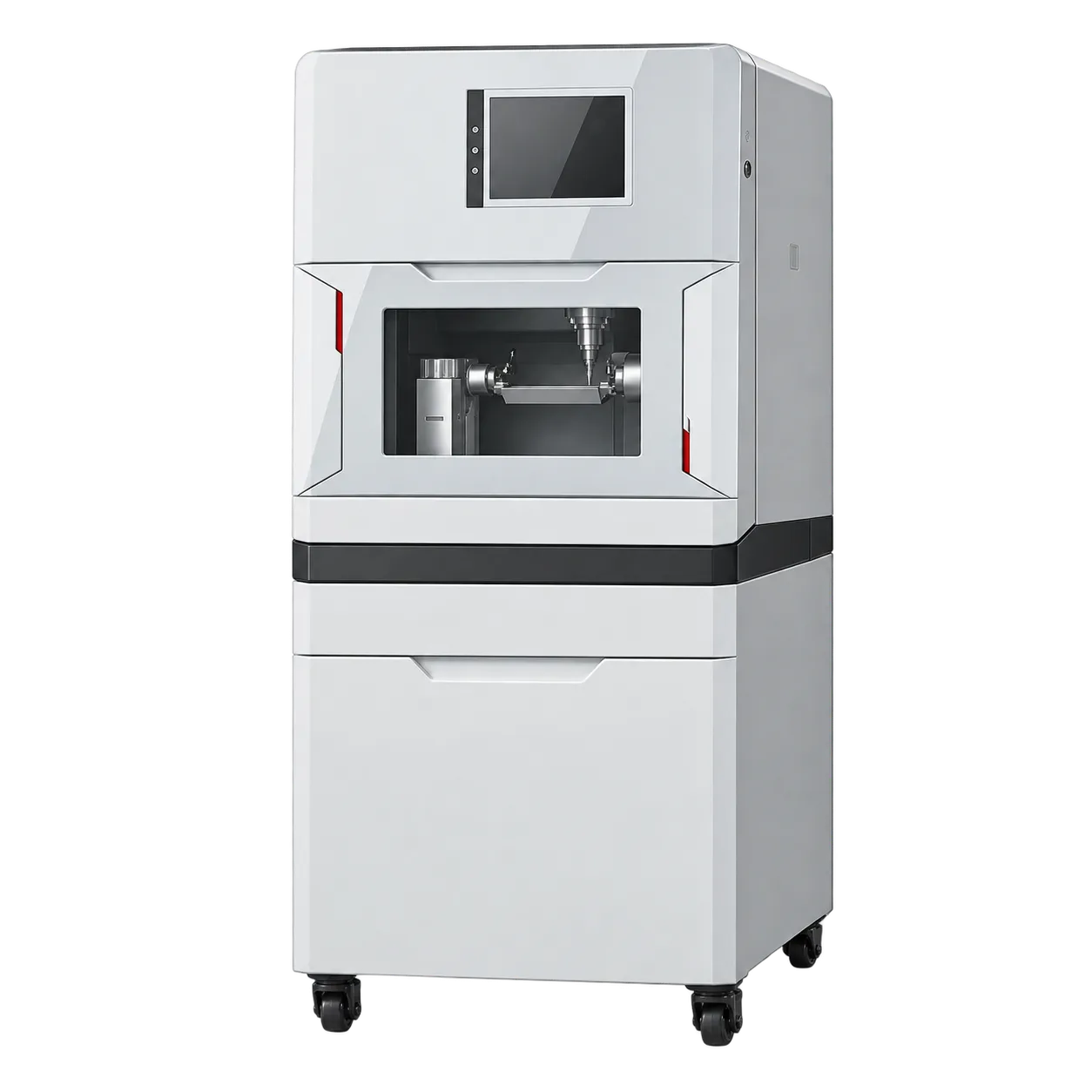
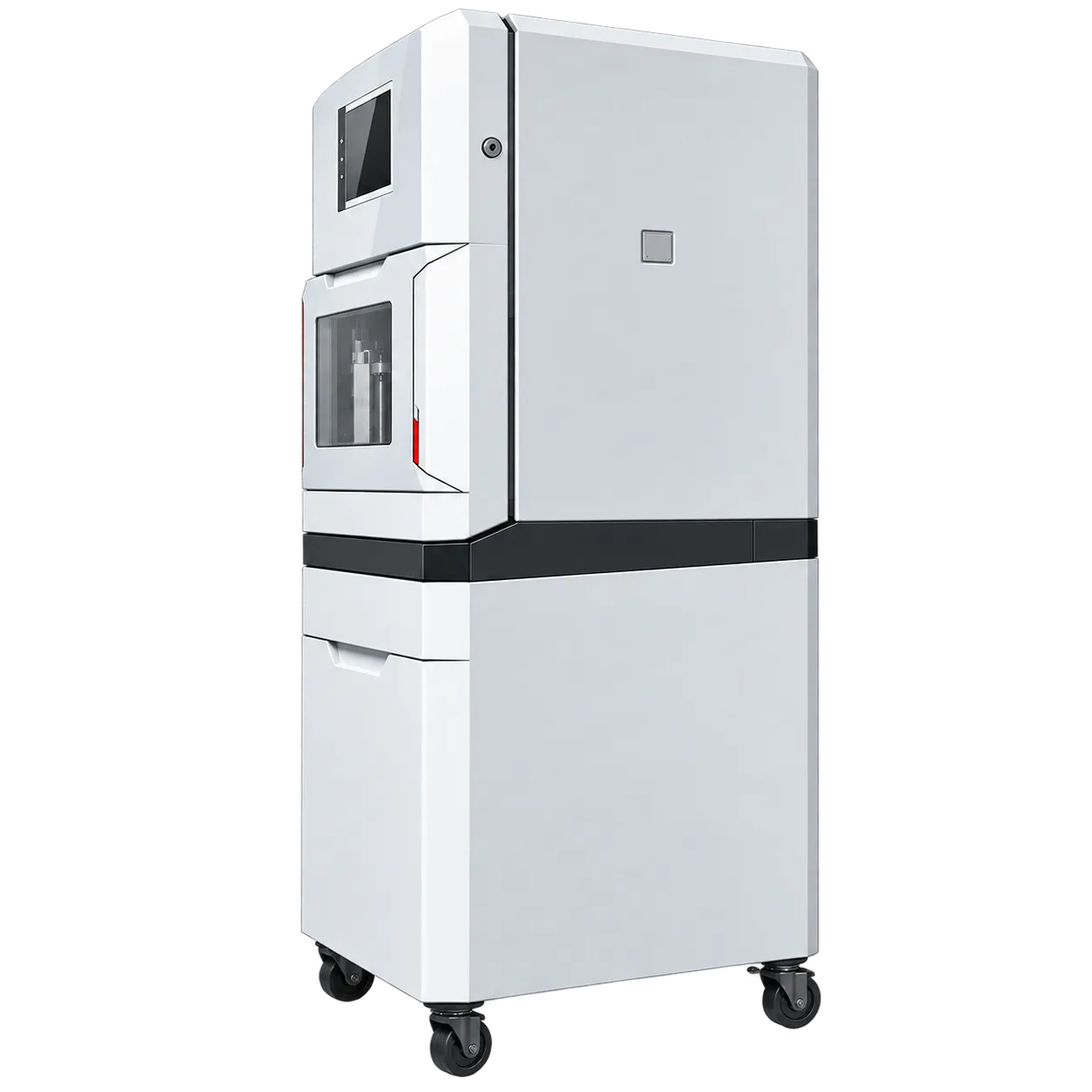
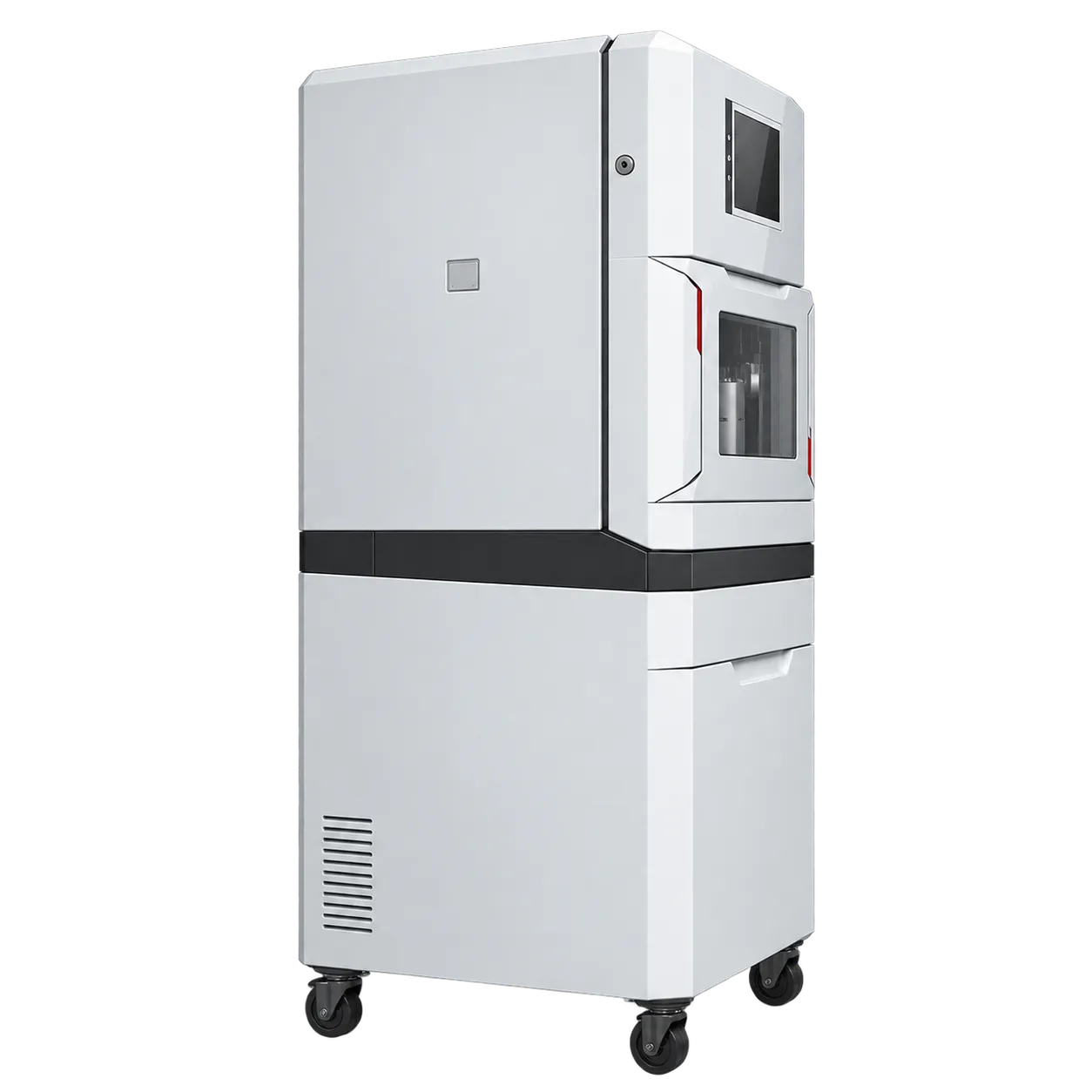
The 52Max is for an operation that doesn't want to choose between a laboratory that takes prescriptions from several practices and a practice milling its own work chairside. A dry-only machine handles zirconia, PMMA and wax and stops there, and wet capability is what brings glass ceramic and metals into the same room. Anyone taking work across single units, bridges, veneers, inlays, abutments and screw-retained cases is quoting for all of those materials whether they can cut them or not, and the alternative to one machine doing both is sending part of the book out.
Blank format is the other half of the same argument. Discs suit batching, where a full tray of units is nested into one blank and run unattended. Blocks suit single cases turned round quickly, and the chairside-style work where one unit is needed now. A machine taking both lets the format follow the case rather than the equipment, which is what the sheet means by diversified production.
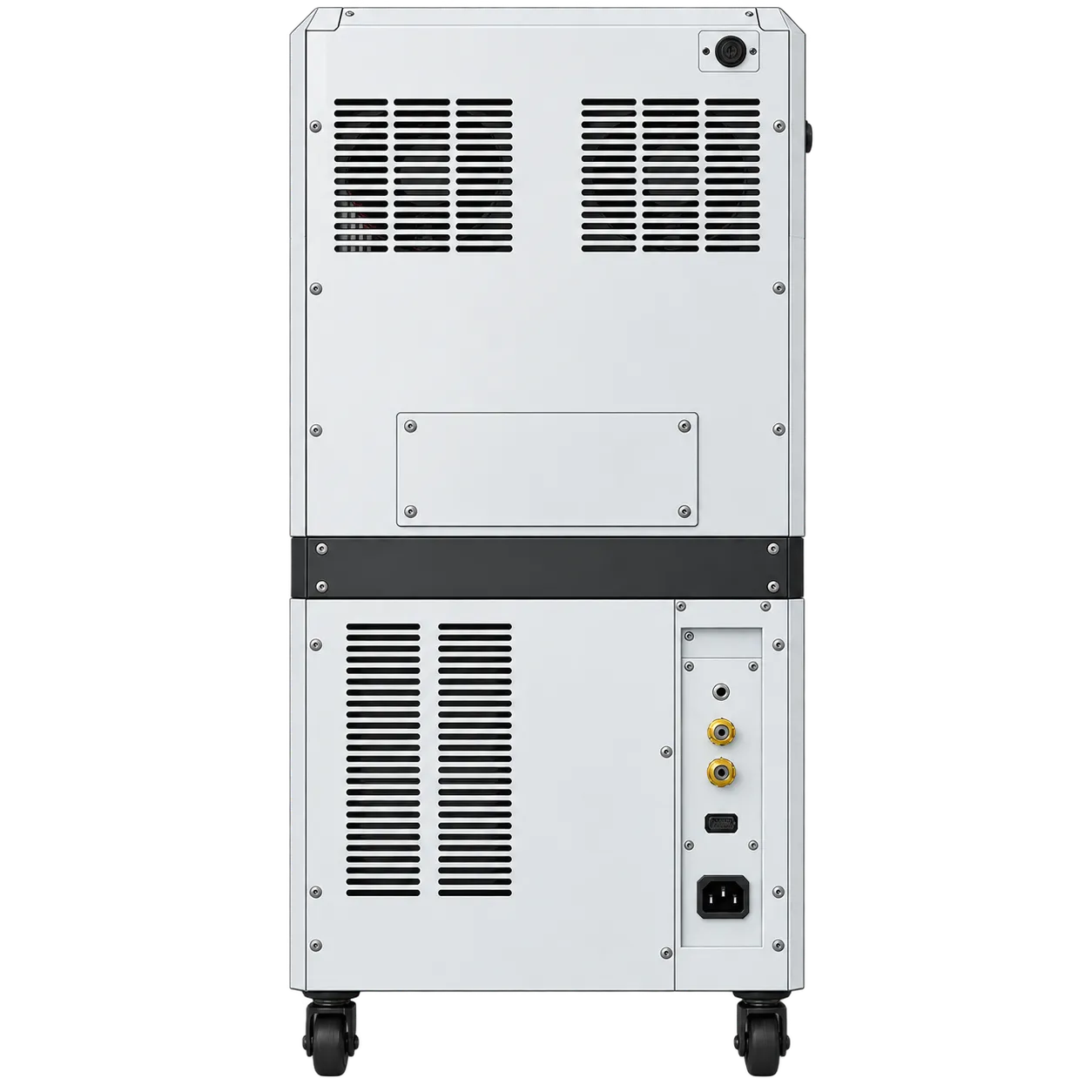
The constraint is what surrounds it. A floor-standing wet and dry machine needs a compressor, an extraction unit, coolant handling, and floor area for all of them, plus access for service. An operation already running dry milling has some of that. One moving from outsourcing to in-house has none of it, and the room has to be planned rather than found.
Buying runs through the usual routes. Private laboratories, dental groups, trust laboratories, teaching institutions, and practices milling chairside each apply their own procurement rules, and capital equipment like this clears health and safety and finance before anything else. The registration duty for custom-made devices works the same way in each of them. The manufacturer issues the conformity route documentation, and the seller provides it.