

Routine Subjective Refraction
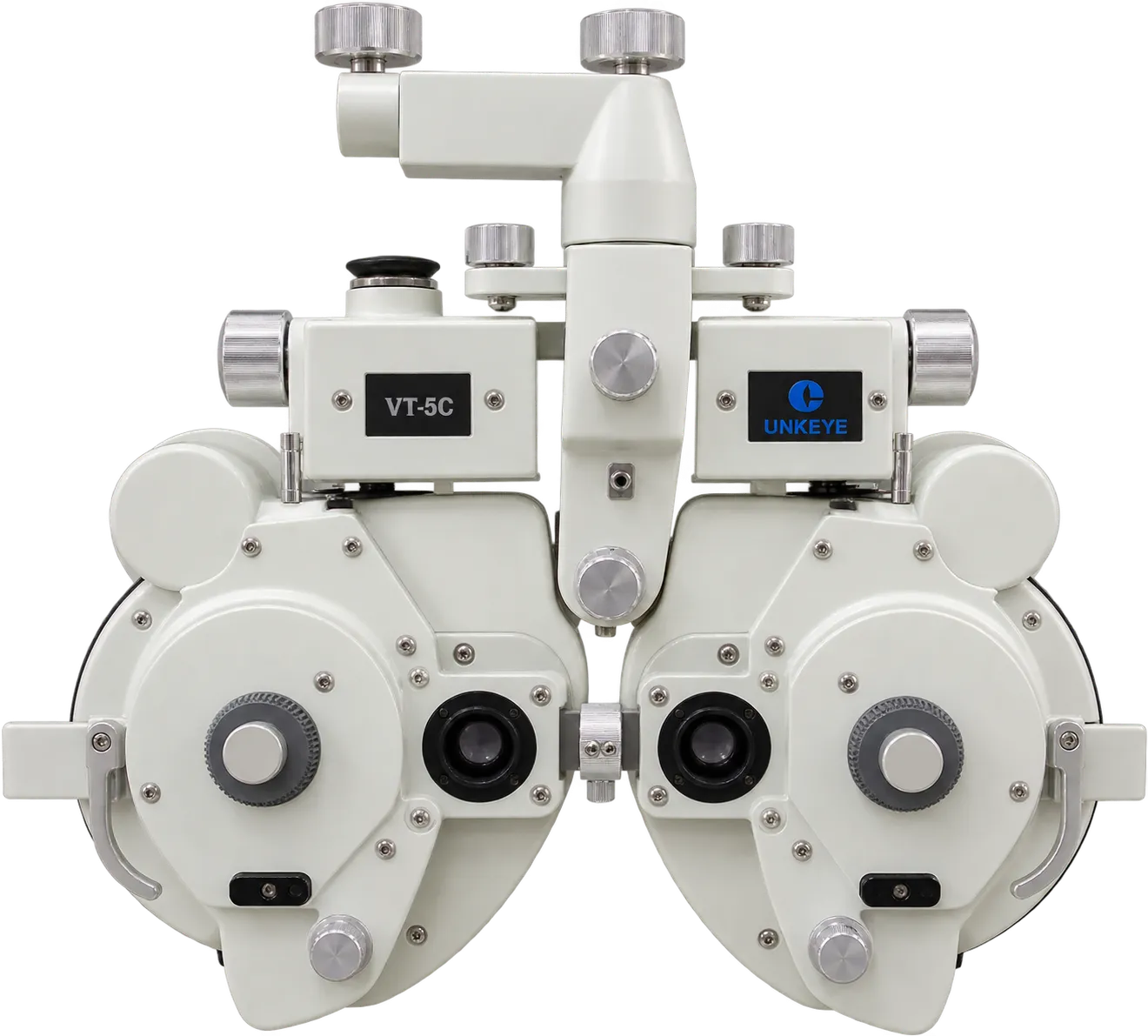
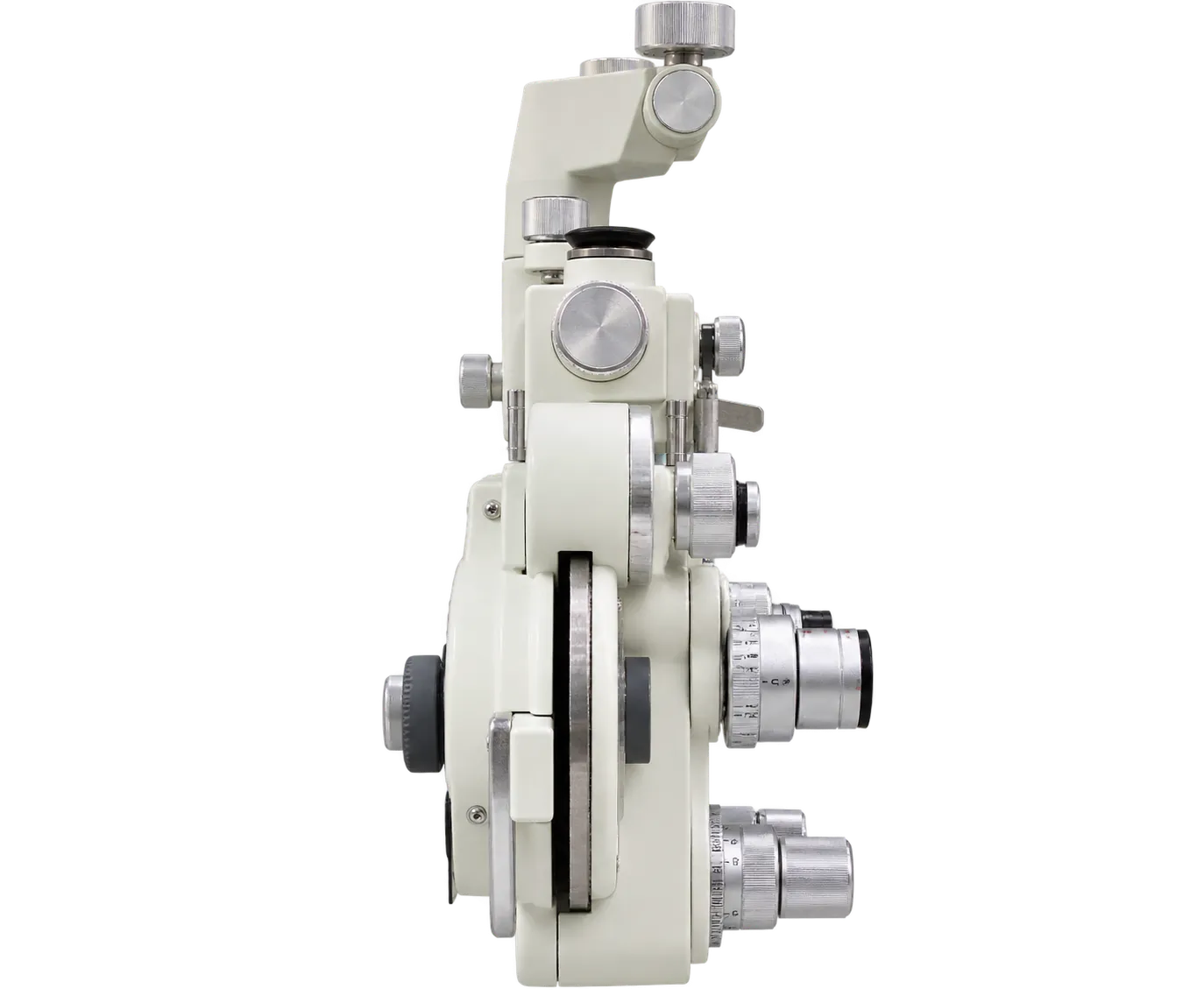
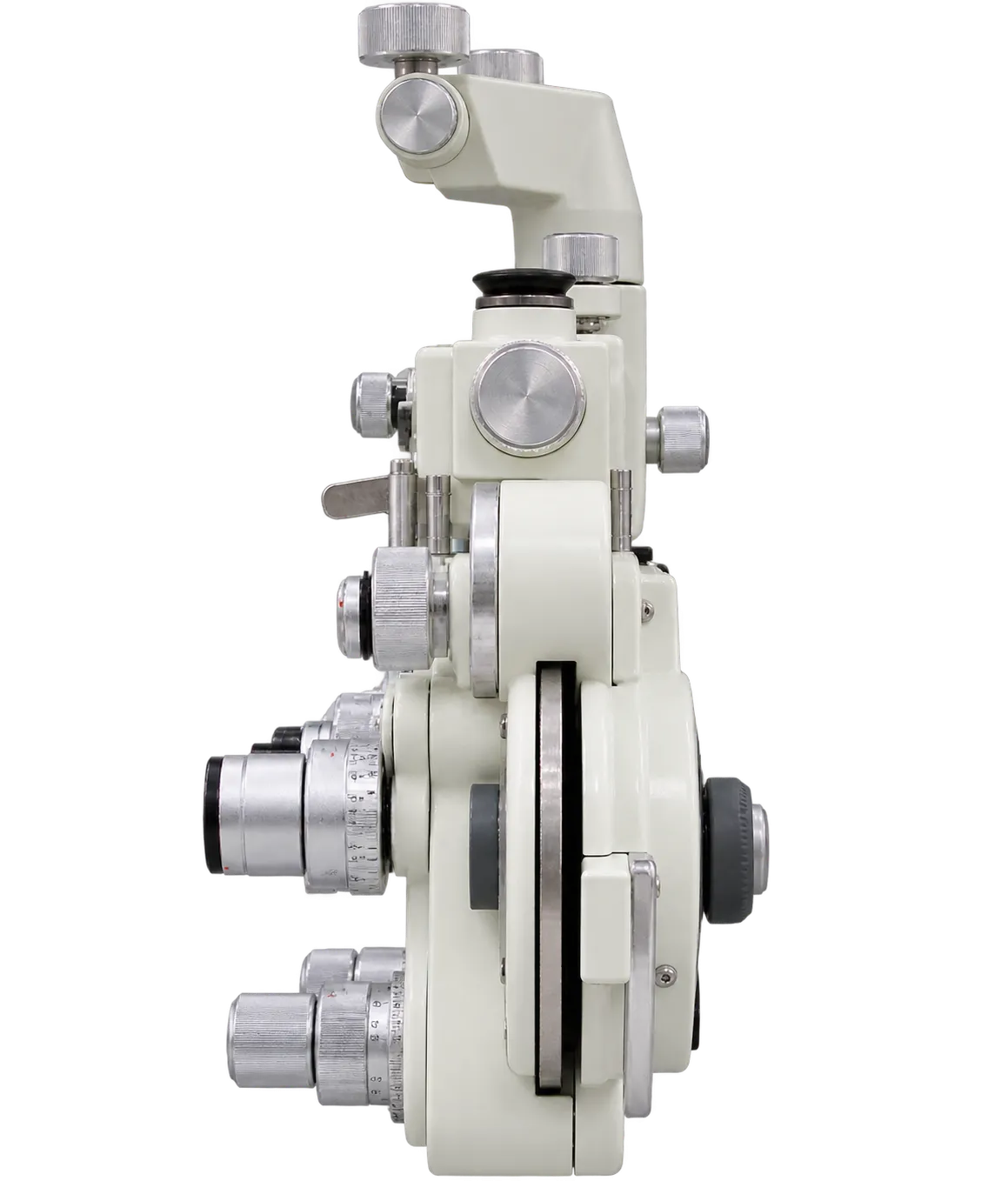
This is the instrument's principal role. Objective figures from a pre-test give a starting point, and the refracting head is where those numbers are refined against what the patient actually reports seeing. Spherical range from plus 16.75D to minus 19.00D and cylinder to minus 8.00D with auxiliary lens cover the great majority of prescriptions encountered, while the 0.12D minimum reading allows refinement to be pushed as far as a given patient can reliably discriminate between presented options.
Astigmatic Refinement and Axis Determination
Cross cylinder testing at plus or minus 0.25D, synchronised with the astigmatic axis, is the standard method for refining cylinder power and orientation. Because the axis follows the flip automatically, the practitioner keeps attention on the patient's responses rather than on resetting the instrument between presentations. The selectable plus or minus 0.50D cross cylinder suits patients who struggle to discriminate the finer step.
Binocular Balance and Phoria Assessment
Rotary prism to 20 prism dioptres in single dioptre steps brings vergence and phoria testing into the same sitting as the refraction. Heterophoria, fusional reserves and binocular balance can all be assessed without moving the patient to separate equipment, which matters for anyone whose symptoms suggest the problem lies in how the two eyes work together rather than in either eye alone.
Near Vision and Presbyopic Testing
The convergence arrangement aligns the optical axes at 400mm from the corneal vertexes, with interpupillary distance enabling convergence from 57mm to 80mm. Near addition can therefore be determined with the eyes converged as they would be in actual reading, rather than at a distance setting that does not reflect how the patient will use the correction.