
Near Point and Presbyopic Testing
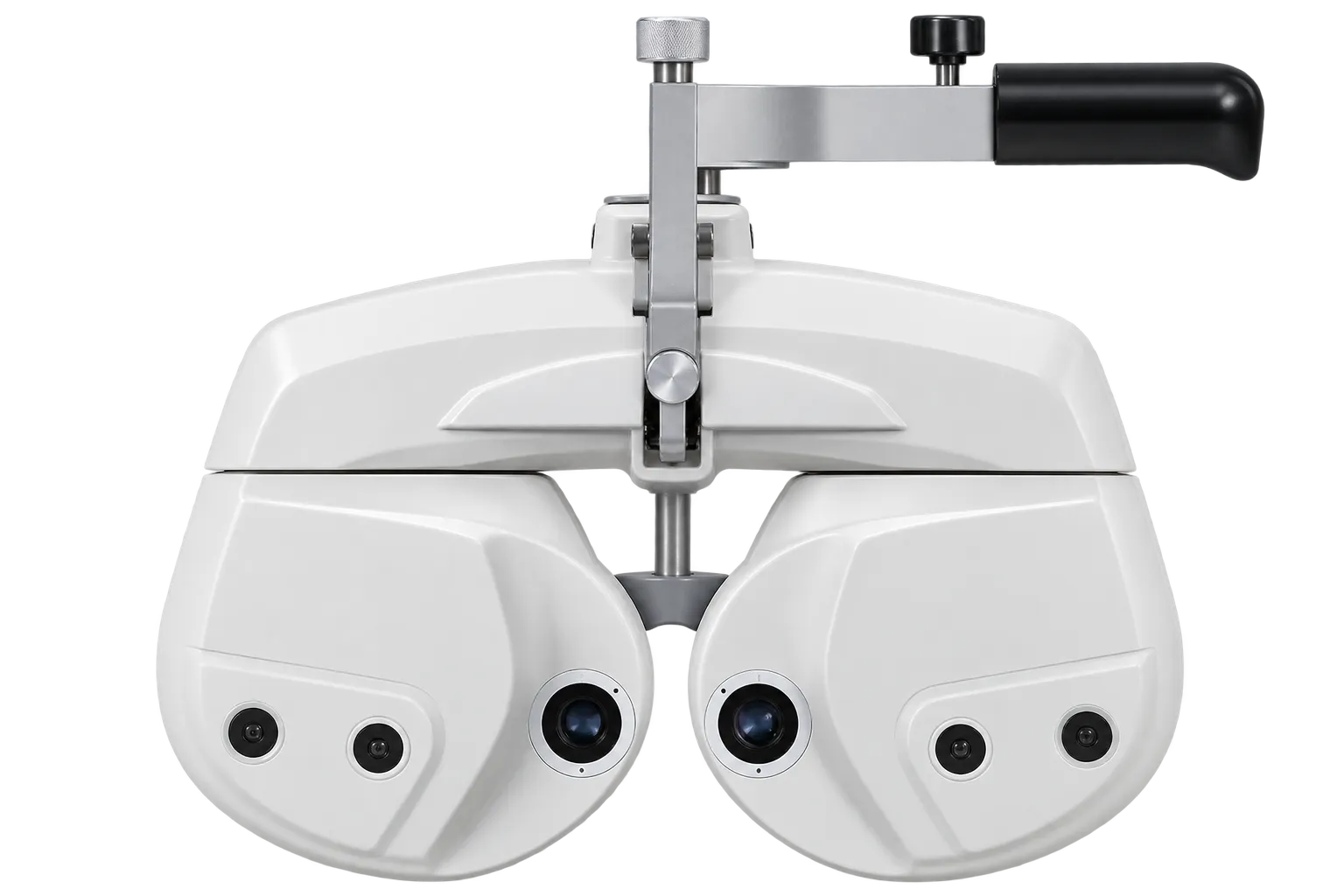
Automatic convergence and pupillary distance adjustment during near testing means the eyes are correctly converged and the lenses correctly centred for close work without the practitioner setting either by hand. Near addition is determined in the geometry the patient will actually use, and the illuminated near point card with its various charts removes the dependence on consulting room lighting that otherwise makes near acuity results difficult to compare between visits.
Precise Vergence and Phoria Investigation
Prism resolution of 0.1 prism dioptres is a substantial step beyond what geared heads offer. Where fusional reserves are being measured or a small vertical deviation is suspected, the difference between one prism dioptre and the next is exactly the territory in which the answer sits. Being able to work at a tenth of that interval turns an approximate finding into a measurement worth recording.
High Astigmatism in Either Notation
Cylinder from minus 8.75D to plus 8.75D covers substantial astigmatic corrections without auxiliary lenses, and accommodates both plus and minus cylinder recording conventions directly. Practices working to a particular convention, or receiving prescriptions written in the other, can proceed without converting figures by hand and introducing the arithmetic errors that conversion invites. Working directly in the practice convention saves a conversion step each time.
Infection Control in Busy Clinics
The face shield and forehead rest both detach, which makes cleaning the surfaces that contact a patient's face genuinely practical rather than a wipe around a fixed component. For clinics running back to back appointments, a hygiene routine that can be completed quickly between patients is one that actually gets completed, and removable parts are what make that realistic.