
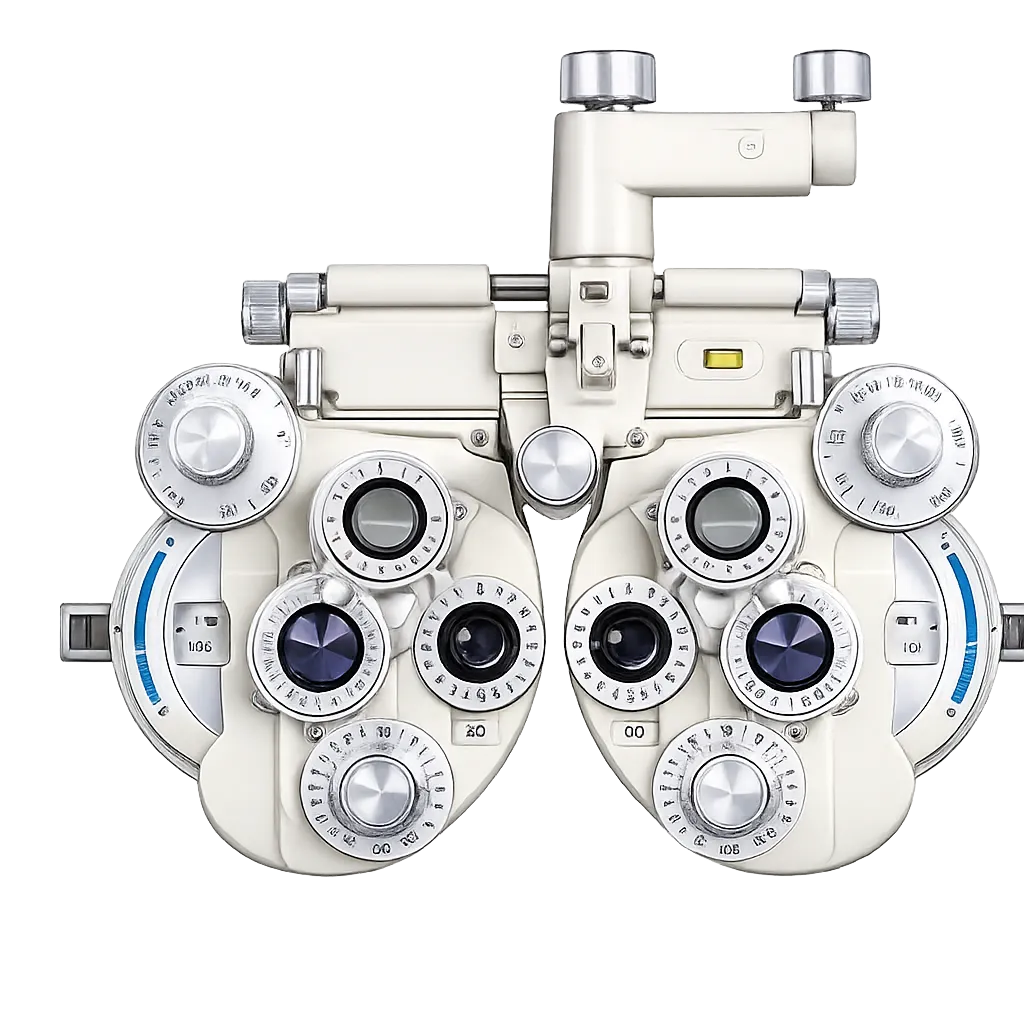
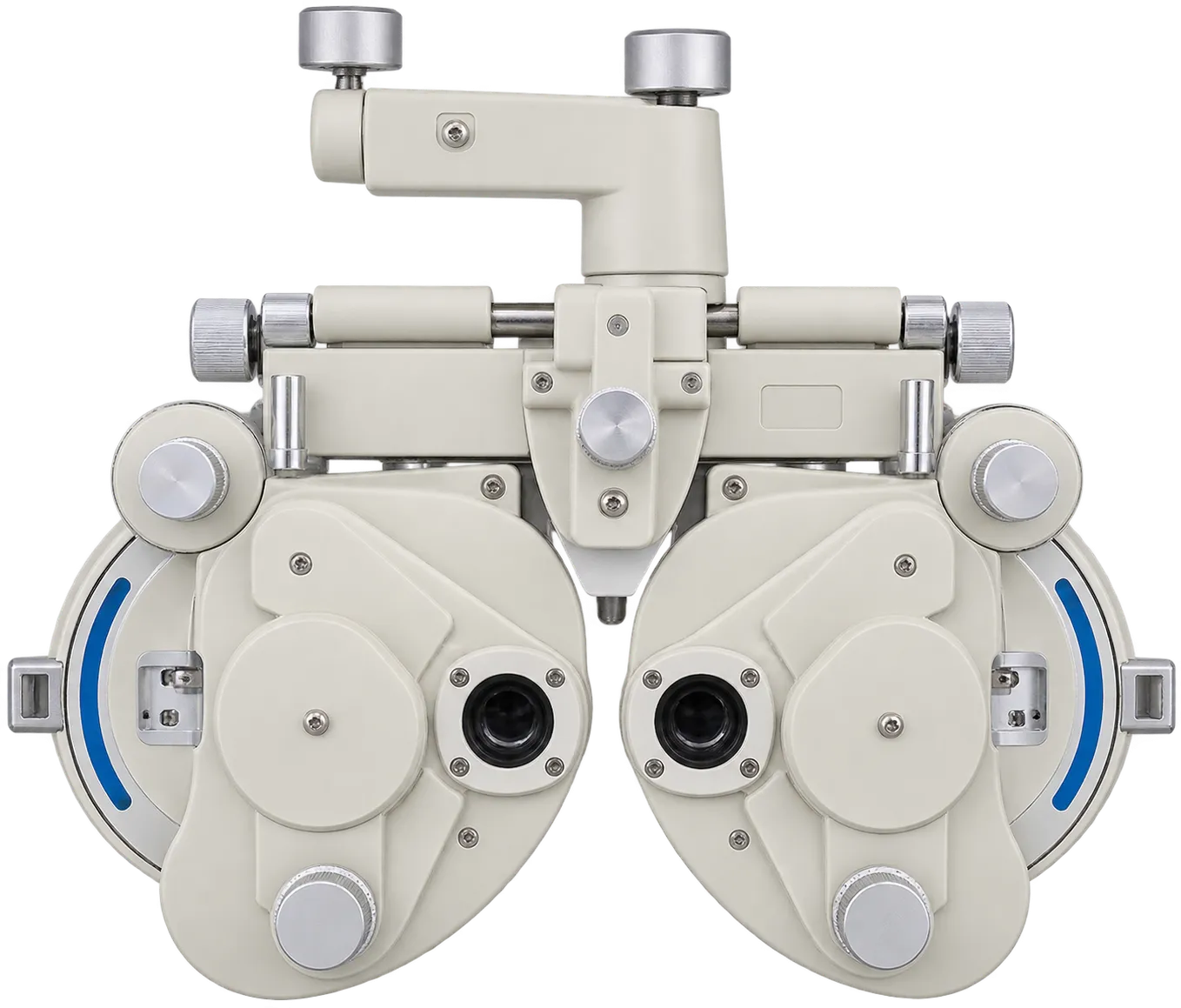
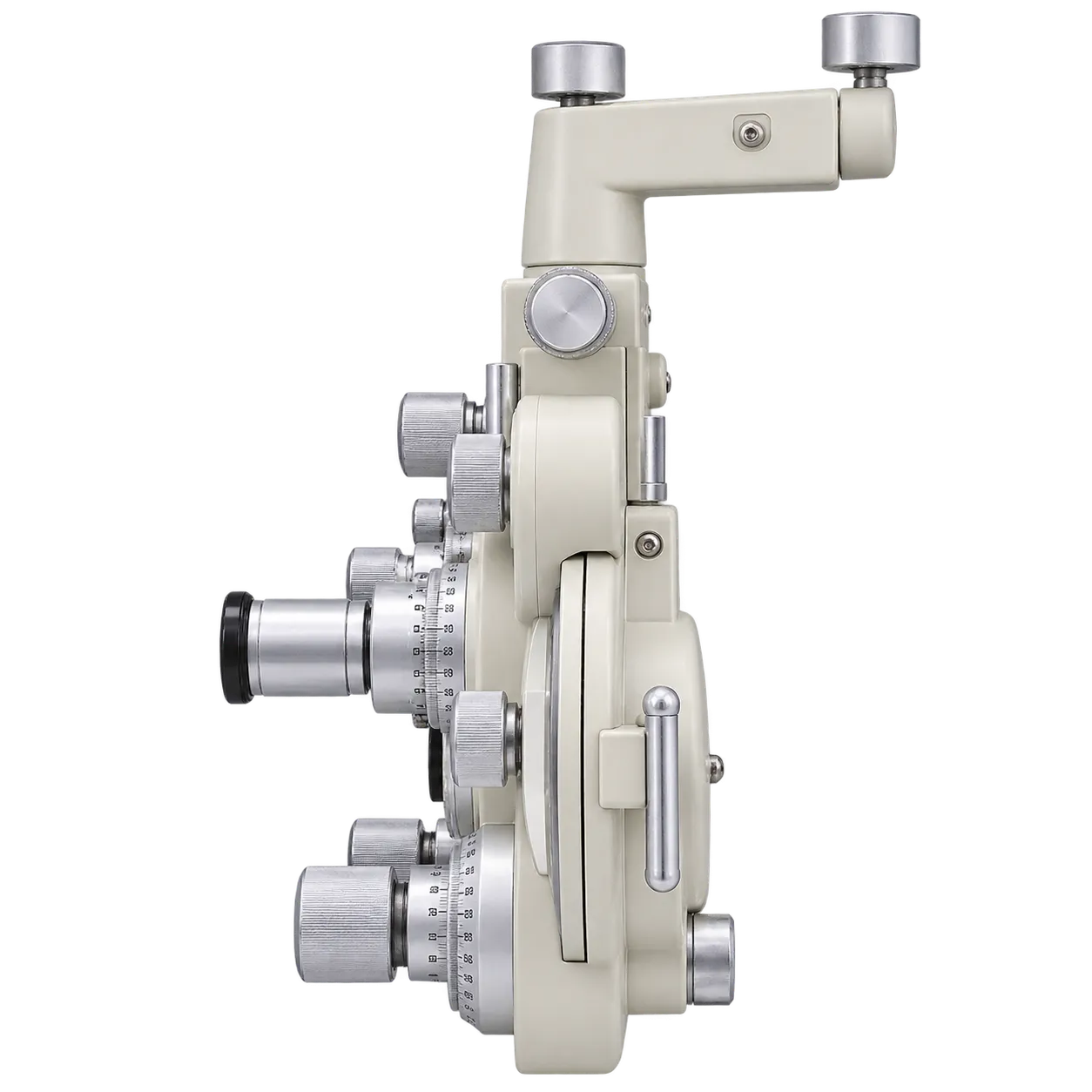
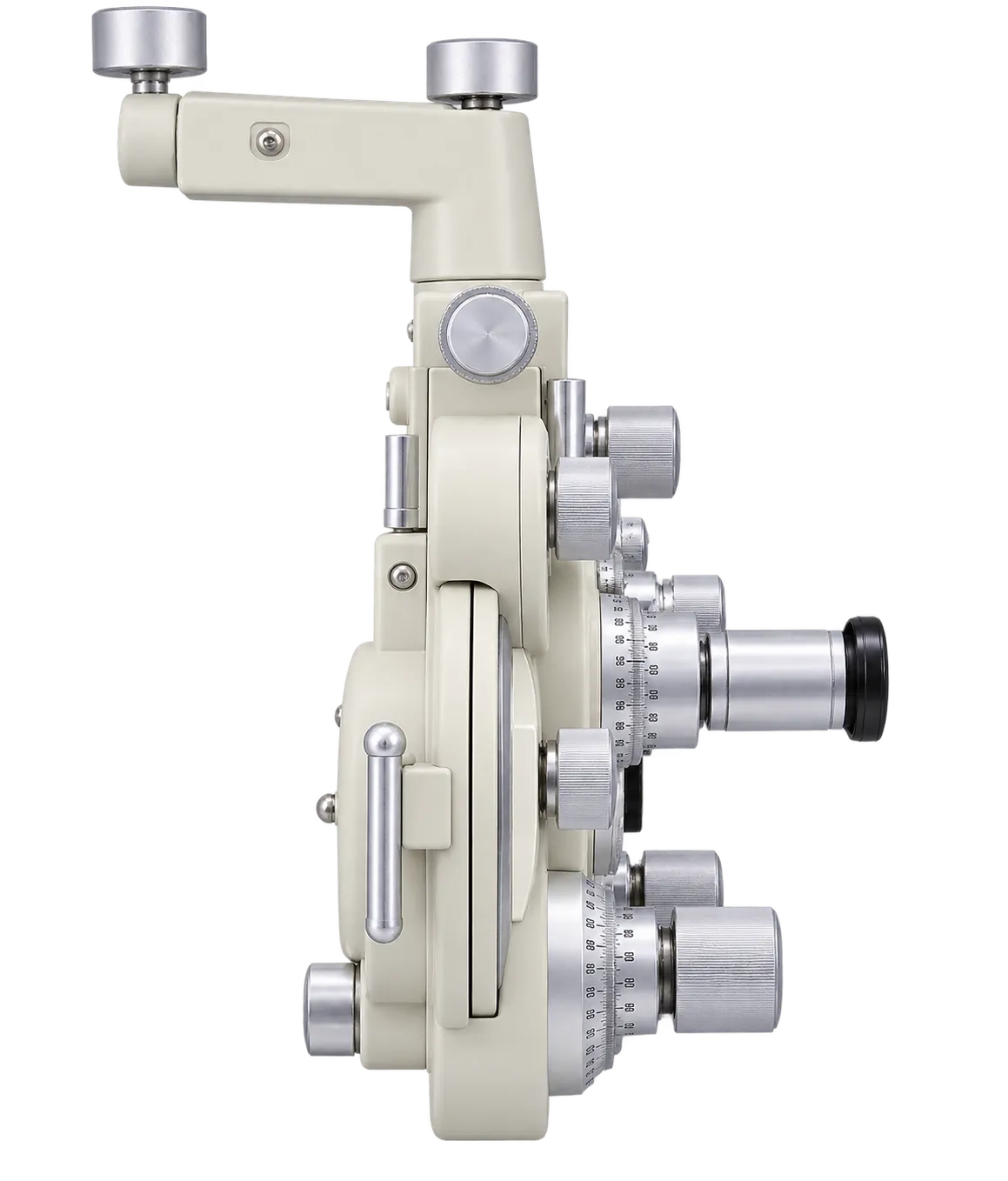
Oblique Base Prism Prescribing
Prism base direction across the full 360 degrees means an oblique base can be set as prescribed rather than rounded toward whatever the instrument permits. Patients with vertical or combined deviations frequently need prism at a base direction that does not fall neatly horizontal or vertical, and approximating that orientation degrades the correction in a way the patient experiences even when the magnitude is right.
Precise Astigmatic Axis Determination
Being able to estimate the axis to 1 degree between 5 degree markings matters most with higher cylinders, where the penalty for an axis error grows with the power involved. The printed steps set the coarse position and judgement between them refines it, which gives the practitioner more resolution than the scale alone implies without pretending to a precision the instrument does not have.
Consistent Vertex Geometry Across Patients
A fixed vertex corneal distance of 13.75mm means every refraction is conducted at the same working distance. Effective power at the eye becomes predictable, and comparisons between one examination and the next are not confounded by a positional variable that changed between visits. For practices wanting reproducible records, a known constant has real advantages over an adjustable range set differently each time.
Binocular Vision Assessment
Rotary prism to 20 prism dioptres in single steps, combined with full circle base direction, supports phoria measurement and vergence testing in the same sitting as the refraction. Where a patient reports headaches or reading difficulty without an obvious refractive cause, the instrument carries what is needed to pursue the binocular question immediately. Pursuing the question immediately is what makes it likely to be pursued at all.