
High Power and Post-Surgical Prescriptions
The optional plus or minus 10.00D lens extends spherical testing to plus 26.75D and minus 29.00D. Aphakic patients, high myopes and those left with substantial residual error after ocular surgery can be refracted properly at the head rather than through improvised trial frame combinations. Working within a single instrument keeps vertex distance consistent throughout the examination, which matters a great deal at powers this high, where small positional differences change the effective correction reaching the eye.
Paediatric and Narrow Interpupillary Testing
Interpupillary adjustment from 48mm accommodates children and adults whose interpupillary distance sits below what many refracting heads reach. Where the setting cannot be brought narrow enough, the patient looks through the lenses off centre, introducing unwanted prism and undermining the whole refraction. Practices seeing children regularly, or working in school screening programmes, benefit directly from the wider adjustment span.
Routine Subjective Refraction
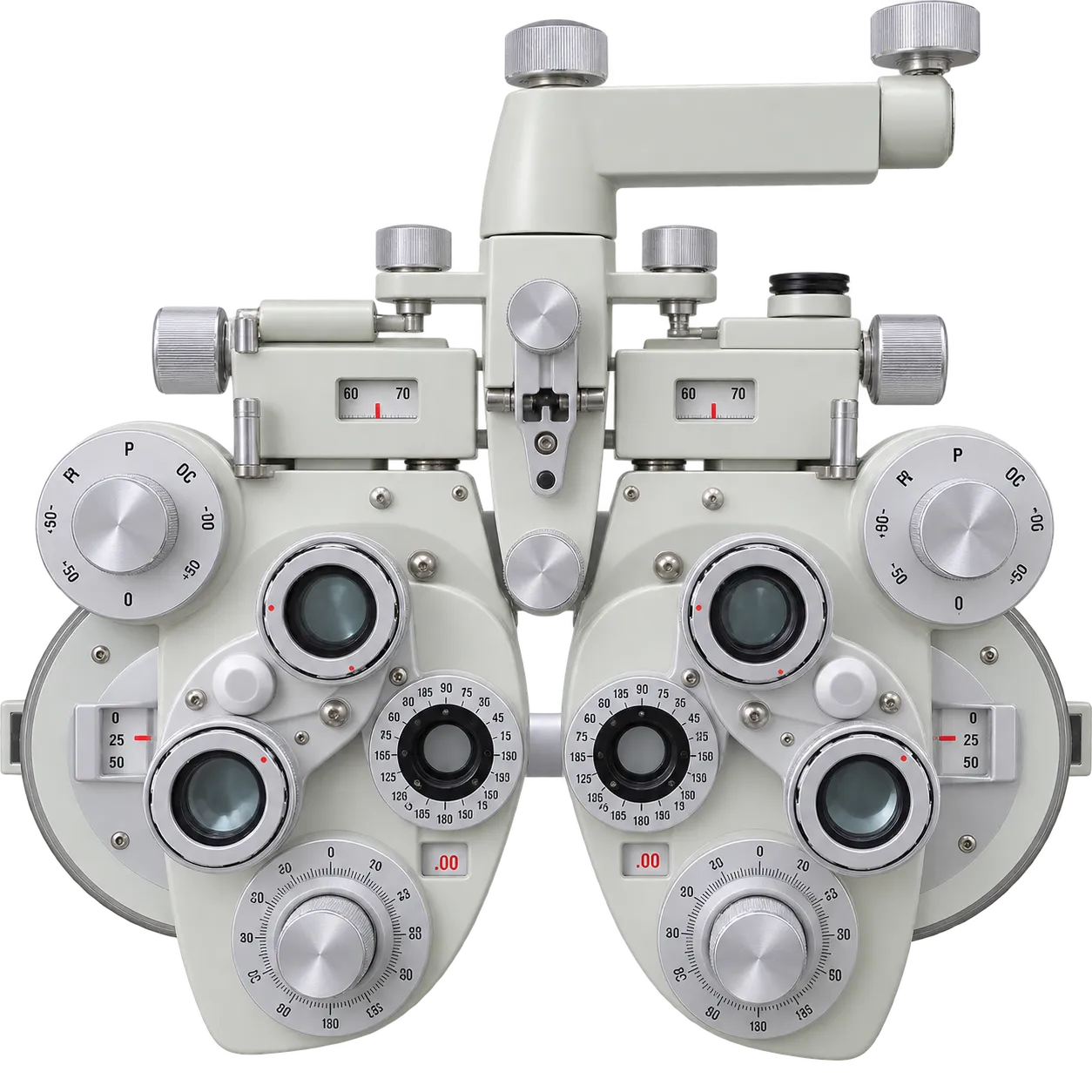
For everyday sight testing the head covers sphere from plus 16.75D to minus 19.00D and cylinder to minus 8.00D with auxiliary lens, at a minimum reading of 0.12D where the appropriate lens is fitted. Cross cylinder testing synchronised with the astigmatic axis handles cylinder refinement, and rotary prism supports binocular balance work within the same sitting. Everyday work is handled with no optional fitting required at all.
Hospital, School and Workplace Settings
The manufacturer describes the head as suited to eyesight examination in optical retail, hospital ophthalmology departments, schools and workplace settings. The wide interpupillary span and extended spherical reach are what make that breadth realistic, since screening populations bring a far wider spread of prescriptions and physical dimensions than a settled private practice list.