

High Cylinder Prescription Refinement
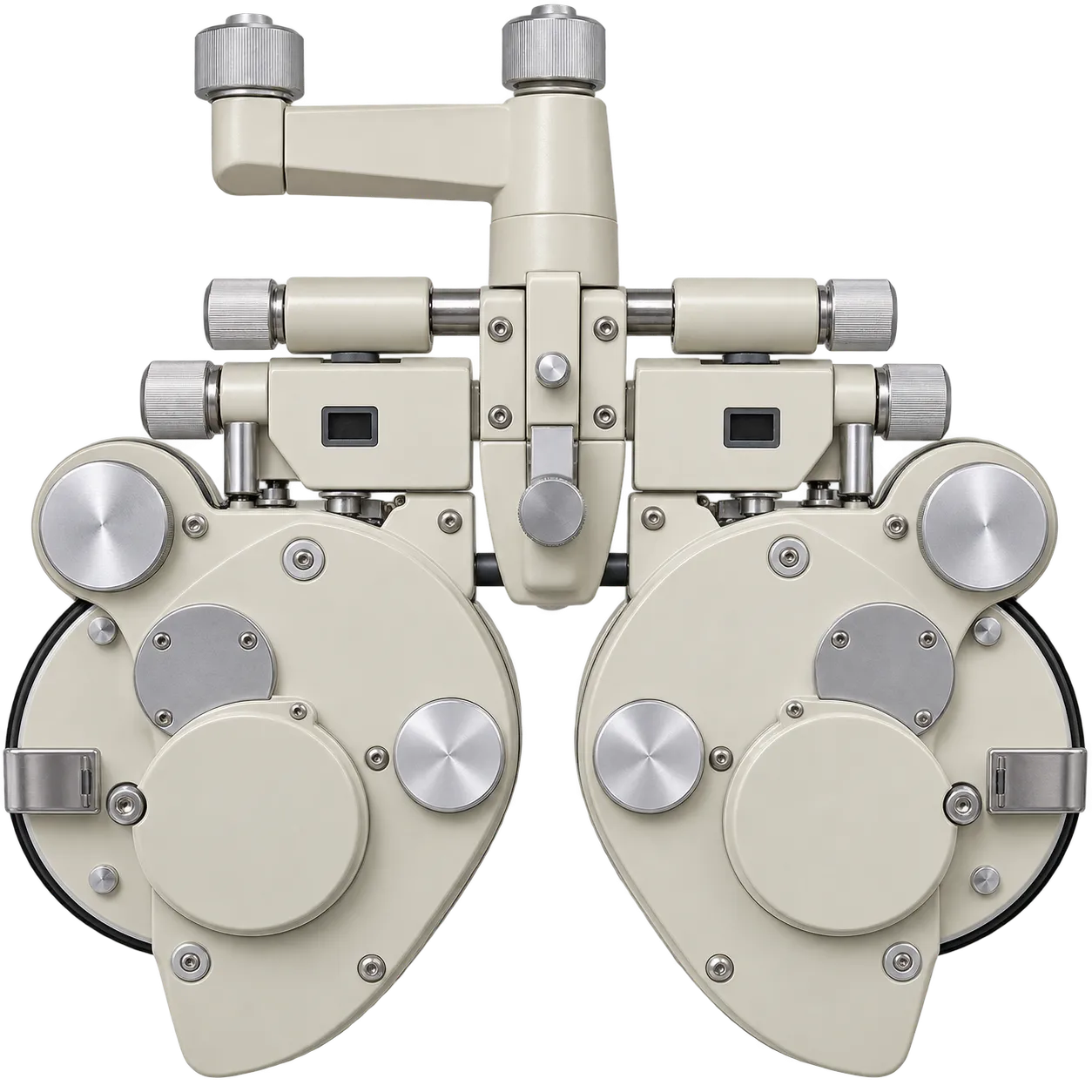
Patients carrying substantial astigmatism need careful axis determination, because a correctly powered cylinder on a wrong axis performs poorly and the error grows with the cylinder. Refining those prescriptions involves many cross cylinder presentations, and the automatic linkage means the axis is where the instrument says it is throughout. For practices seeing high cylinder regularly, that consistency is the difference between a prescription that settles quickly and one that comes back.
Repeat Prescription Verification
When a patient returns reporting that a recent pair has never felt right, the question is usually whether the prescription or the dispensing is at fault. Repeating the refraction on an instrument where the axis holds automatically gives a cleaner comparison against the previous result. Quarter dioptre steps throughout mean the repeat is conducted at the same resolution the original was written at. A clean comparison narrows the question quickly.
Paediatric and Narrow Face Testing
Pupillary adjustment reaching 48mm accommodates children and adults whose pupillary distance sits below what many heads manage. Off centre viewing introduces unwanted prism that contaminates the whole refraction, so reaching the narrower settings genuinely affects result quality rather than merely comfort. Practices with paediatric lists benefit accordingly.
Binocular Assessment in the Same Sitting
Rotary prisms covering 0 to 20 prism dioptres in single steps allow phoria measurement and binocular balance work to follow the refraction without moving the patient. Symptoms such as headaches or reading discomfort frequently have a binocular origin rather than a refractive one, and keeping the investigation continuous makes it far more likely to happen at all. Continuity of the appointment is what makes the extra testing realistic.