
Repeatable Near Vision Testing
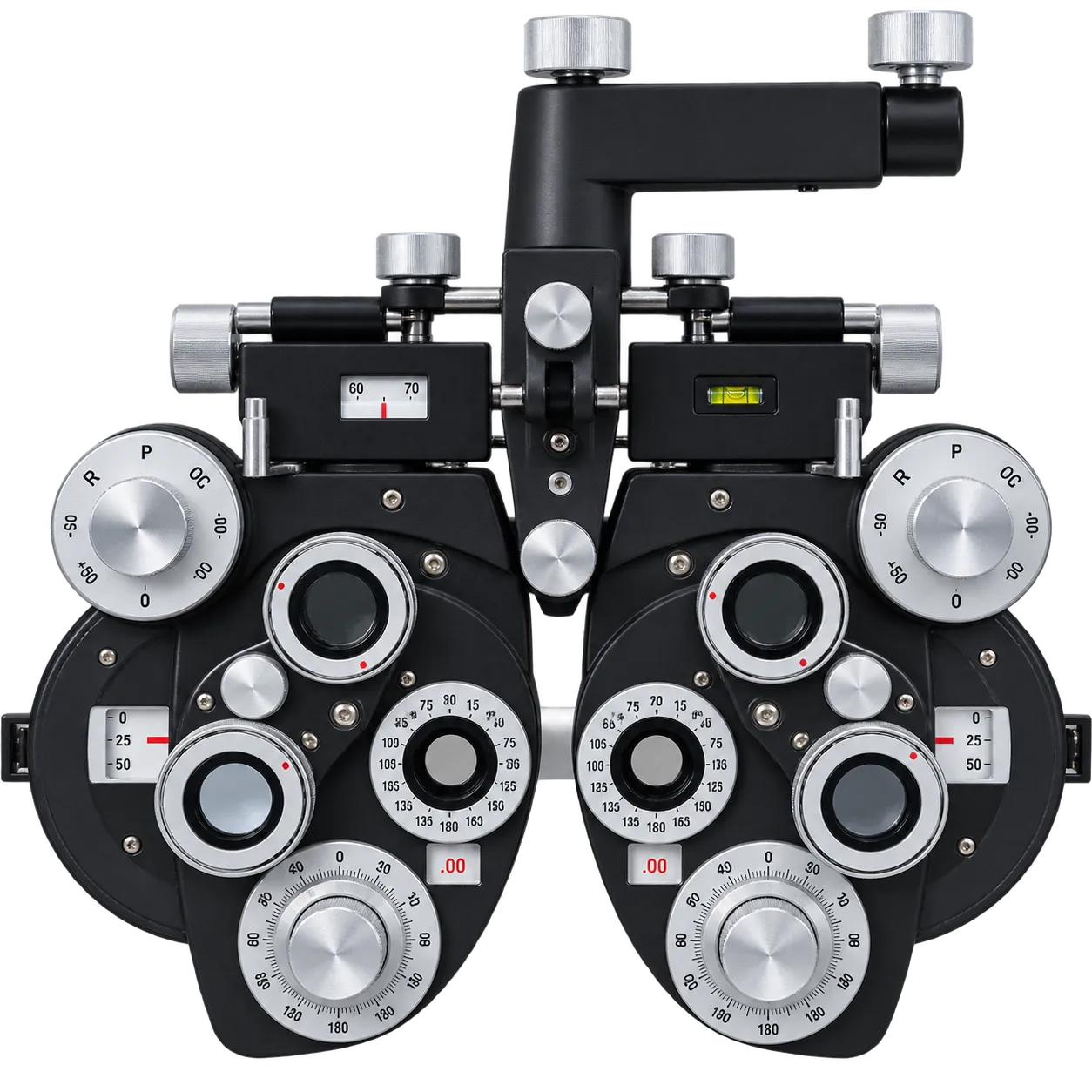
Convergence adjustable from 57mm to 80mm in 2mm steps means near testing is conducted at a stated setting rather than an approximate one. That figure can be written into the patient record and reproduced precisely at the next examination, which matters when comparing near addition over time or investigating why a reading correction that worked previously has stopped suiting the patient. Repeatability is what turns a series of examinations into usable clinical history.
Testing Across the Full Adult Range
Interpupillary adjustment from 50mm to 80mm covers ordinary adult faces at both extremes. Where a head cannot open wide enough, the patient views through the lenses off centre, introducing unwanted prism and producing a refraction that will not translate faithfully into spectacles. Practices seeing an unselected adult population benefit from the full span being available rather than discovering the limitation with a patient in the chair.
Binocular Assessment Within the Refraction
Rotary prism to 20 prism dioptres in single steps supports phoria measurement, fusional reserve work and binocular balance during the same appointment. Combined with the convergence setting for near, the head covers the binocular questions that arise from a routine sight test without the patient being moved to separate equipment partway through the examination.
High Volume Consulting Room Use
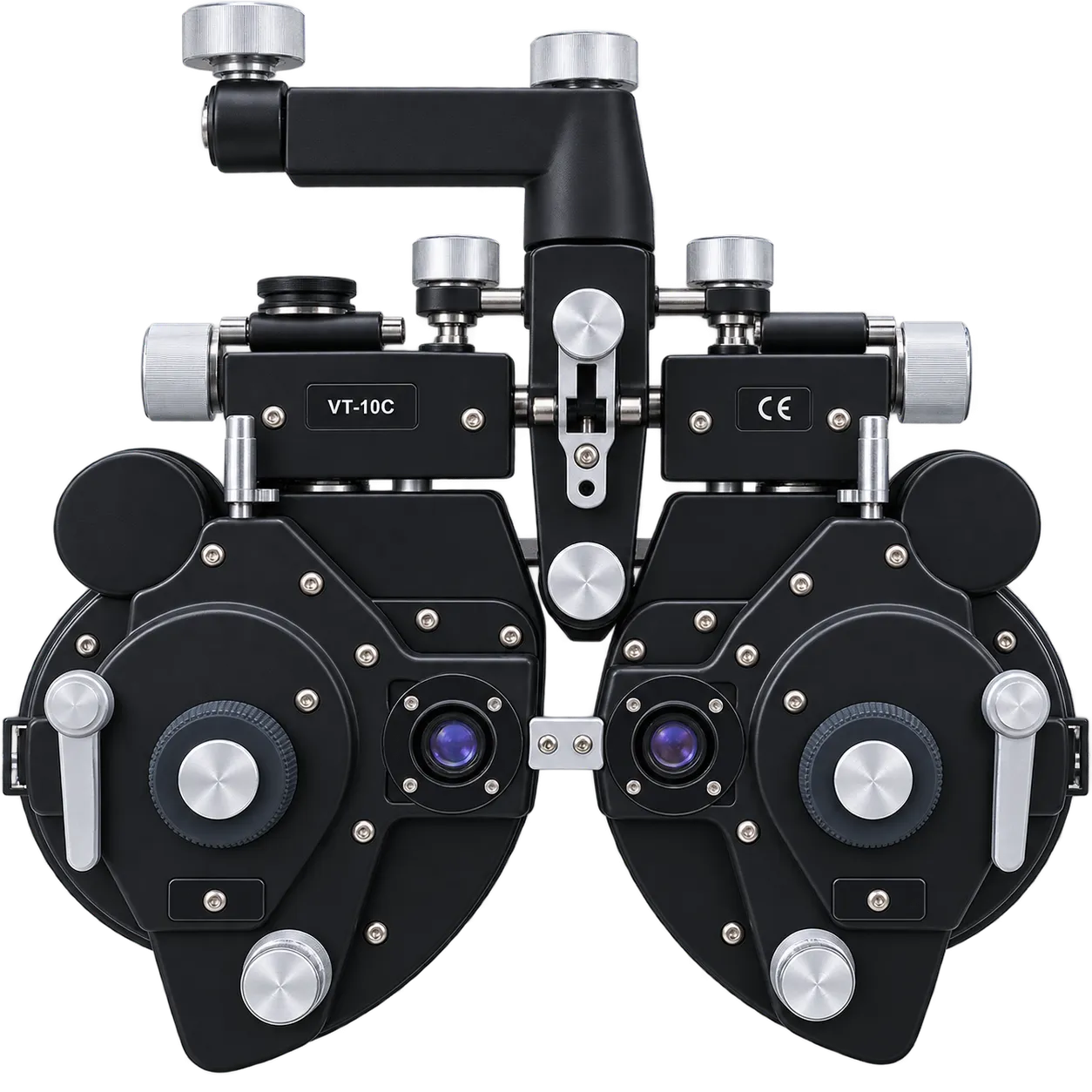
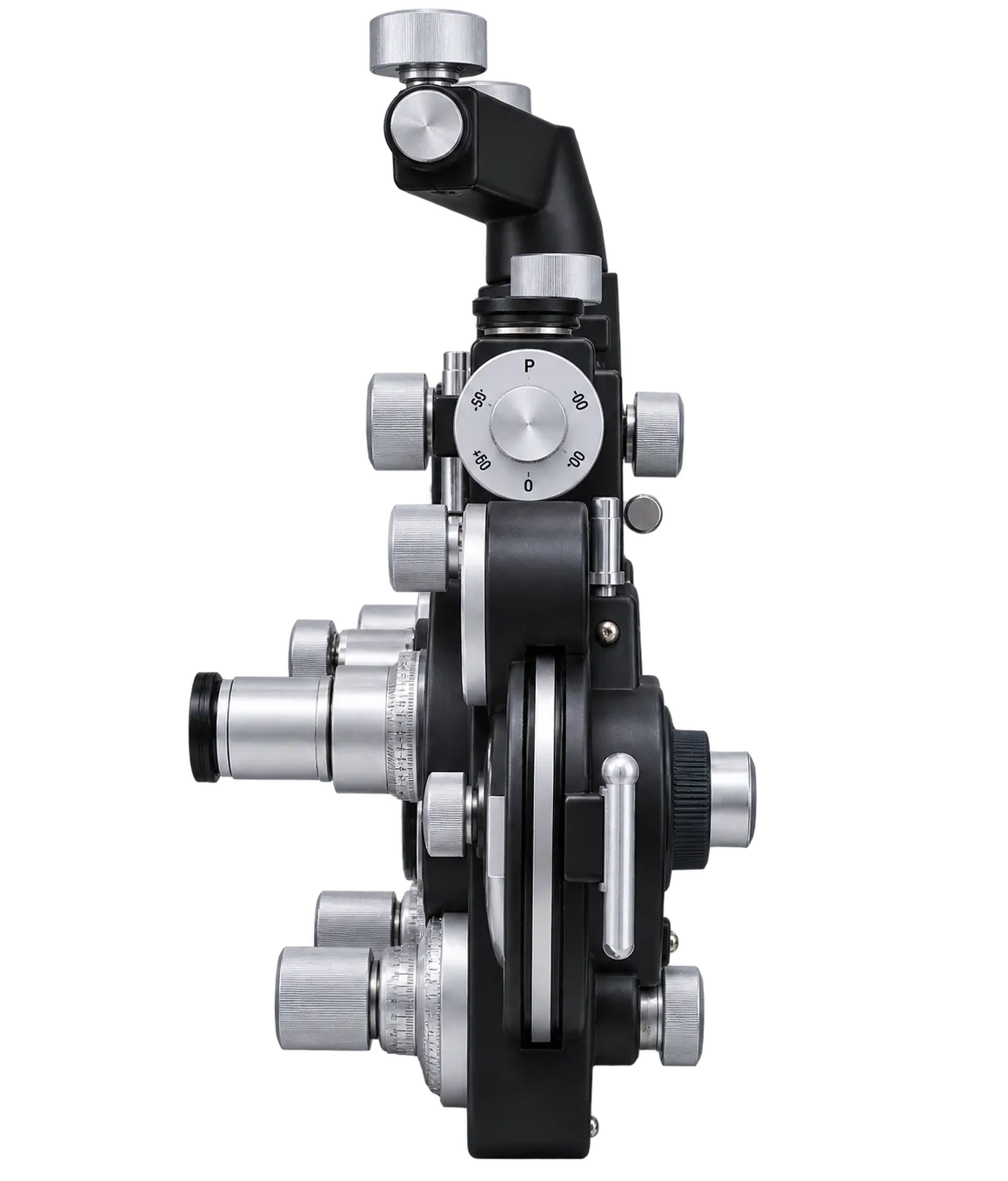
Metal gearing addresses the component that actually wears in a refracting head. For practices running full appointment books, where dials are turned many hundreds of times each week, mechanical durability determines whether the instrument still reads true after several years. A head that has developed play gives figures that no longer match its scales, which is a difficult fault to notice.