
Routine Subjective Refraction
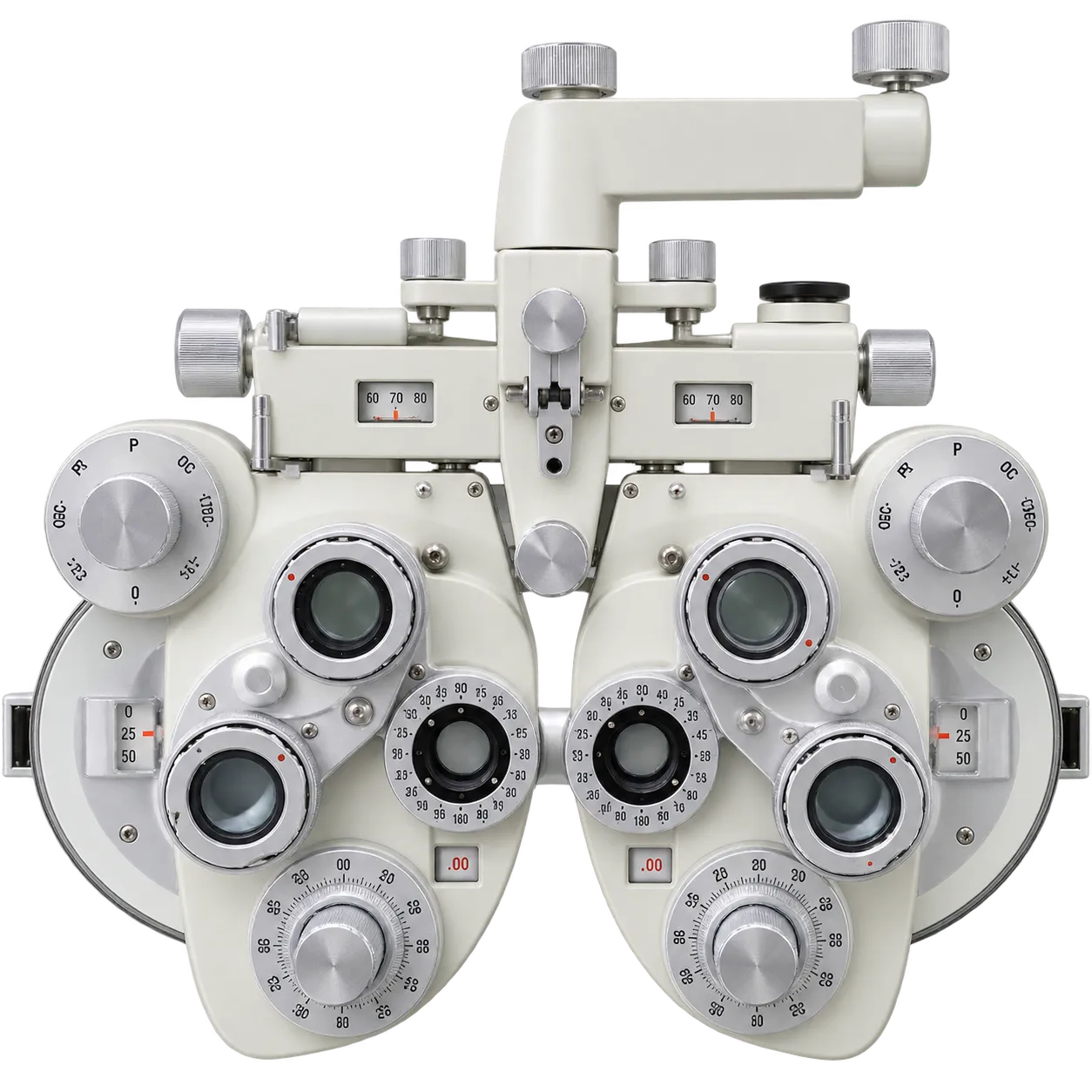
The core purpose is refining objective figures into a prescription the patient accepts. Spherical coverage from minus 19.00D to plus 16.75D in quarter dioptre steps handles the great majority of prescriptions encountered, with cylindrical power to minus 6.00D as standard. The automatic interlock matters here more than anywhere, since astigmatic refinement involves repeated flipping of the cross cylinder and any manual resetting between presentations both slows the process and invites error. Quarter dioptre steps match the resolution at which prescriptions are written.
Practices With Limited Consulting Space
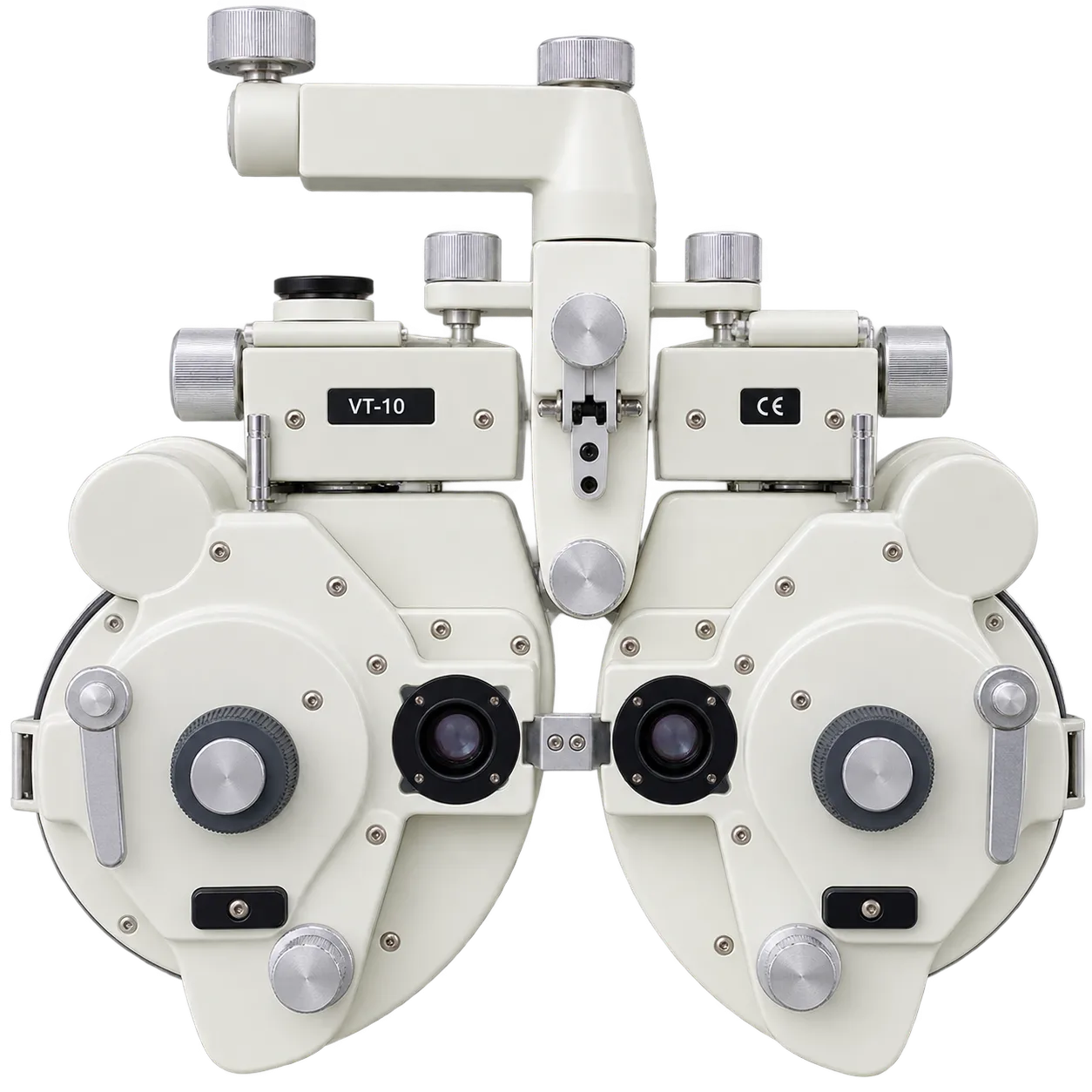
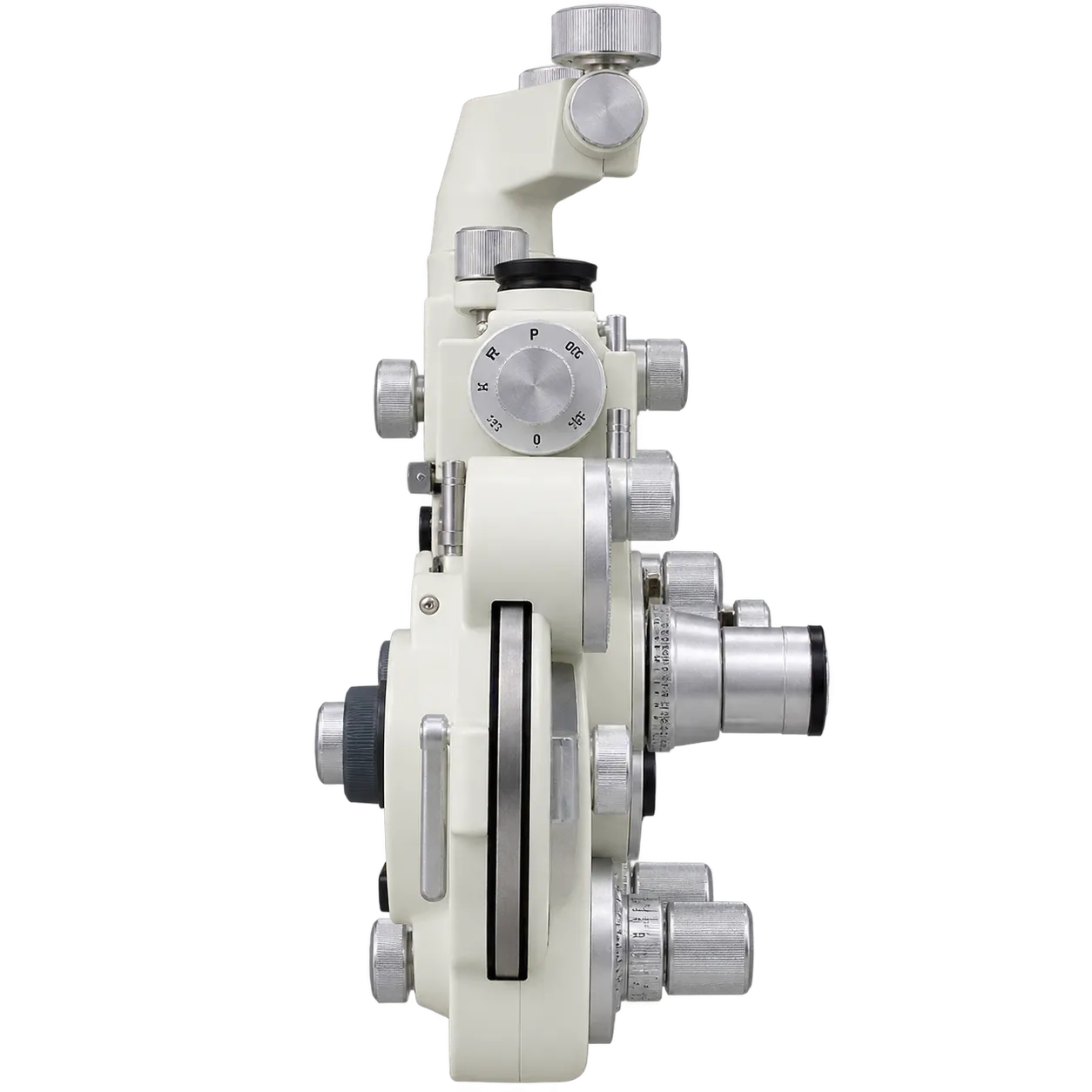
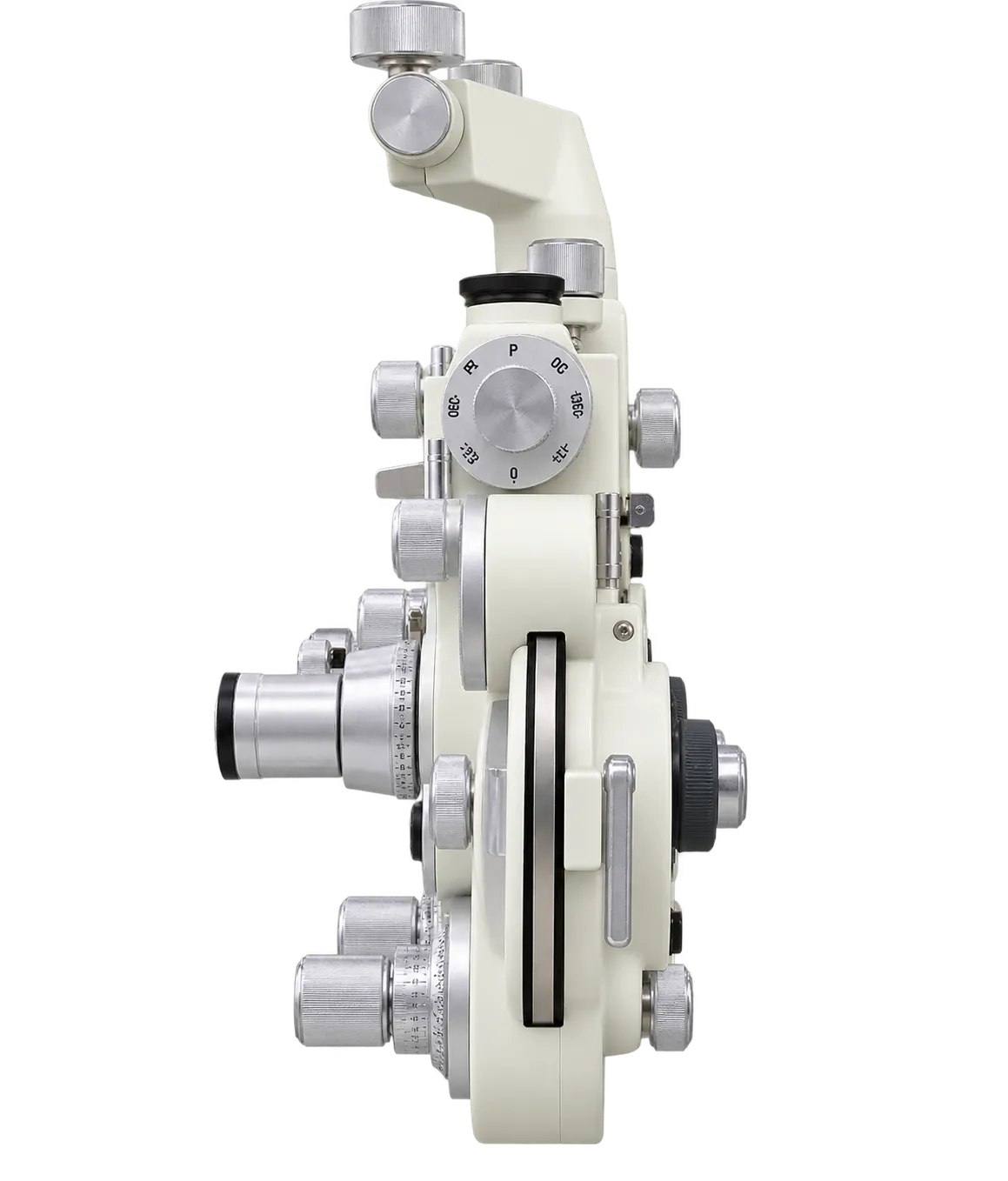
At 345mm by 295mm by 85mm and 4.5kg, the head is modest in both footprint and load. Smaller consulting rooms, converted premises and shared spaces frequently cannot accommodate the larger arrangements comfortably, and a lighter head also permits mounting on arms and units that would struggle with something heavier. Physical fit determines what is possible far more often than specification does.
Paediatric and Narrow Pupillary Testing
Pupillary adjustment reaching 48mm accommodates children and adults whose pupillary distance sits below what many refracting heads manage. Where the setting cannot be brought narrow enough the patient views through the lenses off centre, introducing unwanted prism and undermining the refraction, so the lower limit is genuinely useful for practices seeing younger patients regularly.
Binocular Assessment Within the Same Sitting
Rotary prisms covering 0 to 20 prism dioptres in single dioptre steps bring phoria measurement and binocular balance work into the same appointment as the refraction. The patient stays positioned throughout, which shortens the examination and keeps their attention available for the responses that subjective testing depends upon. Fewer transitions make the appointment easier on everyone involved.