
Progressive and High Power Dispensing
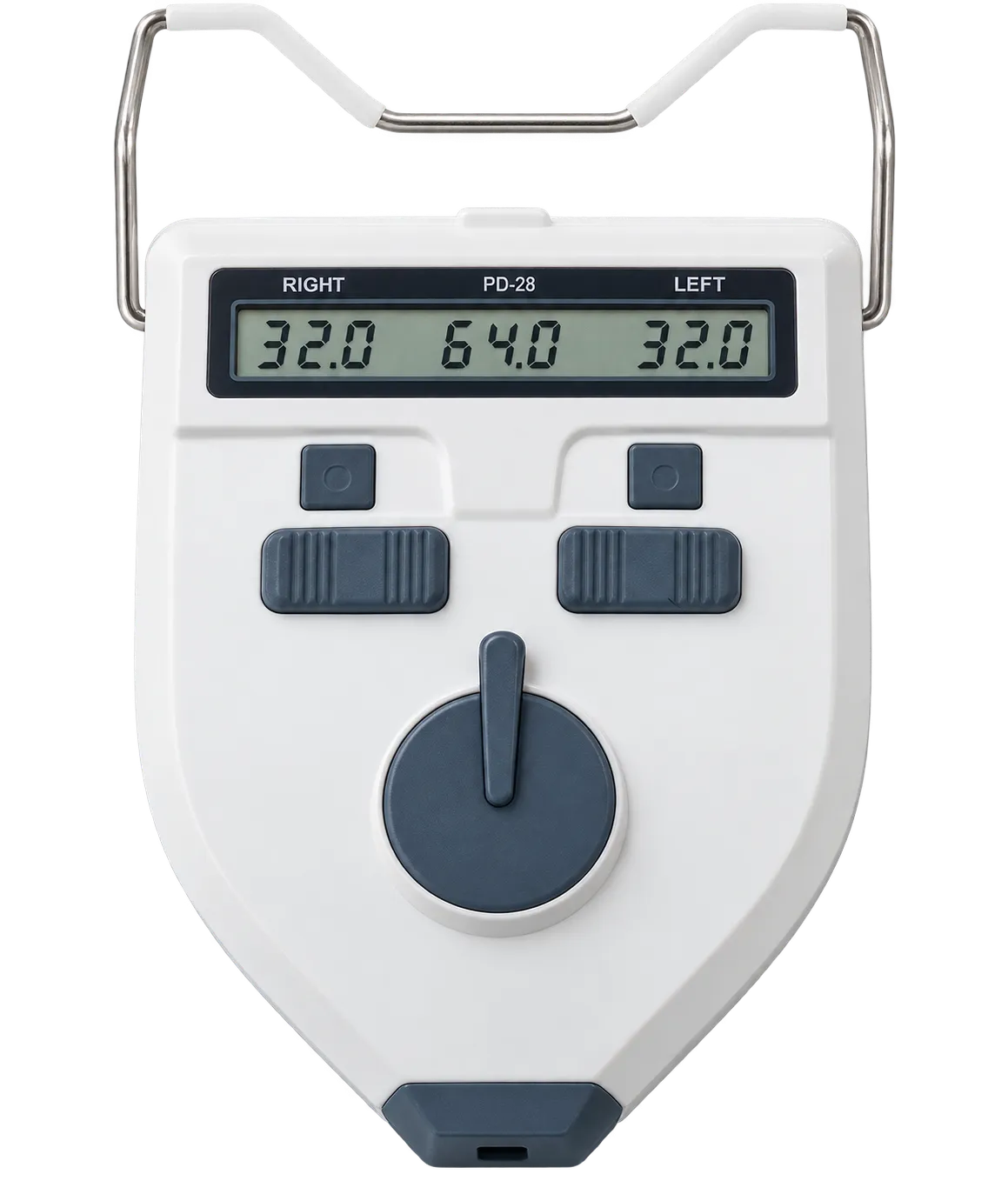
Monocular measurement across 22.5 to 41mm for each eye is what these lenses require. Monocular centration is rarely symmetrical, and halving a binocular total therefore places the optical centre wrongly on at least one eye. In a progressive lens the corridor is narrow enough that the wearer notices, and in a high power lens the prismatic effect of a displaced centre scales with the power, so both patient groups depend on the individual figures being measured rather than derived.
Reading and Near Correction Dispensing
Because the focusing point range extends from 30cm to infinity, near centration is measured rather than estimated from the distance figure. The eyes converge for close work, so near pupillary distance is genuinely smaller, and a reading correction centred on the distance value puts the optical centres outside where the patient looks through. Measuring both properly is straightforward on this instrument and worth the moment it takes.
Practices Wanting Defensible Records
Published measuring ranges and stated error figures mean a recorded centration value comes with a known tolerance. Where a patient queries a dispensing outcome, or where an internal review examines a remake, being able to say what the instrument's stated accuracy is puts the discussion on firmer ground than an unqualified number from an instrument whose specification says nothing about error.
Everyday Dispensing Throughout the Day
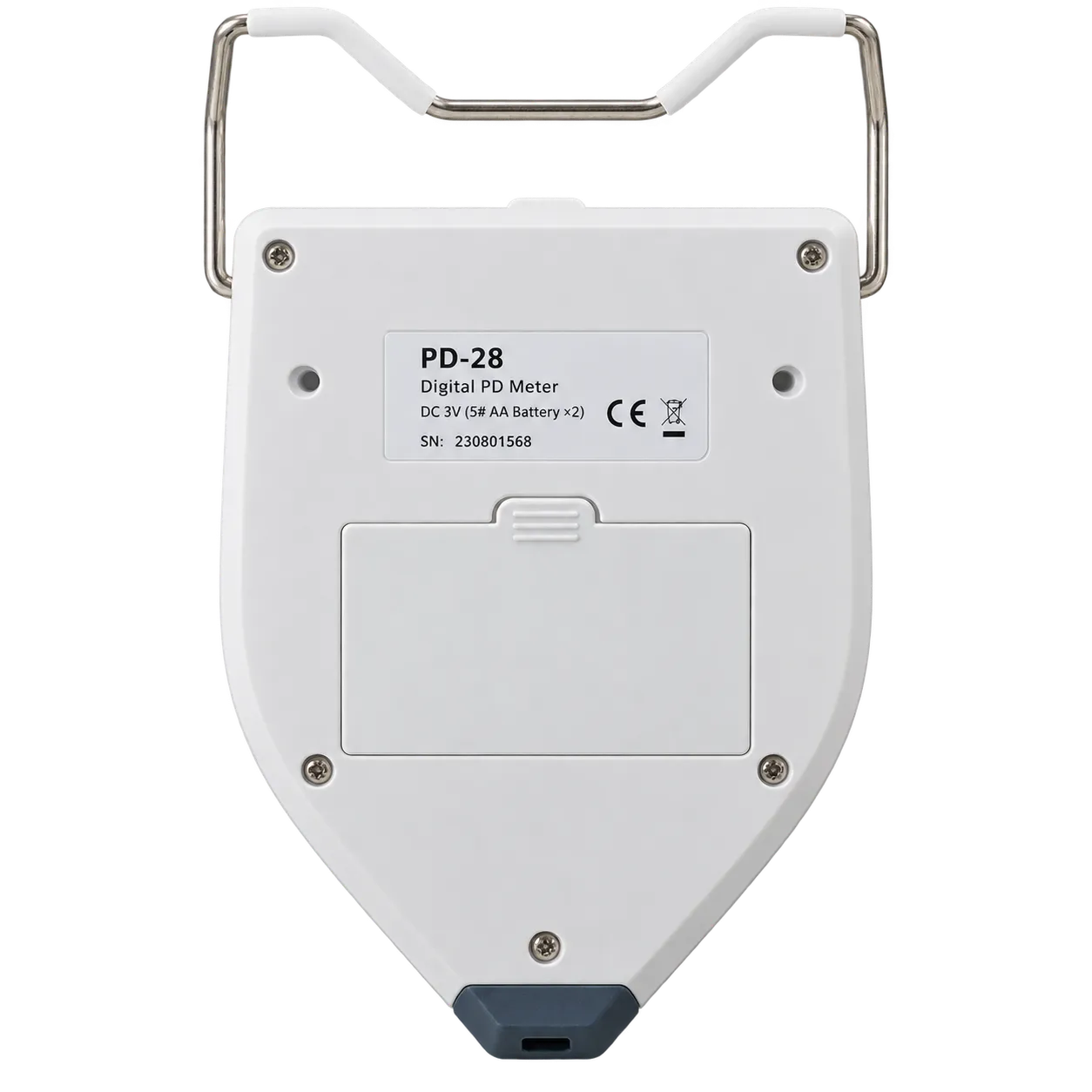
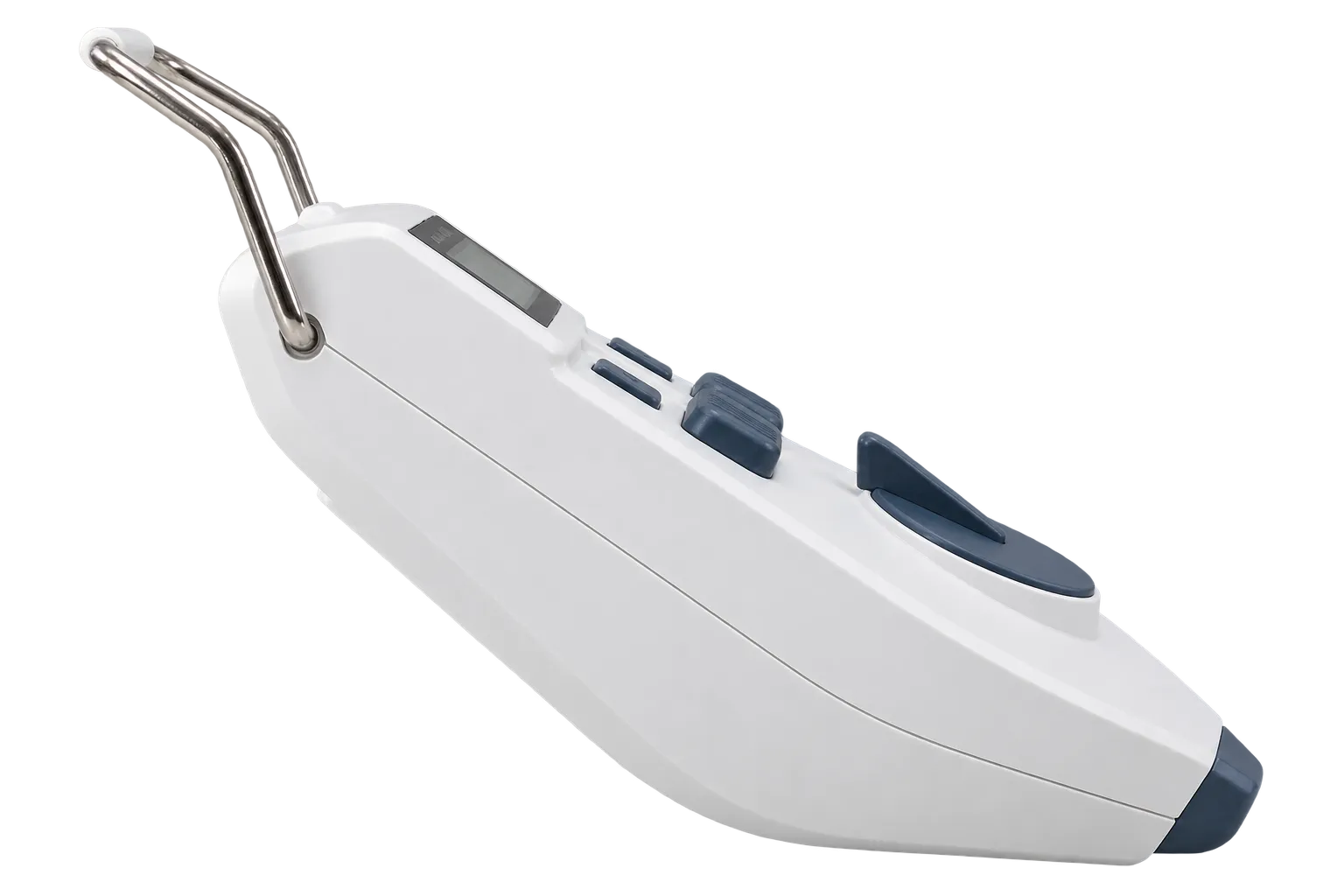
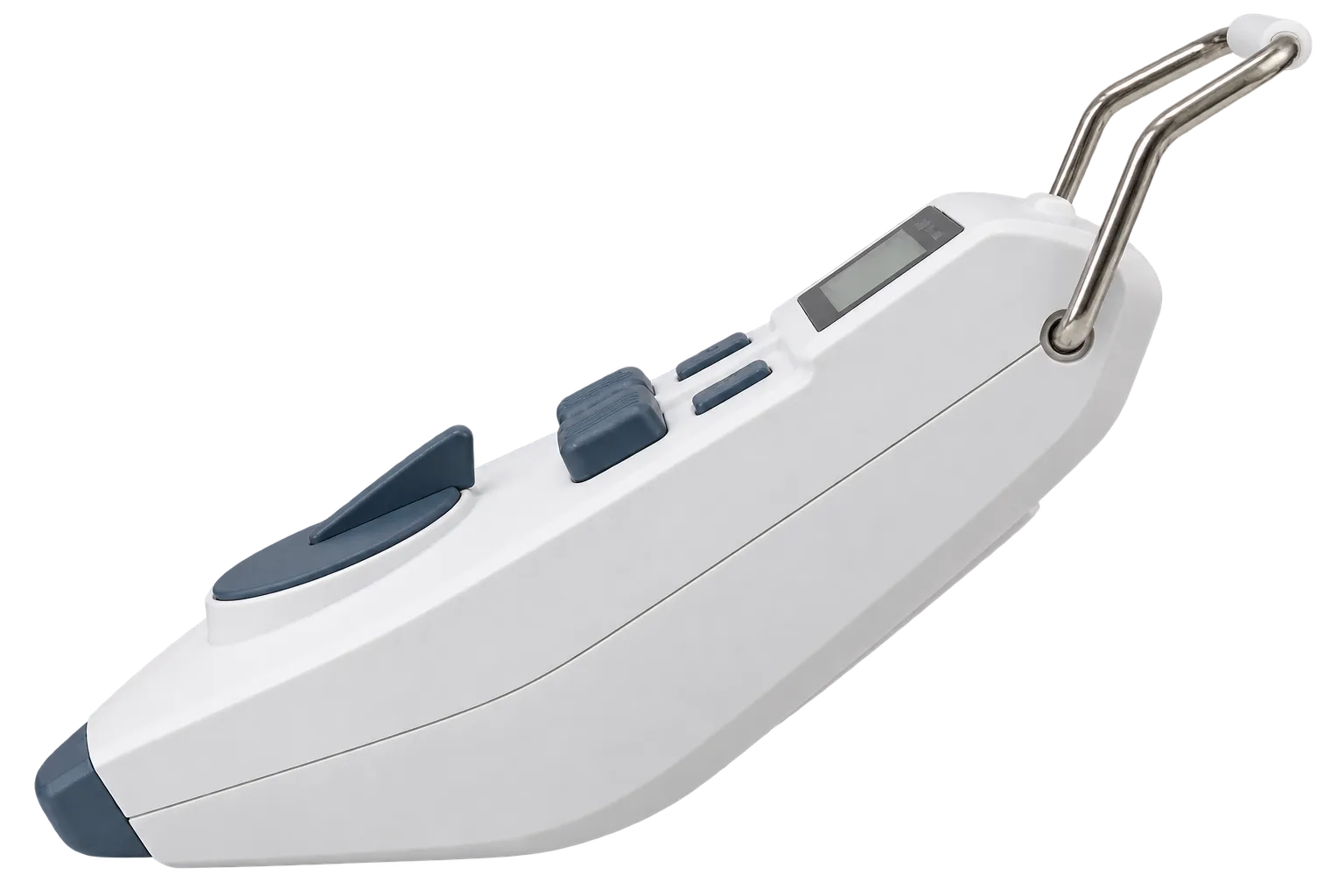
Two AA cells, automatic shut off and handheld operation make this a straightforward instrument to keep in constant use. It goes to the patient rather than the patient coming to it, the cells are replaceable in seconds from any stationery drawer, and nothing gets left running to flatten overnight.