
Everyday Acuity Testing
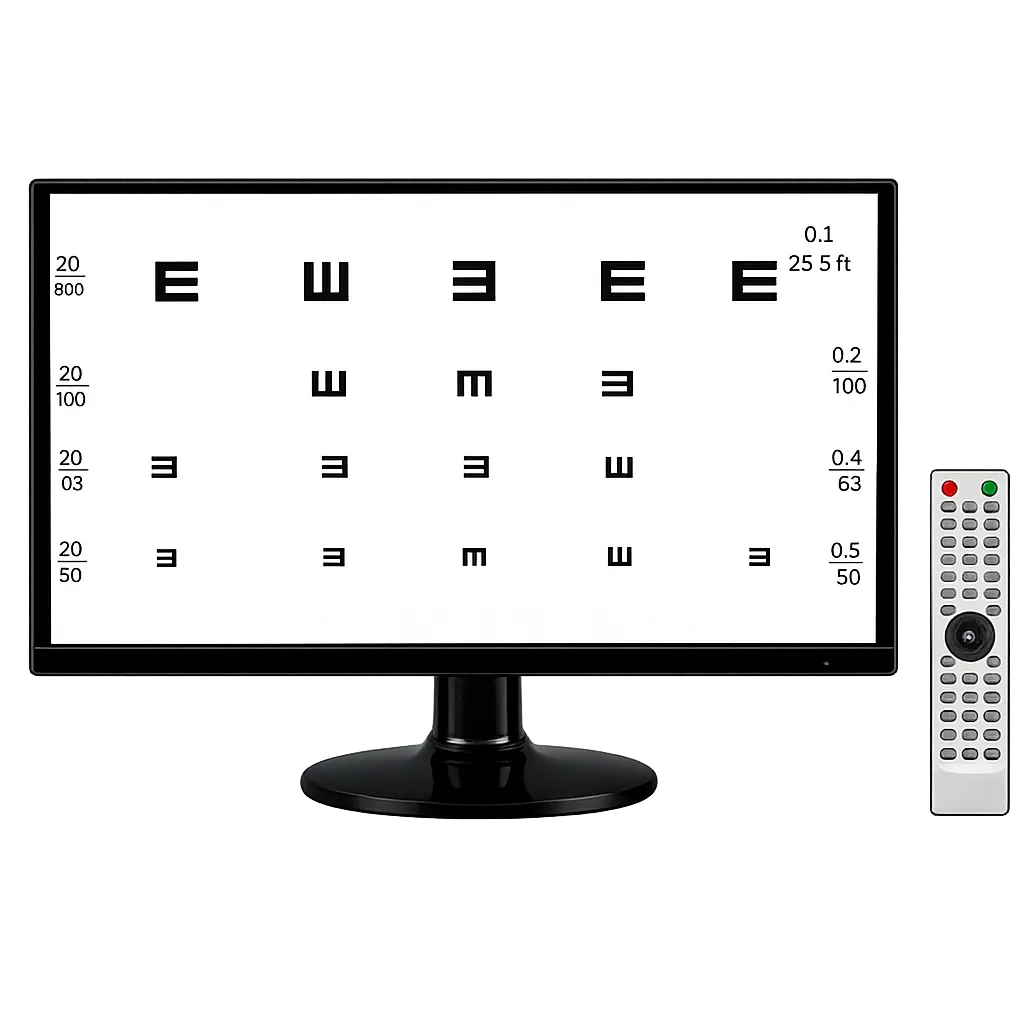
The core purpose is straightforward sight testing. E, C, letter, number and children's targets cover the patients an ordinary appointment book brings through, with two size notations and four display modes to present them. For a practice whose examinations are principally about acuity and refraction rather than extended binocular investigation, a display that does this thoroughly and without complication is often a better fit than one carrying functions that will rarely be used. Fewer unused functions also means fewer menus to work through.
Consulting Rooms of Awkward Proportions
Working distance settable from 1 metre in tenth metre gears, with target size following the configured distance, means the display can be set up properly in rooms that could not accommodate a longer sight line. Converted premises and smaller consulting rooms are common, and a screen that scales its optotypes to the actual distance produces correctly sized targets where a fixed assumption would not.
Rooms With Difficult or Changing Light
Backlight adjustment across 80 to 320 candela per square metre covers rooms from dim to brightly lit, including spaces with significant daylight that changes through the day. Because chart luminance affects the acuity figure measured, a display that can be matched to the prevailing conditions produces results that compare properly between morning and afternoon appointments.
Testing Children and Non-Readers
Children's targets and a special visual marker sit alongside the conventional letter and number charts. Patients who cannot read an alphabet chart, whether through age, language or literacy, are assessed on the same screen without printed cards being fetched and held up by hand, which keeps the examination consistent for everybody.