
Domiciliary and Outreach Verification
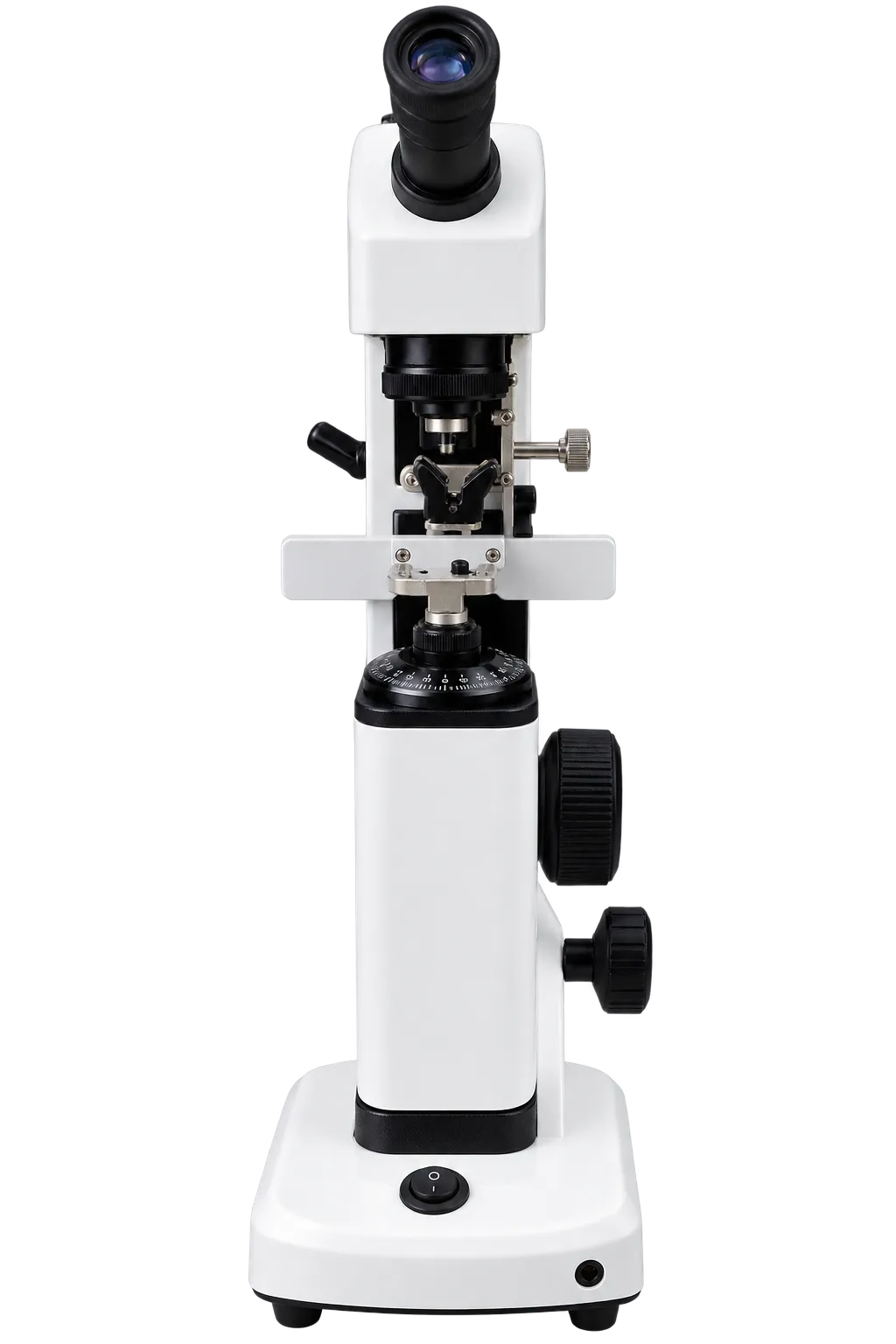
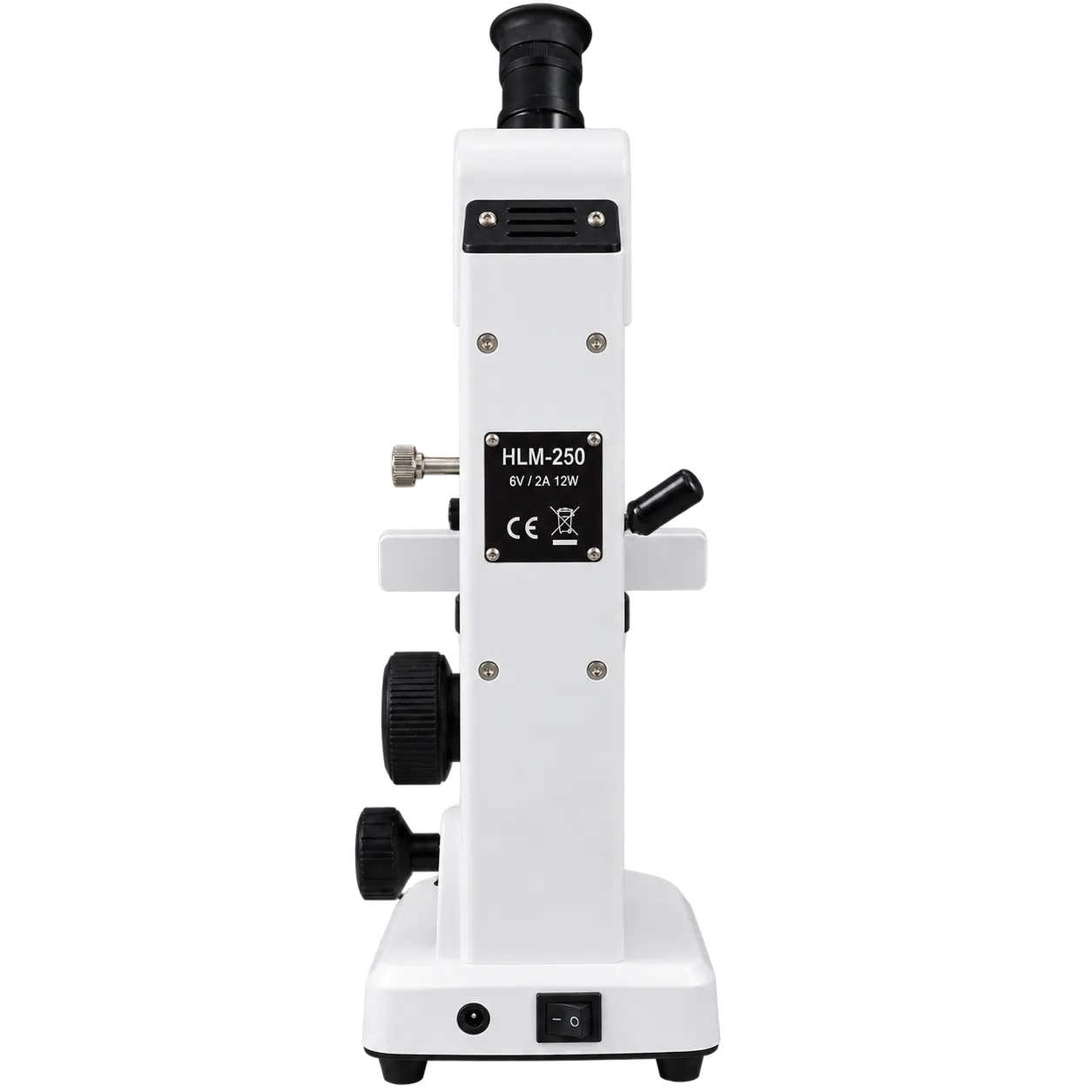
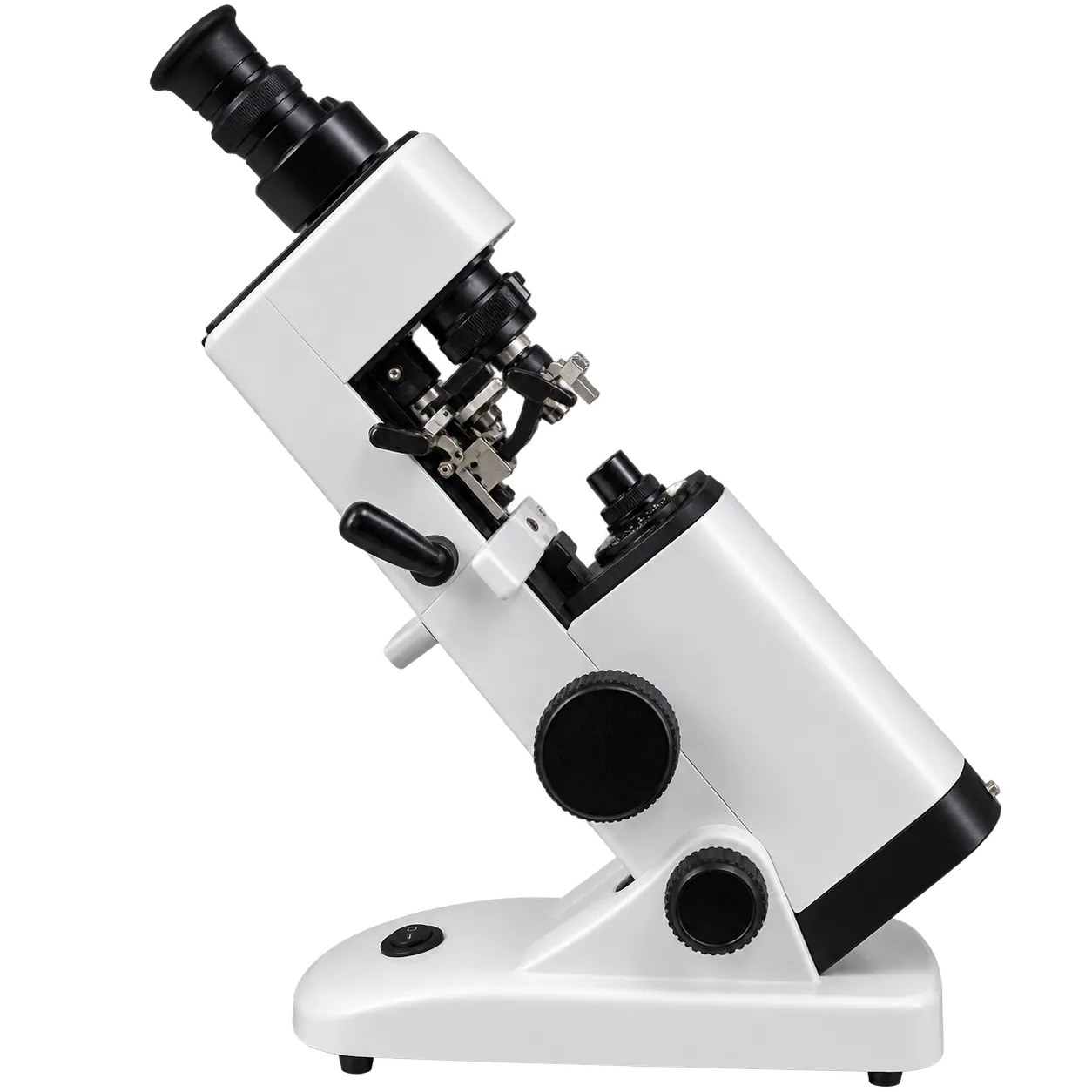
External battery support is the feature that matters here. Practices visiting care homes, housebound patients or community venues frequently find that a suitable mains outlet is either absent or already occupied, and an instrument that can run independently removes that obstacle entirely. Verification stops being something deferred until the return journey and becomes part of the visit itself, which is when a discrepancy is most useful to discover.
Prismatic Prescription Work
The strengthened version, fitted with a prism compensator, measures to 20 prism dioptres at single prism dioptre resolution, with basal angle across the full 0 to 180 degree sweep. That covers the substantial prism encountered when managing binocular vision anomalies. Practices doing little prism work may find the standard model's 5 prism dioptre range sufficient, which is why establishing the version at the outset matters.
Practices With Constrained Power Provision
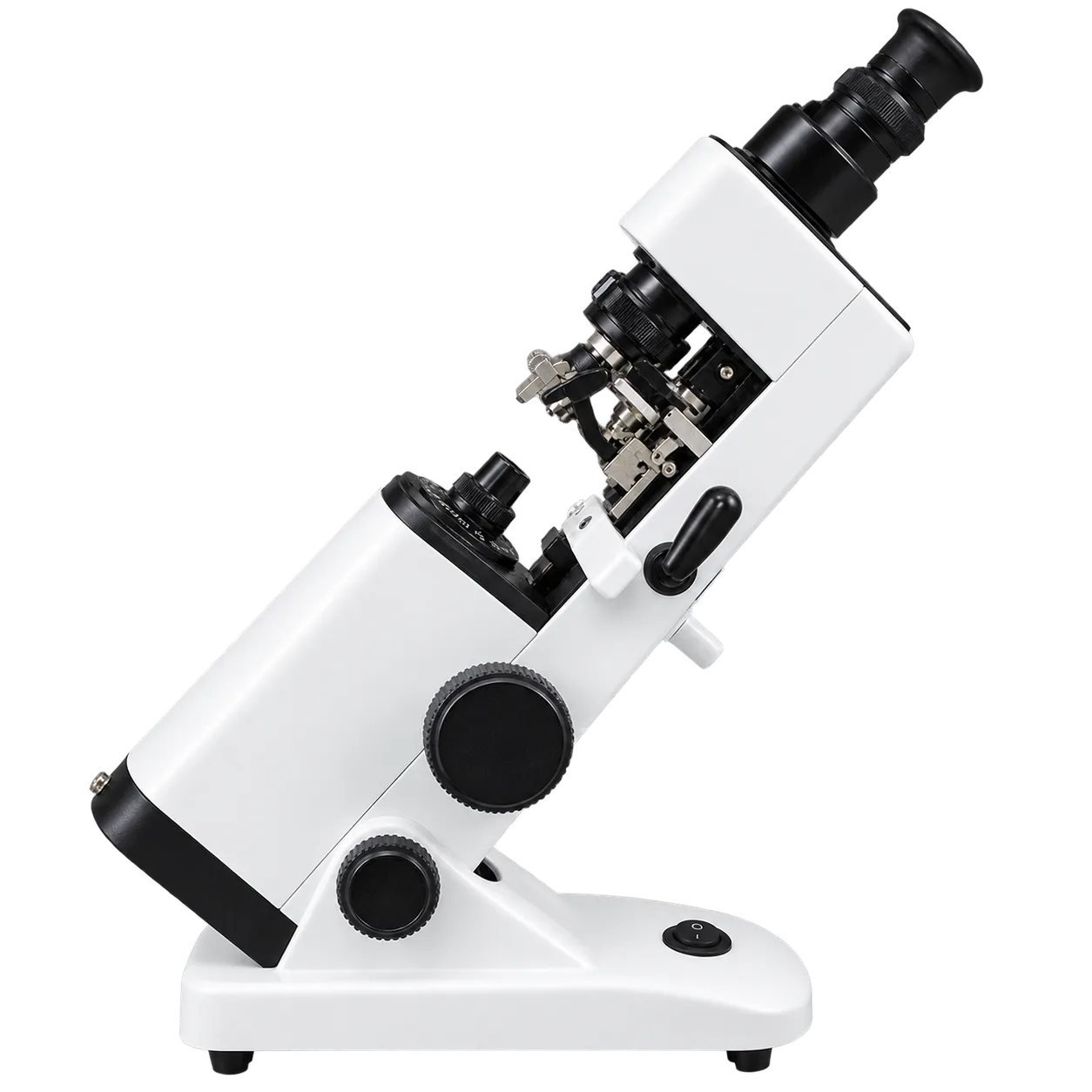
Older premises, converted buildings and shared consulting rooms often have fewer accessible power points than equipment requires. A low draw green LED illuminant and battery capability mean the instrument can be positioned by where the work is rather than by where an outlet happens to be. That flexibility is worth more in daily practice than it sounds when reading a specification sheet.
Teaching and Student Practice
An instrument where the student aligns the target and reads a graduated scale makes optical measurement visible as an act rather than an output. Power, axis and prism turn into quantities the student judges and writes down. Adjustable ocular visibility across ten dioptres lets a succession of students with differing eyesight each work at the same instrument without compromise.