
Prism Measurement Without Accessories
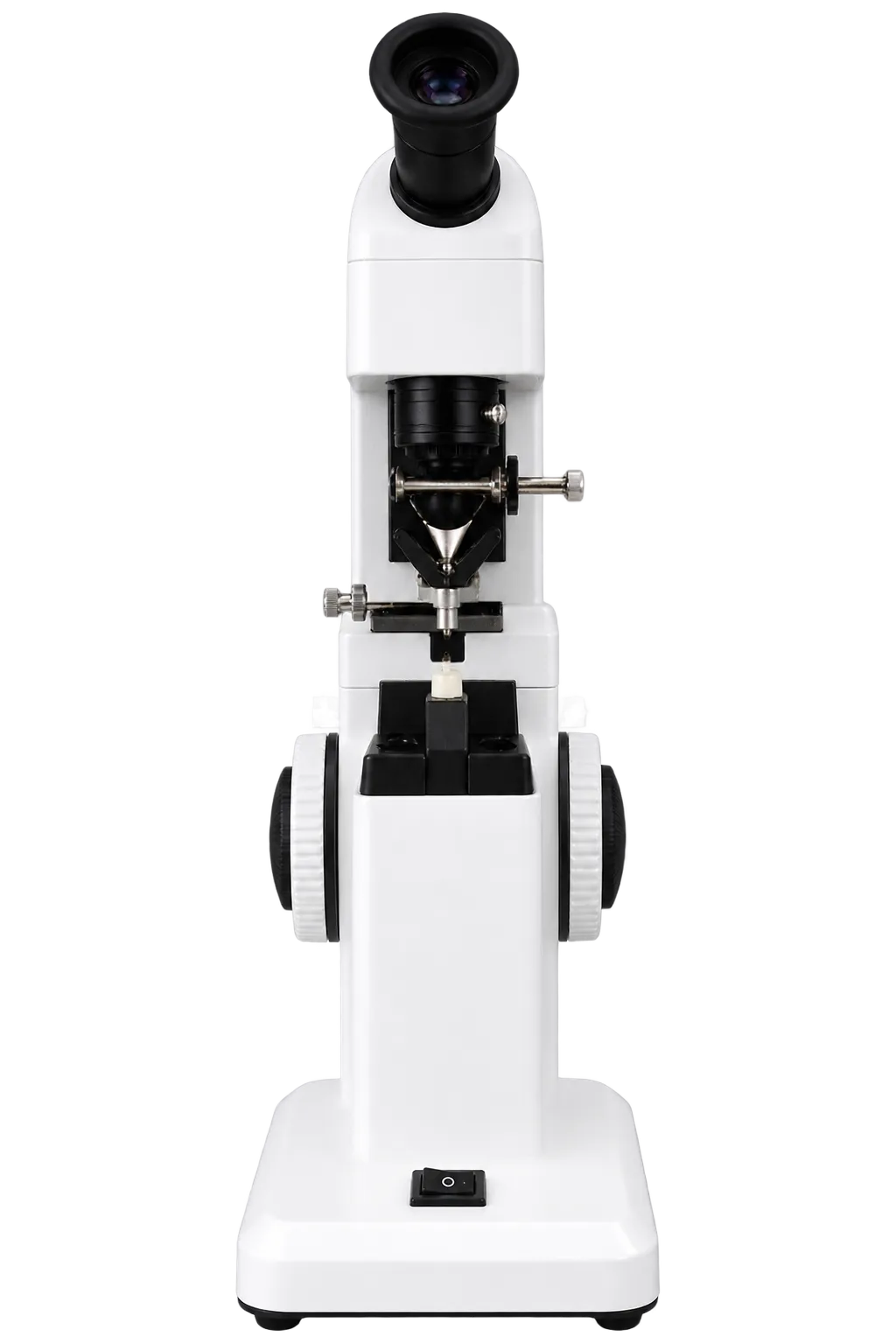
Direct measurement across 10 prism dioptres in single dioptre graduations covers a great deal of the prismatic work an optical practice sees. Because that range is available without fitting anything, the instrument handles prism prescriptions as ordinary work rather than as a case requiring preparation. For practices managing binocular vision anomalies, the absence of a setup step means prism gets verified as routinely as sphere and cylinder do, which is precisely when it is most reliably done.
Verification of Large Modern Lenses
A maximum measured diameter of 100mm accommodates the larger lens shapes now common, including generously sized frames and uncut blanks. Instruments with tighter diameter limits force awkward handling or leave certain work unverified. Combined with the wide field of vision, larger lenses are seated and read without the operator fighting the instrument to get a usable view of the target.
Teaching Optical Measurement Directly
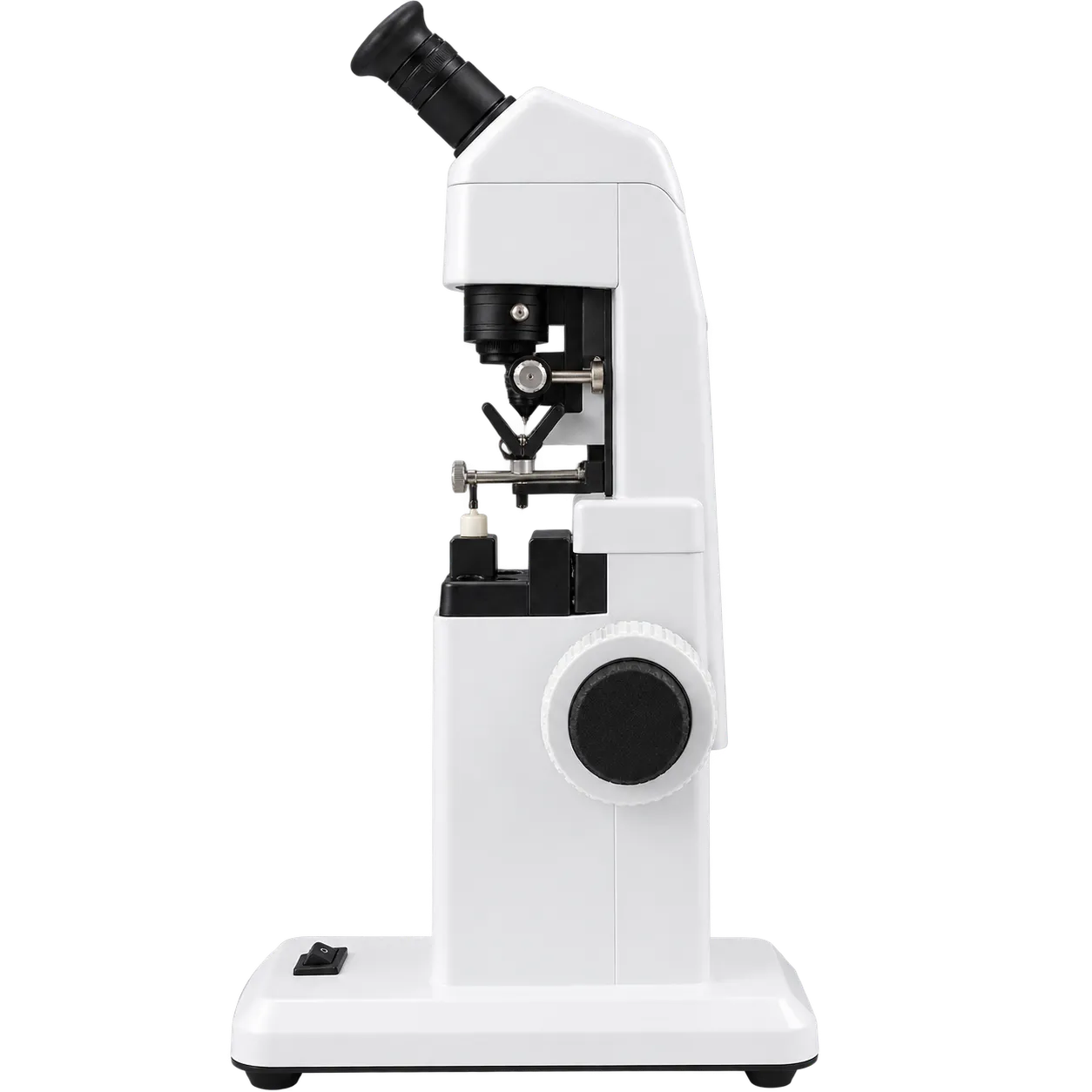
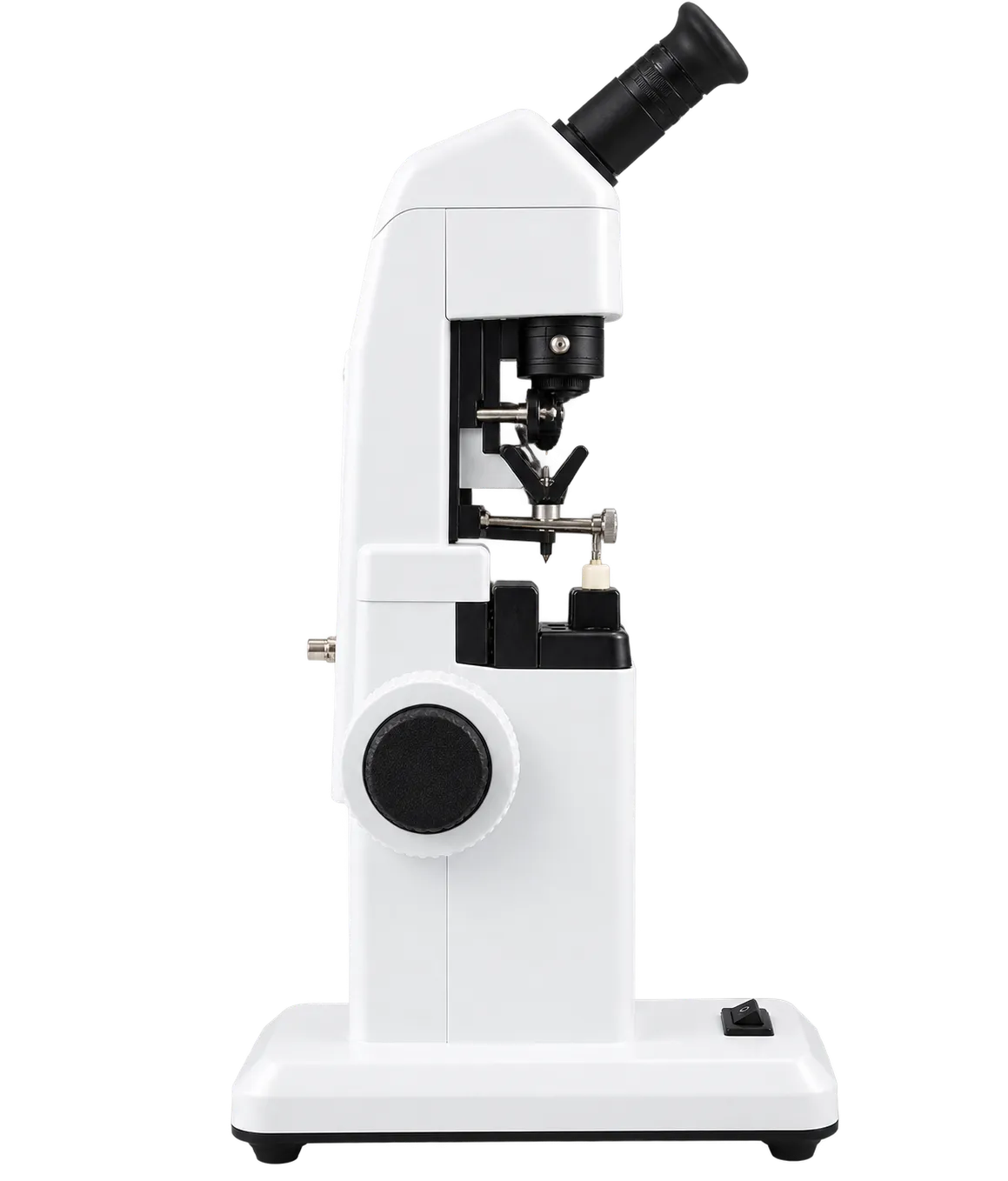
For training purposes an instrument where the student aligns the target and reads a graduated external scale makes the measurement itself visible. Sphere, cylinder, axis and prism become quantities observed and recorded rather than figures that simply appear. The adjustable eyepiece allows a succession of students with differing eyesight to work at the same instrument comfortably, which shared teaching equipment must accommodate.
Dependable Second-Position Checking
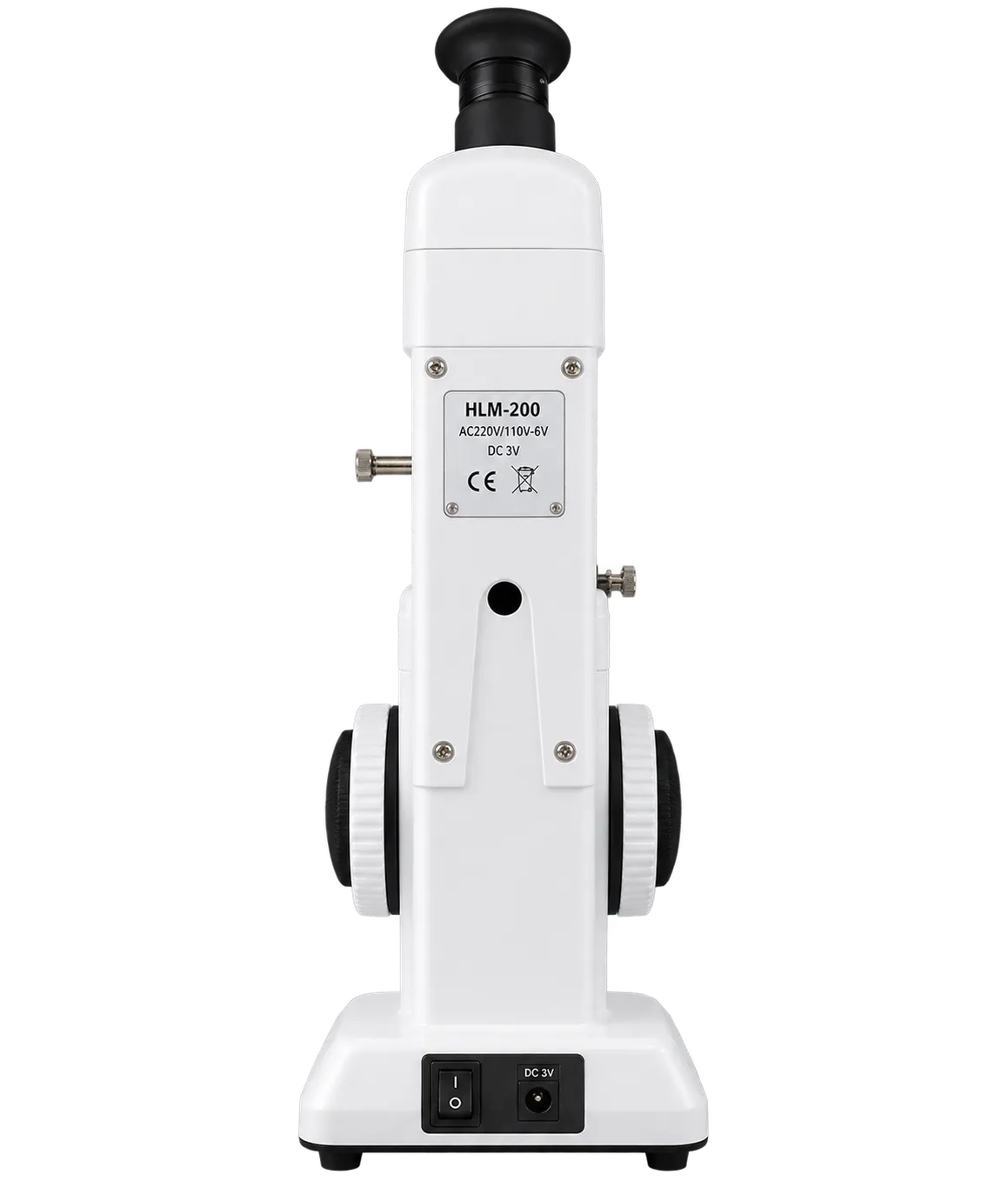
An optical instrument with no electronic interpretation provides verification capability that stays available and behaves predictably. Practices wanting a checking position that does not depend on a powered bench unit, or somewhere to verify work away from the main dispensary, are well served by an upright column instrument that needs little beyond a level surface and an operator who knows how to read it.