

Sustained Verification Sessions
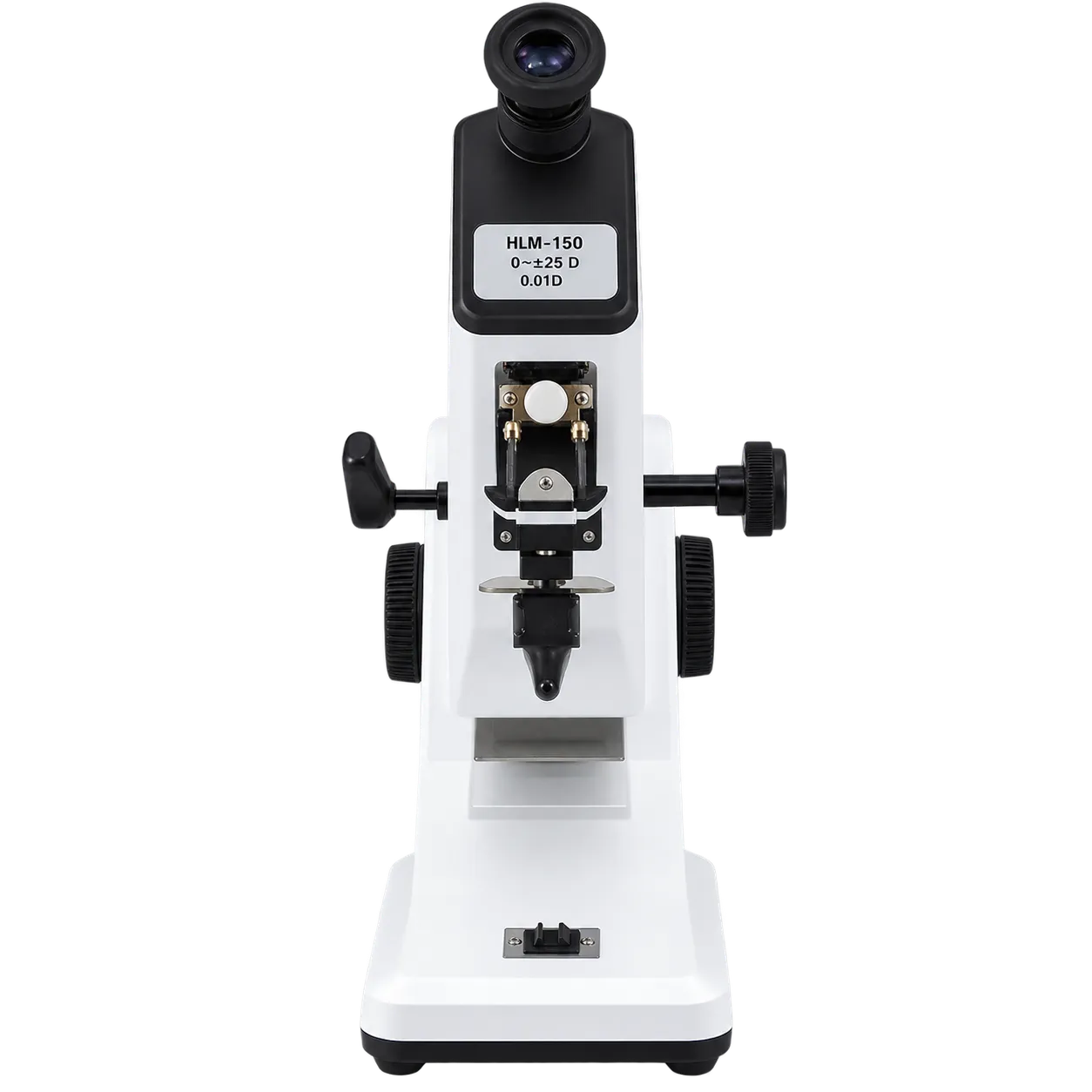
Where a run of finished work needs checking in sequence, the internal reading arrangement shows its value. Each measurement is a single continuous observation rather than a cycle of sighting, looking away to read a scale and returning to the eyepiece. Over a tray of lenses those interruptions accumulate into real time, and more importantly into the small lapses of attention where a figure gets attributed to the wrong lens or written down transposed.
Prism Measurement in Binocular Vision Work
Direct prismatic measurement to 5 prism dioptres, extending to 20 with the compensation device, covers the prescriptions encountered when managing binocular vision anomalies. Single dioptre graduations across the whole range, with base angle read over the full 0 to 180 degrees, mean both magnitude and orientation are recorded properly rather than approximated from an instrument working at the edge of its capability.
Teaching Optical Measurement
For training, an instrument where the student aligns the target and reads a graduated scale makes the measurement itself visible. Sphere, cylinder, axis and prism become quantities observed rather than numbers delivered. The adjustable eyepiece lets a succession of students with differing eyesight each work comfortably at the same instrument, which is precisely what a teaching setting requires of shared equipment.
Portable and Second-Position Use
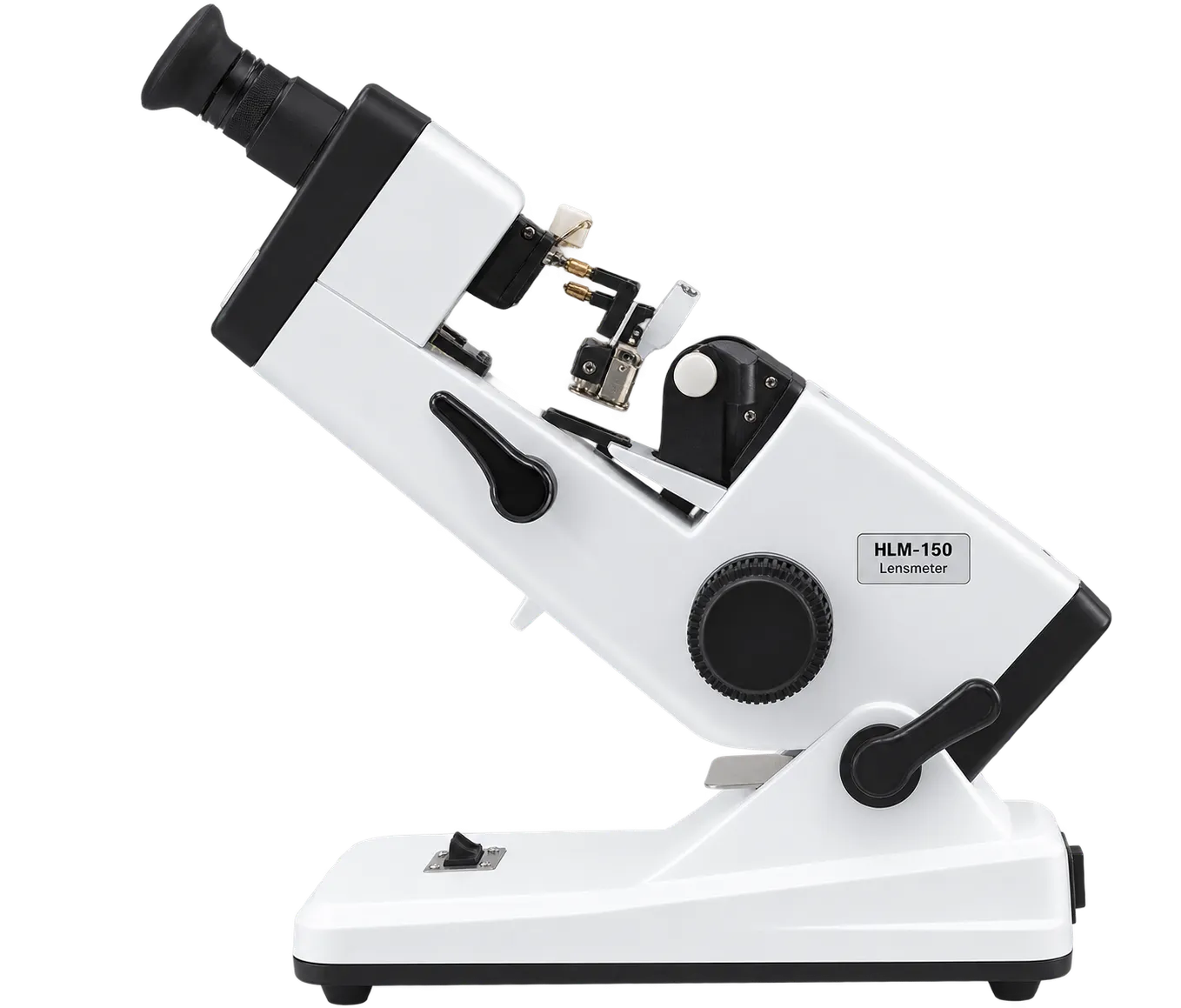
Four kilograms and a compact footprint make the instrument practical to move. Practices running more than one site, holding domiciliary sessions, or simply wanting verification capability at a second position can do so without dedicating permanent bench space. The instrument sets up wherever it is needed and packs away again when the session finishes.