
Paediatric and Preschool Vision Screening
Screening young children is the clearest use case. The instrument works from six months of age, captures in under a second and needs no darkened room, so it can be taken into nurseries, schools and paediatric clinics. Uncorrected refractive error in early childhood carries real consequences for visual development, and objective figures obtained quickly give a defensible basis for deciding which children warrant a full examination and which can safely be reviewed later.
Community, Domiciliary and Outreach Work
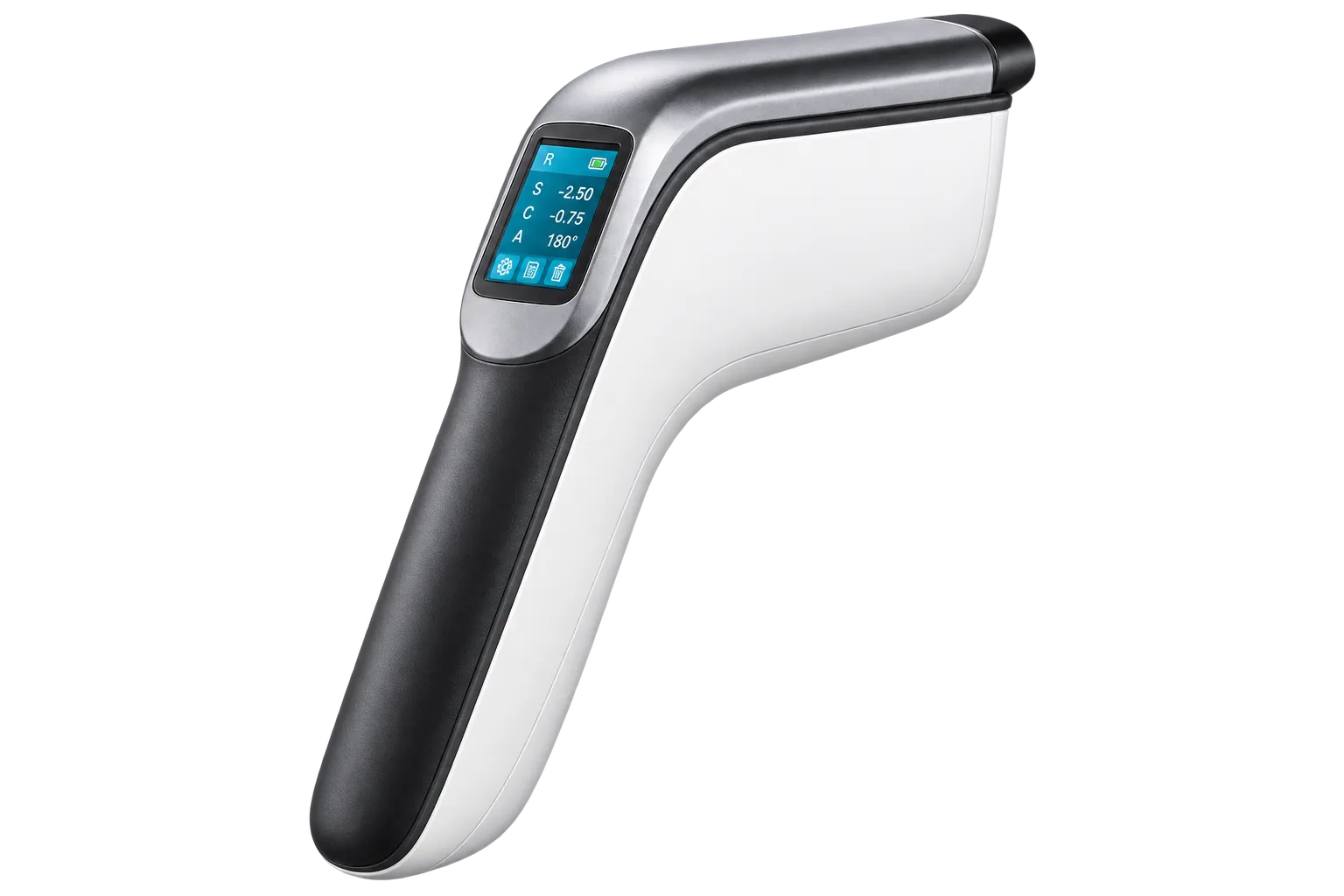
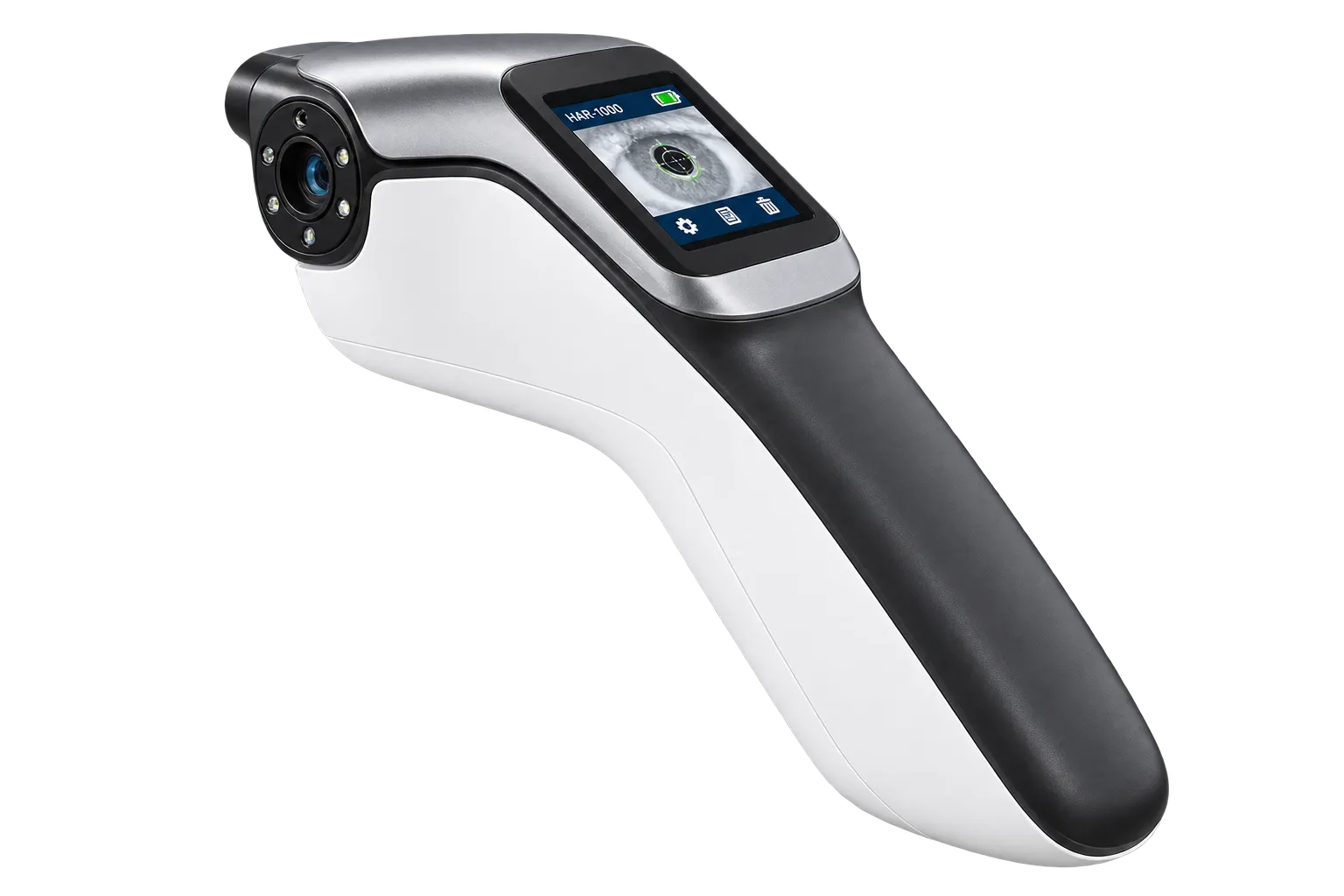
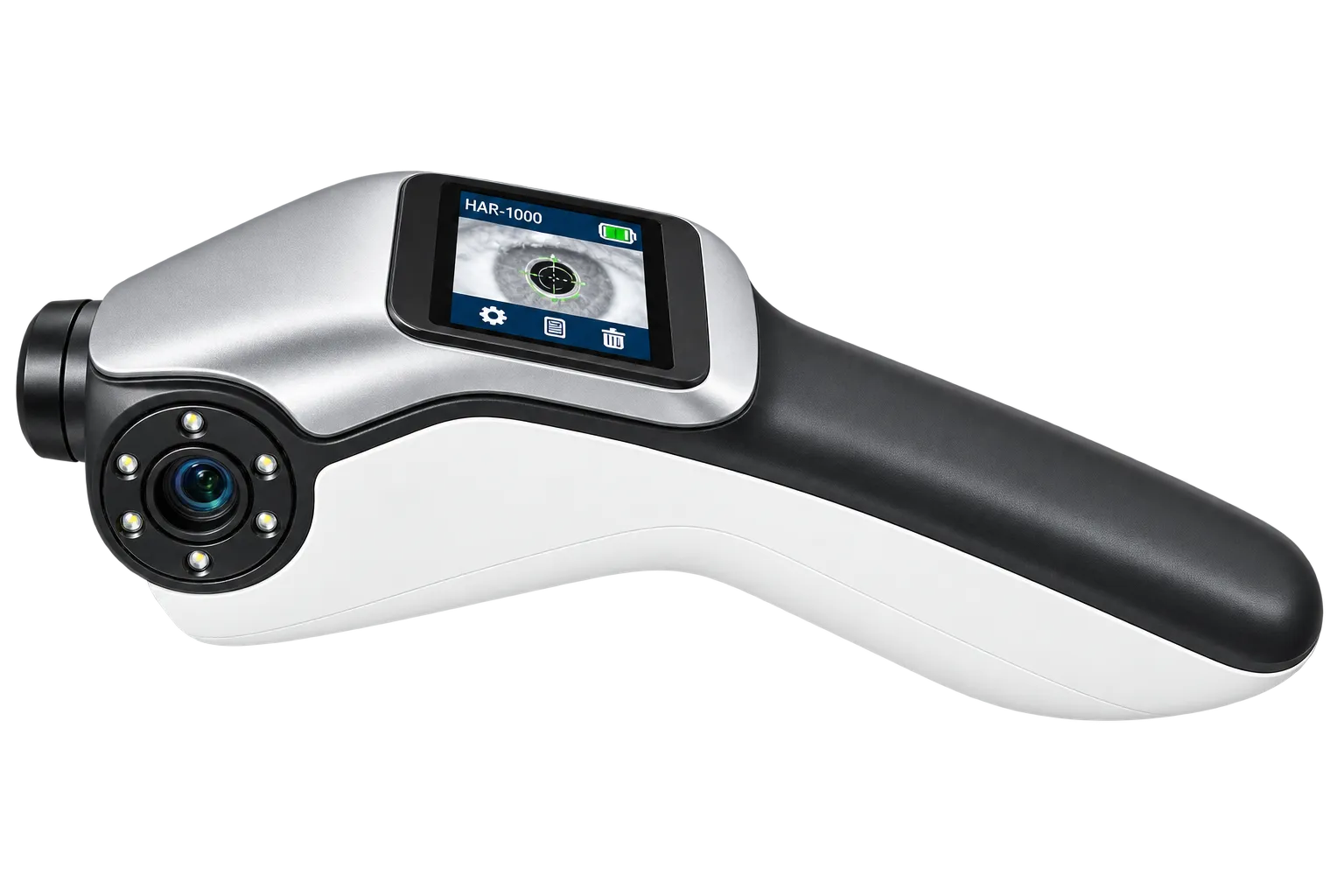
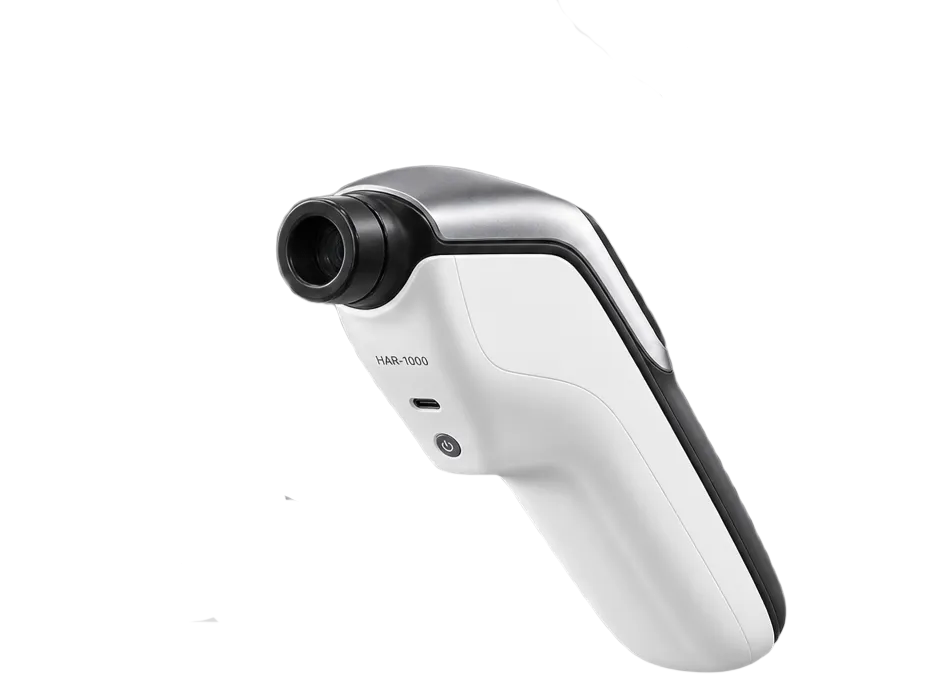
At 203mm by 110mm by 50mm the device travels easily to care homes, housebound patients and outreach sessions. Patients who cannot attend a practice, whether through frailty, limited mobility or distance, can still receive an objective refractive assessment in their own surroundings. Wireless transfer means the results reach practice records without a paper trail that has to be typed up afterwards.
Pre-Test Support in Optical Practice
Within a practice the instrument provides a quick objective starting point ahead of subjective refraction, particularly useful when a patient cannot manage a conventional seated arrangement. Wheelchair users, patients with reduced neck mobility and those with cognitive impairment can all be measured wherever they are comfortably positioned, rather than being asked to transfer to a fixed instrument.
Detecting Common Refractive Conditions
The measurement span covers the refractive conditions most often sought in screening, including myopia, hyperopia, astigmatism and anisometropia. Anisometropia deserves particular mention, since a meaningful difference between the two eyes can go unnoticed by the patient entirely while still affecting binocular development, and it shows up immediately when both eyes are measured in quick succession. Early identification is what gives any later treatment the best prospect of succeeding.