

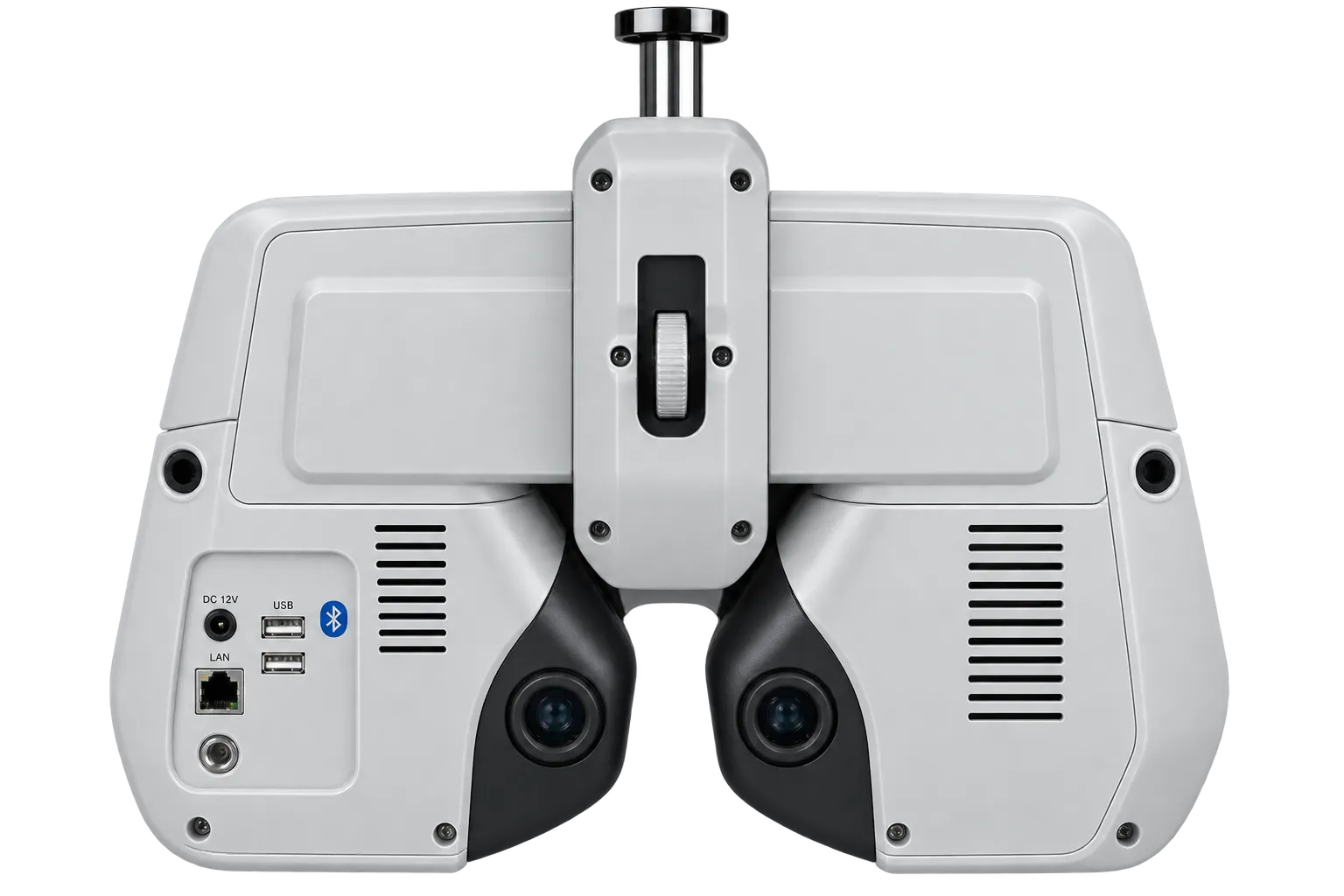
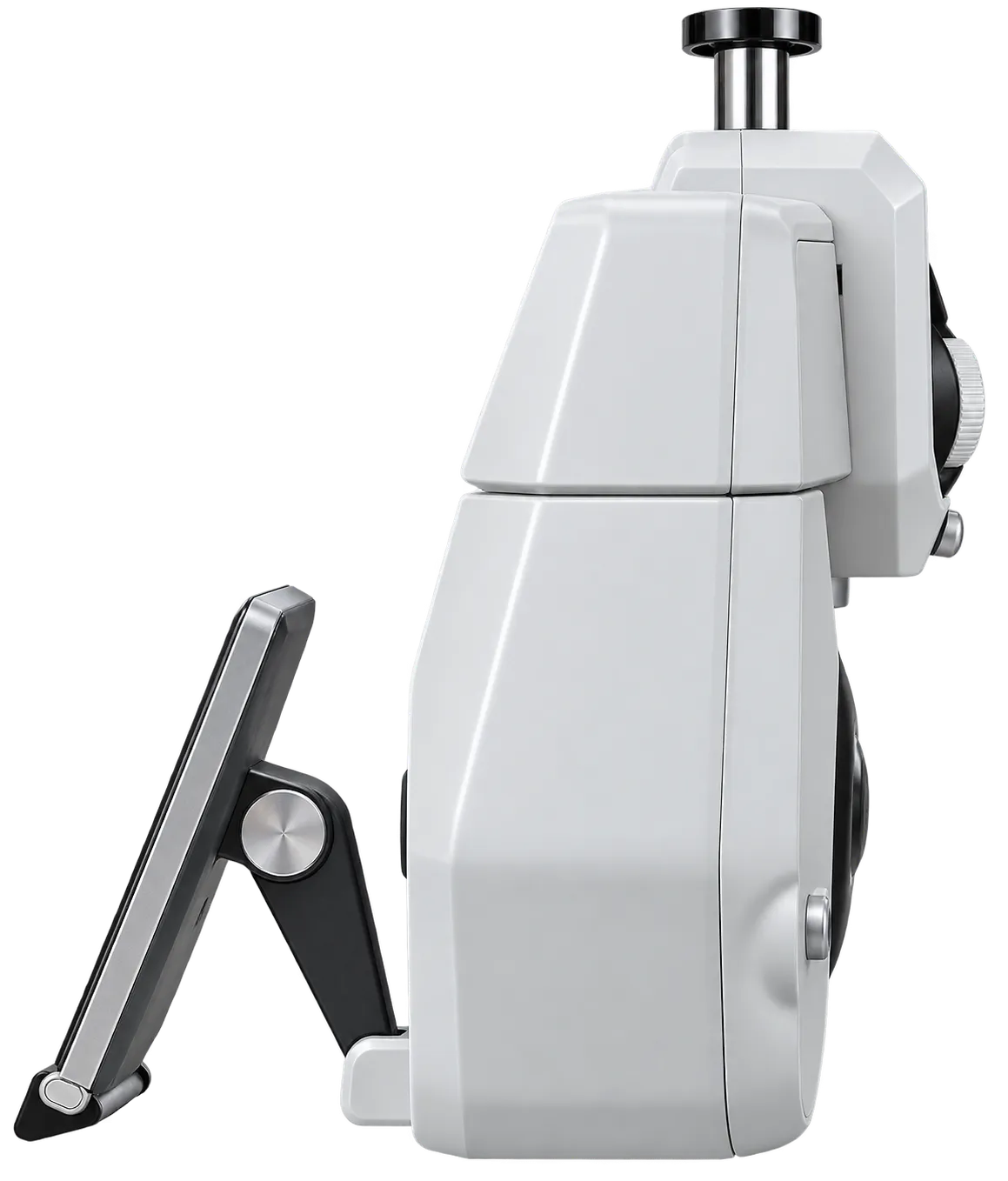
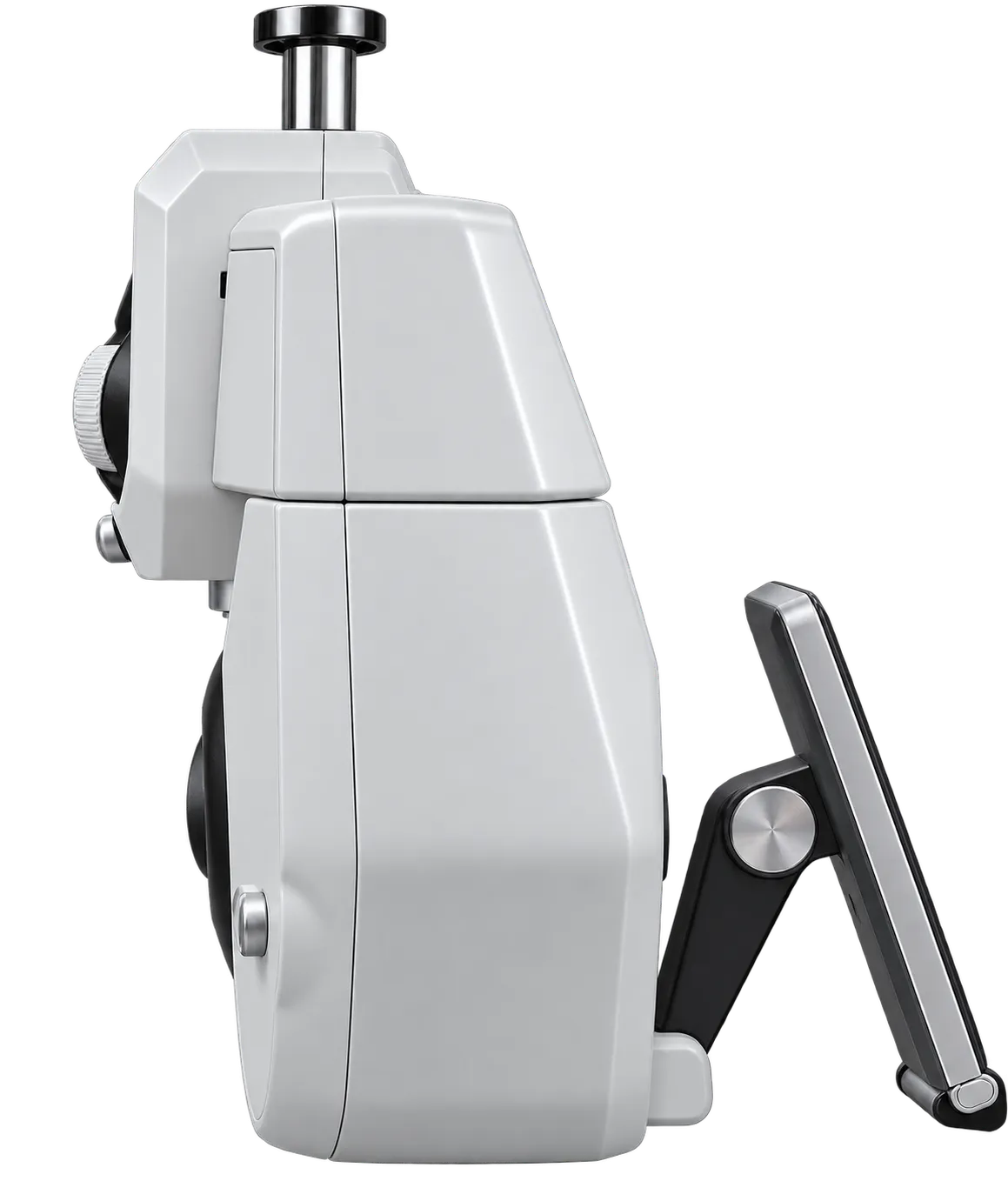
Connected Consulting Room Workflows
Bluetooth links to an autorefractor, chart projector and unit table mean the objective starting point reaches the refracting head without transcription. Manual re-entry of refractive figures is a persistent source of error in optical records, and a transposed digit at the start of a subjective refraction sends the whole examination off in the wrong direction. Removing the keyboard step between instruments removes that failure mode from the workflow entirely.
Extreme Prescription Refraction
Spherical coverage from minus 29.00 to plus 26.75D reaches well past what most refracting heads present. Aphakic patients, those with severe myopia and post-surgical cases with large residual error can all be refracted properly at the instrument. Working inside a single head keeps vertex geometry consistent throughout, which matters a great deal at powers where small positional differences alter the effective correction reaching the eye.
Rooms With Non-Standard Chart Distances
Working distance selectable from 35cm to 70cm in 5cm steps allows the refraction to be conducted at the geometry the room actually provides. Converted premises and smaller consulting rooms frequently cannot offer a textbook chart distance, and being able to set the instrument to the real distance is better than correcting for an assumption afterwards.
Near Vision and Visual Function Testing
Near vision test charts, visual function tests and various refraction charts are carried on the panel, with graphical representation guiding the sequence on screen. That breadth supports the parts of an examination that go beyond distance refraction, and having them on the same panel means the practitioner moves between them without changing equipment or repositioning the patient. Breadth on one panel keeps the appointment continuous.