

Shared-Bench Verification in Busy Glazing Rooms
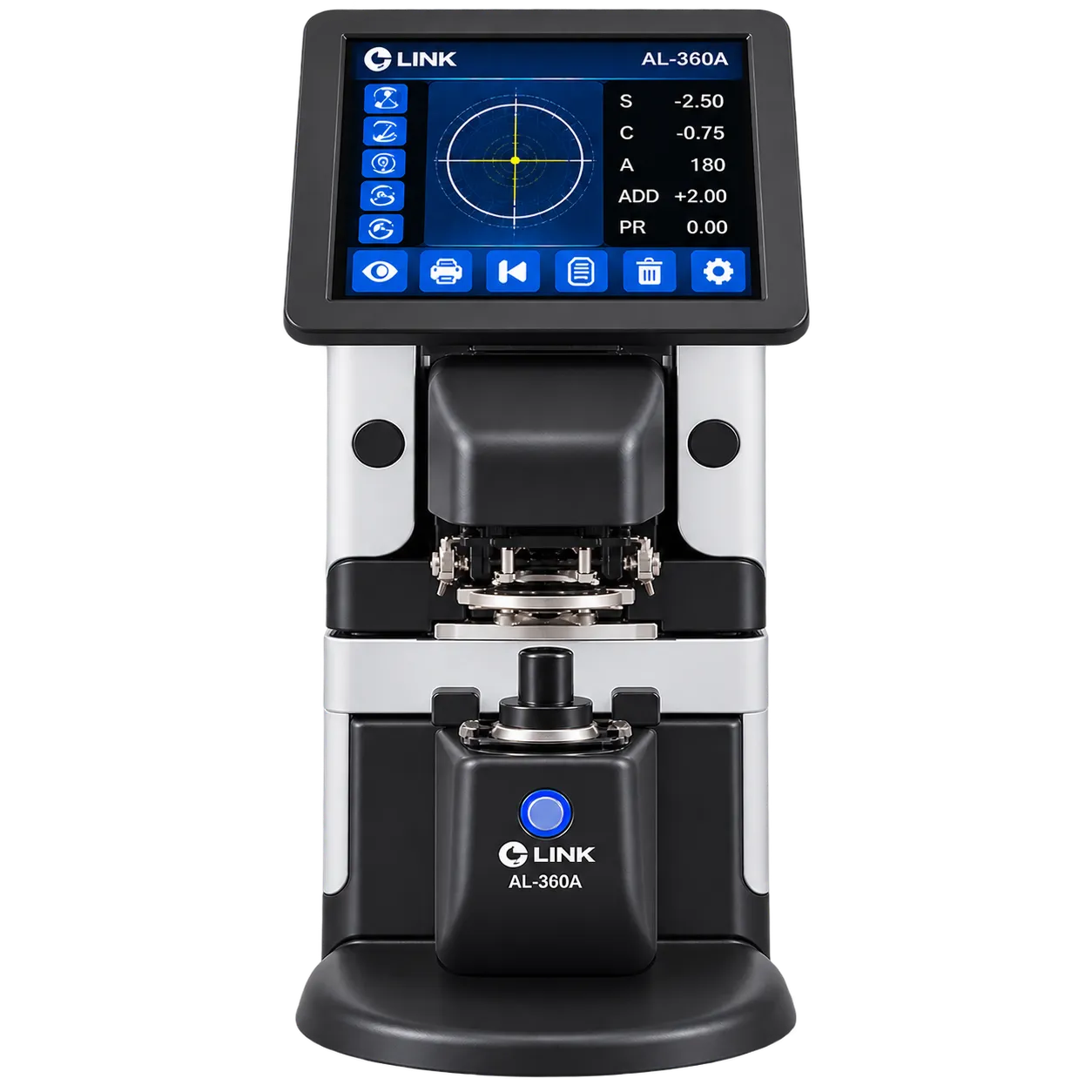
Where a glazing room runs with several people around one bench, the seven-inch display allows a result to be read by more than one person without repositioning the instrument. Verification often involves a second opinion, particularly on unusual prescriptions, and a screen that both parties can see removes the awkward step of reading figures aloud. Misheard numbers are a genuine source of recording error, and they disappear entirely when everyone simply looks at the same display together.
Progressive and Prismatic Prescription Checking
Automatic recognition of progressive designs, addition measurement to plus 9.99D and prism to 15 dioptres suit the more demanding end of dispensing work. Progressive and prismatic prescriptions are where visual inspection is least reliable, so objective figures carry the most weight. Being able to display prism in rectangular or polar notation means the reading can be compared directly against the prescribing record without anyone performing a conversion by hand.
Contact Lens Power Confirmation
Soft and hard contact lenses both fall within the measuring modes, so power can be verified directly instead of relying on packaging. For practices running a contact lens service alongside spectacle dispensing, having one bench instrument cover both keeps the checking routine uniform and avoids the expense and clutter of separate provision for a task performed several times a week.
Demonstrating Ultraviolet Performance to Patients
The built-in ultraviolet tester supports the questions that arise at the counter about tinted and protective eyewear. Showing a patient an actual transmission result is more persuasive than repeating a claim from a lens catalogue, and it gives staff something concrete to work with when a patient returns doubting that their eyewear is performing as described.