
Practices Dispensing Modern Lens Materials
High refractive index lenses have become ordinary rather than exceptional, and polarised lenses arrive routinely with prescription sunwear. Both can trouble measurement, and an instrument that identifies and handles them automatically keeps them inside the normal verification routine. The practical benefit is consistency: the same procedure applies whether the lens in the holder is a standard plastic single vision or a polarised high index progressive, and the operator does not need to know which before starting.
Progressive Lens Verification and Centration
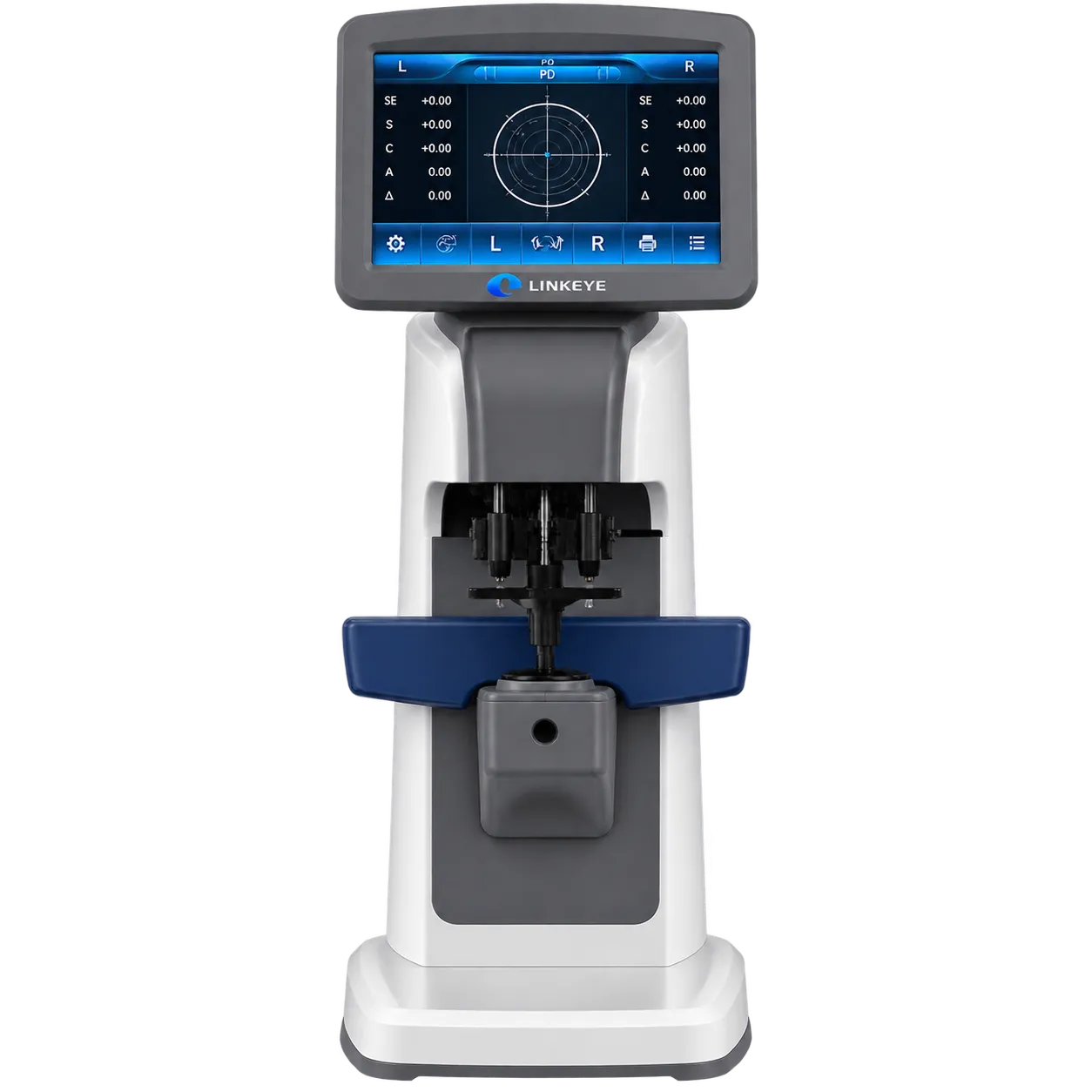
Progressive designs are determined quickly and automatically, and the on-screen electronic rangefinder covers the distance and height measurements that govern where the corridor sits relative to the eye. Having both on one instrument matters because a progressive complaint can originate either in the lens or in how it was centred. Being able to examine both without changing instruments makes that distinction quicker to reach and easier to explain to the patient.
Verification by Staff Without Specialist Training
Because the instrument identifies the lens itself and requires no Abbe setting, the number of decisions asked of the operator is small. Practices that delegate verification to support staff benefit most, since fewer decisions mean fewer opportunities for an inconsistent result. Touch operation on a high definition display keeps the interaction direct, which shortens the time before a new member of staff can be trusted with the task unsupervised.
Everyday Spectacle and Contact Lens Checking
Sphere to plus or minus 25D, cylinder and addition to plus or minus 10D and axis across the full range cover ordinary dispensing comfortably, with soft and hard contact lenses included in the measuring modes. Cylinder in plus, mixed or minus mode and prism in Cartesian or polar form mean output matches whatever convention the practice already records against, without anyone converting figures by hand.