
Progressive Lens Fitting Assessment
Progressive channel length and pupil height are the measurements that determine whether a progressive lens works for the wearer once it is glazed and fitted. A lens can be optically perfect against the prescription and still fail in wear if the corridor sits wrong relative to the pupil. Measuring these figures on the same instrument that verifies power means a non-adapting patient can be investigated properly, with the fitting geometry examined rather than assumed correct because the prescription checks out.
Routine Verification With Dispensing Data Attached
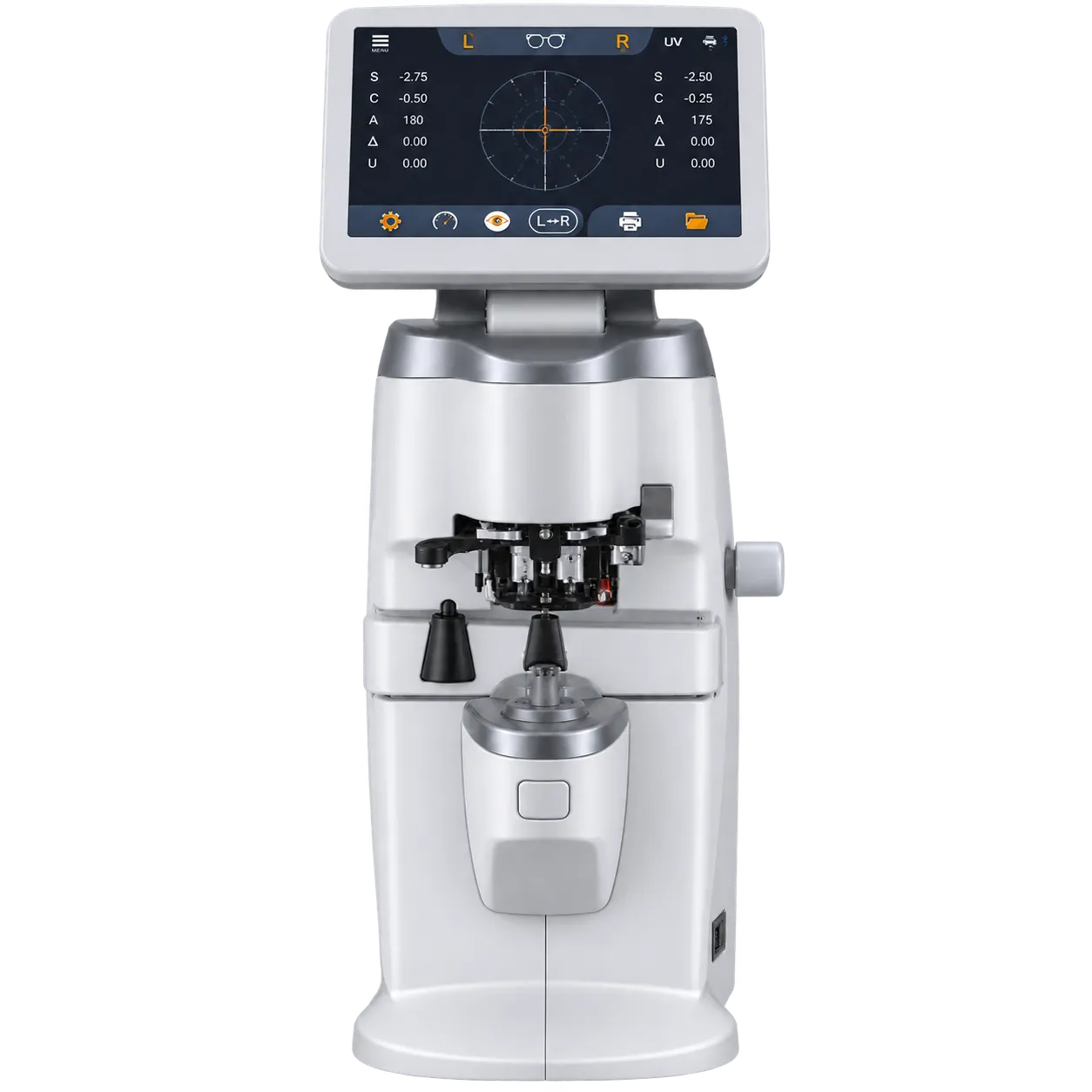
For everyday verification the instrument reads sphere, cylinder, axis, addition and prism in a tenth of a second, with automatic recognition of lens type. Because pupillary distance is captured at the same time in half-millimetre steps, the record produced covers both what was made and how it was centred. That combination is considerably more useful at a later date than a power reading on its own when a query arises about a particular pair.
Practices Running Electronic Records
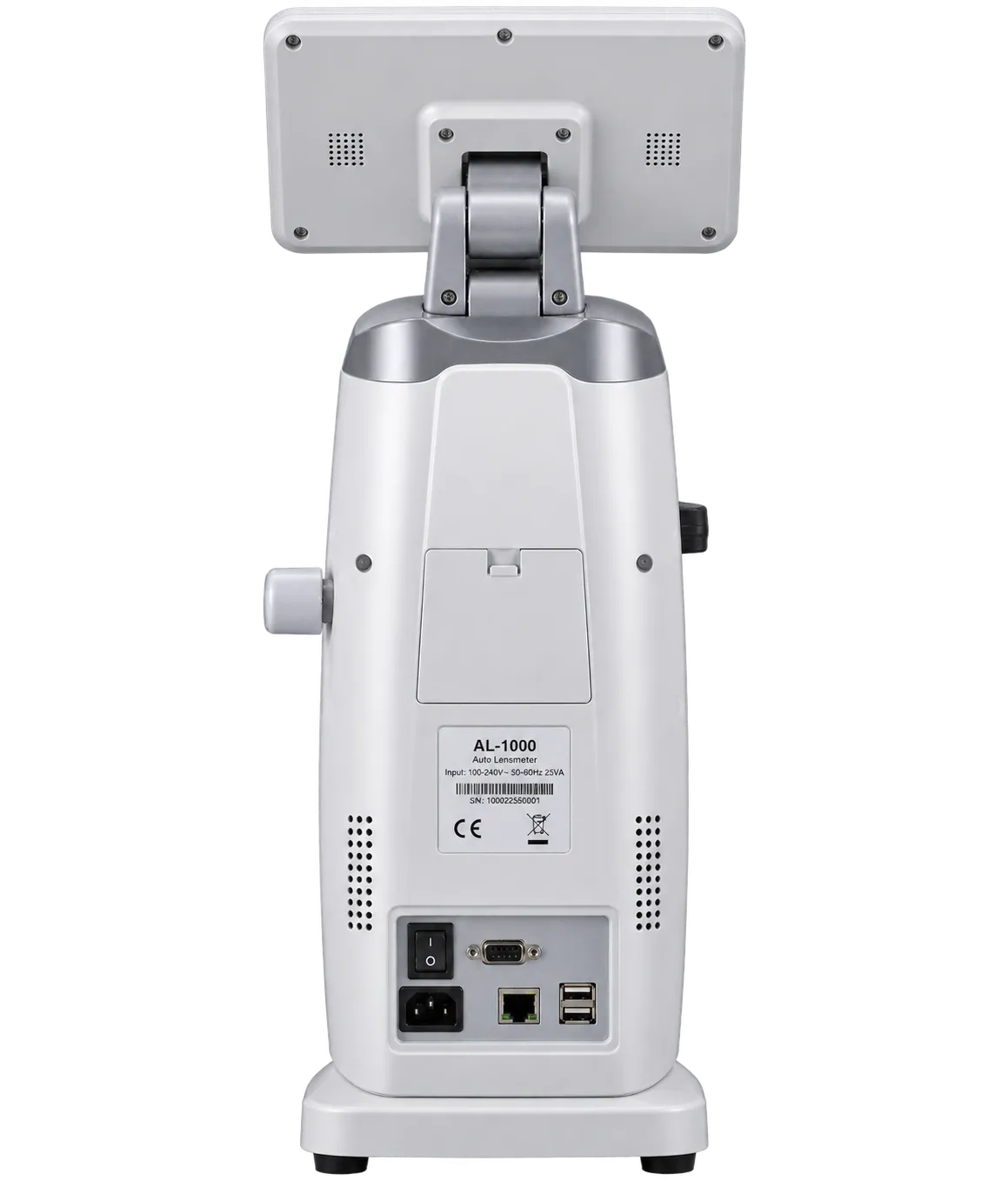
Four communication routes, covering Bluetooth, serial, USB and wireless networking, mean the instrument fits alongside practice management software without anyone retyping figures. Manual transcription is a persistent source of error in optical records, and eliminating the keyboard step between measurement and record removes it entirely. Practices with older serial-based systems are accommodated as readily as those running modern wireless setups.
Rimless, Small and Specialist Lens Work
Lens diameter down to 12mm brings work within scope that larger holders struggle with, including rimless mounts, small uncut blanks and contact lenses. Combined with soft and hard contact lens measurement and ultraviolet and green wavelength examination, the instrument handles the varied and awkward items a busy dispensary accumulates rather than restricting itself to conventional glazed spectacles.