
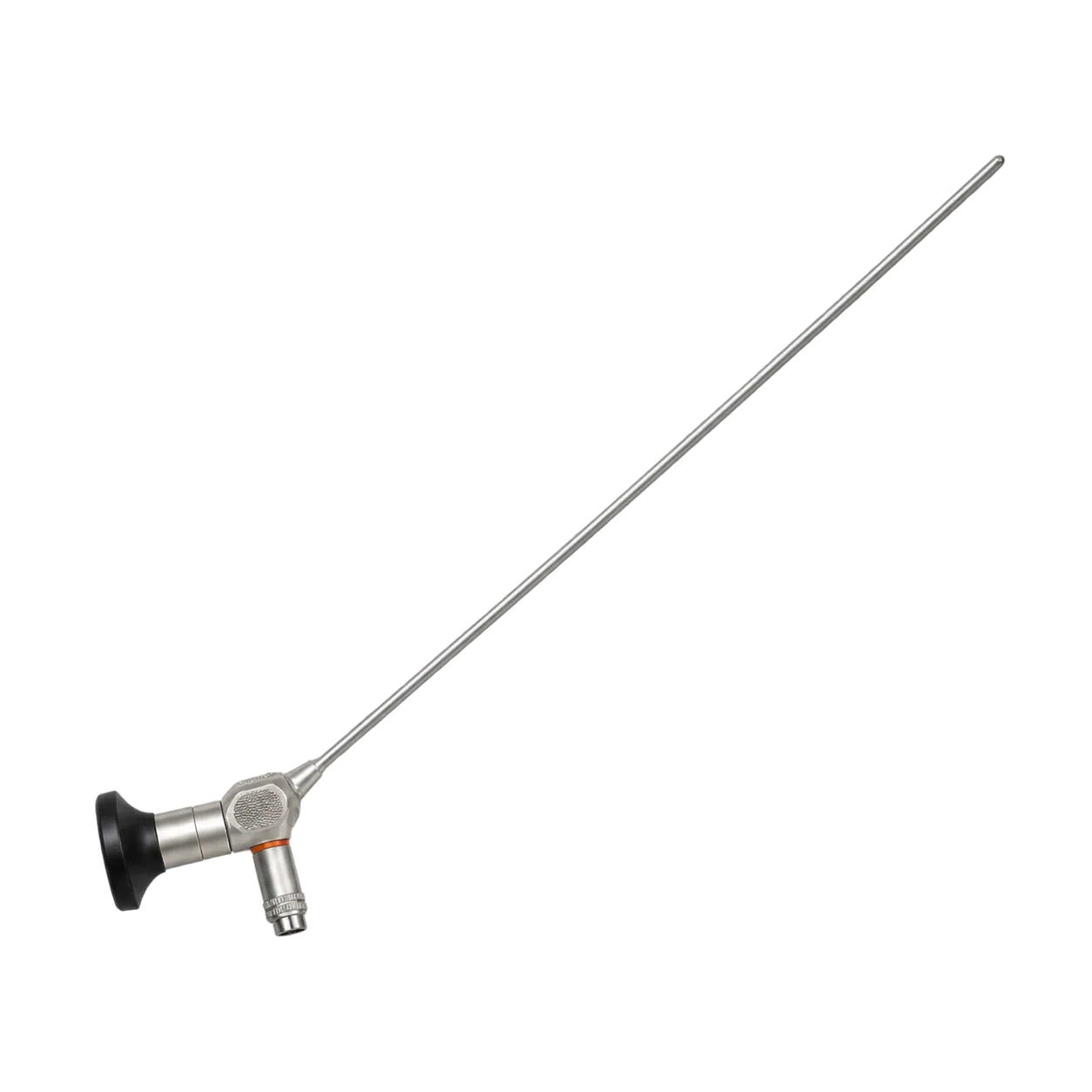
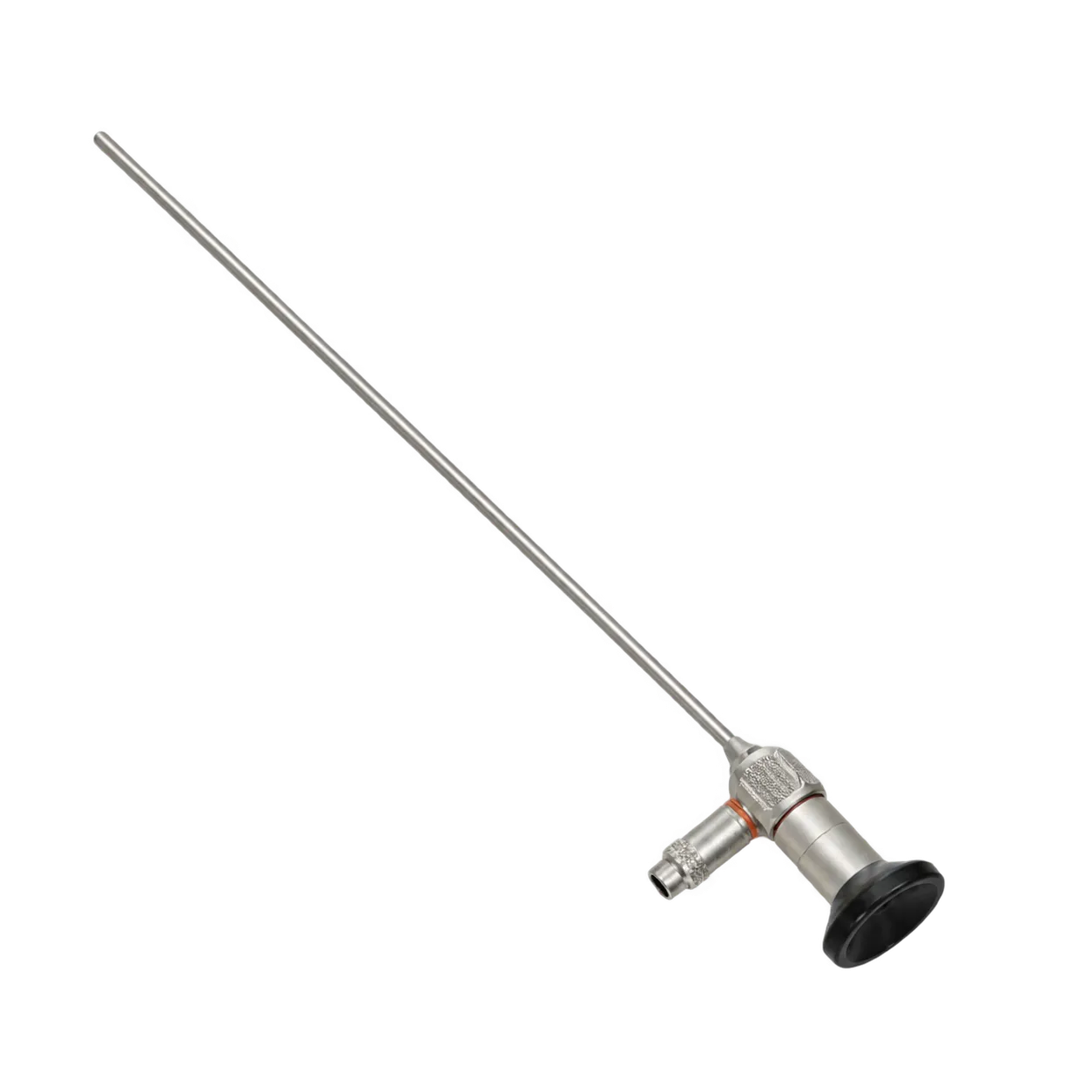
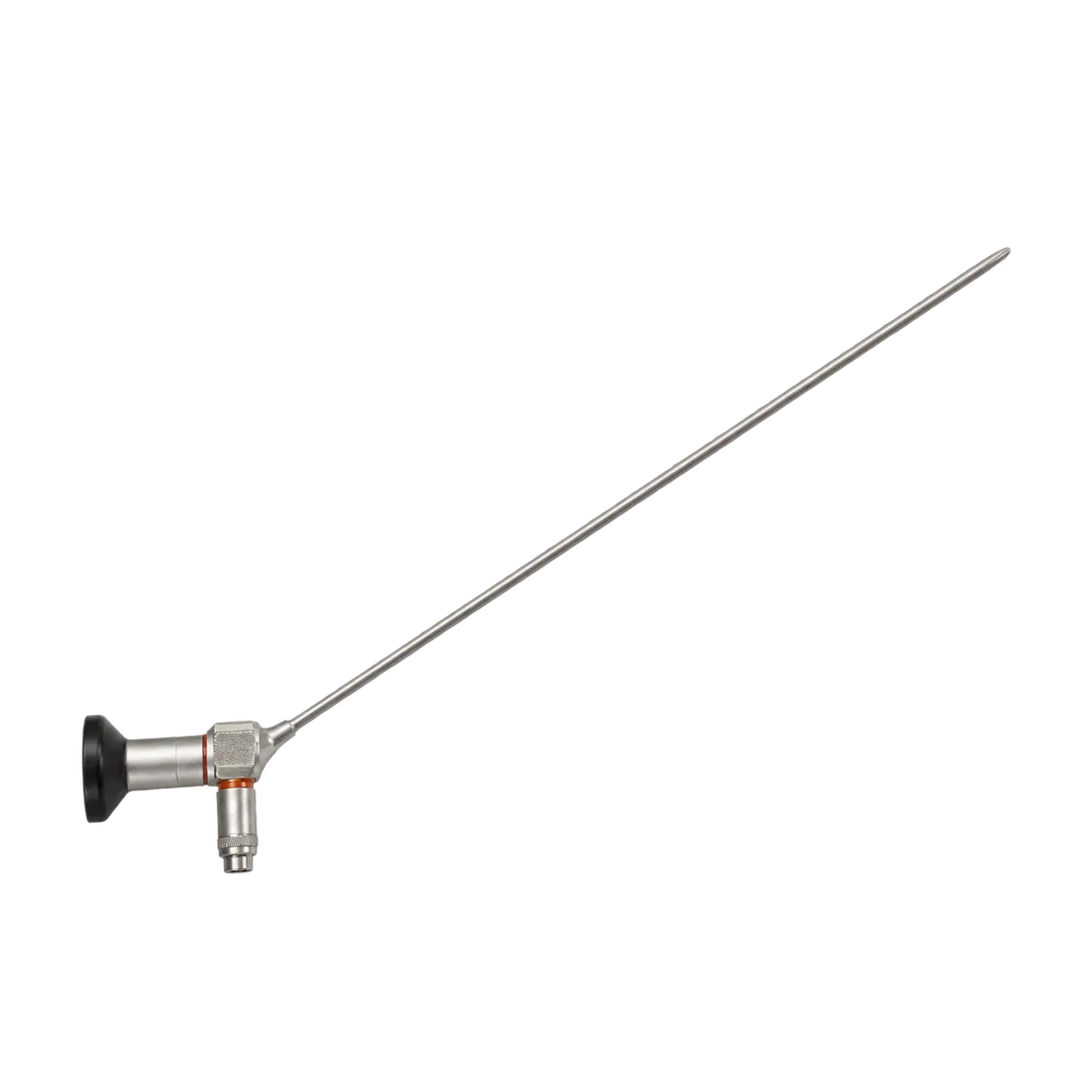
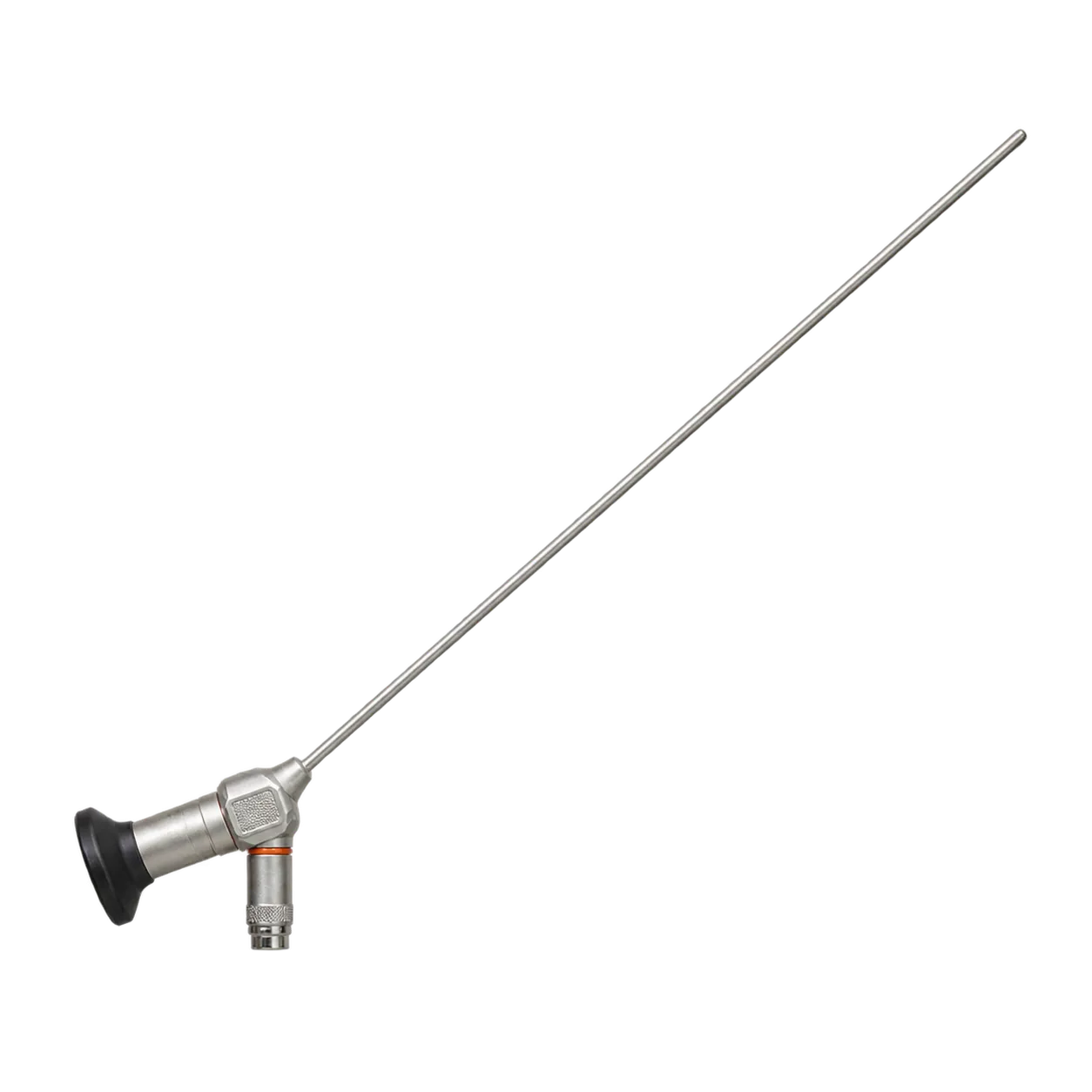
The 27005BA serves urology theatres, endoscopy suites and clinics that examine the bladder and prostate. A urologist holds the eyepiece and turns the telescope to survey the field; a theatre nurse prepares the light cable and instrument table; and reprocessing staff take the telescope through the autoclave after each case.
The HOPKINS II rod lens system performs the optical work. It carries the image from the distal end to the eyepiece through a 4 mm shaft, and the picture it returns is enlarged. The line of sight is 30° forward-oblique, which means it points forward and sits 30° off the shaft axis. Turning the telescope about its axis sweeps that line of sight around the field, so the walls of the bladder and the prostate come into view from several directions during one examination.
Illumination travels the same shaft. A light cable attaches at the light post, and optical fibres guide the light to the distal end. In a theatre with several telescopes and cables laid out, the red colour code and the light cable coding on the telescope cube make the 27005BA easy to pick out and pair with its cable. Because the coding tells staff which cable fits, setting up the light path takes little time before the examination begins.
The telescope is reusable and autoclavable and is supplied non-sterile. A cycle of use, cleaning and autoclaving suits departments that return the same telescope to service through the week. The sapphire cover glass on the eyepiece cup and the anti-reflective coating keep the viewing end clear for the examiner, while the 30 cm working length gives reach along the route of