
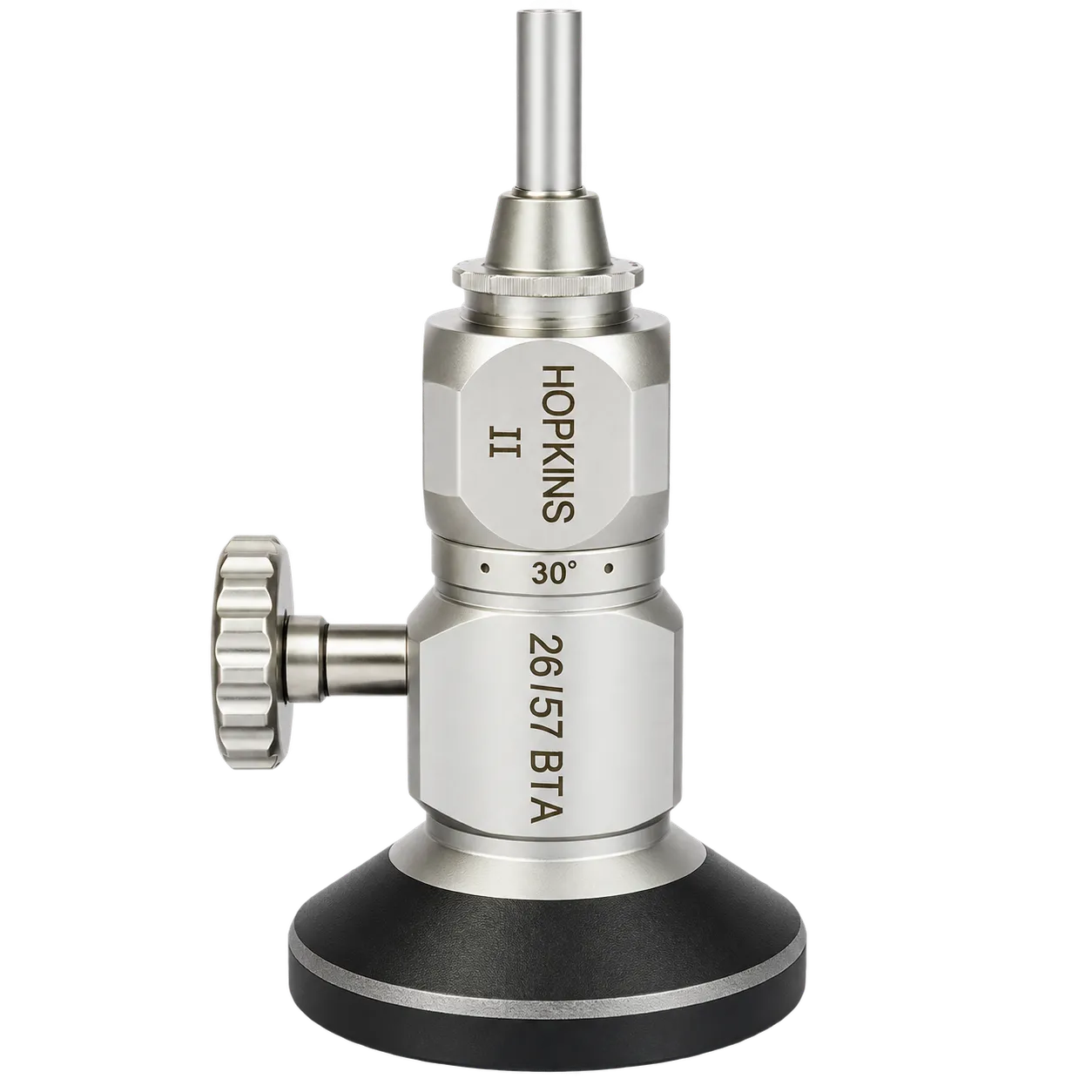
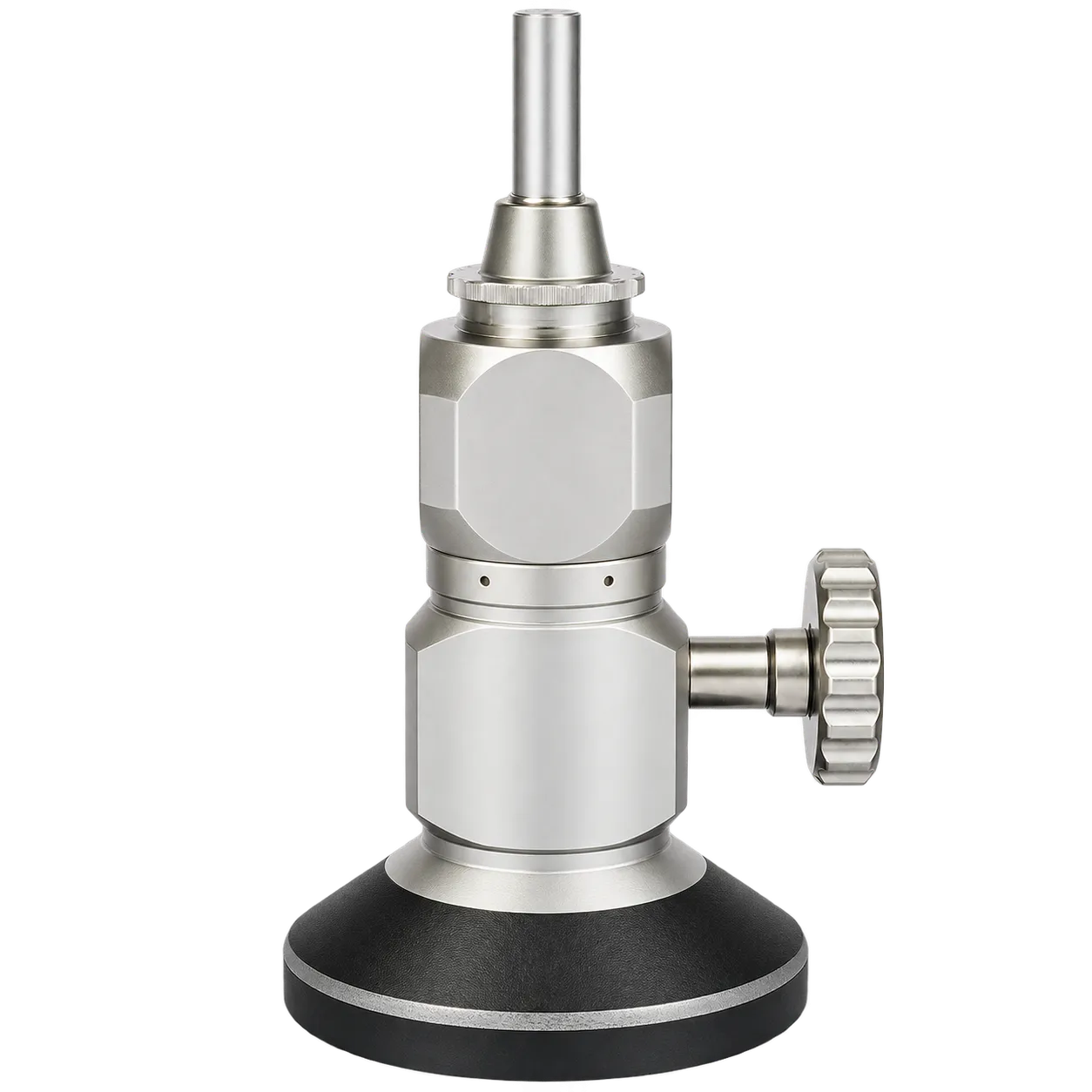
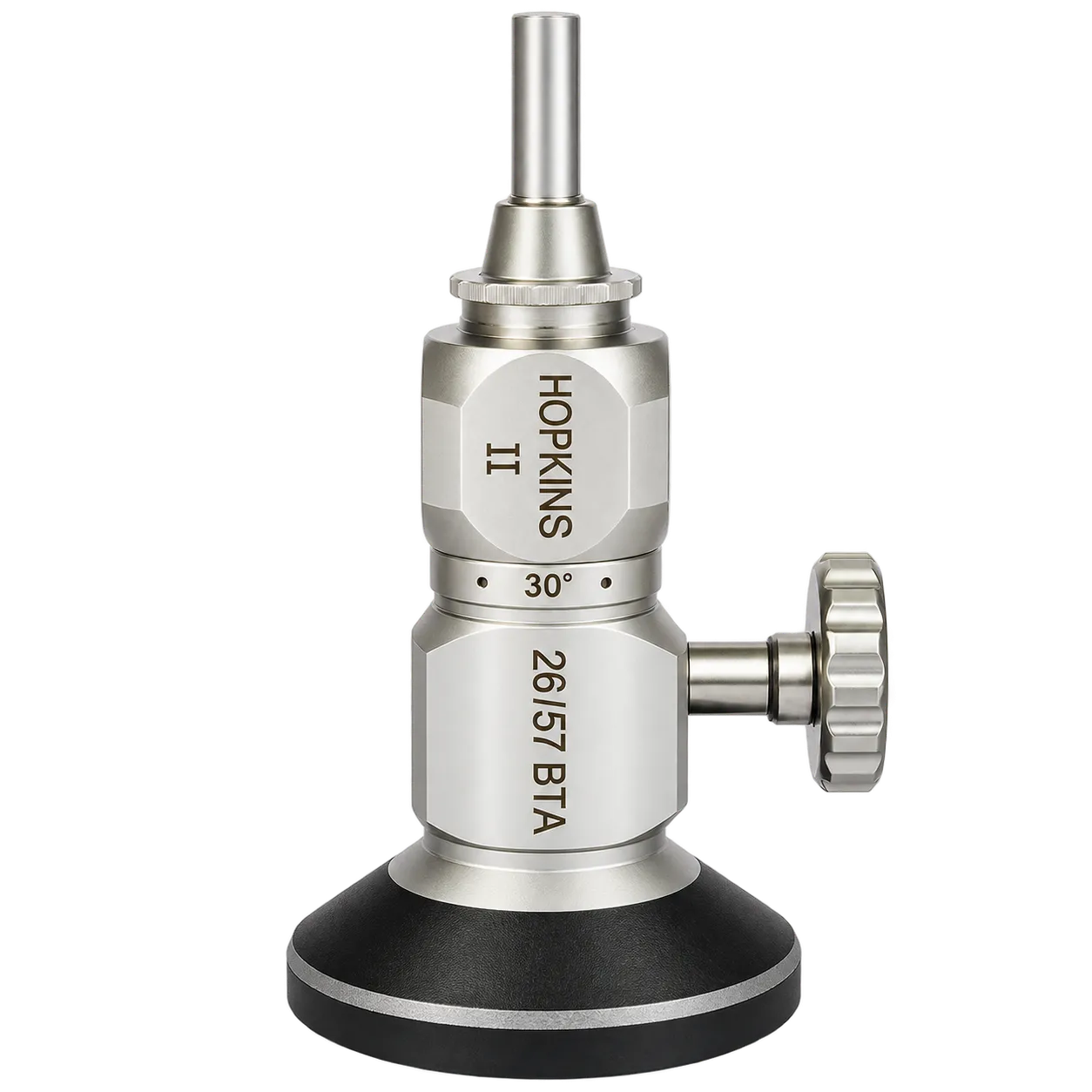
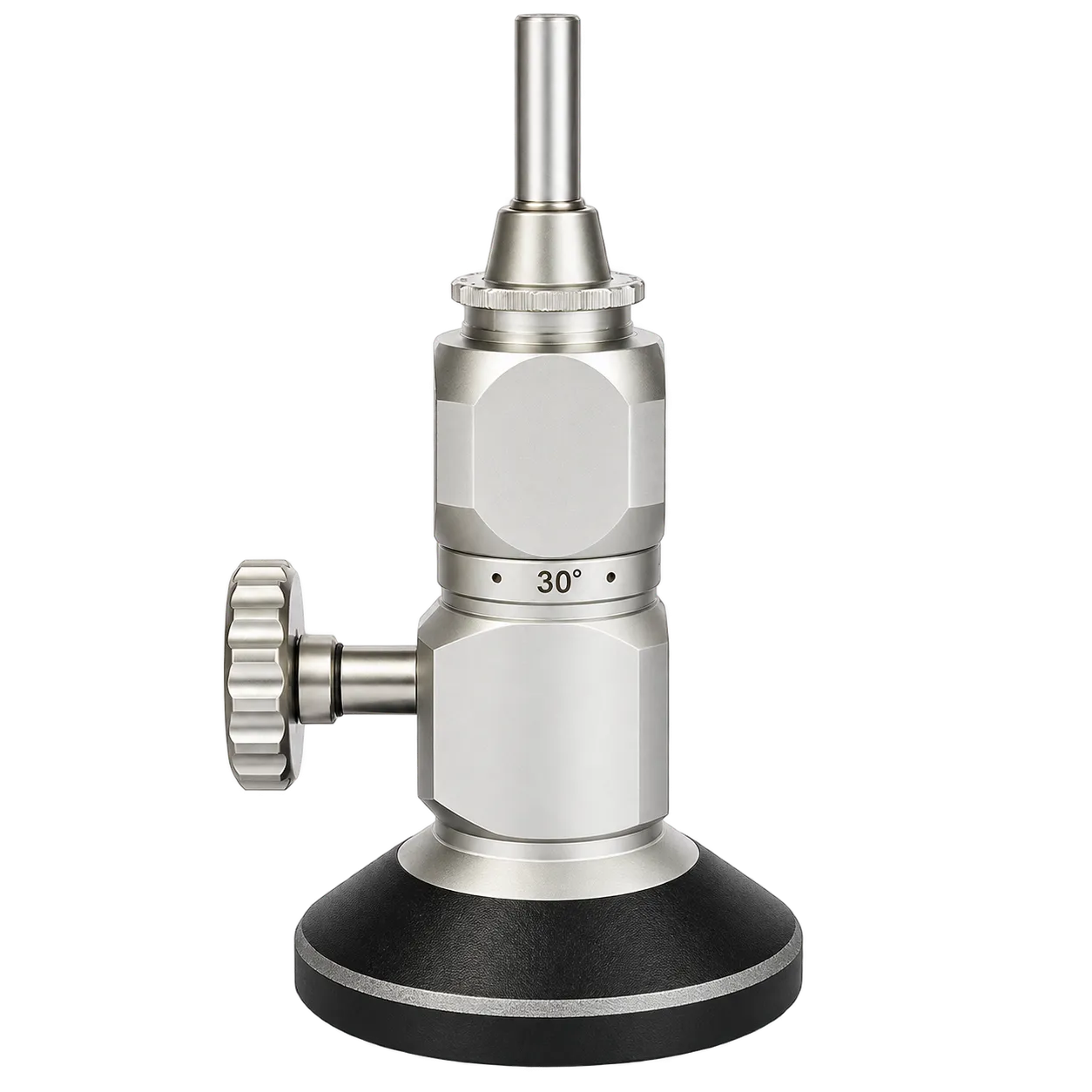
The 26157BTA serves urology departments in hospitals, ambulatory surgical units and urology clinics that examine the bladder and urethra through a rigid telescope. A urologist passes the 4 mm shaft through a cystoscopy sheath and follows the examination through the eyepiece, with a 30° forward-oblique view and a 30 cm shaft that reaches along the urethra into the bladder. Theatre and endoscopy nurses assemble the sheath and telescope, connect the light cable at the light post and handle reprocessing after each case.
Diagnostic work is the first use. The oblique view brings a region beside the insertion line into view, and a turn of the telescope about its axis moves that region around the bladder wall. A fixed 30° angle gives every examiner the same geometry from one sheath position. The examination covers lesions, strictures, inflammation and stones, and rod lenses carry the image from the distal end to the eyepiece.
Treatment is the second use. The sheath carries irrigation and the instruments used for biopsy and minor therapeutic work so that a procedure can move from inspection to a further step with the same telescope in place. Diagnostic and surgical endoscopic interventions both draw on the same optic.
Departments that run frequent lists plan around the reprocessing routine. The telescope is delivered for reprocessing and is cleaned, disinfected or sterilised before first use and before each reuse, following the manufacturer's instructions. A department that standardises on one 30° telescope works to a single set of figures: a 4 mm diameter, a 30 cm length and a red colour code that identifies the angle.