
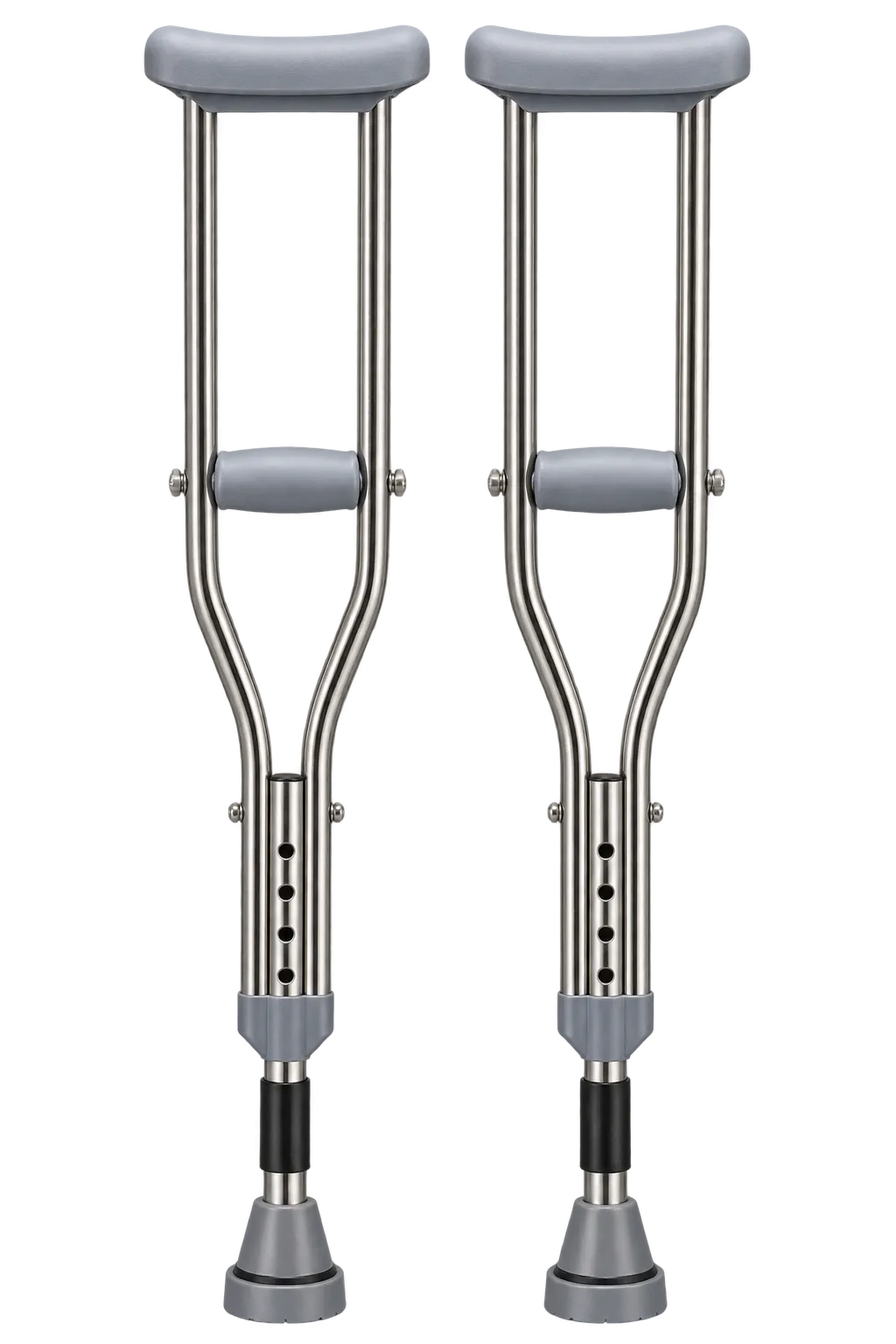
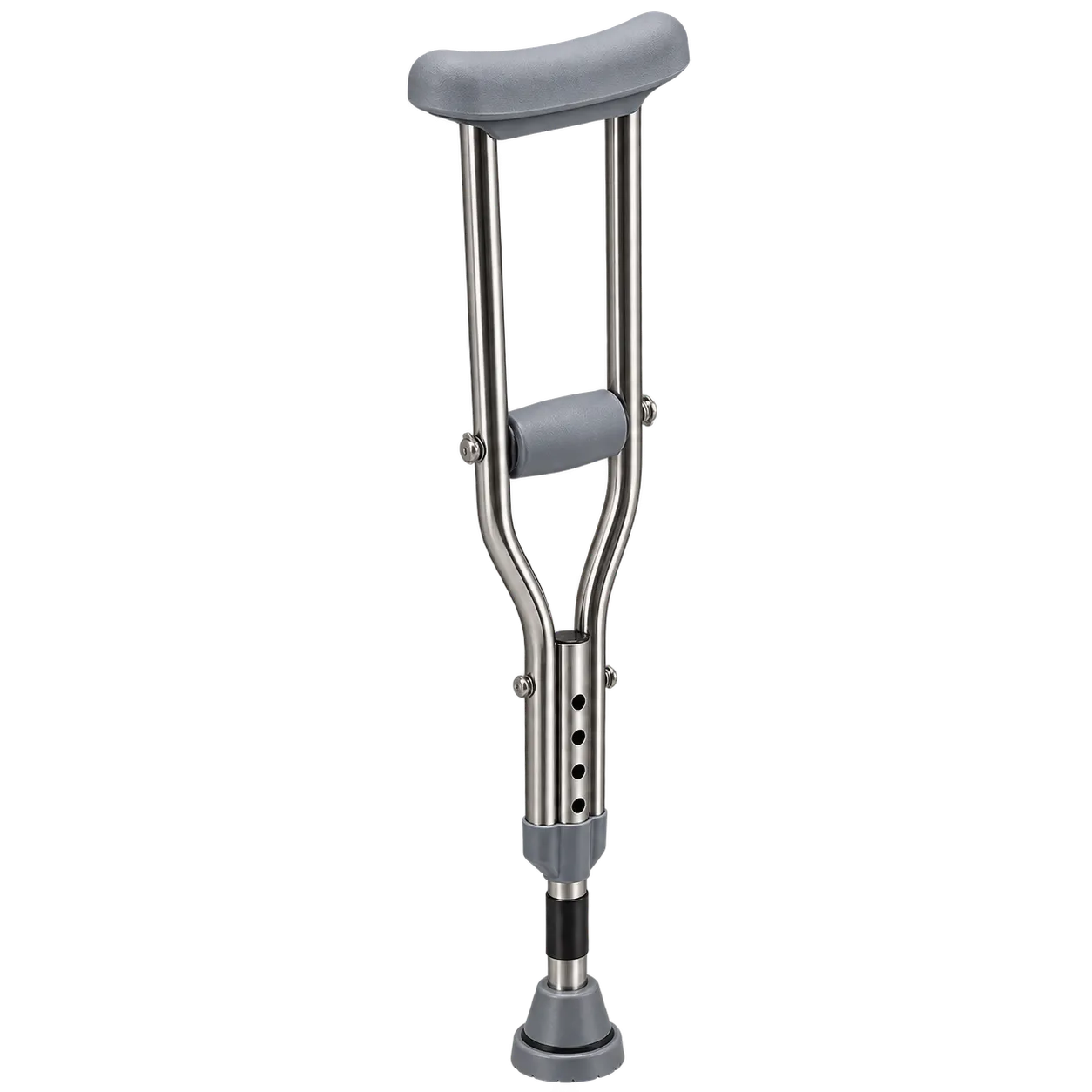
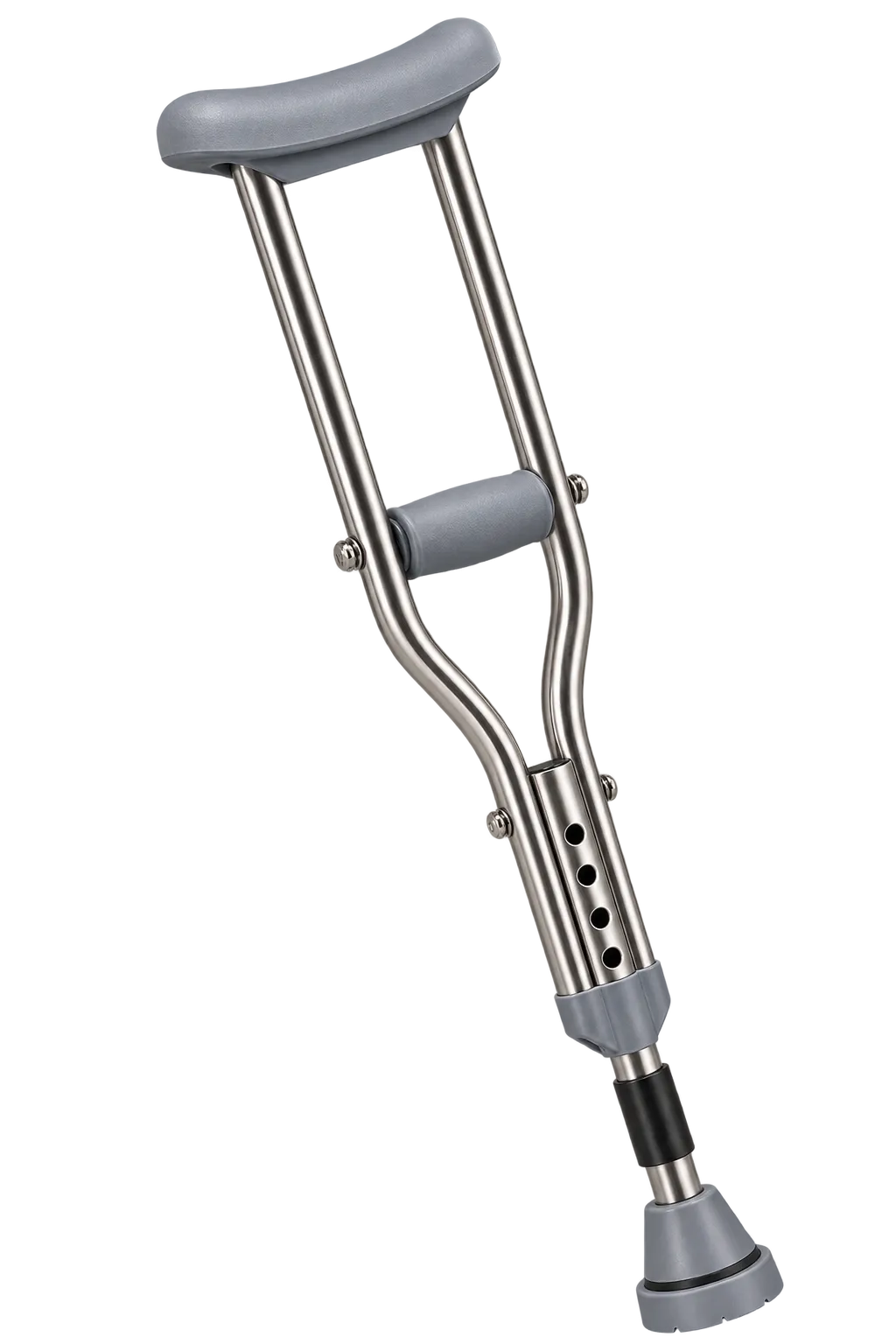
Physiotherapy holds the fitting, and the fitting is the safety measure. Height at the shaft and at the grip both have to be set against the individual and the footwear they will wear, and recorded so the setting can be rechecked rather than rediscovered.
Anybody issuing these needs to explain where the load goes. A user who has been told the pad is not for leaning on, and shown why, is the main protection against the injury this design can cause. That conversation belongs with the issue, not in a leaflet.
Community and home settings should make the ferrules somebody's job. They are the only contact with the floor, they wear and harden, and a worn ferrule on a wet surface is a fall. Check them at every review.
Equipment services holding stock should record the adjustment range against each pair, since a crutch that will not reach the right height for a person is not usable by them. Routes across NHS trusts, local authority equipment services and independent providers each ask for their own evidence. The conformity documentation those procurement routes require is issued by the manufacturer and provided by the seller.