
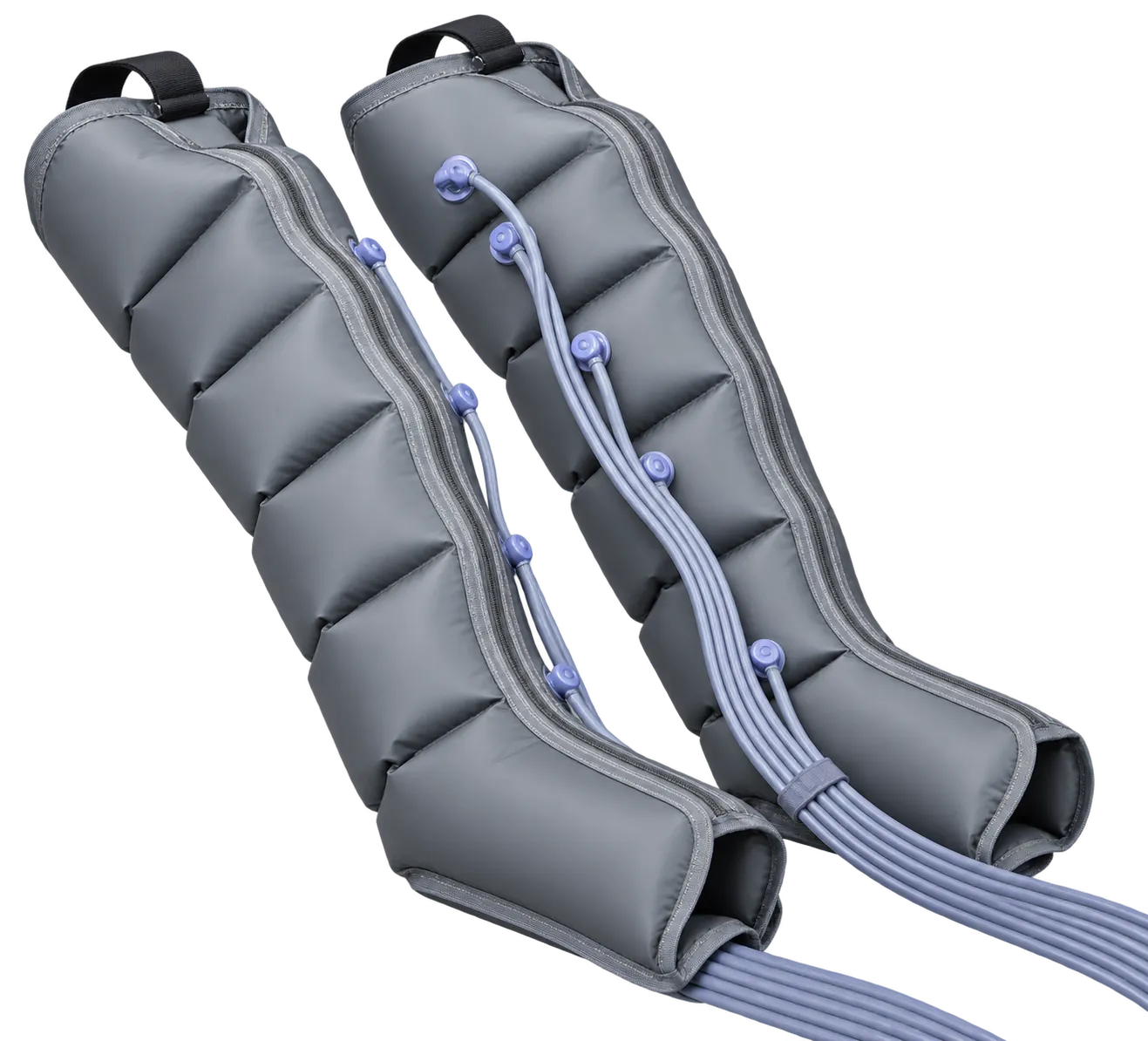
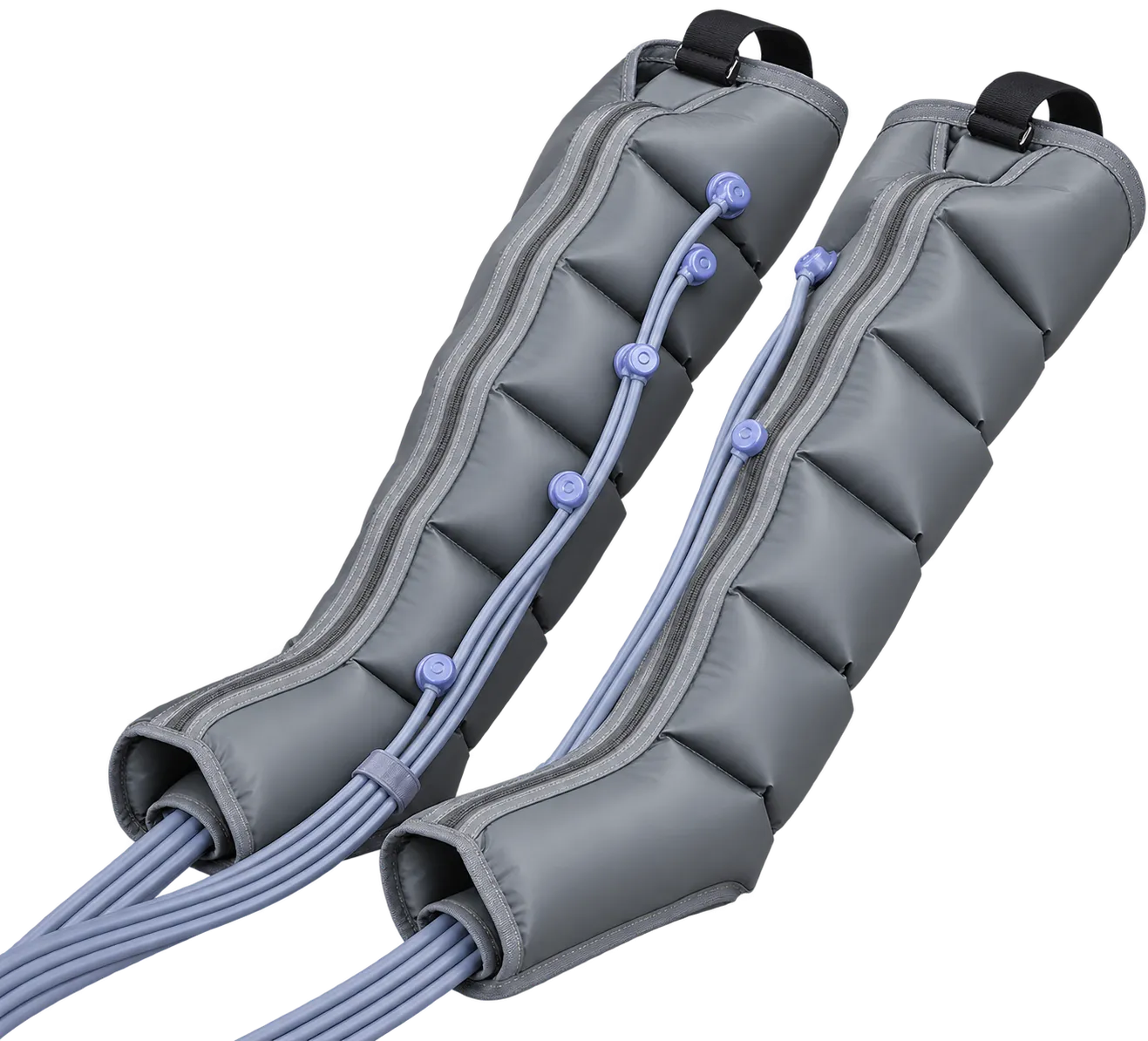
Sports and fitness recovery is the setting the photography points to and the language supports. Athletes, gym members and anyone who trains hard use full-leg compression after sessions for the sensation of the limbs being worked through and for muscle comfort. In that setting the pair is a wellbeing appliance, the buyer is a club, a studio or an individual, and the questions are inflation order, pressure range, fit and cleaning between users.
Occupational and workplace wellbeing is the other natural fit. People who stand all day, or who sit still for long stretches, notice their legs by the evening, and a set offered as a comfort service addresses that without any clinical claim being made. Screening at the point of use is what keeps it straightforward, and it takes one question on a booking form.
Clinical settings need the route question answered before anything else, and on legs that matters more than on any other site. Pneumatic compression of the legs is used clinically, with devices carrying a stated intended purpose, a known pressure range, documented contraindications and a classification. A product without those cannot be written into a treatment plan, however closely its construction resembles one that can.
Home use follows the same logic with one person instead of many, which removes the hygiene problem and leaves the suitability one. Anyone with a suspected clot, a leg infection, poor arterial circulation or recent leg surgery should speak to a clinician first, and a supplier that says so plainly is doing the work the sheet has left undone. Procurement in any of these settings will ask which regulatory route applies. The conformity documentation those procurement routes require is issued by the manufacturer and provided by the seller.