
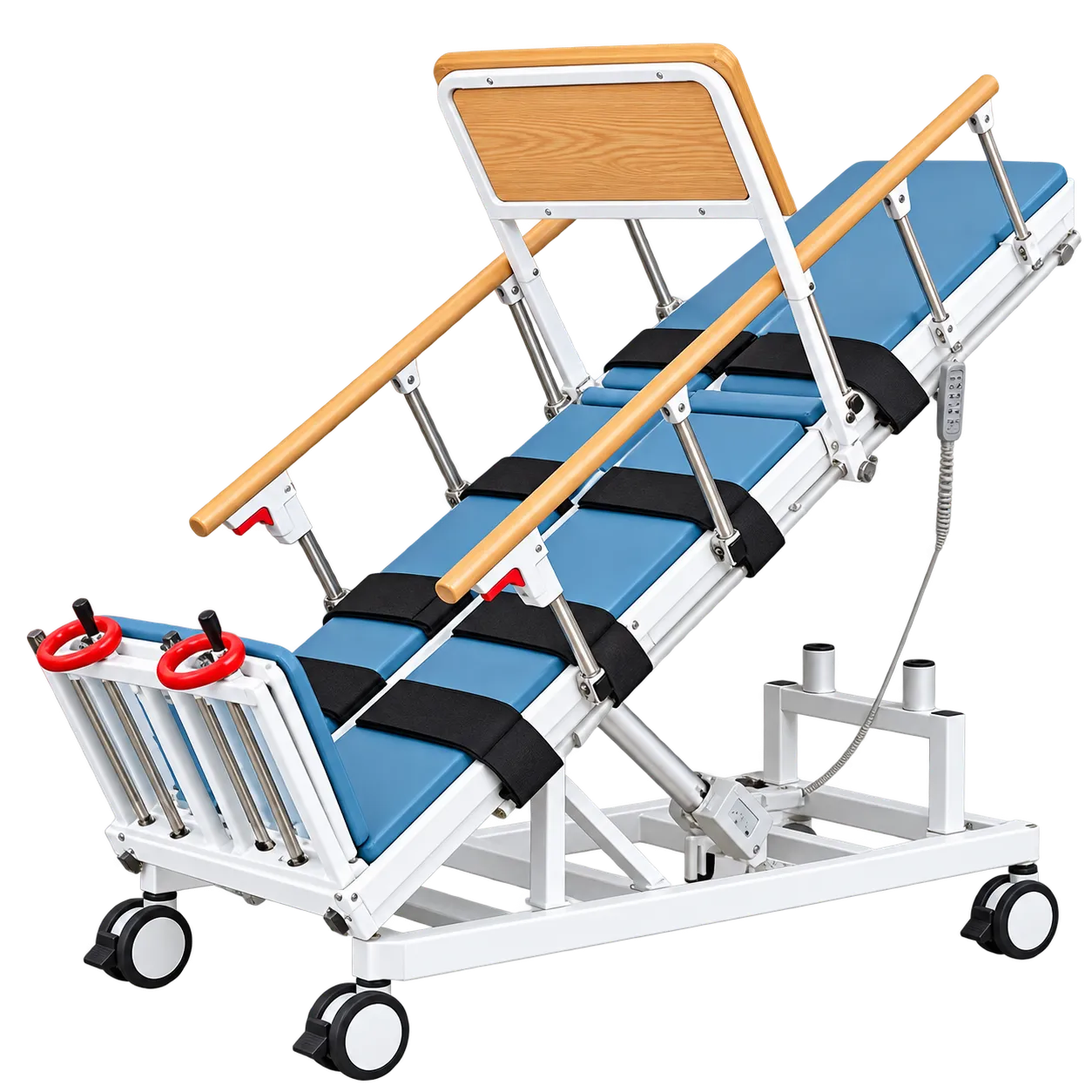

Neurological rehabilitation units are the primary setting. Acquired brain injury, stroke and disorders of consciousness are pathways where early upright positioning is part of the treatment plan, and where the length of a session is often governed by how long the patient tolerates the angle rather than by the timetable. Combining the standing function with lower limb movement addresses that limit directly, provided the pedal specification supports the population being treated.
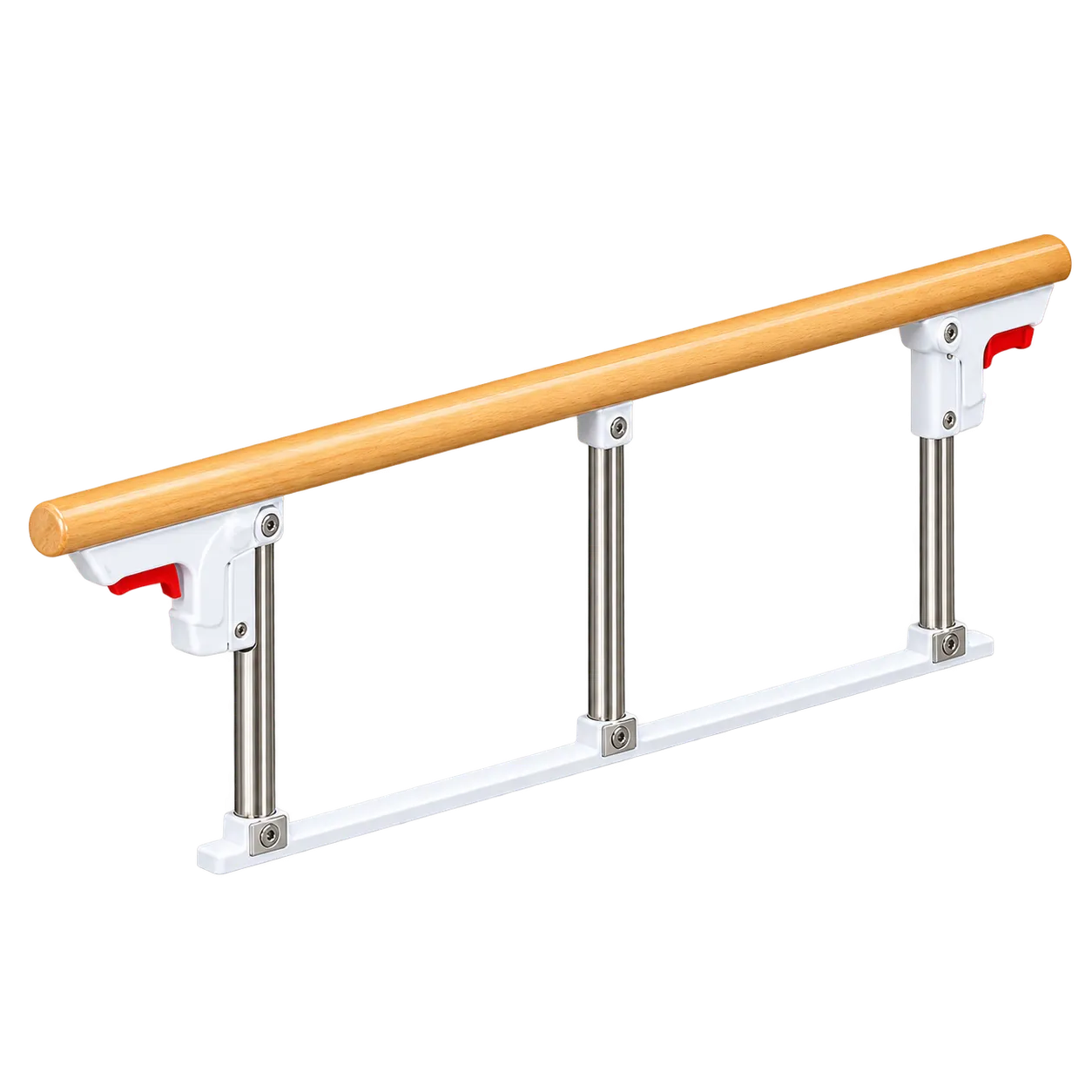
Spinal injury and long-term neurological care use verticalisation for weight-bearing, bone loading, postural tolerance and orientation, with lower limb movement adding a circulatory and range-of-motion element to the same session. The stainless steel guardrail and four drainage hooks suit a population with catheters and drains in place through therapy. Because no standing angle is published, protocols have to be built from figures obtained from the manufacturer rather than from the datasheet.
Therapy departments and rehabilitation gyms running scheduled sessions get a second use from the frame: it occupies a treatment slot rather than a bed bay, and the pedal turns a passive tilt into an active one where the patient can contribute. Duty cycle matters in this setting more than in a ward, since the motor may run repeatedly through a working day, and it is not published.
Complex home and long-term placements are possible but need the practical questions closed first: a socket that stays available, ceiling and floor clearance nobody has measured, and a documented plan for a power cut with a patient upright. Across all settings, procurement should price the inspection regime alongside the purchase, since the standing function and its body support may bring statutory thorough examination with them. The conformity documentation those procurement routes require is issued by the manufacturer and provided by the seller.