
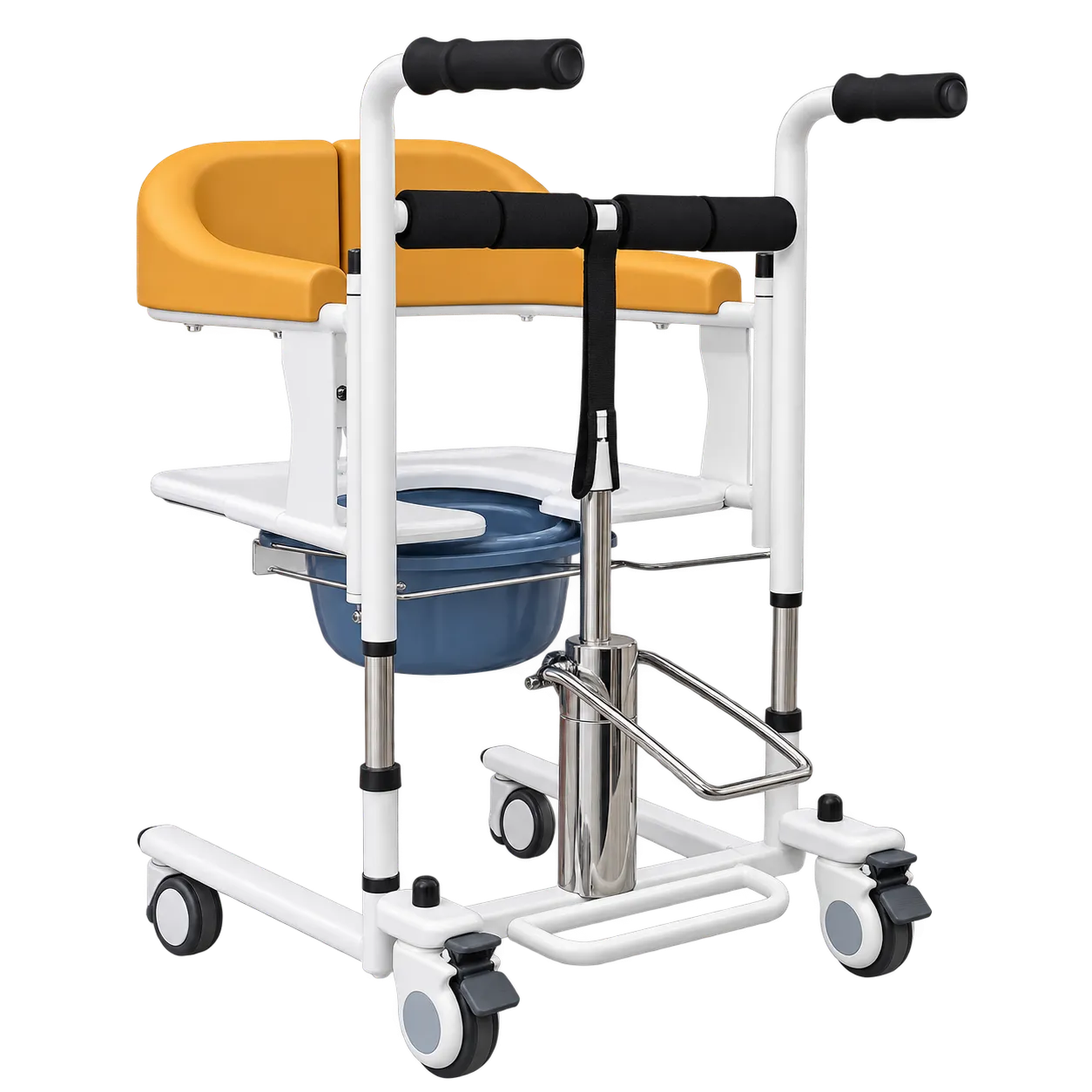
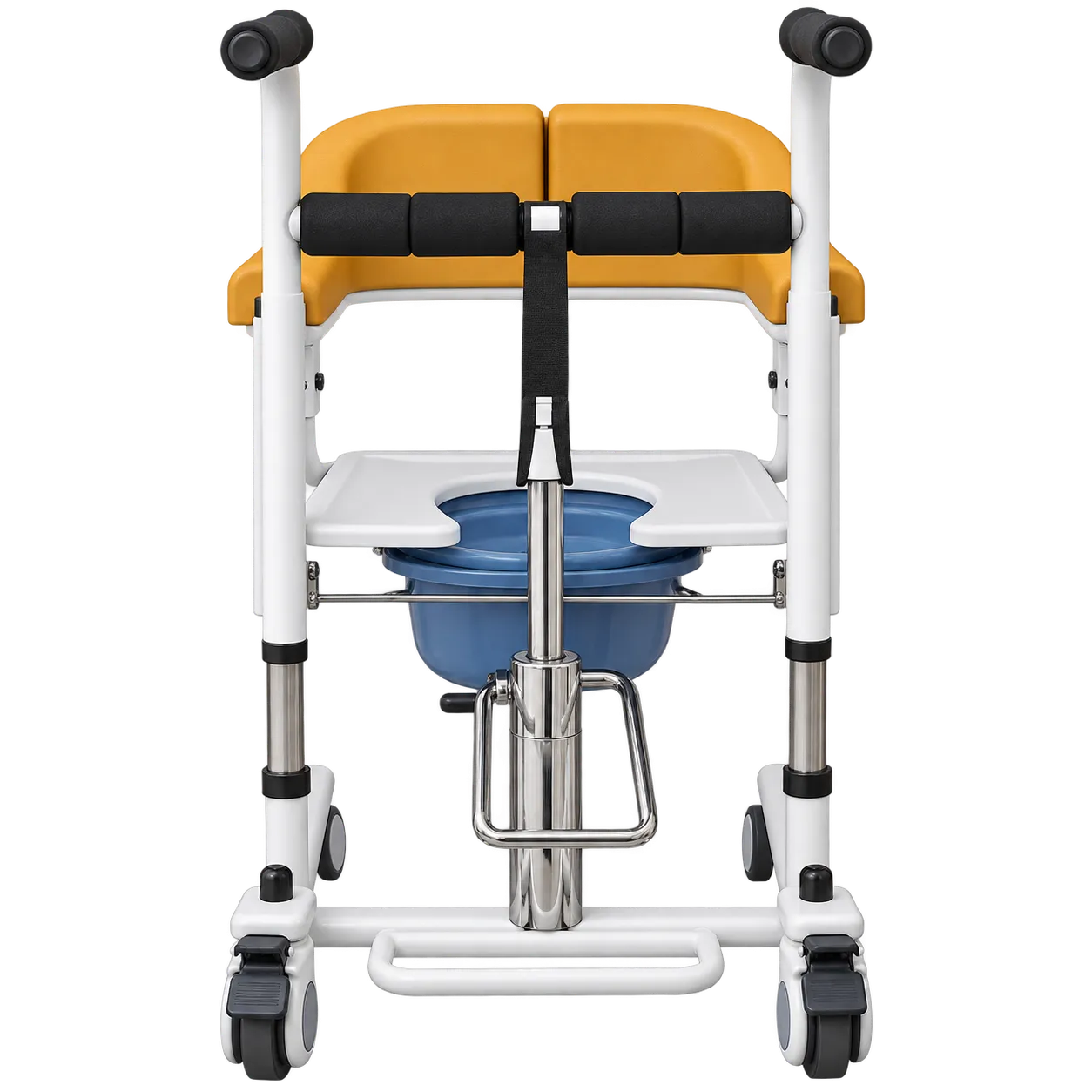
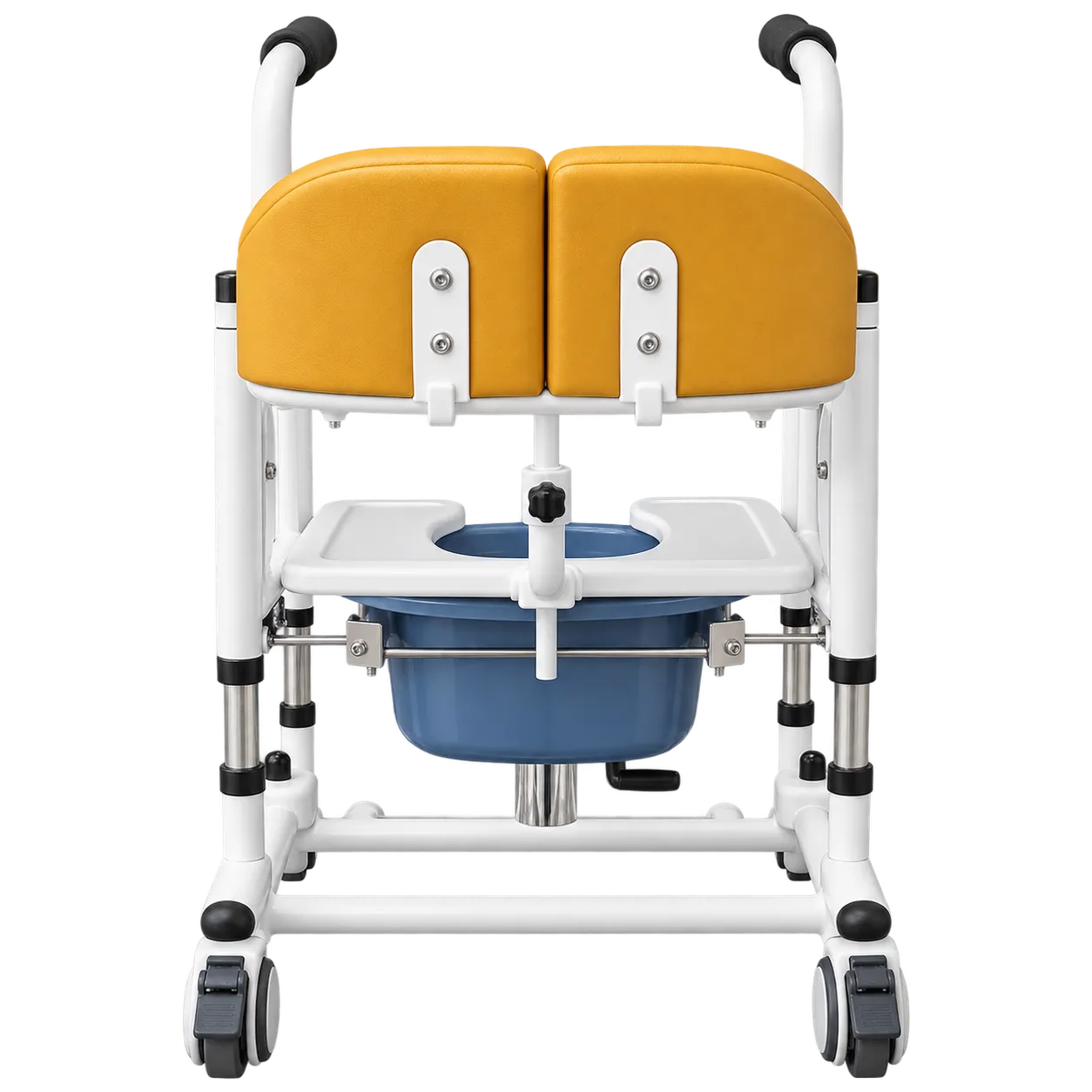
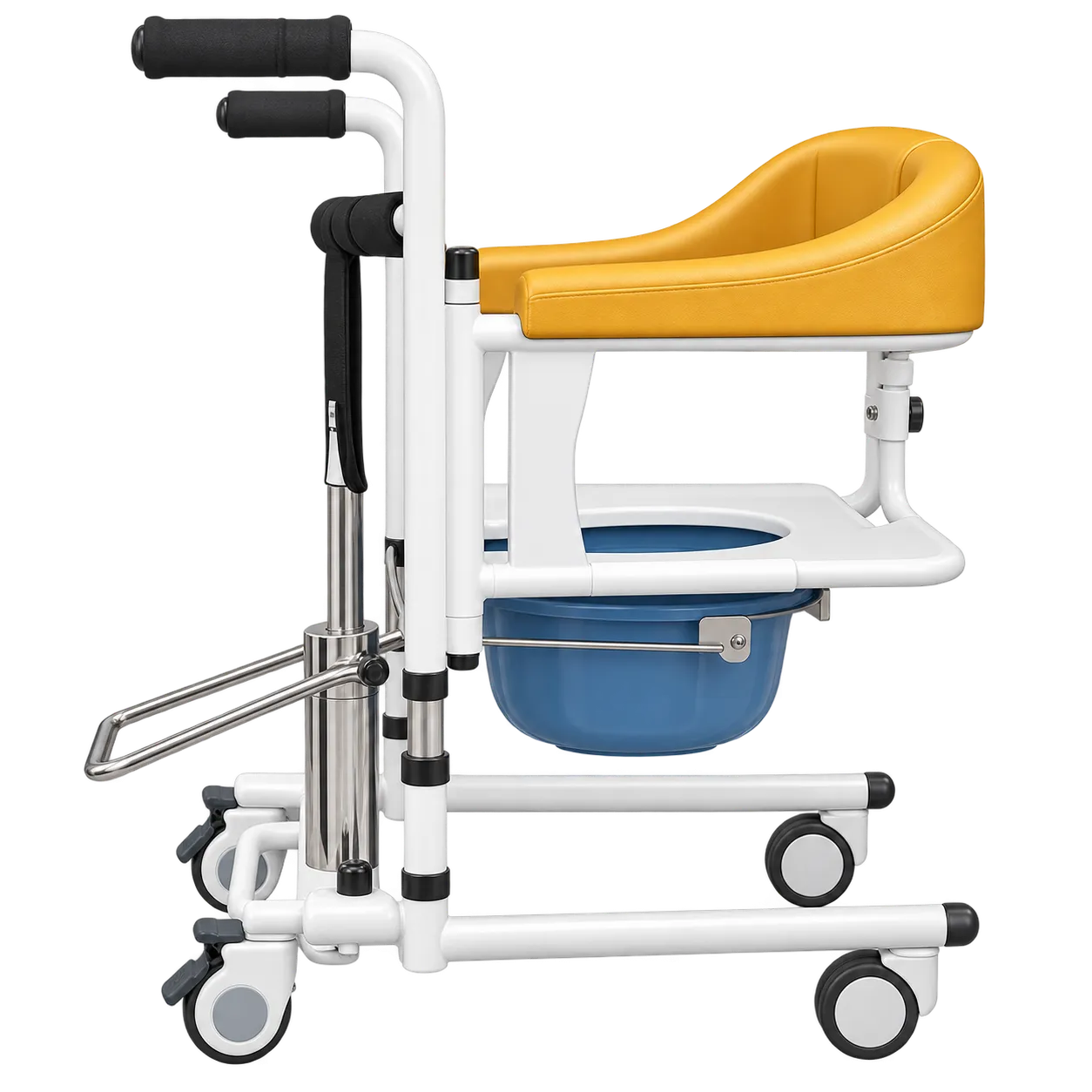
Assisted toileting and washing is the working purpose here, and the daily pattern is short, repetitive and unglamorous. A dependent resident is brought from bed or armchair onto the seat, raised on the foot pump, wheeled the few metres that matter, and dealt with in place while the split seat is open. The pan carried in the frame means the episode can be completed away from a bathroom altogether, which is what makes the design useful in rooms where the WC is down a corridor.
Community and homecare packages are where the absence of electrics earns its keep. A unit needing no socket can work in a bedroom, a hallway or a bathroom without regard to where the power is, and there is no charging routine for a visiting carer to remember or a family member to manage. Against that, the foot pump puts the physical work on whoever is present, so packages staffed by a single carer need the stroke count and pedal force confirmed before allocation.
Rehabilitation and step-down units use equipment of this type where sitting tolerance has returned but standing has not. Care plans record the seat setting, the chest pad position and the number of staff attending, and adjustment ranges that remain unpublished cannot yet be written into those plans.
Infection prevention teams will treat both the upholstery and the pan as shared-surface items needing a documented clean between residents. Procurement through NHS framework routes, local authority equipment services and private provider groups will each ask for conformity evidence, a load marking and an inspection history. The conformity documentation those procurement routes require is issued by the manufacturer and provided by the seller.