
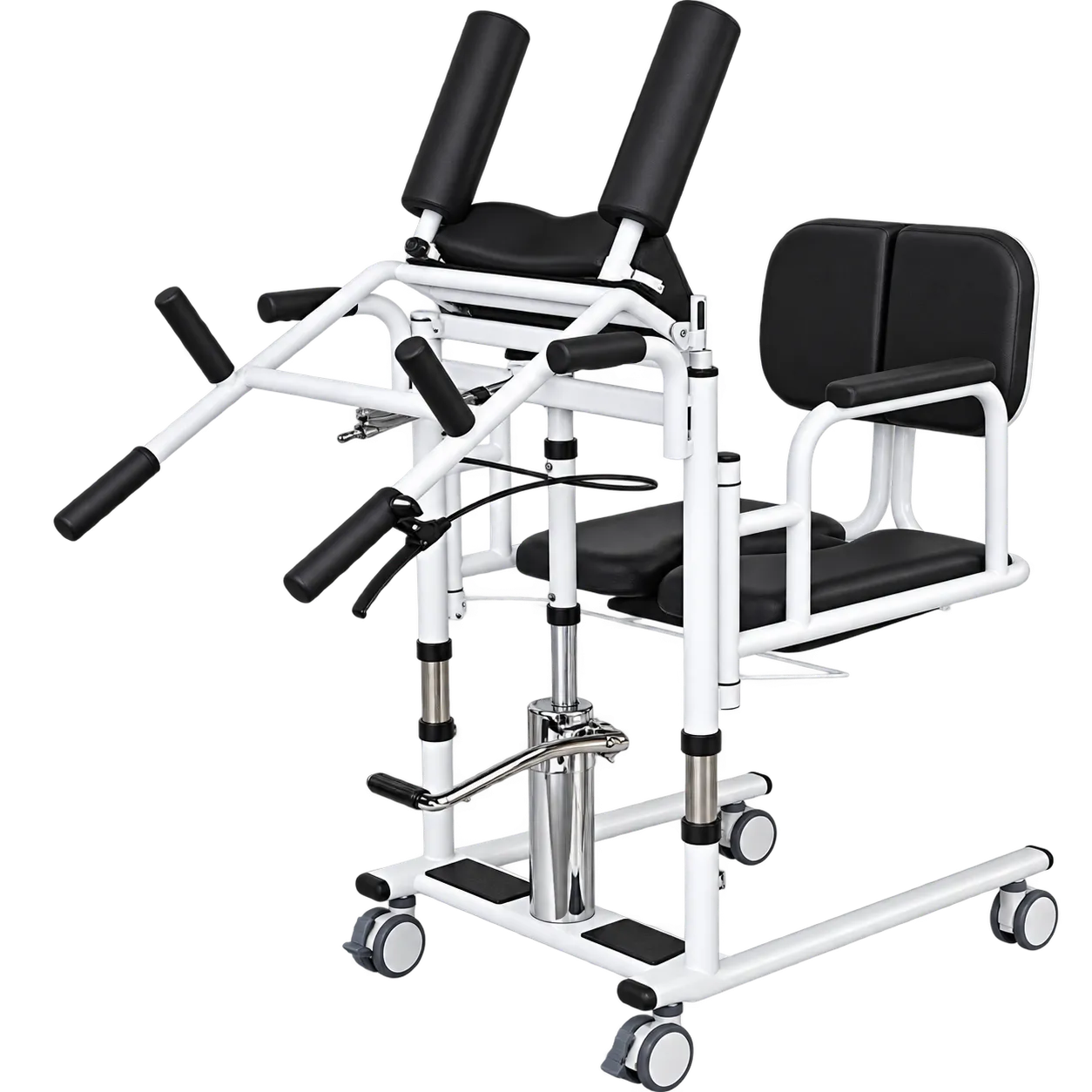
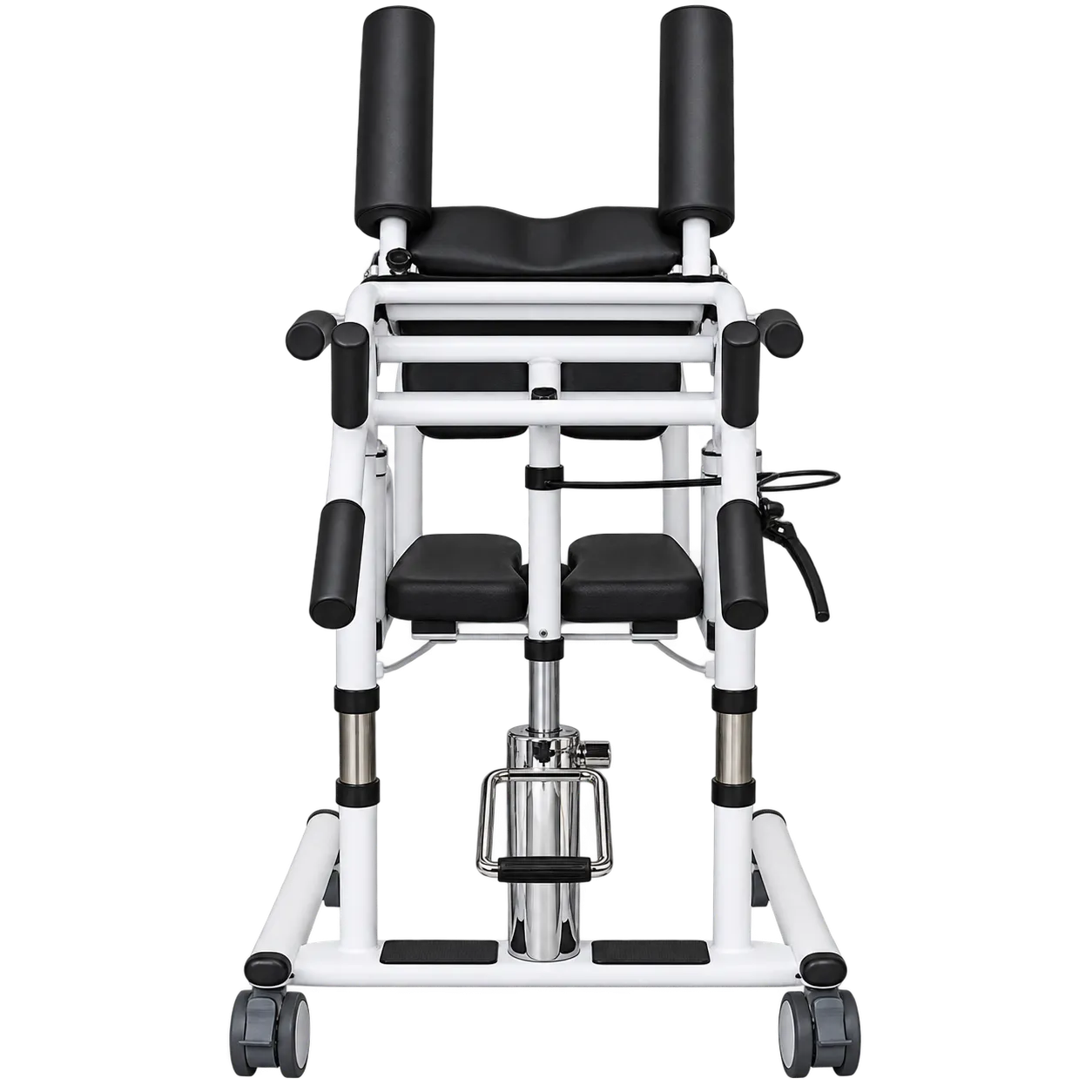
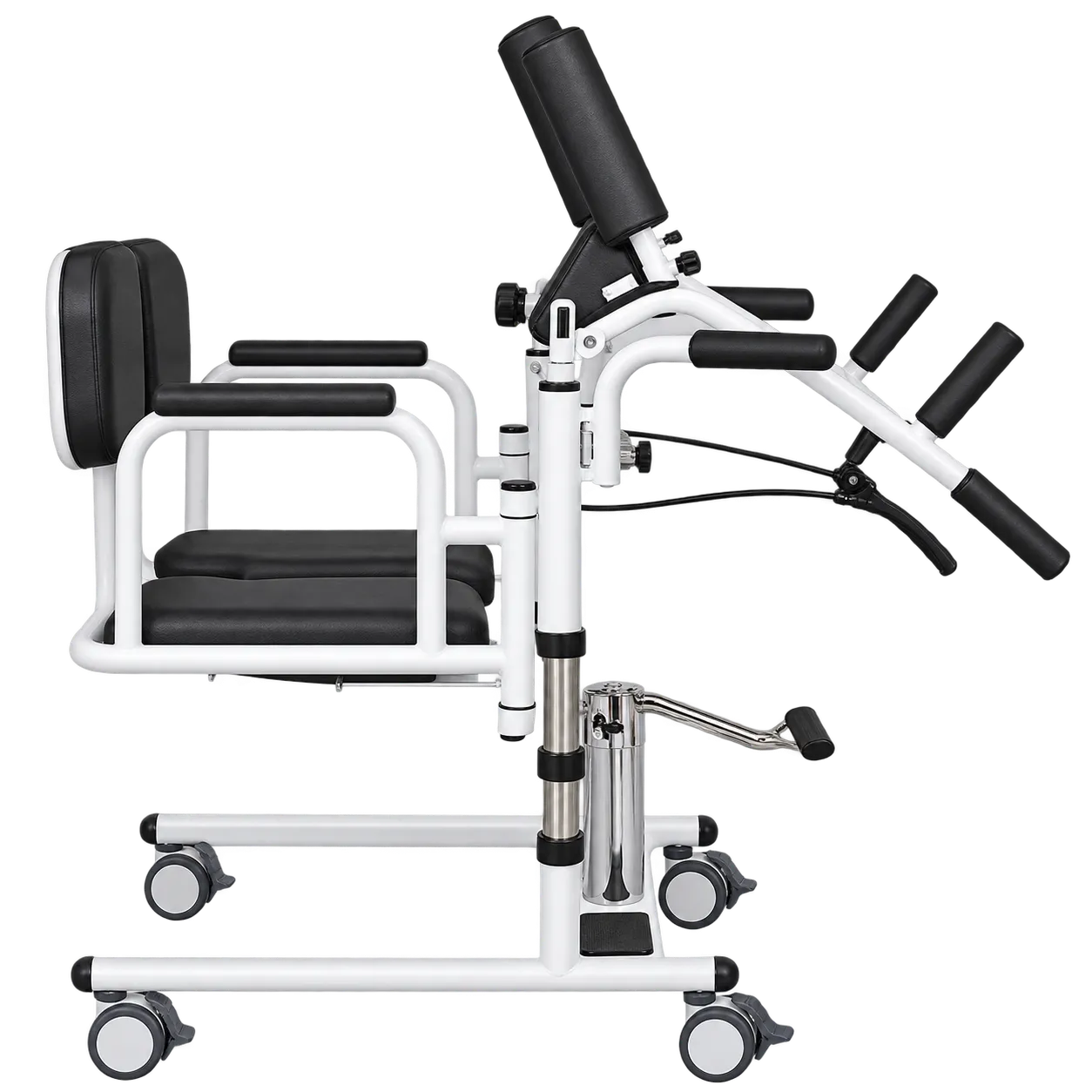
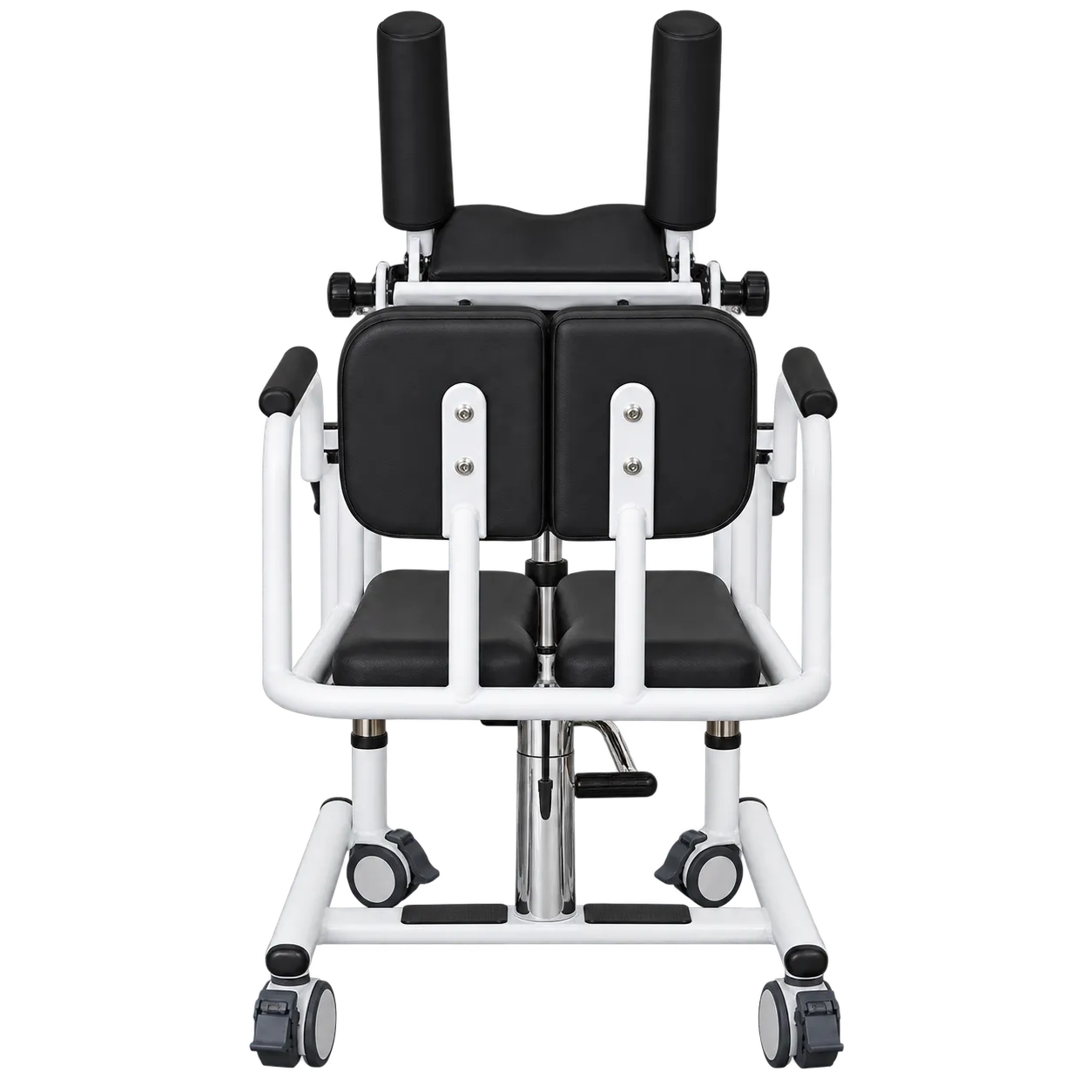
Assisted personal care is where this unit is aimed, and the working pattern is narrow and repetitive. In a residential or nursing home the same episode recurs several times a day for a dependent resident: bring the frame alongside, raise them from the chair or bed, deal with clothing and toileting while they stay supported, then lower them onto the surface they are going to occupy. Handling the hygiene element without a further move is the point of the design.
In community and homecare packages the constraints tighten. Bathrooms are small, the WC sits close to a wall, and visiting carers work alone or in pairs with no shared induction. Four castors turning in any direction help a frame find an angle in a confined room, and the unpublished footprint is the figure that decides whether the unit gets into the bathroom at all. Measure before committing, because a lift that cannot reach the WC cannot deliver the function it was bought for.
Rehabilitation and step-down settings use equipment of this kind where sitting tolerance is present but standing and weight-bearing are not yet reliable. Care plans record which supports are used, at what adjustment, and how many staff attend, and adjustment ranges that are not published cannot yet be written into those plans.
Infection prevention teams will treat a sanitary-use device as a shared-surface item requiring a documented clean between residents. Procurement through NHS framework routes, local authority equipment services and private provider groups will each ask for conformity evidence, a load marking and an inspection history. The conformity documentation those procurement routes require is issued by the manufacturer and provided by the seller.