
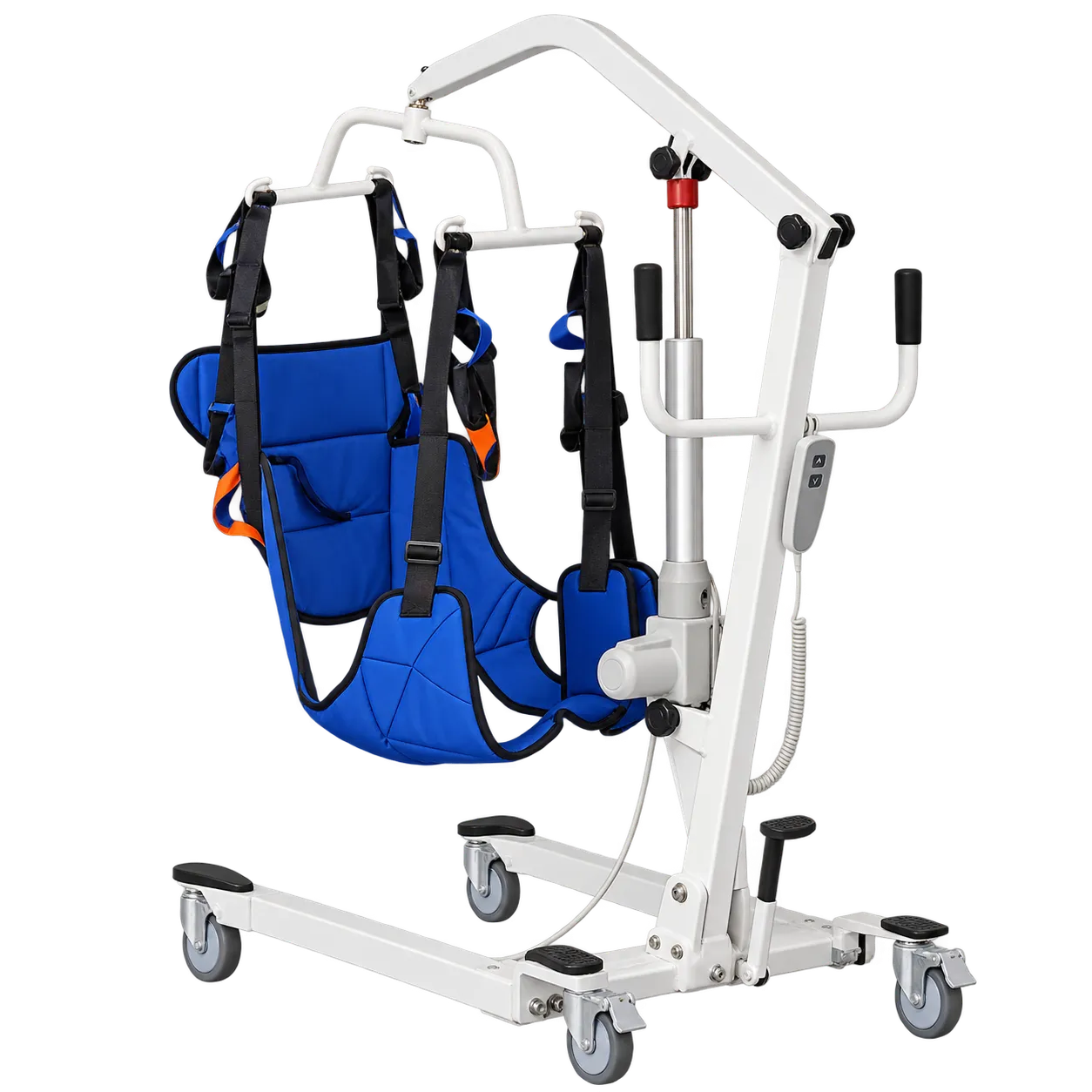
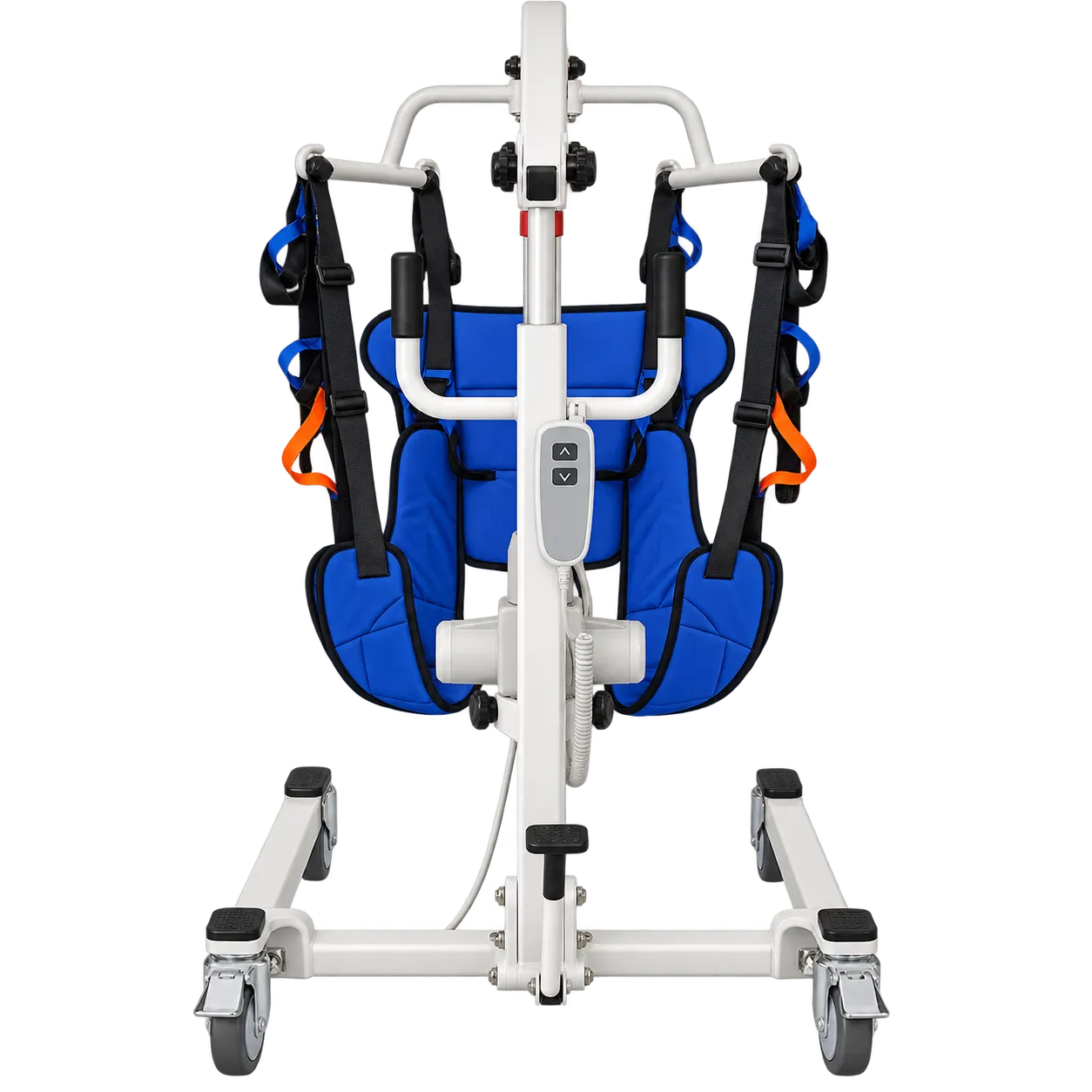
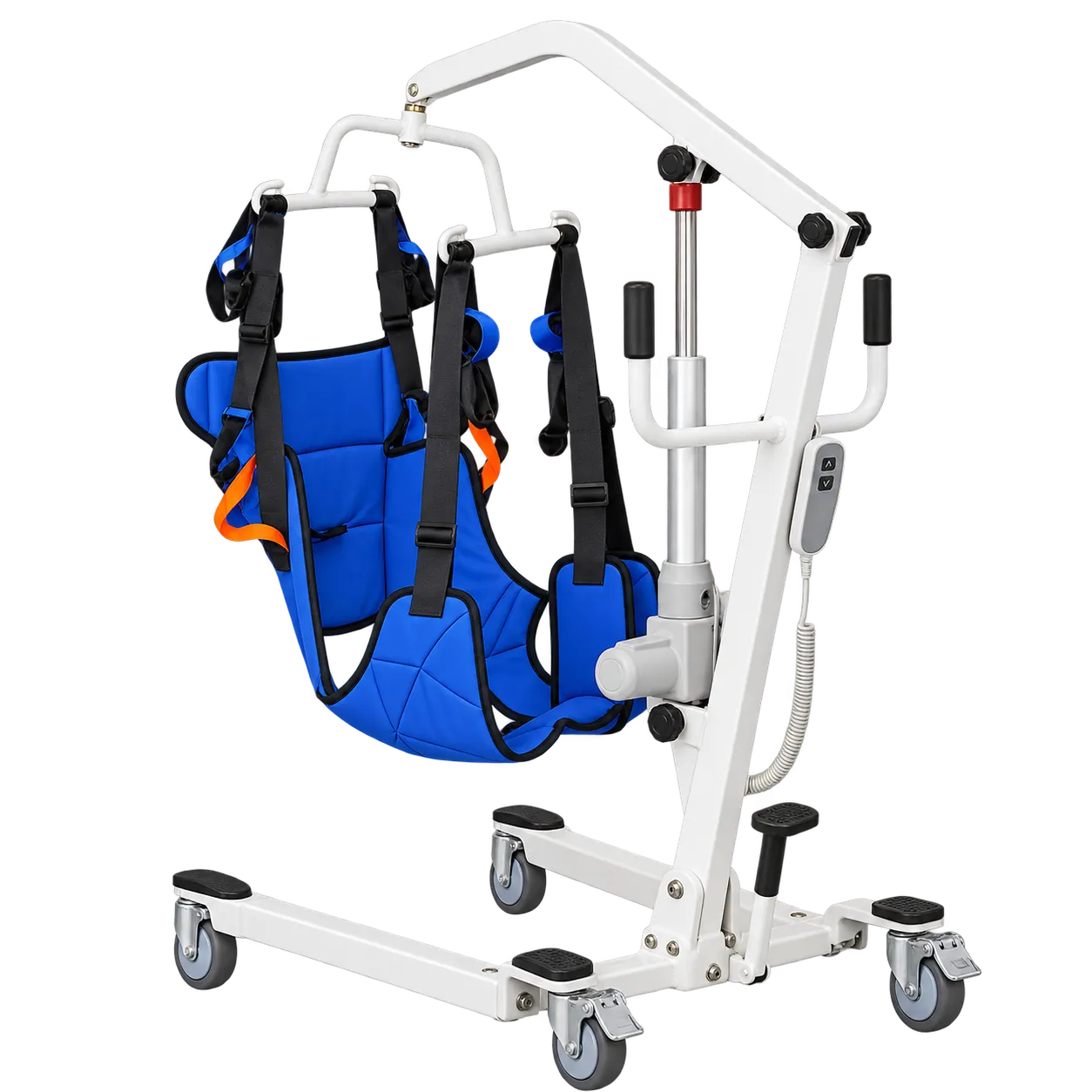
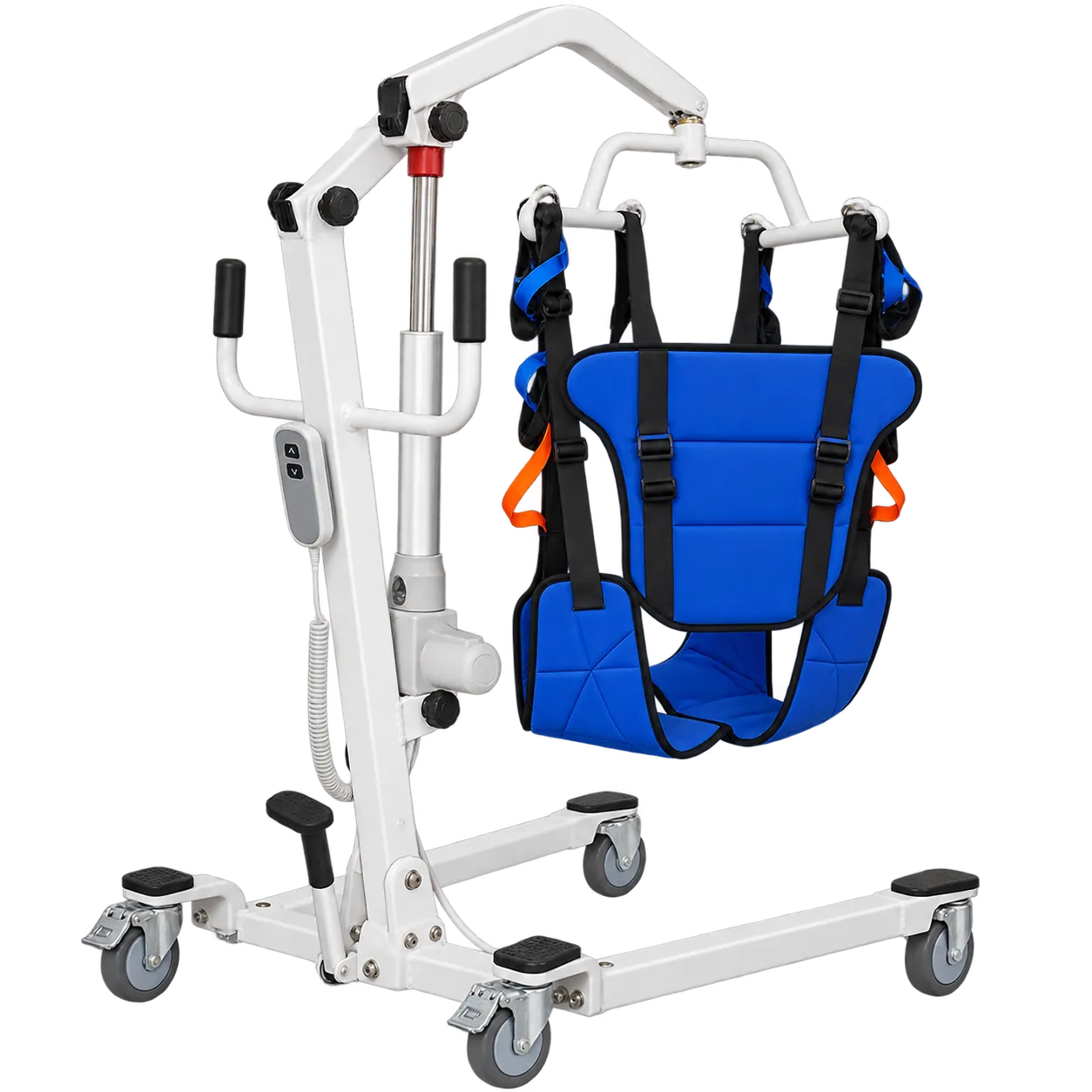
Mobile sling hoists earn their place wherever a person can no longer take their own weight through a transfer, and the JD-YWJ-02 is specified for that seated work. In a nursing home the pattern is repetitive and predictable: bed to armchair after personal care in the morning, armchair to commode through the day, and the reverse at night. A base that opens around the legs of a chair means the lift is set up where the resident already is, and the whole episode stays within the footprint of one room.
In community and homecare packages the same device meets a harder environment. Rooms are smaller, floor coverings vary, and the equipment is often shared between a rotating team of visiting carers with no shared induction. The single control point helps here, because familiarisation is about one device and one set of controls. The closed base width and the turning circle carry more weight in a domestic setting than in a purpose-built bay, and both need measuring before a unit is sent to an address.
Rehabilitation and step-down units use hoists as a bridge, supporting transfers while sitting balance and standing tolerance are being rebuilt. Care planning documents which sling, which size and which attachment points apply to each person, and a hoist with an unconfirmed attachment type cannot be written into that plan until the loop or clip question is settled.
Procurement through NHS framework routes, local authority equipment services and private provider groups will each ask for conformity evidence, a safe working load marking and an inspection history. The conformity documentation those procurement routes require is issued by the manufacturer and provided by the seller.