
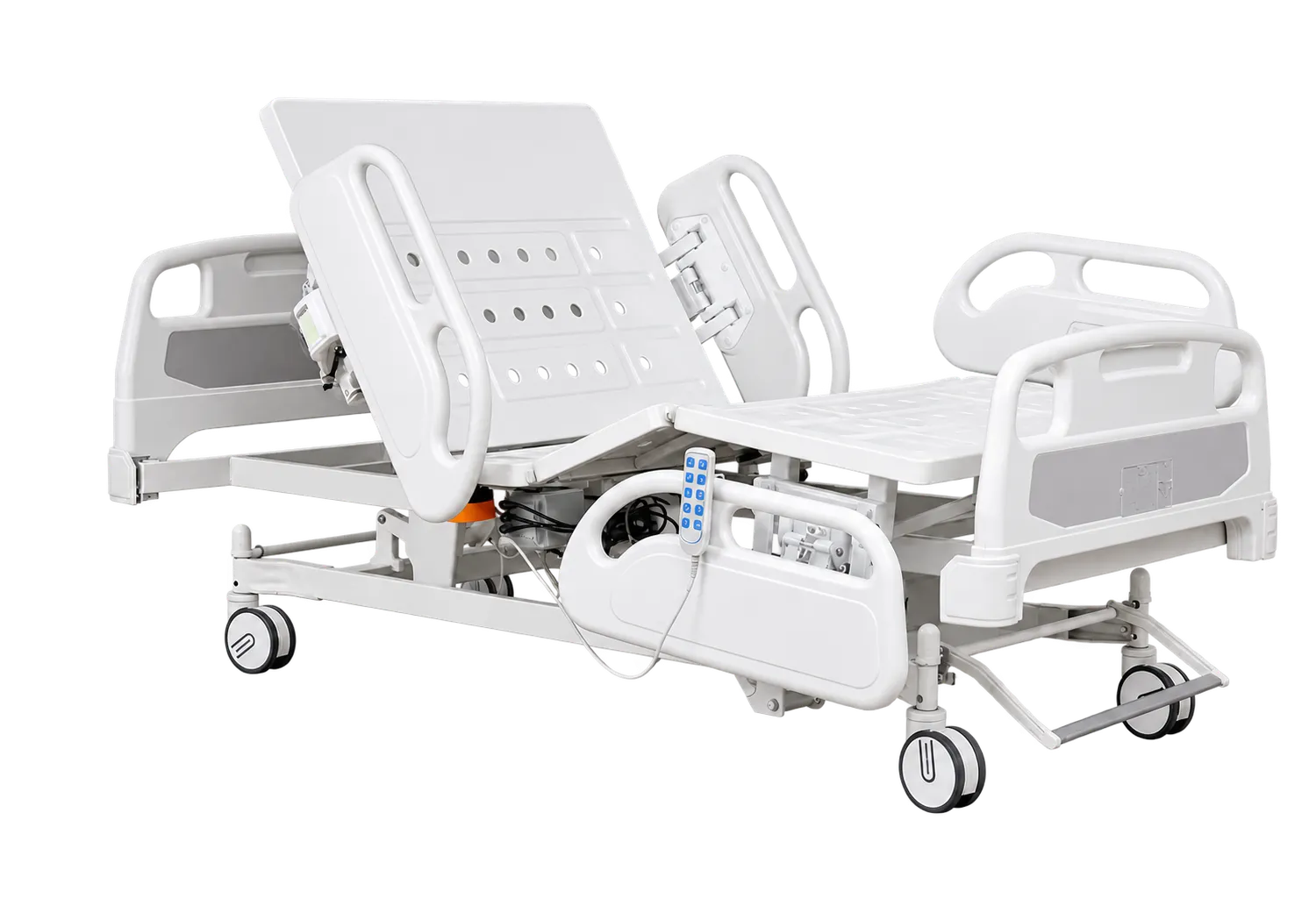
The JD-YLC5-09 is specified for general inpatient wards, and its case is strongest where a service is buying several beds rather than one.
Standardisation is the practical argument. A ward running a single bed model trains rotating and agency staff once, holds one set of spares, and runs one service schedule. Induction is shorter, hesitation at the controls disappears, and the delay that follows an unfamiliar bed during an urgent height drop or repositioning goes with it. Where a department mixes three or four models across bays — the usual result of buying in response to need rather than to plan — every one of those gains is lost.
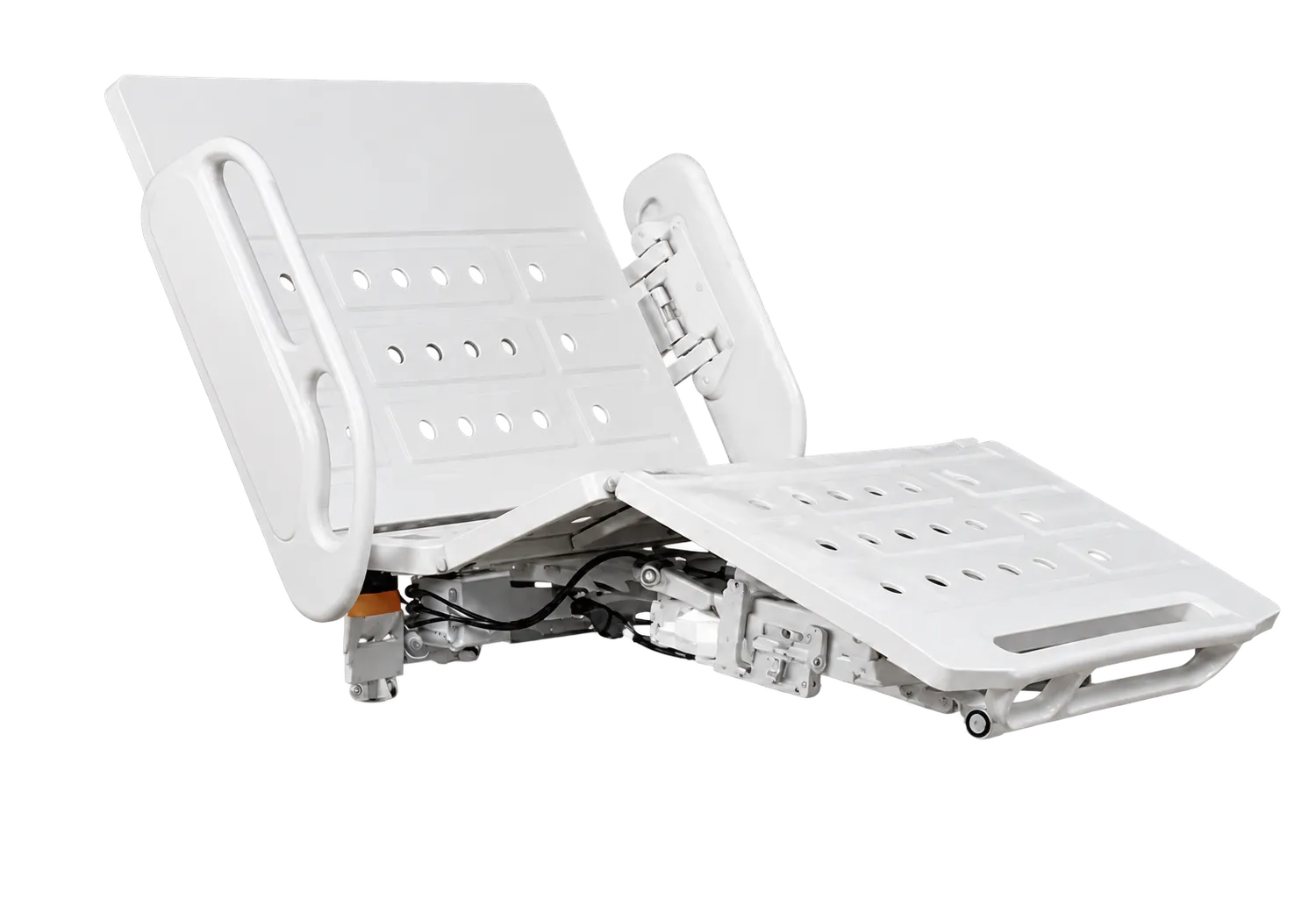
Clinically the positioning range covers routine inpatient work. Backrest travel to 75° brings a patient upright for meals, medication, respiratory comfort and conversation. Leg articulation to 40° supports knee-break positioning and limb elevation for oedema management after orthopaedic and vascular procedures. Both tilt directions are available, so reverse Trendelenburg for respiratory support and enteral feeding sits alongside the head-down position used in circulatory management.
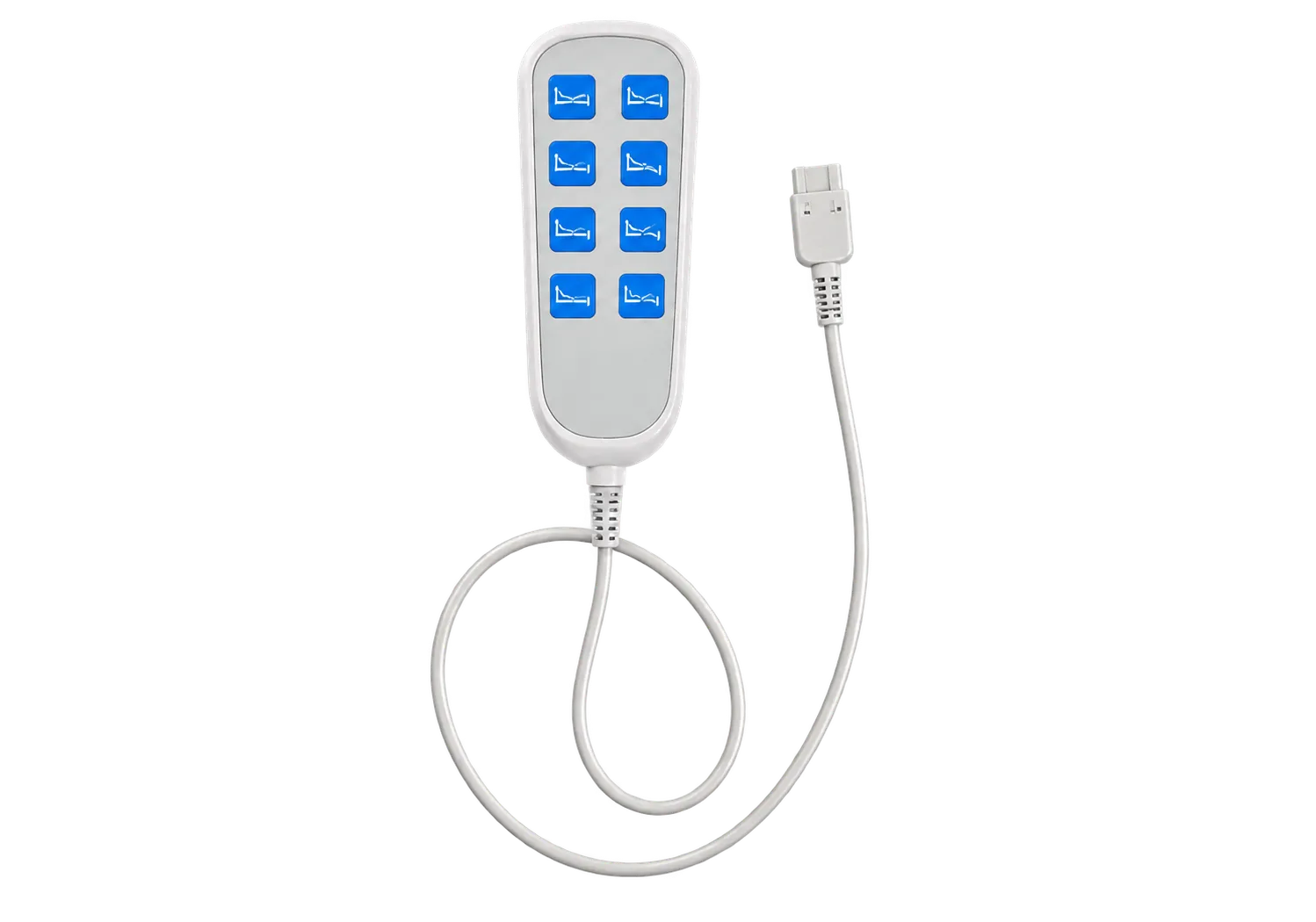
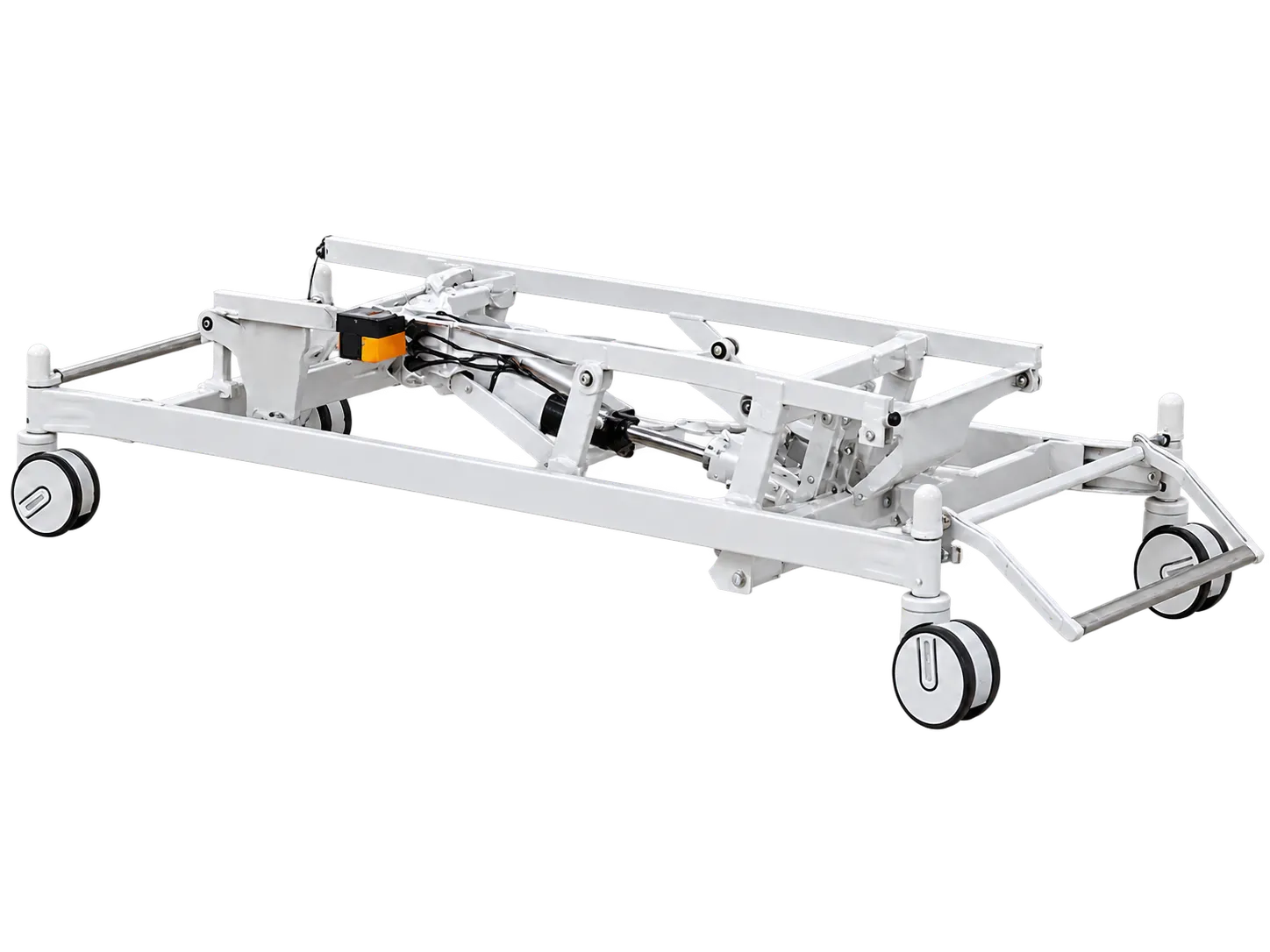
Powered height carries the manual-handling case. Raised, it removes the stooping behind a large share of nursing musculoskeletal injury during washing, dressing and wound care. Lowered, it supports supervised transfer and falls prevention built on safe egress rather than on rails.
Care of the elderly, rehabilitation, community hospitals, hospices, private hospitals and CQC-regulated providers use the same specification for routine inpatient care. Procurement teams working through NHS Supply Chain frameworks or trust and ICB routes should note NICE's late-stage assessment guidance on bed frames for adult acute wards; Medigear.uk supplies the conformity documentation those exercises require.