
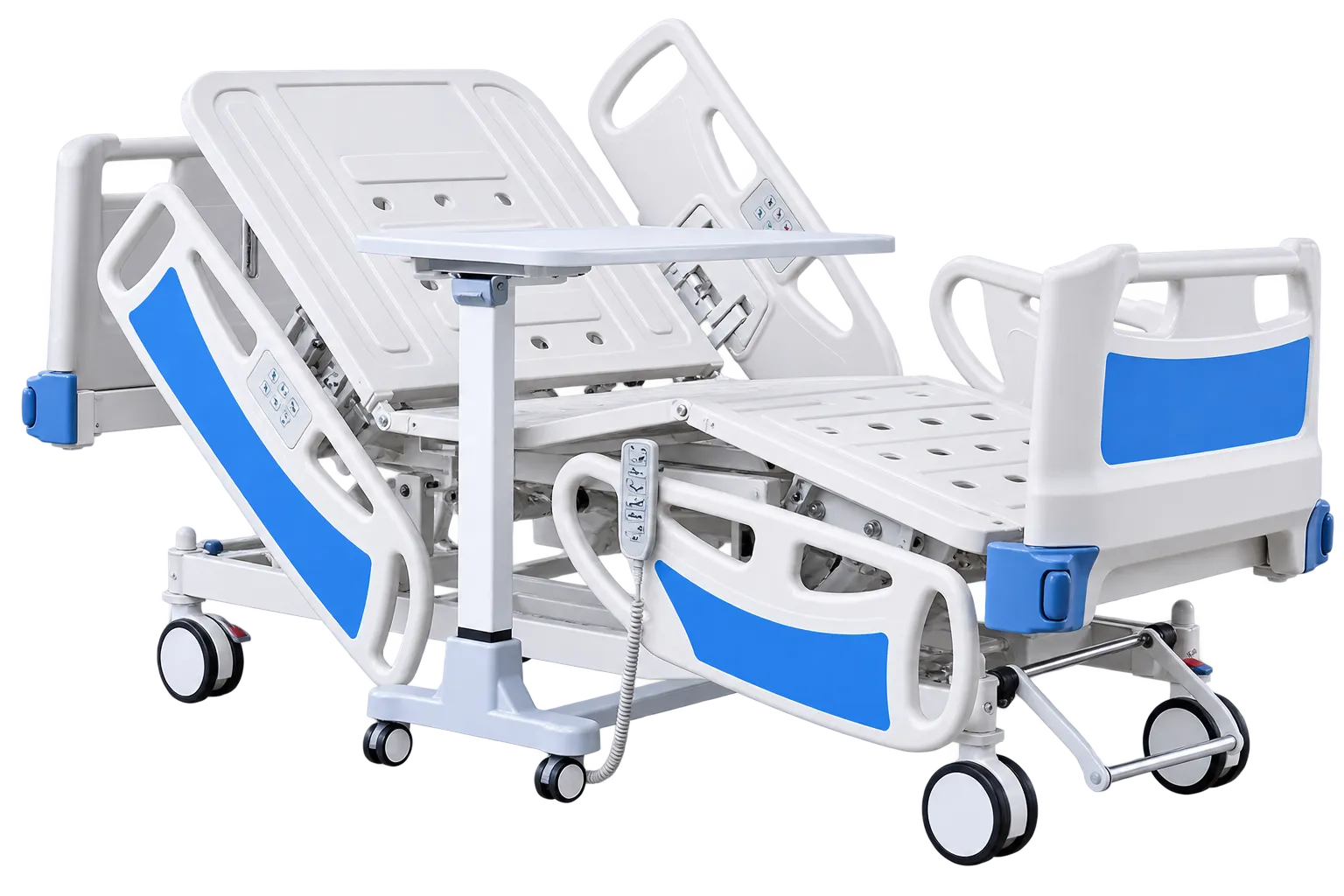





The JD-YLC5-05 suits general inpatient wards, rehabilitation units and longer-stay areas where the same bed serves a patient for weeks rather than days, and where eating, drinking, mobilising and being visited all happen in it.
Nutrition and hydration are where the backrest range earns its place. Patients who cannot sit properly upright are at greater aspiration risk during eating and drinking, and they consistently take in less than patients who are correctly positioned. NICE guidance on nutrition support in adults treats screening and assisted intake as core clinical practice, and the CQC inspects nutrition and hydration as a fundamental standard rather than an optional extra. A backrest reaching a genuine 75° allows a posture close to dining. The same position supports safer medication administration and easier respiratory effort.
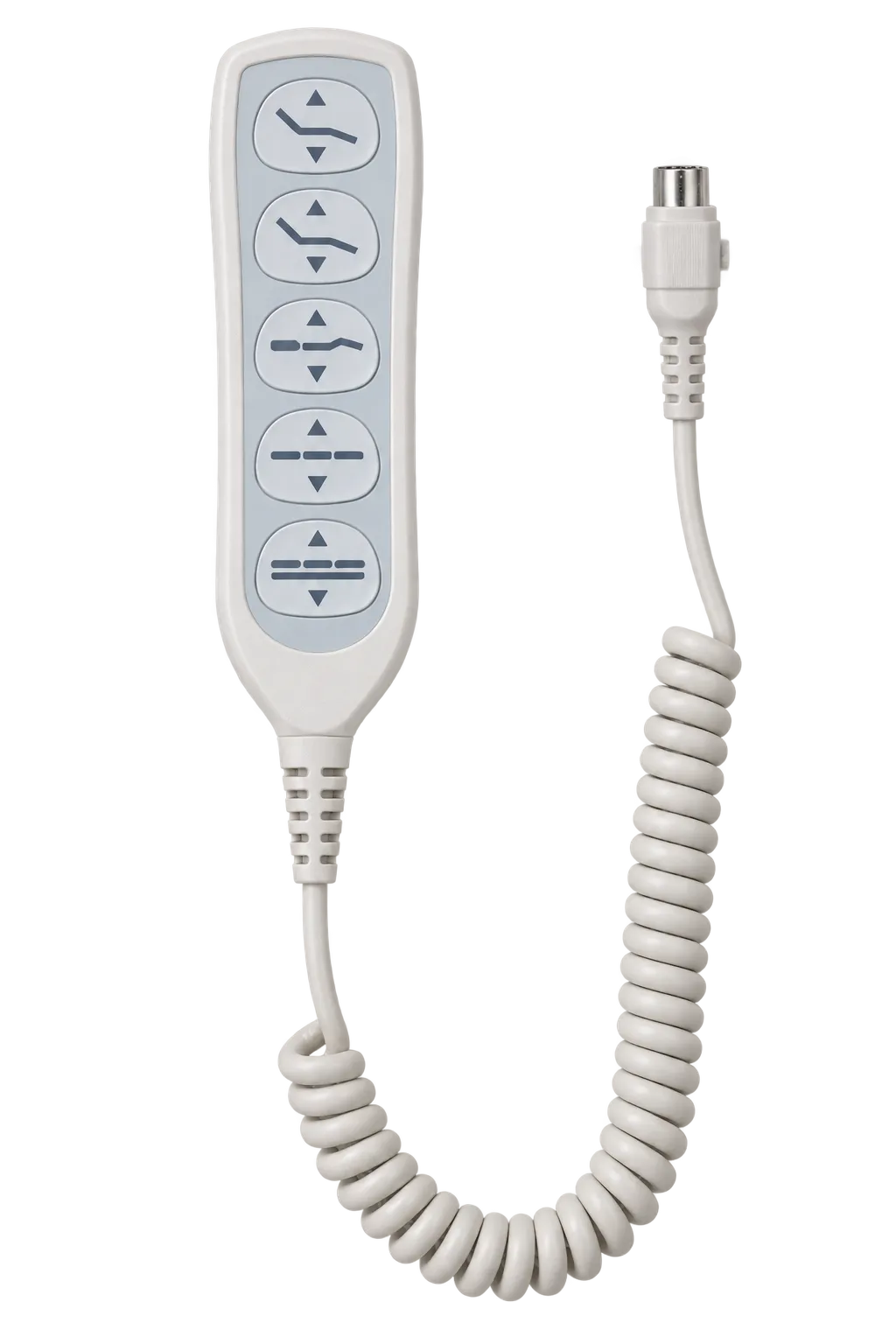
Powered height carries the other half of the workload. Raised, it protects staff from the cumulative back loading behind a large share of nursing musculoskeletal injury during washing, dressing and wound care. Lowered, it puts a patient's feet flat on the floor at a height from which supervised sit-to-stand is achievable — the movement most rehabilitation and discharge-to-assess pathways are organised around.
Leg-section articulation to 40° covers knee-break positioning and limb elevation for oedema management after orthopaedic and vascular procedures, while whole-frame forward tilt provides Trendelenburg positioning where circulatory management is indicated under nursing direction.
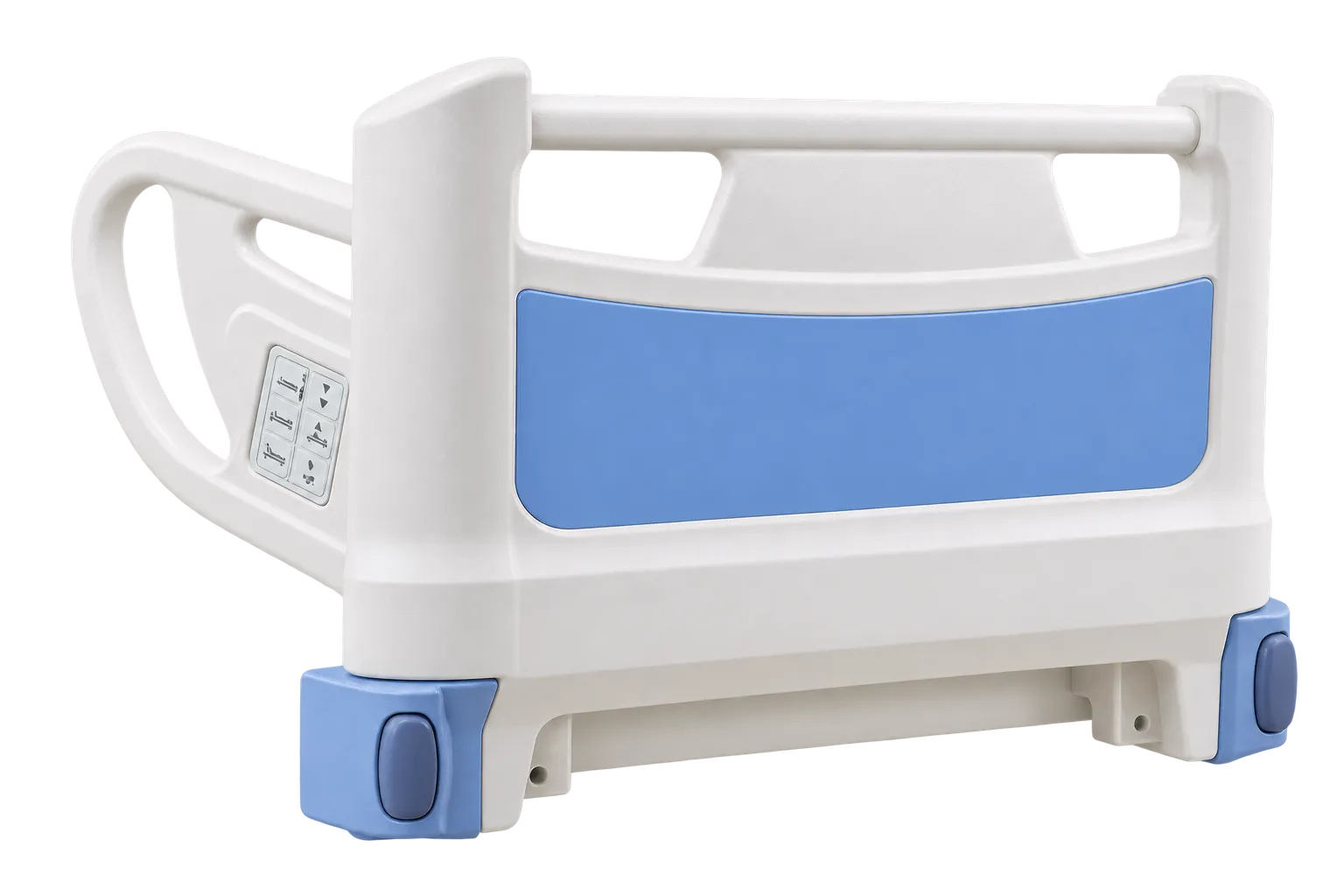
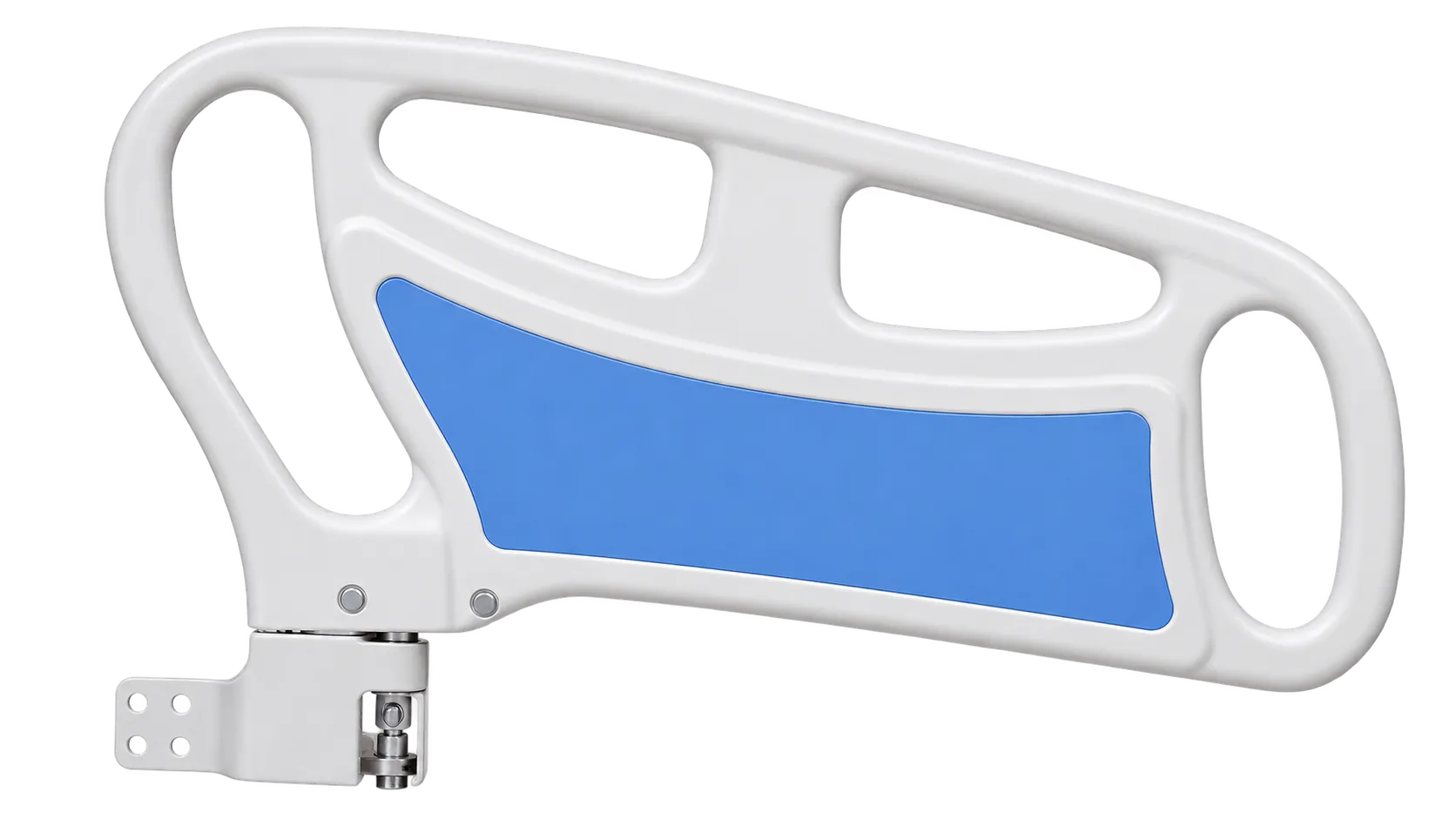
Care of the elderly wards, community hospitals, hospices and CQC-regulated private providers use the same specification for longer inpatient stays, where the guardrail grab openings support the repeated repositioning a patient does for themselves between rounds. Medigear.uk supplies the conformity documentation required by trust, ICB, and NHS Supply Chain procurement routes.