
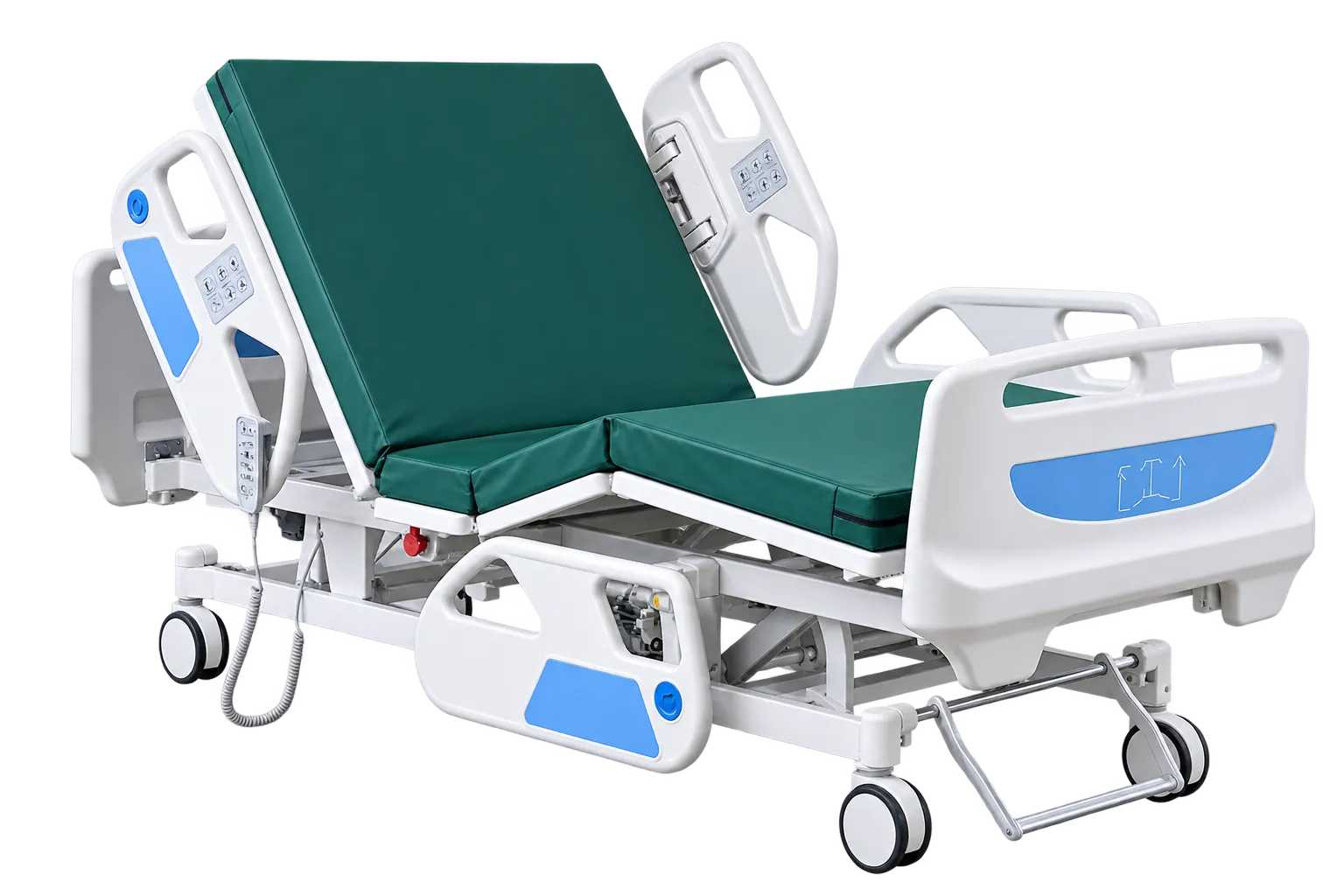



The JD-YLC5-04 is specified for the recovery phase rather than the acute phase—community hospitals, convalescent and step-down units, rehabilitation wards, and intermediate care beds that sit between an acute discharge and a return home.
In those settings, the clinical demand differs from an acute ward in a way that changes the specification. An acute bed mostly supports a patient who cannot move; a convalescent bed mostly supports a patient who is learning to move again. Powered height is the function that carries that work. Raised, it gives staff a working level that protects against the cumulative back loading behind a large share of nursing musculoskeletal injury. Lowered, it puts the patient's feet flat on the floor at a height where supervised sit-to-stand is achievable, which is the movement most rehabilitation and discharge pathways are built around.
Backrest and leg articulation cover everyday positioningfora longerstaysy: sitting up for meals and visitors, knee-break support, and limb elevation for oedema management after orthopaedic or vascular procedures. Forward whole-frame tilt provides Trendelenburg positioning where circulatory management is indicated under nursing direction.
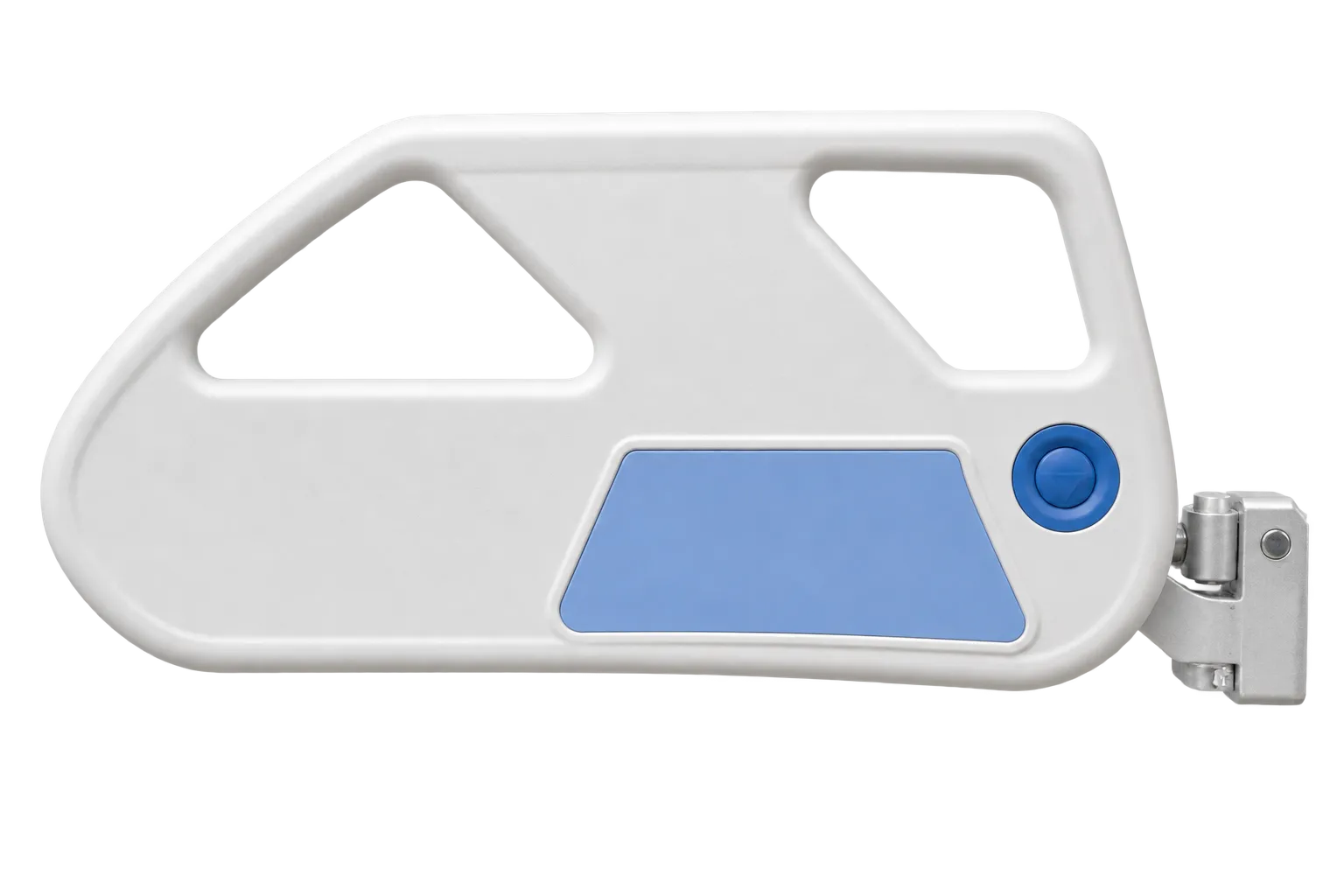
Rehabilitation and care of the elderly wards make the most of the guardrail grab openings. A patient using a defined hand hold to reposition is rehearsing, several times daily, the movement pattern they must use unsupervised at home — which aligns with the early-mobilisation emphasis running through UK rehabilitation practice and with the discharge-to-assess pathways operating across most Integrated Care Boards.
Hospices, CQC-regulated care providers and private hospitals use the same specification for longer-stay inpatient care. Medigear.uk supplies the conformity documentation required by trust, ICB, and NHS Supply Chain procurement routes.