
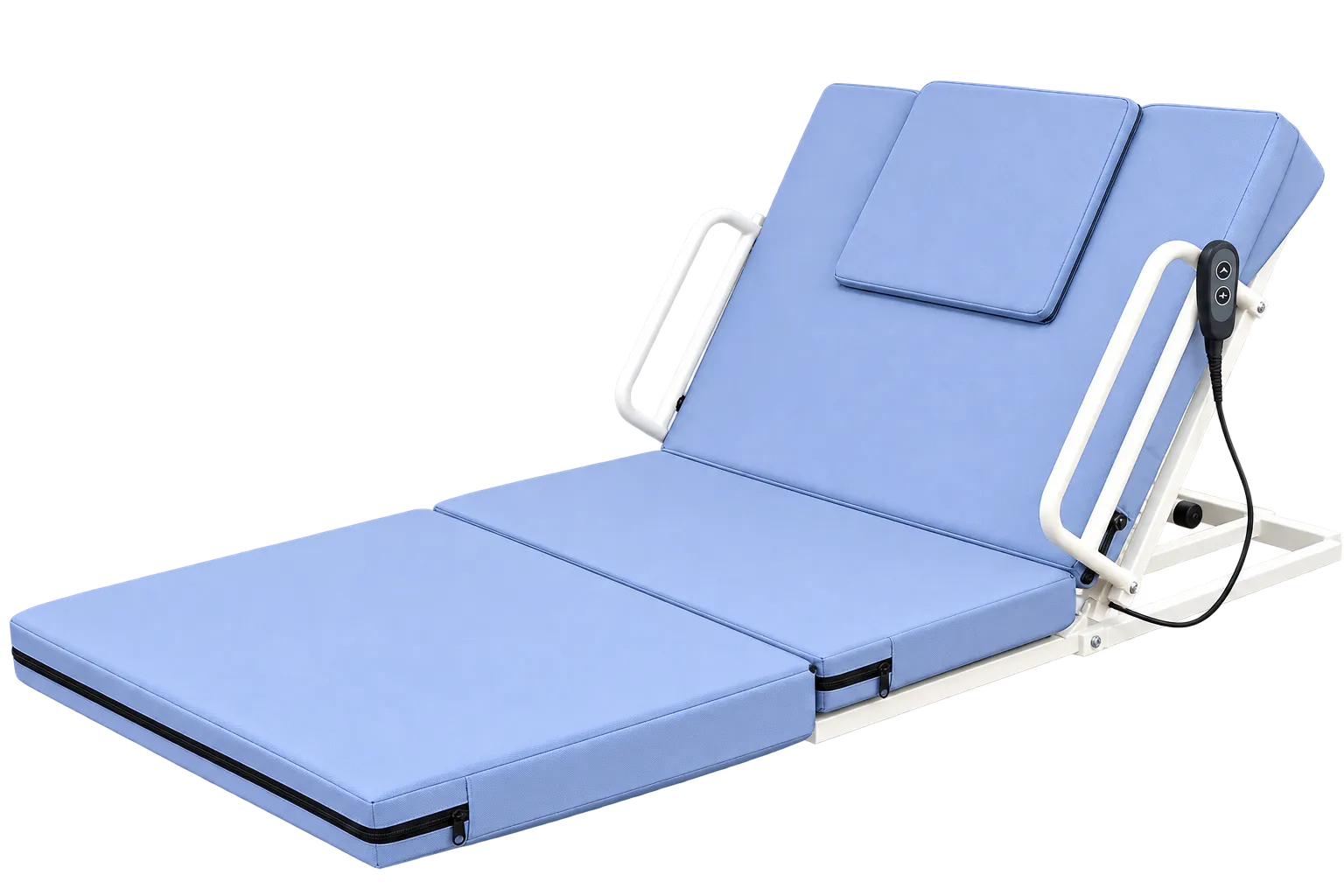
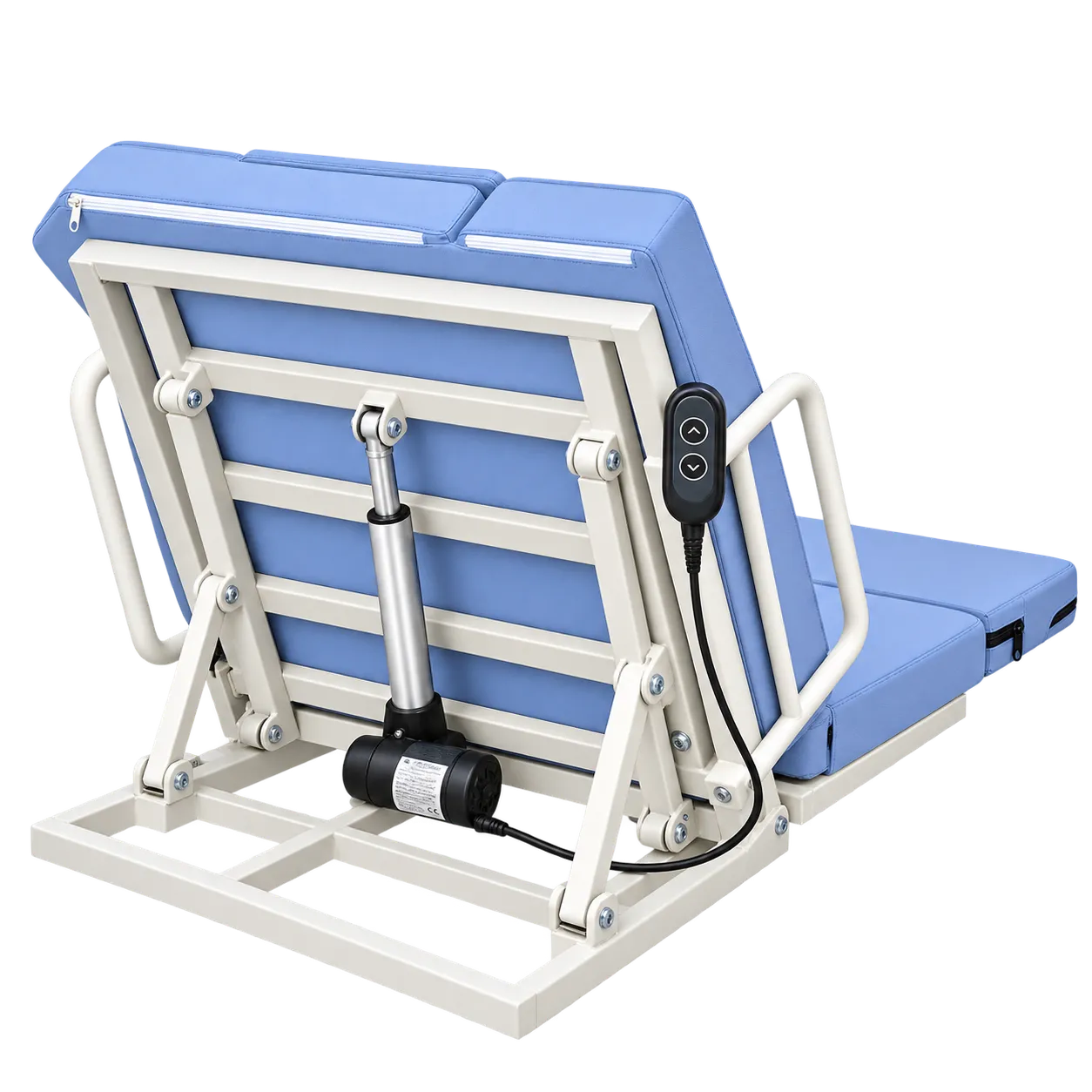
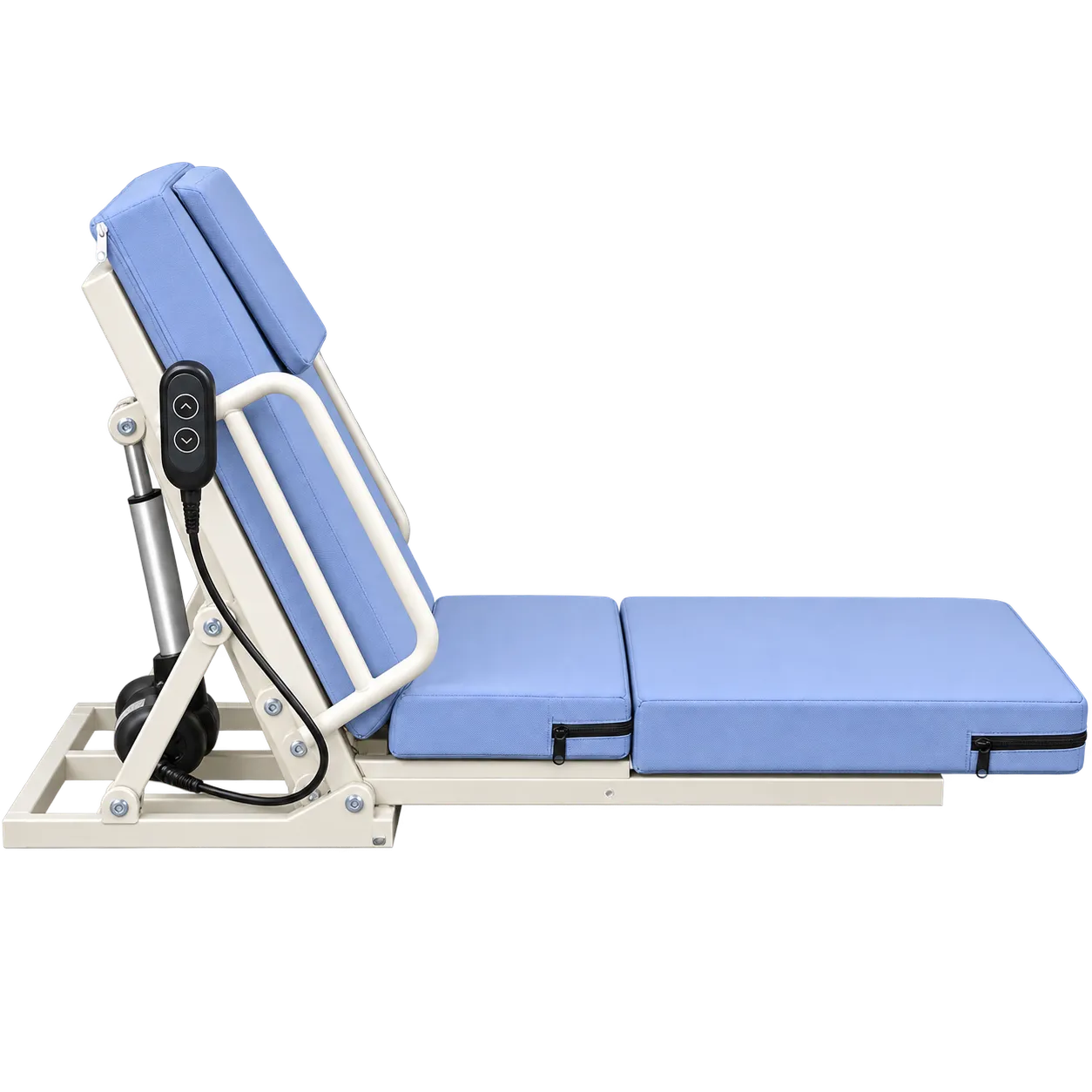
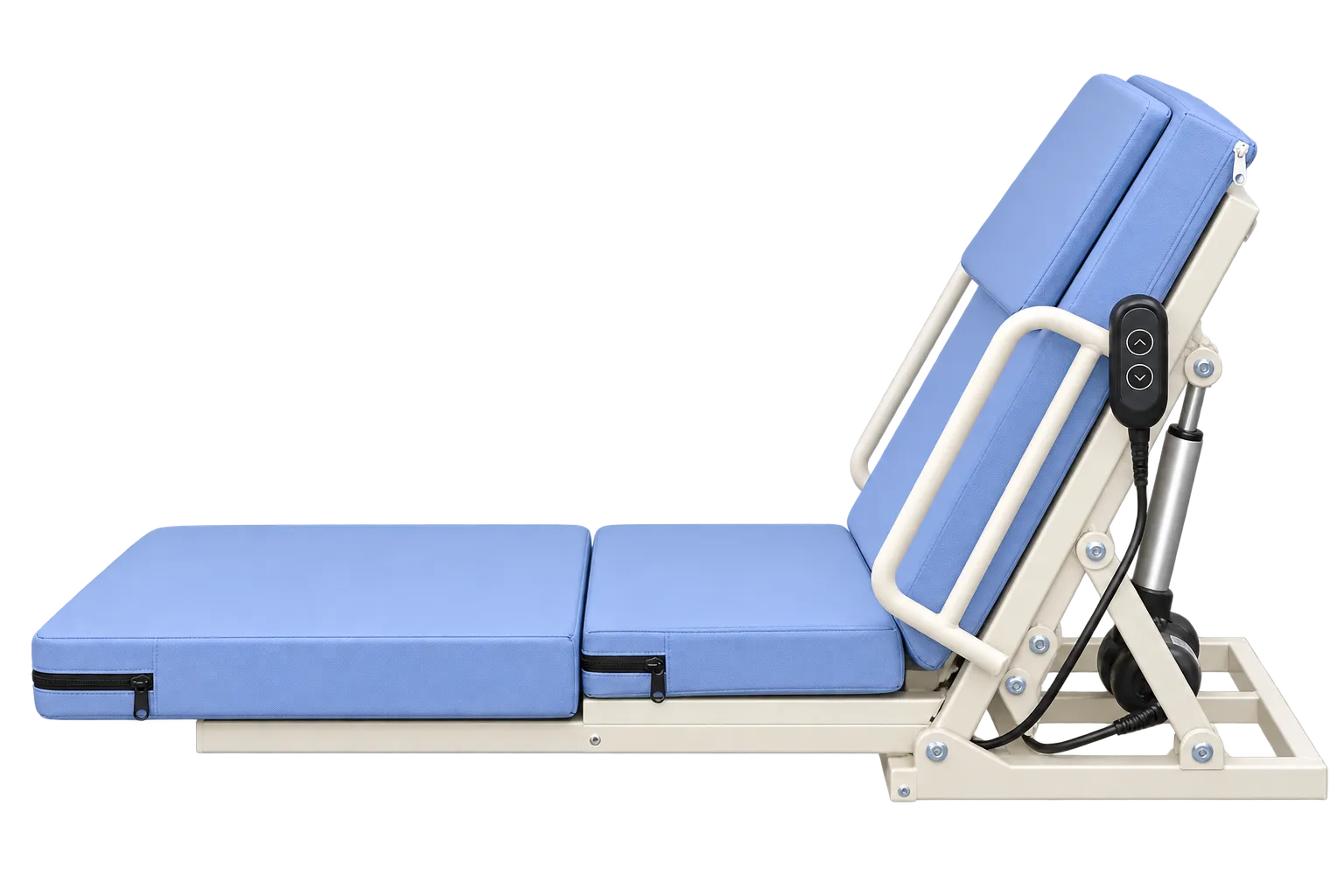
Tissue viability holds the central question. Raising a backrest over a flat base produces sliding, and sliding produces shear at the sacrum — so the decision is whether this product suits the person's risk, and what repositioning regime goes alongside it if it does.
Care planning should treat repositioning here as scheduled work rather than something noticed. Checking position after each elevation and at intervals, and bringing somebody back up with a slide sheet rather than dragging, are both tasks with a time cost that belongs in the plan.
Moving-and-handling leads should note the retrieval as well as the elevation. Somebody who has migrated down the surface has to be brought back, and how that is done determines whether the handling risk lands on a carer's back.
Equipment services should record the frame and the host bed as one asset, with the added height held alongside. Procurement routes across NHS trusts, local authority equipment services and independent providers each ask for their own evidence. The conformity documentation those procurement routes require is issued by the manufacturer and provided by the seller.