
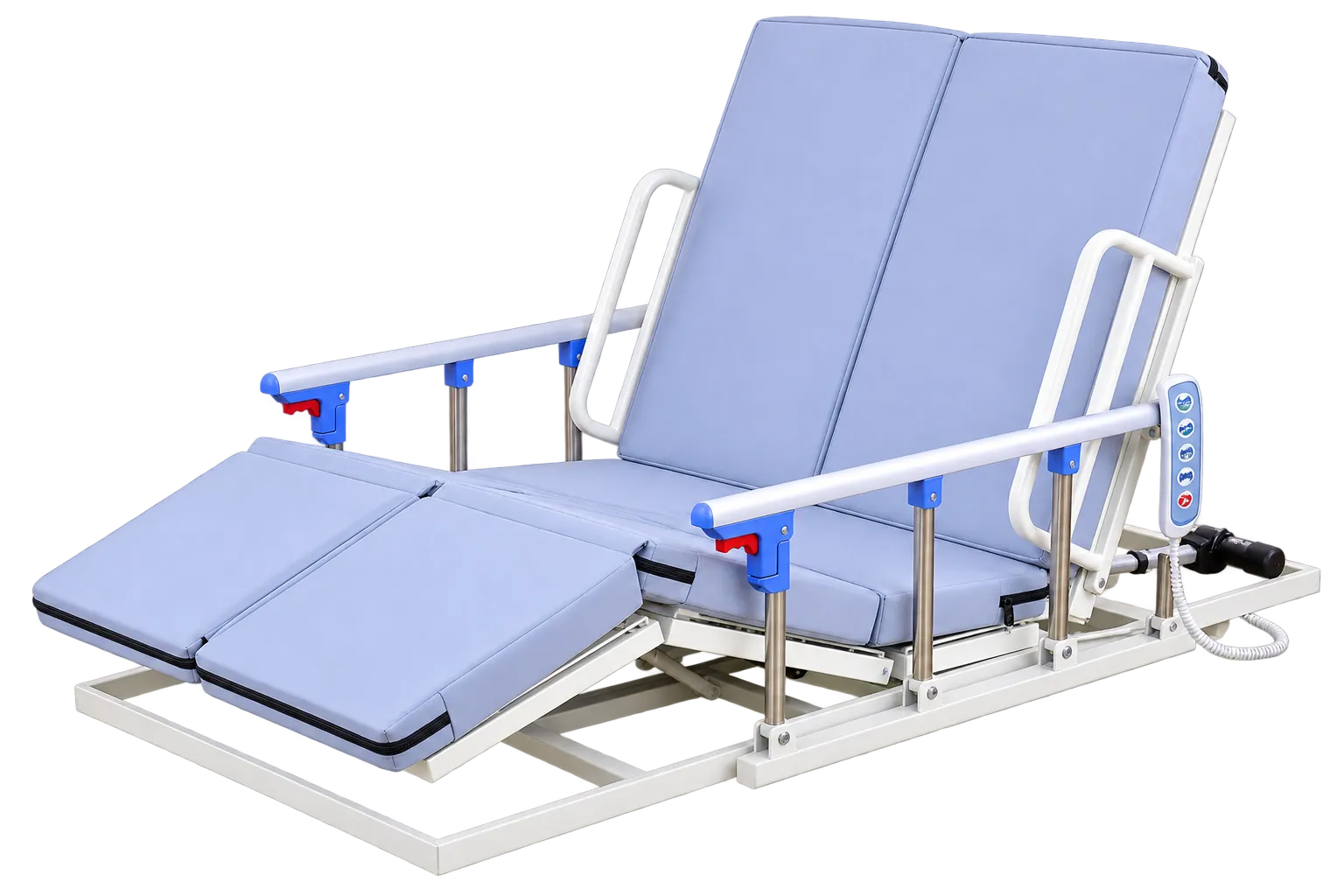
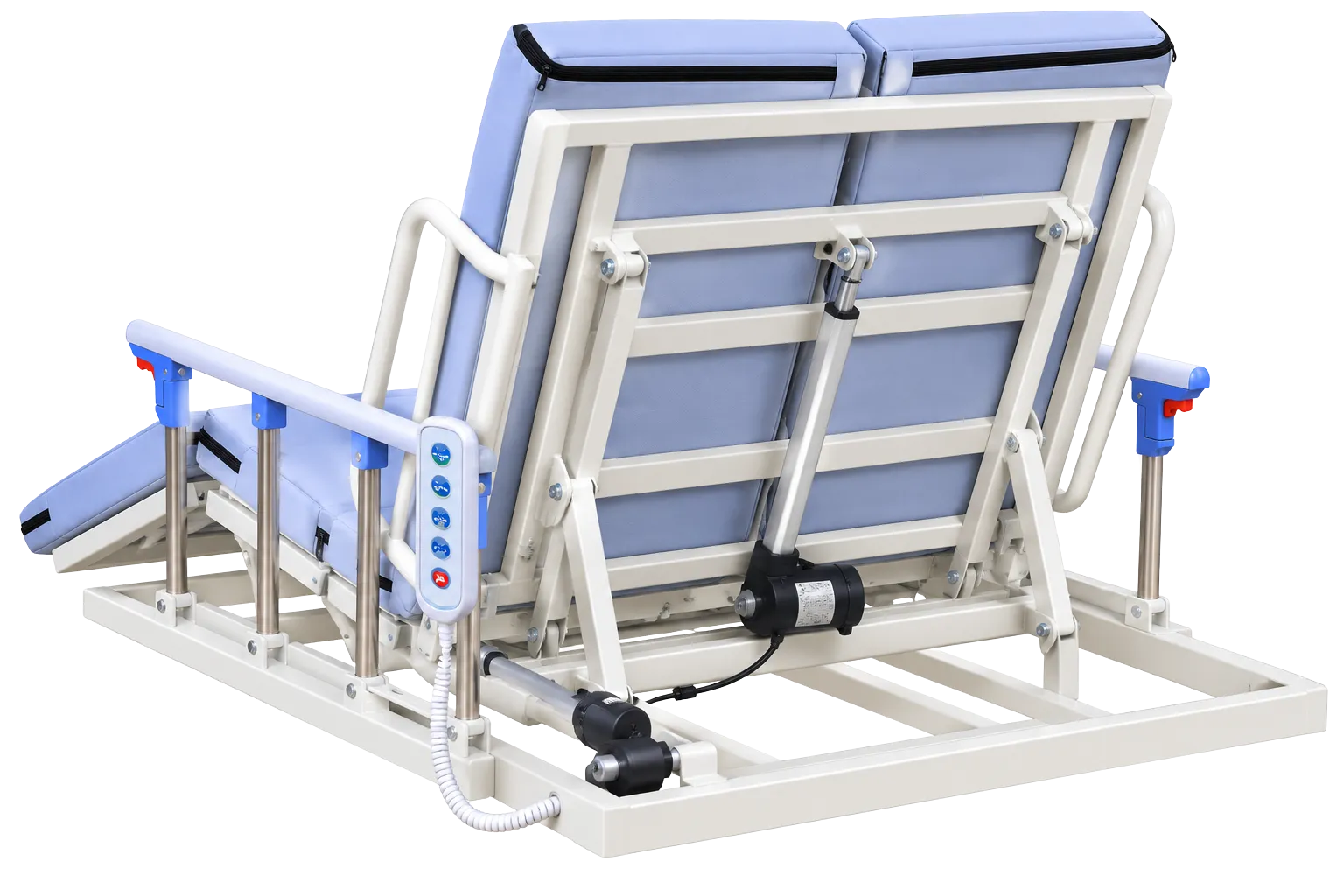
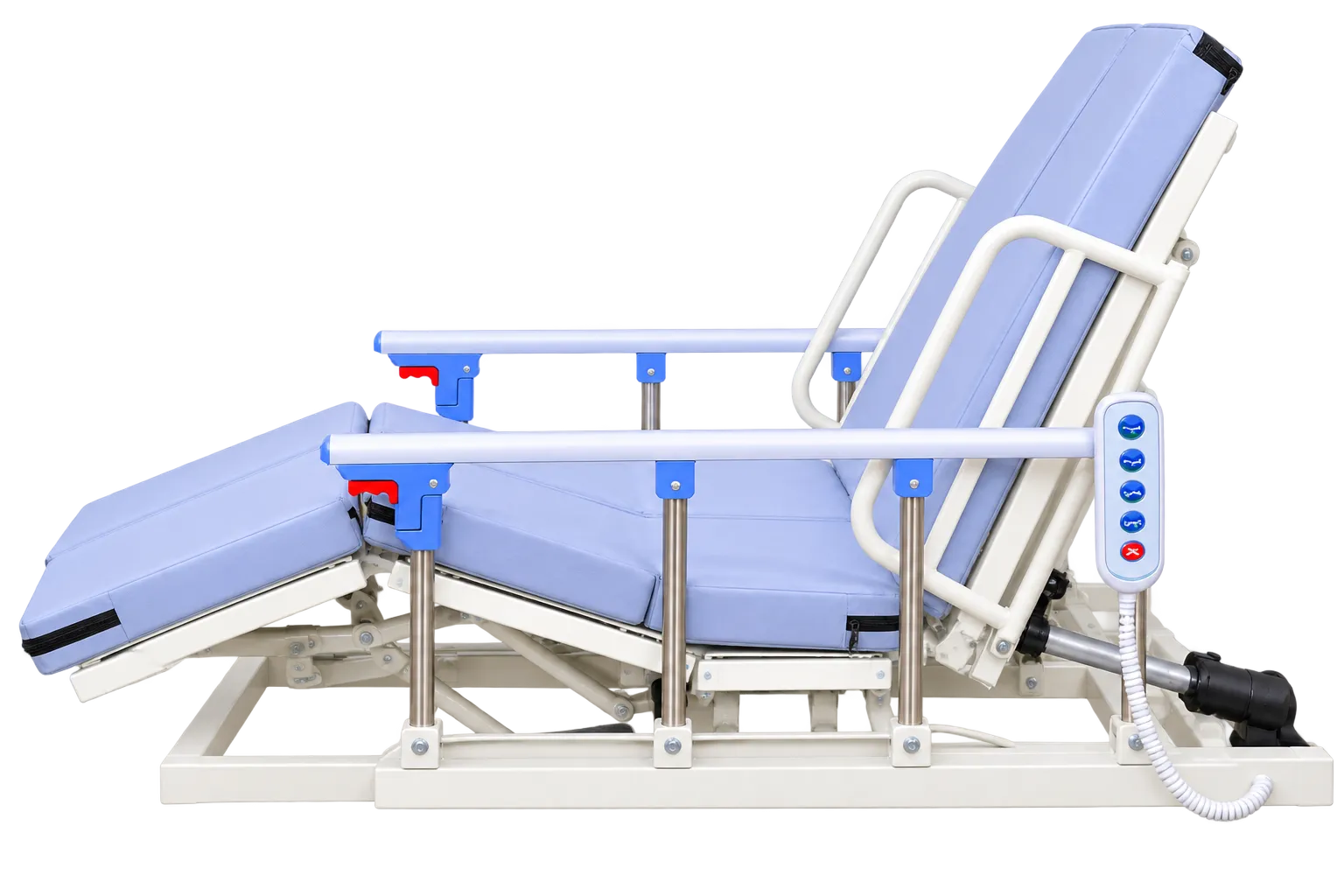
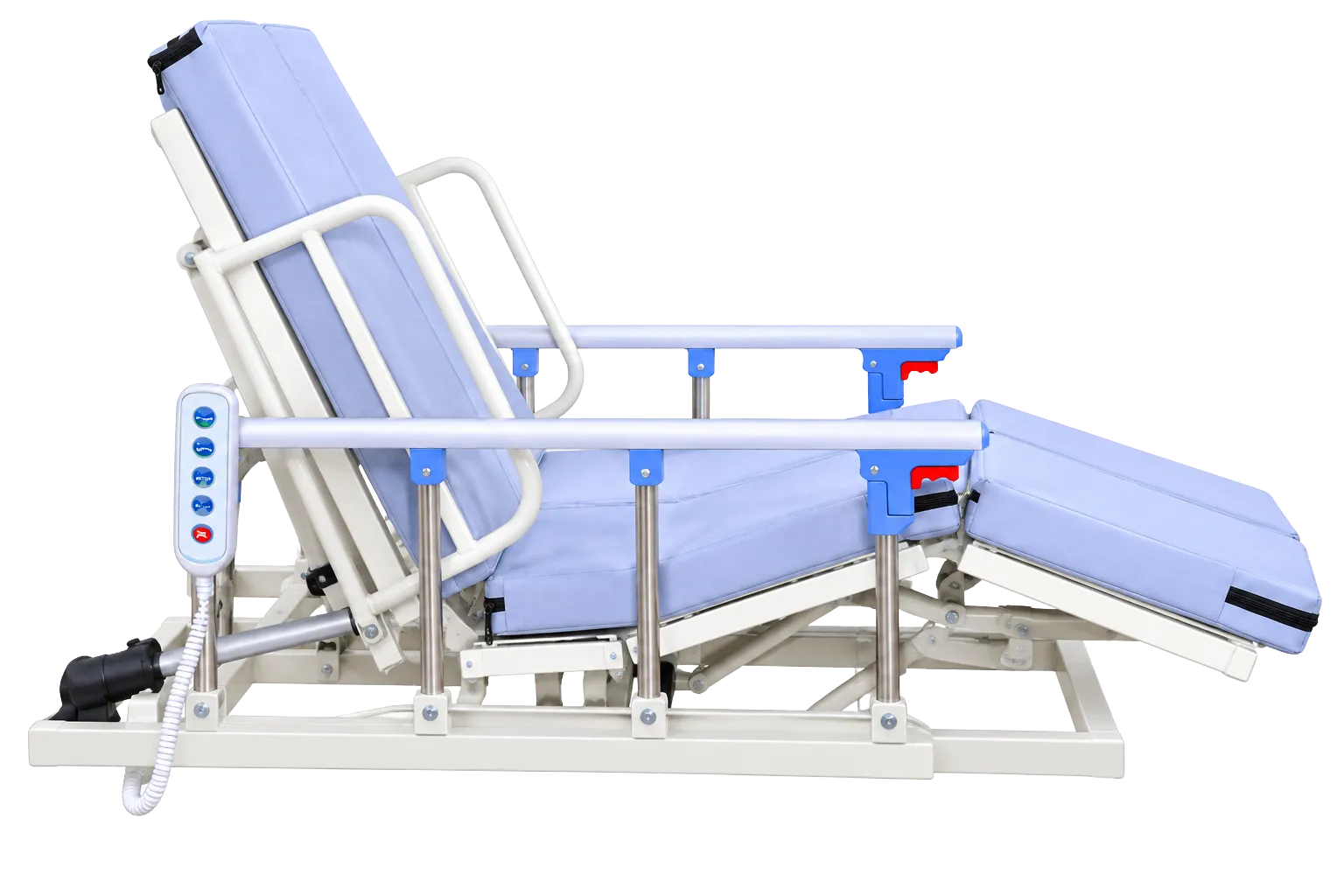
Whoever holds the bed rail risk assessment has to redo it. Adding an insert raises the sleeping surface, and rail height is measured from that surface upward — so every existing rail becomes shorter in relation to the occupant the moment the frame goes in. Re-measure before rails are used again.
Community and home placements are the obvious market, since the product offers movement without replacing a bed somebody is attached to. That benefit is real, and it depends entirely on the host bed being capable of carrying a powered frame and an occupant through movement.
Tissue viability teams should look at the turning function specifically. Powered repositioning to left and right has genuine value for pressure care, and it needs an angle range, a speed and an account of what supports the person during and after the turn.
Equipment services should treat the insert and the host bed as one asset record. Procurement routes across NHS trusts, local authority equipment services and independent providers each ask for their own evidence. The conformity documentation those procurement routes require is issued by the manufacturer and provided by the seller.