
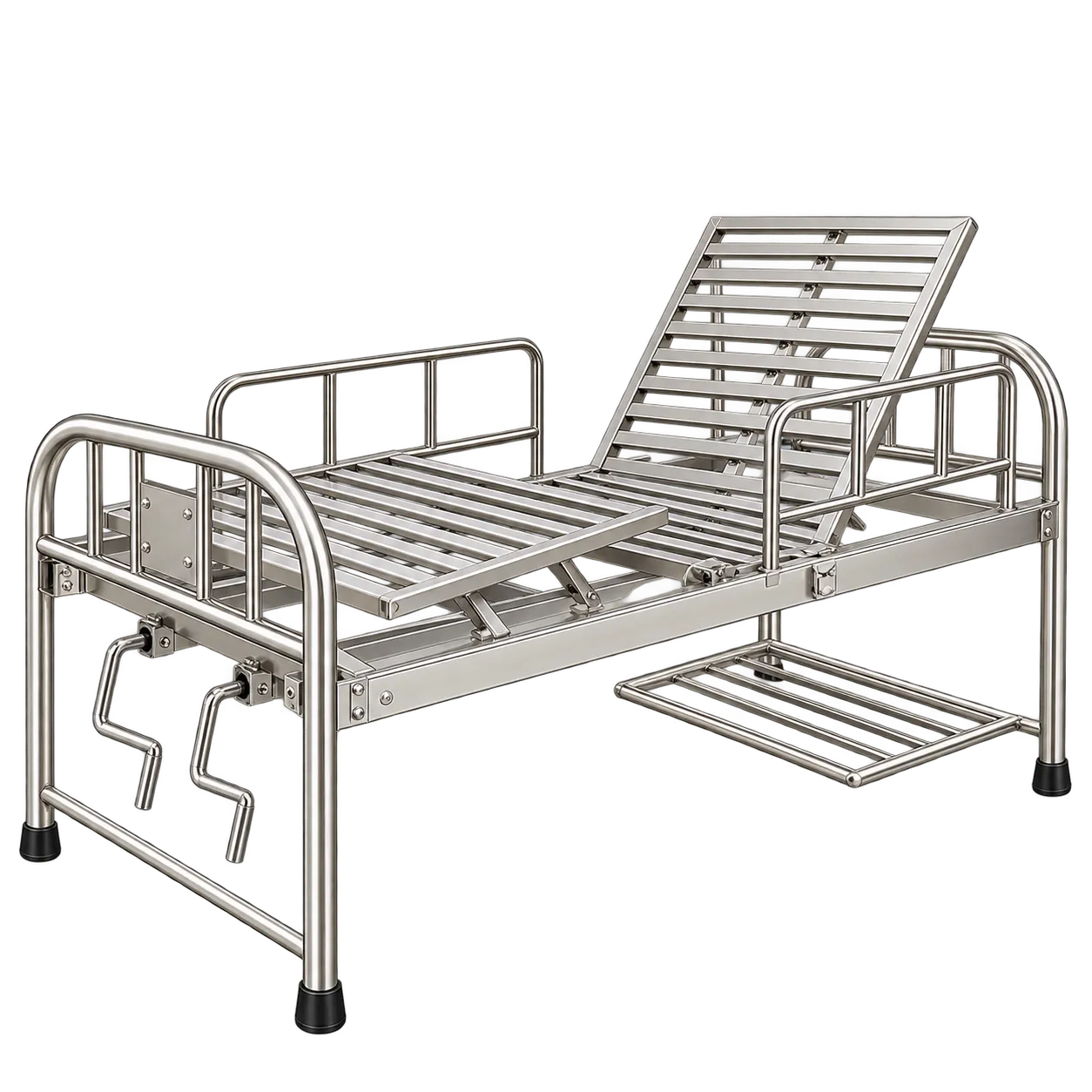
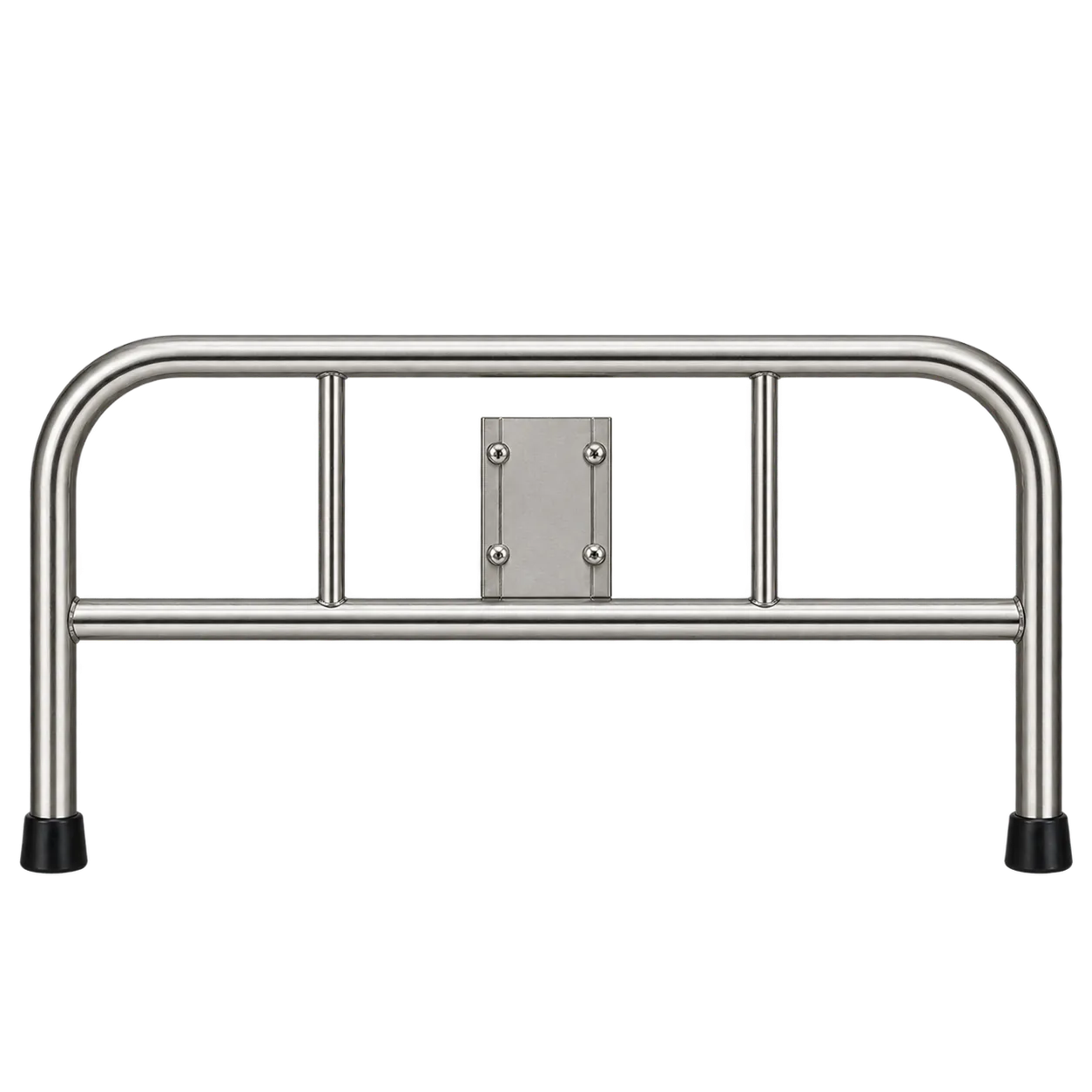
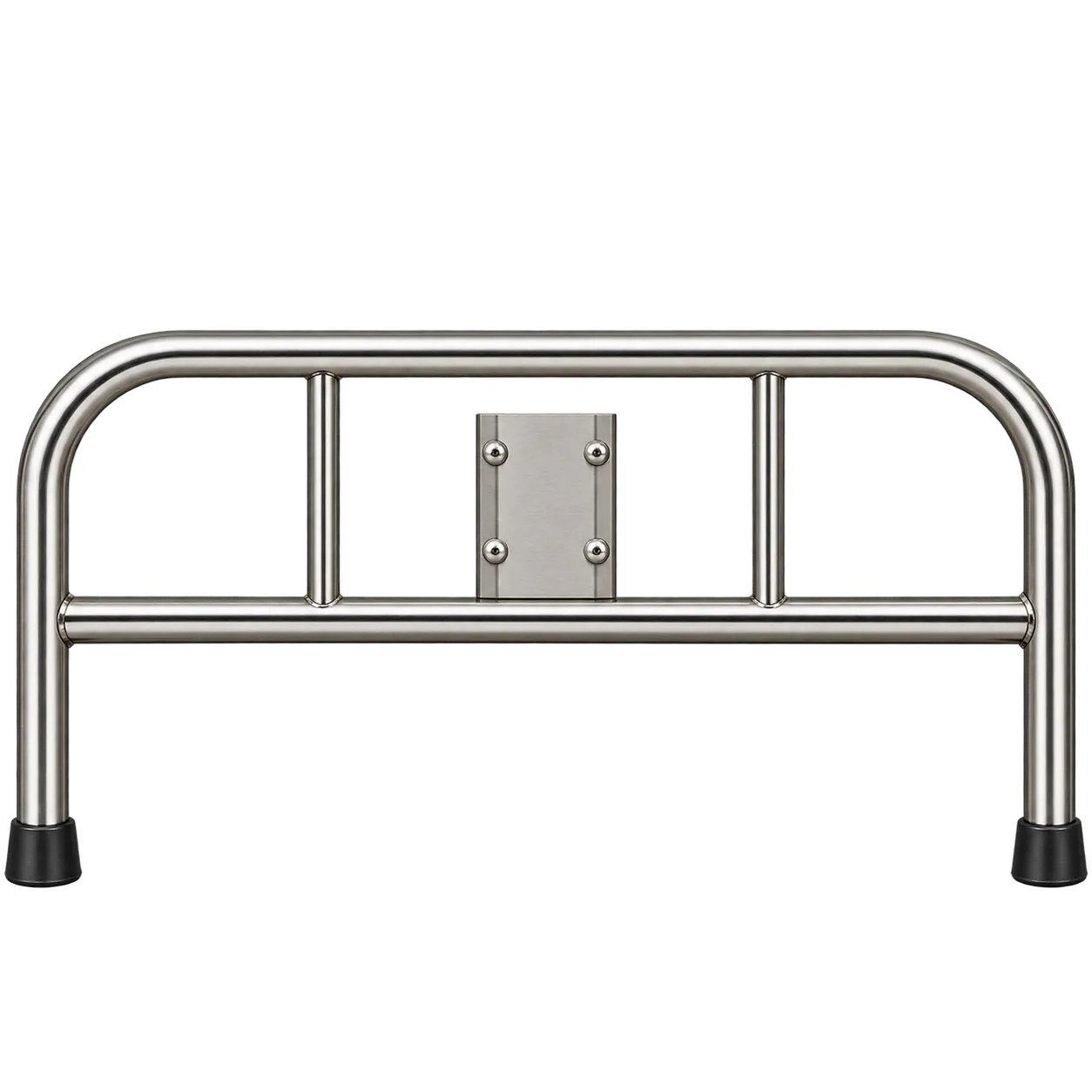
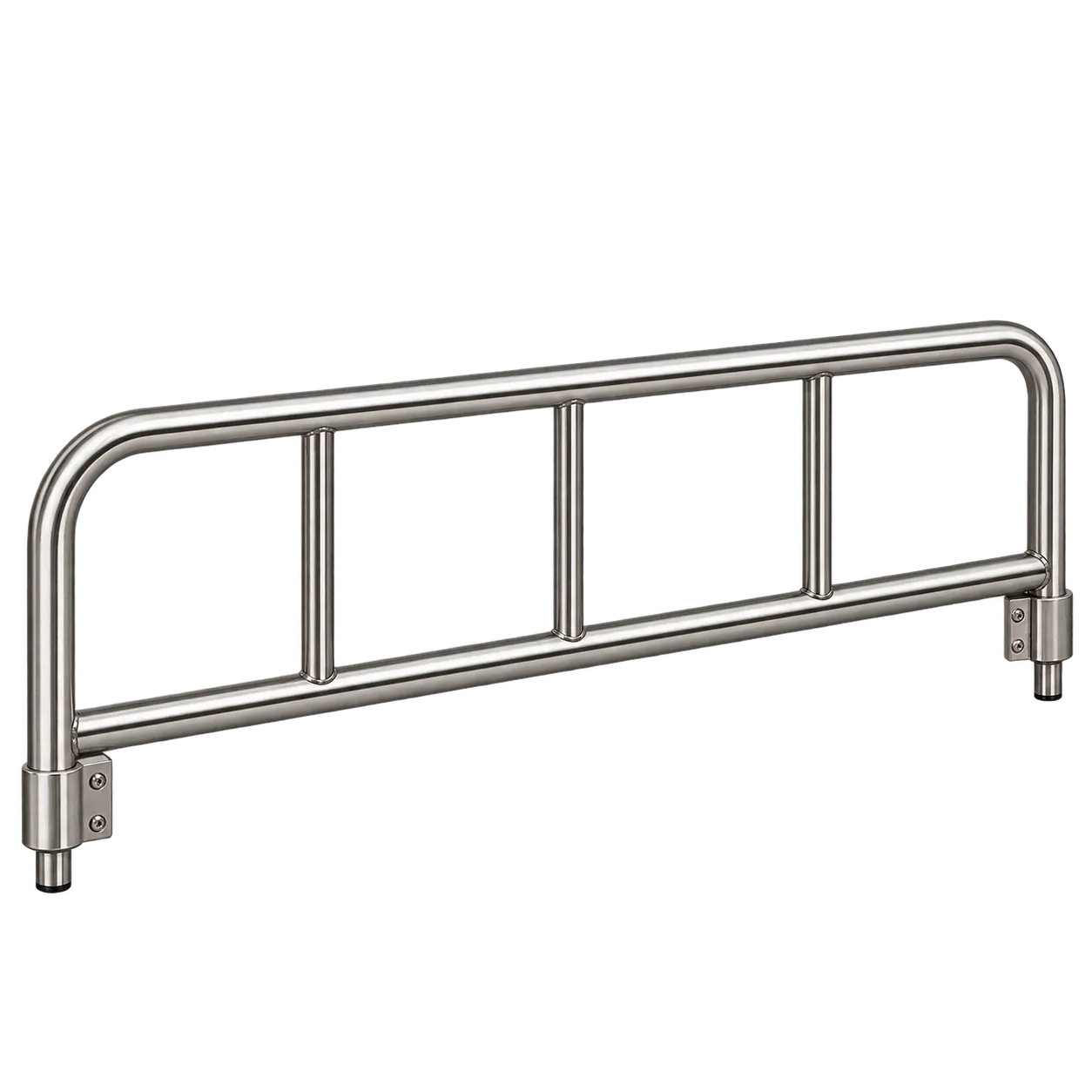
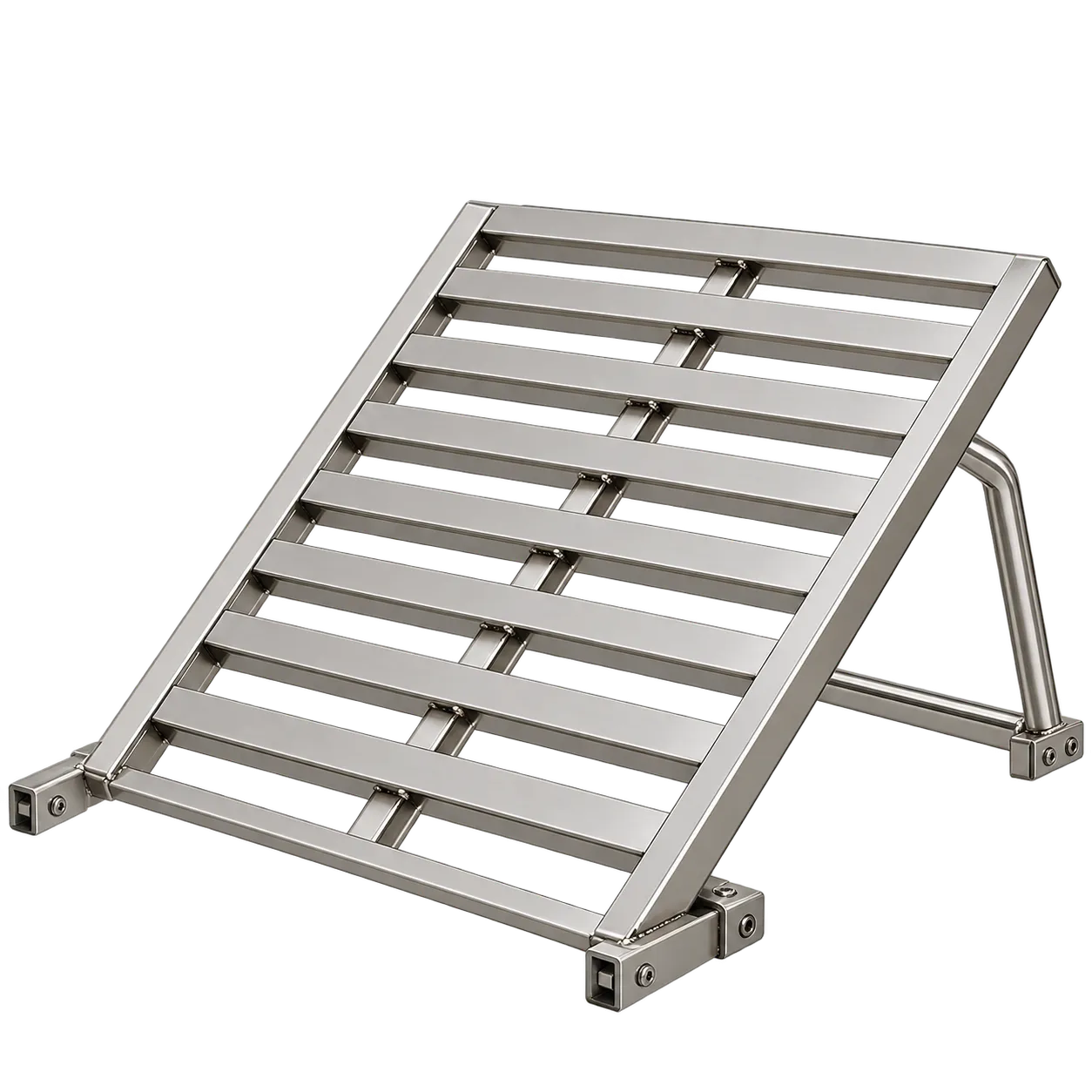
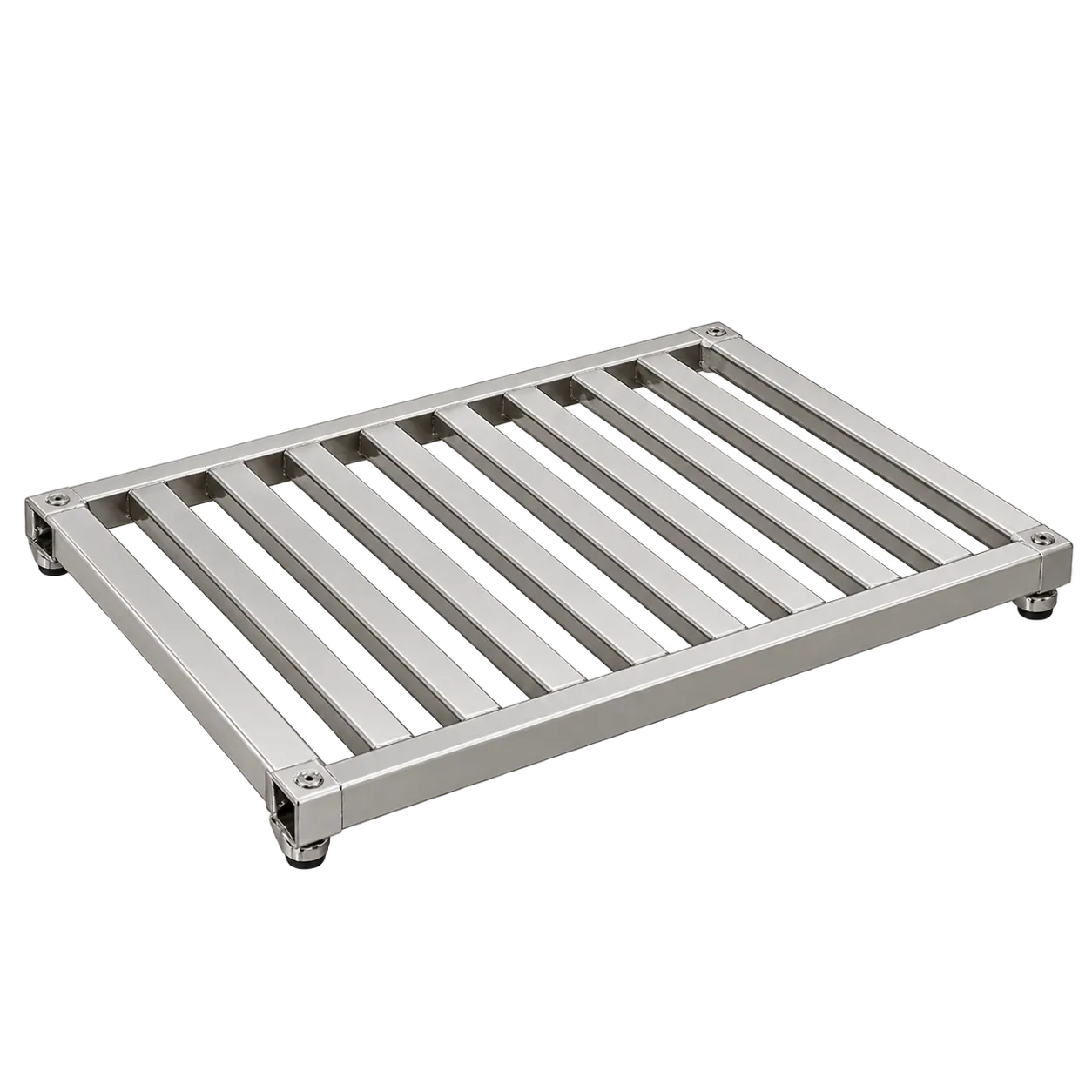
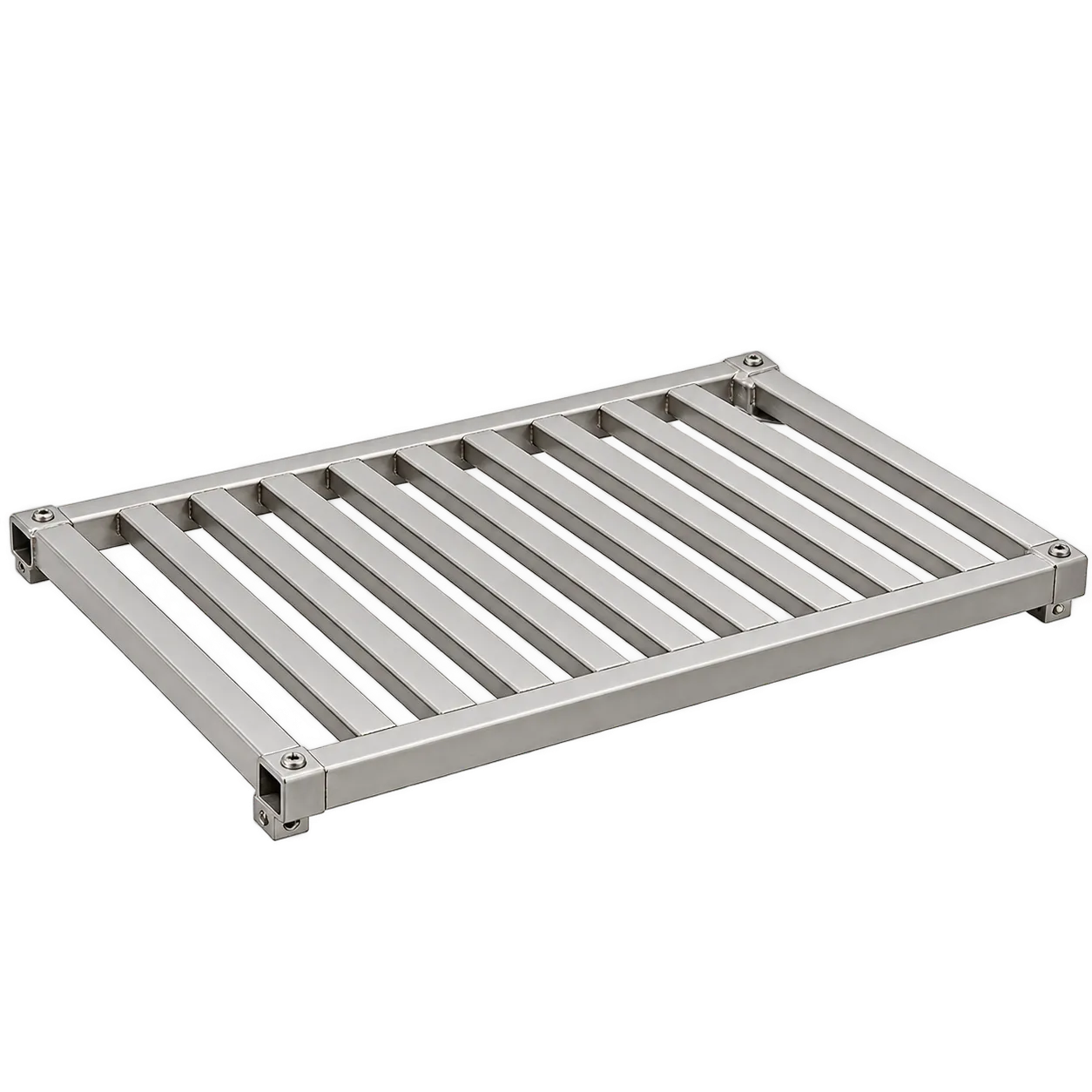
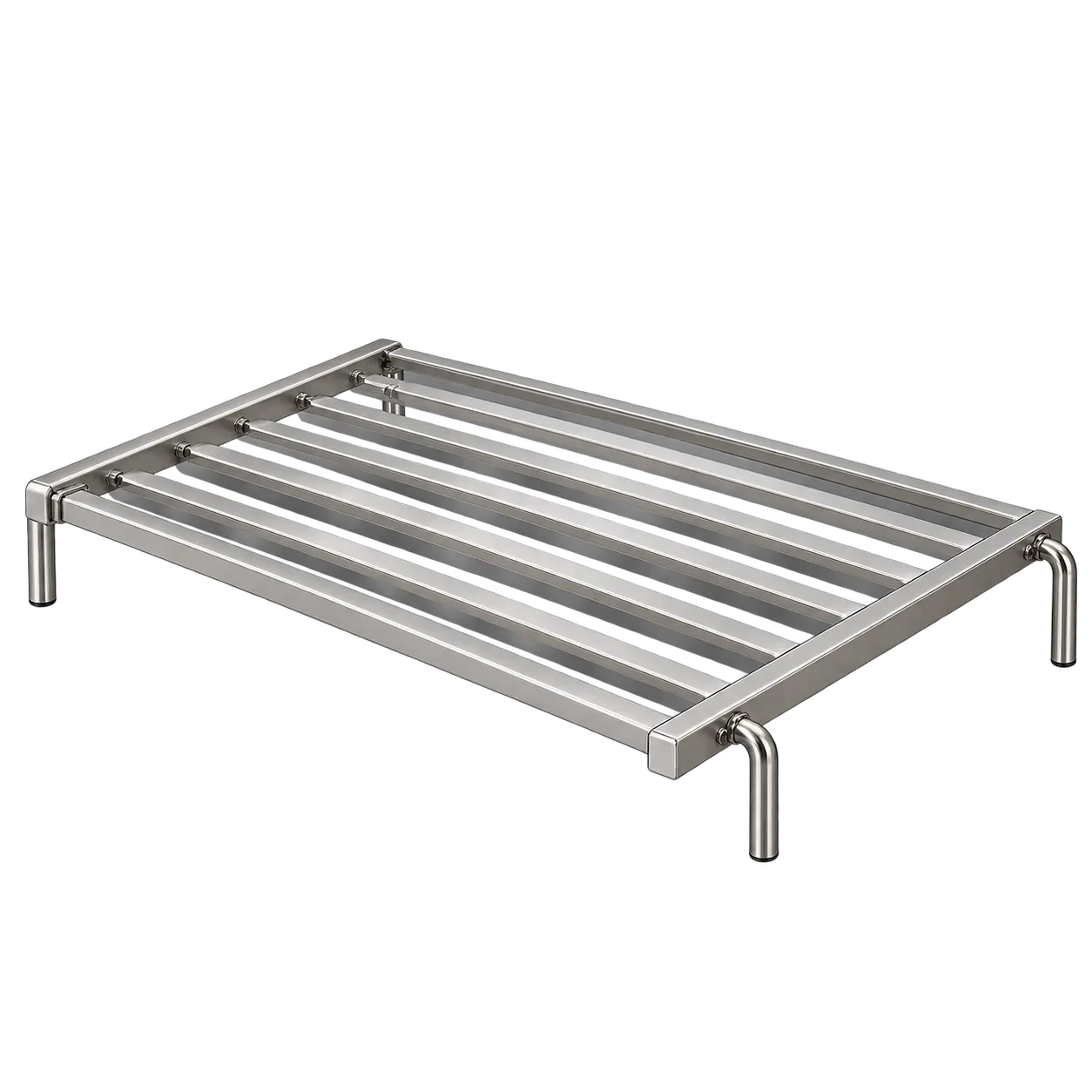

Isolation rooms and outbreak bays are the setting this frame is specified for. Where a room is cleaned to a higher standard and more often than the rest of a ward, a frame with no painted coating and no moulded panel gives the cleaning team a surface that takes the regime without degrading. The slatted deck visible in photography drains and dries, which matters when a bed is cleaned wet rather than wiped. Obtain the steel grade and the disinfectant advice first, so the cleaning protocol is written to the frame rather than assumed from the material.
Humid and wet environments suit it for the same reason. Hydrotherapy support areas, sluice-adjacent rooms and settings where condensation is a fact of life are hard on painted and coated equipment, and a stainless frame carries no coating to fail. The trade-off is that fixings and mechanisms need the same attention as the tube, so ask which components are stainless and which are not.
Fixed-bay wards and long-stay rooms are the natural fit for a static frame. Where a bed is installed once and stays put, the absence of castors removes a maintenance item and a source of unwanted movement. Rooms need to be laid out for it though, with permanent clearance on every side staff work from and an evacuation plan that assumes transfer rather than rolling.
Veterinary, laboratory-adjacent and public-sector settings sometimes specify all-stainless equipment for the same durability reasons. Where the bed is not applied to human patients, UK MDR 2002 does not govern it, and any CE marking should not be presented as medical device conformity. The conformity documentation each procurement route requires is issued by the manufacturer and provided by the seller.