
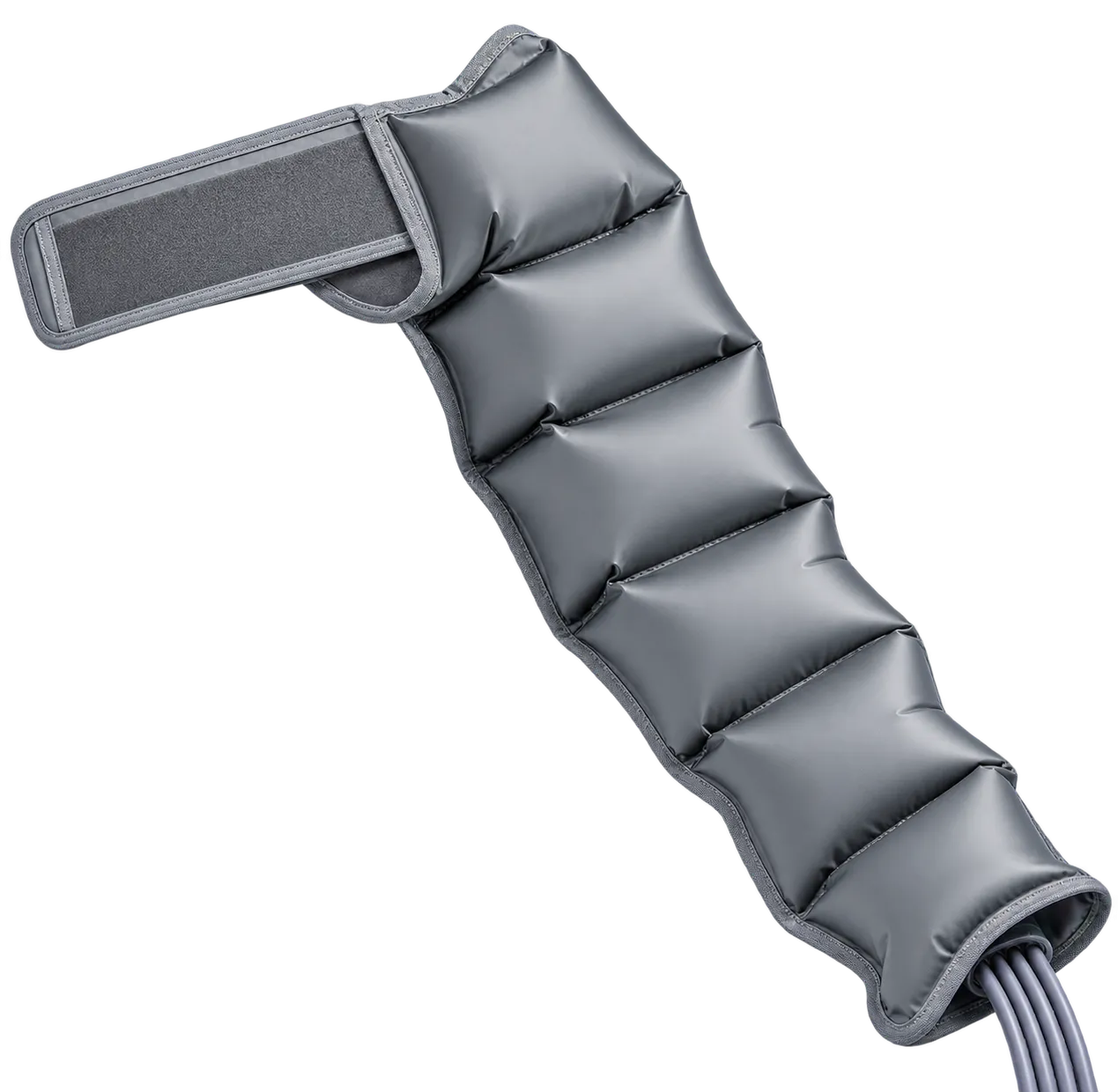
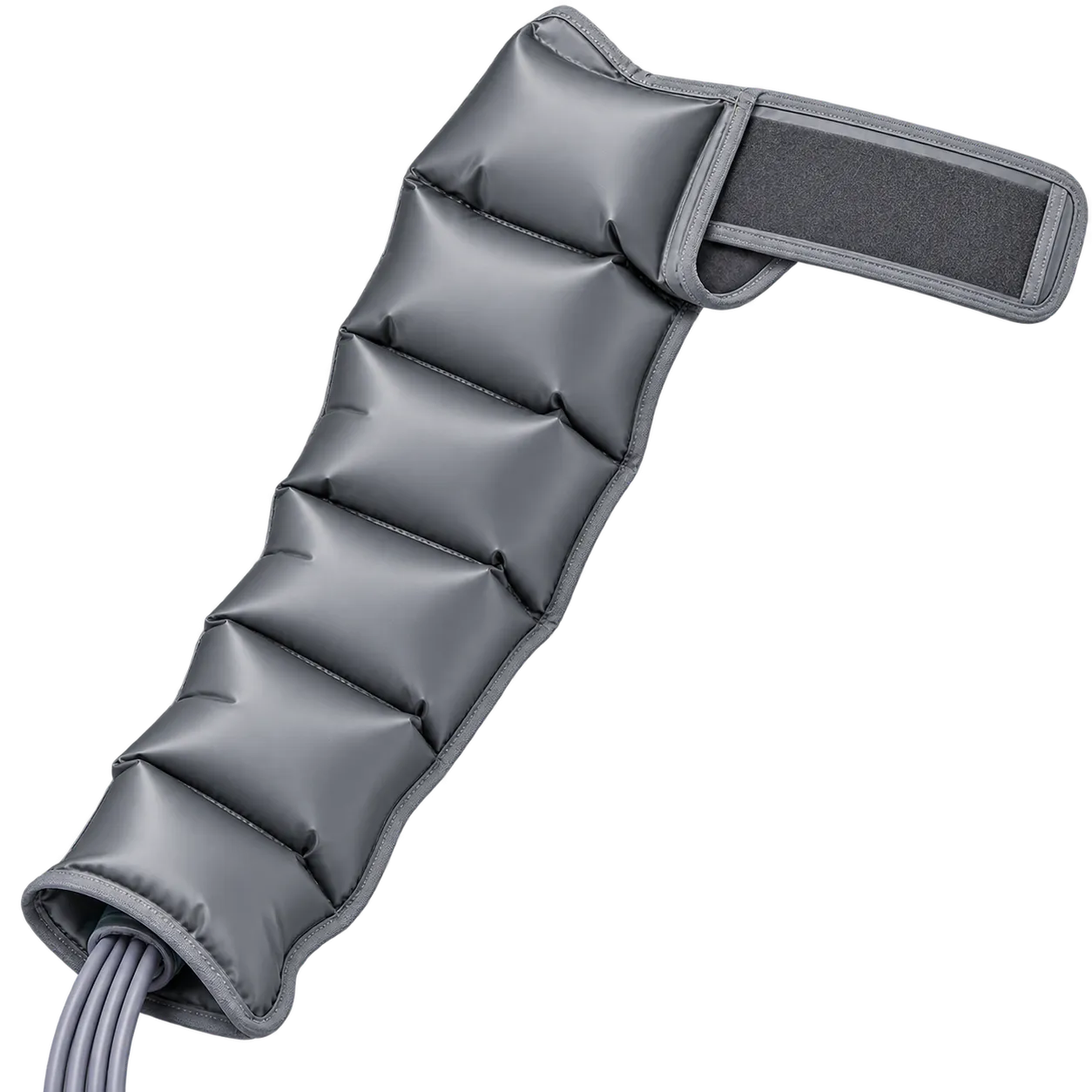
Where this garment can properly be used depends entirely on a question the sheet leaves open, so the honest account is of two separate markets rather than one.
Sports and fitness recovery is the setting the photography points to and the language supports. Athletes, gym members and people whose work loads the forearms use air compression sleeves after training or a long shift, for the sensation of the limb being worked and for muscle comfort. In that setting the garment is a wellbeing appliance, the buyer is a gym, a clinic reception or an individual, and the questions are pressure range, fit, cleaning between users and warranty.
Clinical settings are a different proposition and need a different answer first. Physiotherapy, rehabilitation and lymphoedema services all use pneumatic compression, but they use devices with a stated intended purpose, a known pressure range, documented contraindications and a classification, prescribed and reviewed by a clinician. A product without those cannot be written into a treatment plan whatever its construction resembles.
Occupational health and workplace wellbeing sits between the two and is often the most comfortable fit. A sleeve offered to staff as a comfort measure, with clear instructions that anyone with a circulatory condition, a swollen limb or recent surgery should speak to their GP first, keeps the product inside what its manufacturer actually claims.
Procurement in any of these settings will ask which route applies before anything else. The conformity documentation those procurement routes require is issued by the manufacturer and provided by the seller.