
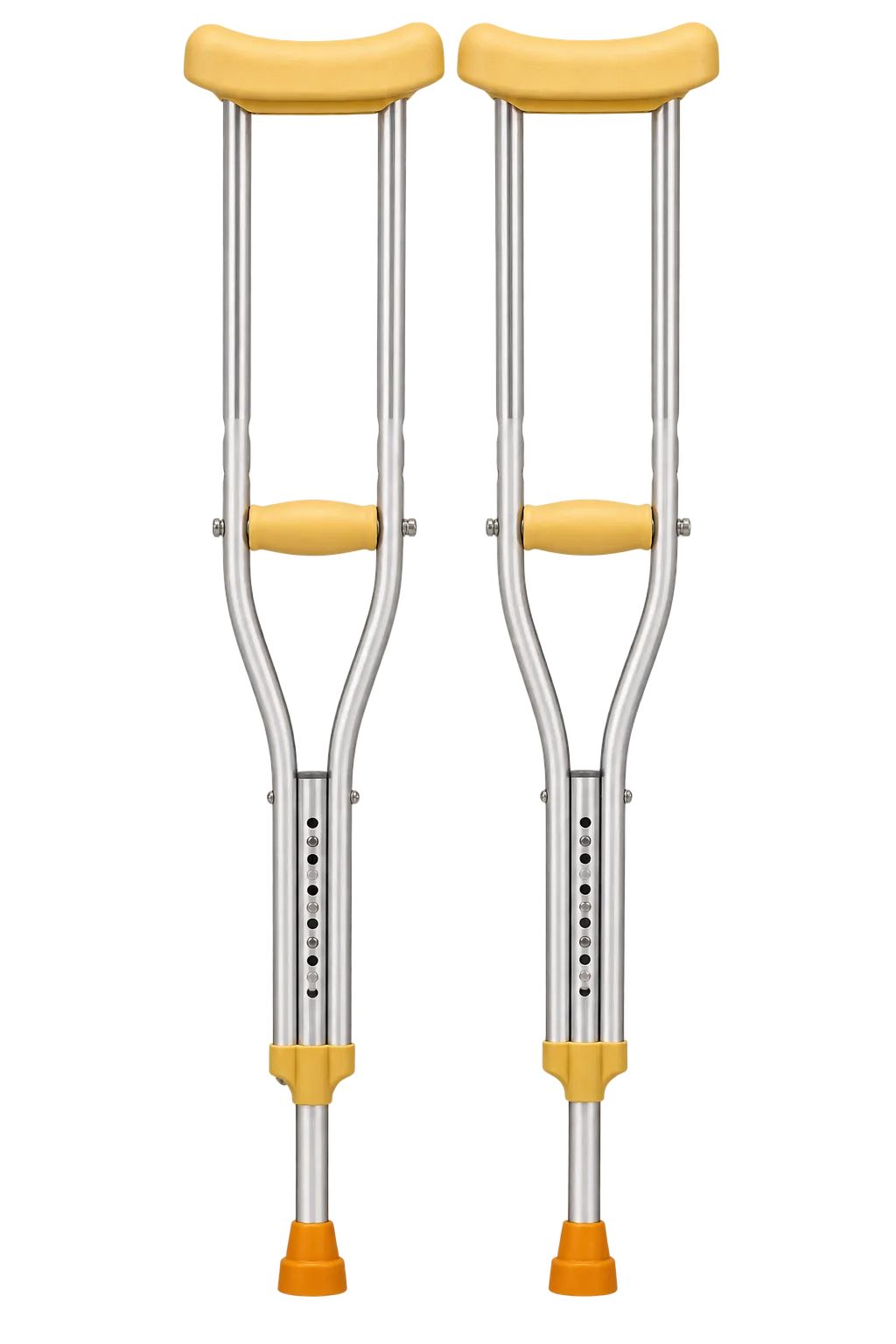
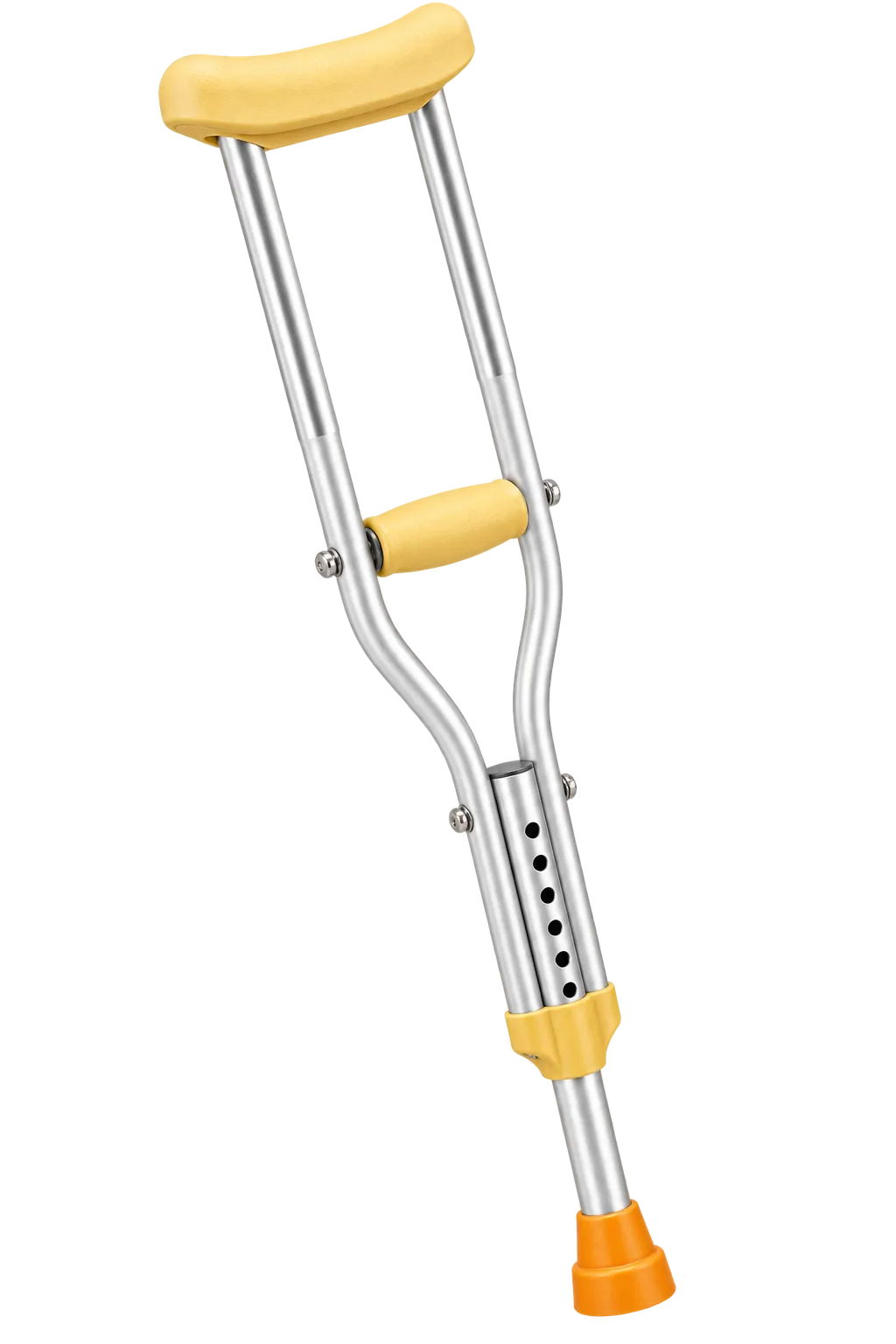
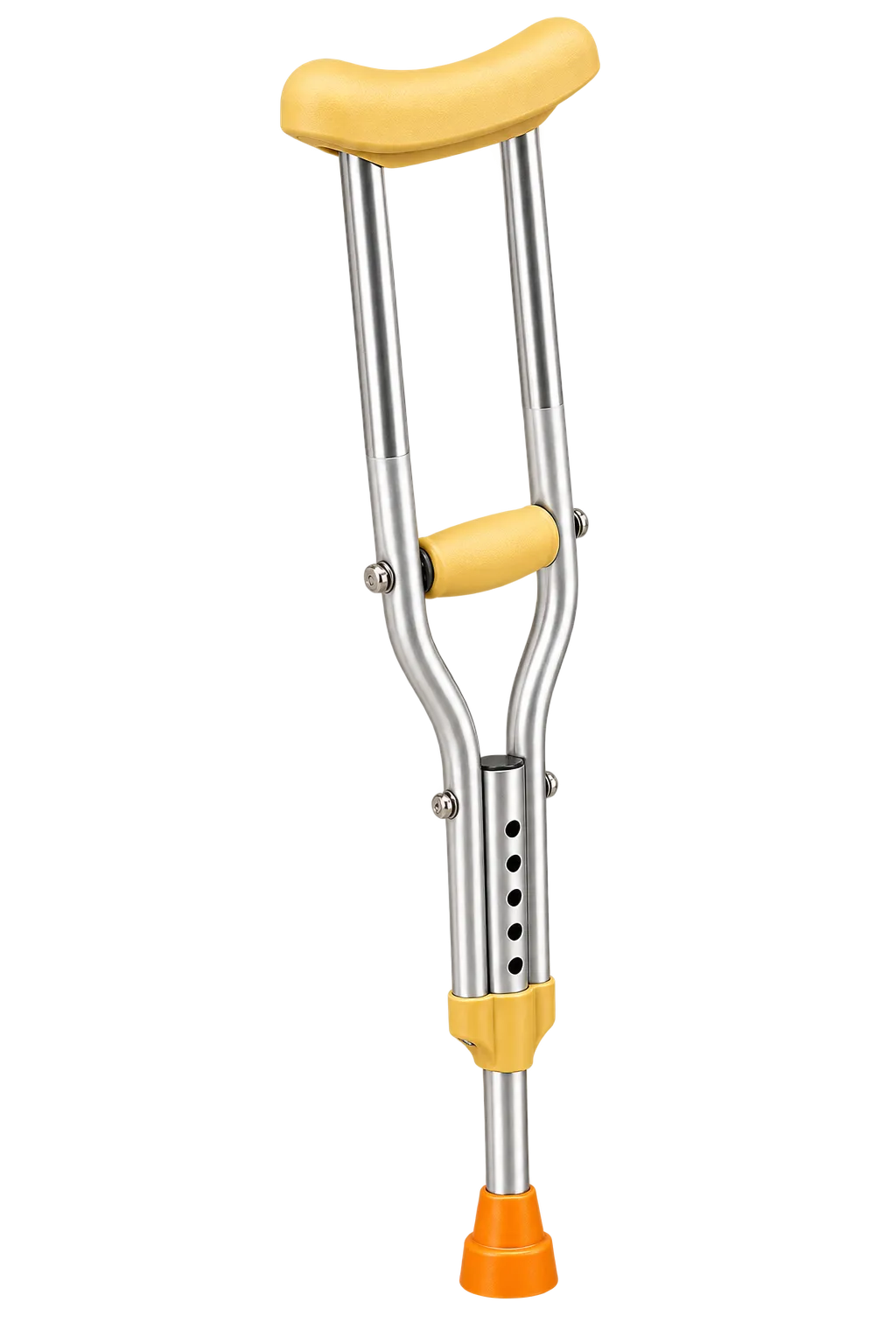
Physiotherapy and equipment stores gain most from the scale, provided the datum is known. A number in the notes lets a setting be reproduced without re-measuring somebody, which matters on reissue and when a different clinician sees the person next.
Whoever maintains the equipment needs the ferrule tied to the reading. The scale records where the shaft sits, not where the crutch meets the floor, so a worn ferrule makes the record drift while the number stays put. Check both in the same entry.
Community and home settings should reset rather than inherit. A setting carried over from a previous user is a number without a person attached, and the scale makes it easy to leave a crutch where somebody else had it.
Stores holding stock should verify on arrival that both crutches read alike at the same physical height. Routes across NHS trusts, local authority equipment services and independent providers each ask for their own evidence. The conformity documentation those procurement routes require is issued by the manufacturer and provided by the seller.