
Three megahertz is absorbed quickly, which makes the JC03-60W a console for structures within about two centimetres of the skin. The lateral elbow is the clearest case. The common extensor origin sits shallow over bone, and tennis elbow has mixed trial evidence for ultrasound and no single established treatment, so when it is used, it usually accompanies a loading programme; wrist tendons, the patellar tendon, and superficial ligaments around the knee fall in the same depth band.
Dose is where the ceiling matters. Electrotherapy dosing tables put the intensity needed at an acute lesion at around 0.1 to 0.3 W/cm², rising to 0.5 to 1.0 W/cm² for chronic tissue, and part of what leaves the head is absorbed before it arrives. A 1 W/cm² maximum comfortably covers acute and sub-acute work. Chronic presentations receive a full dose only at the most superficial sites.
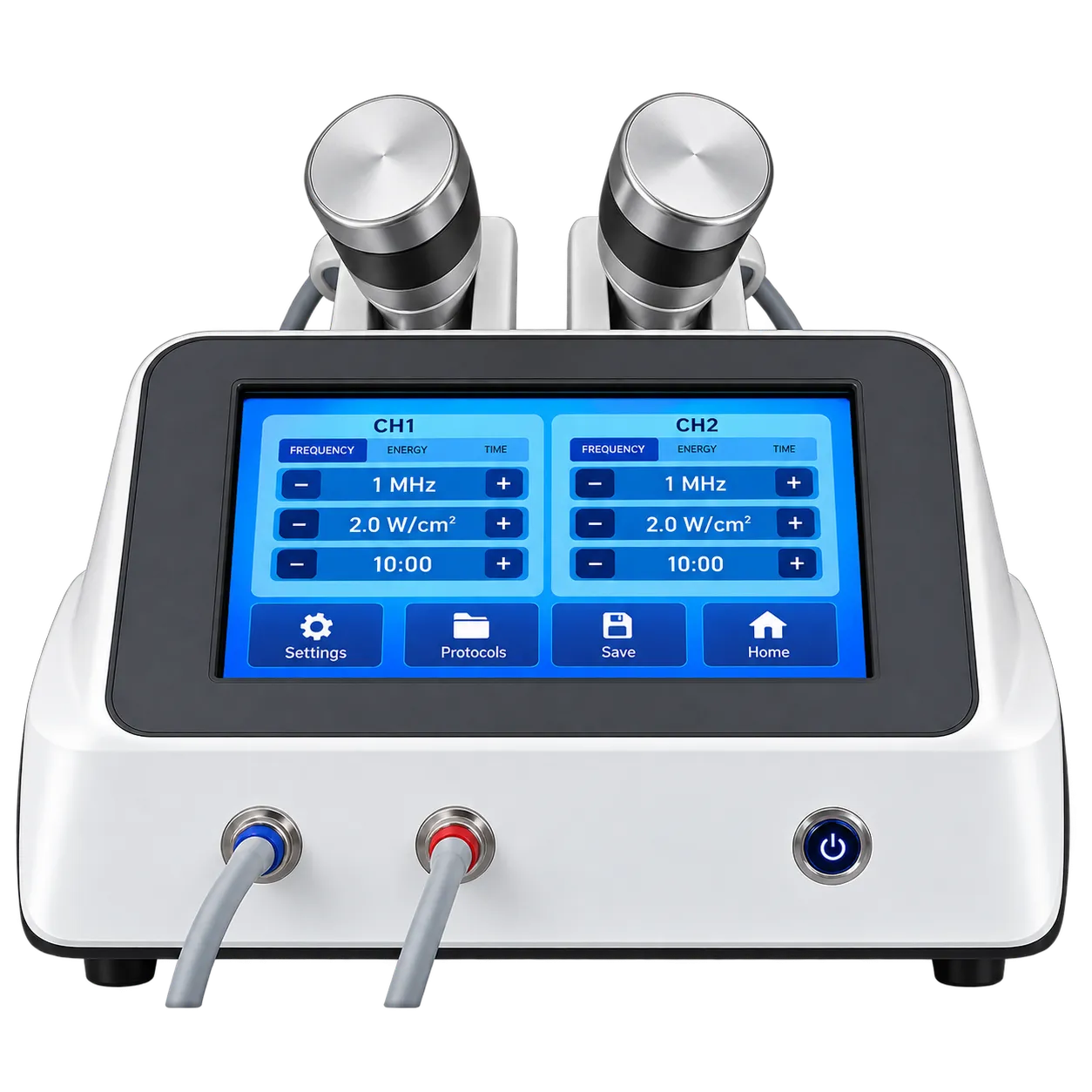
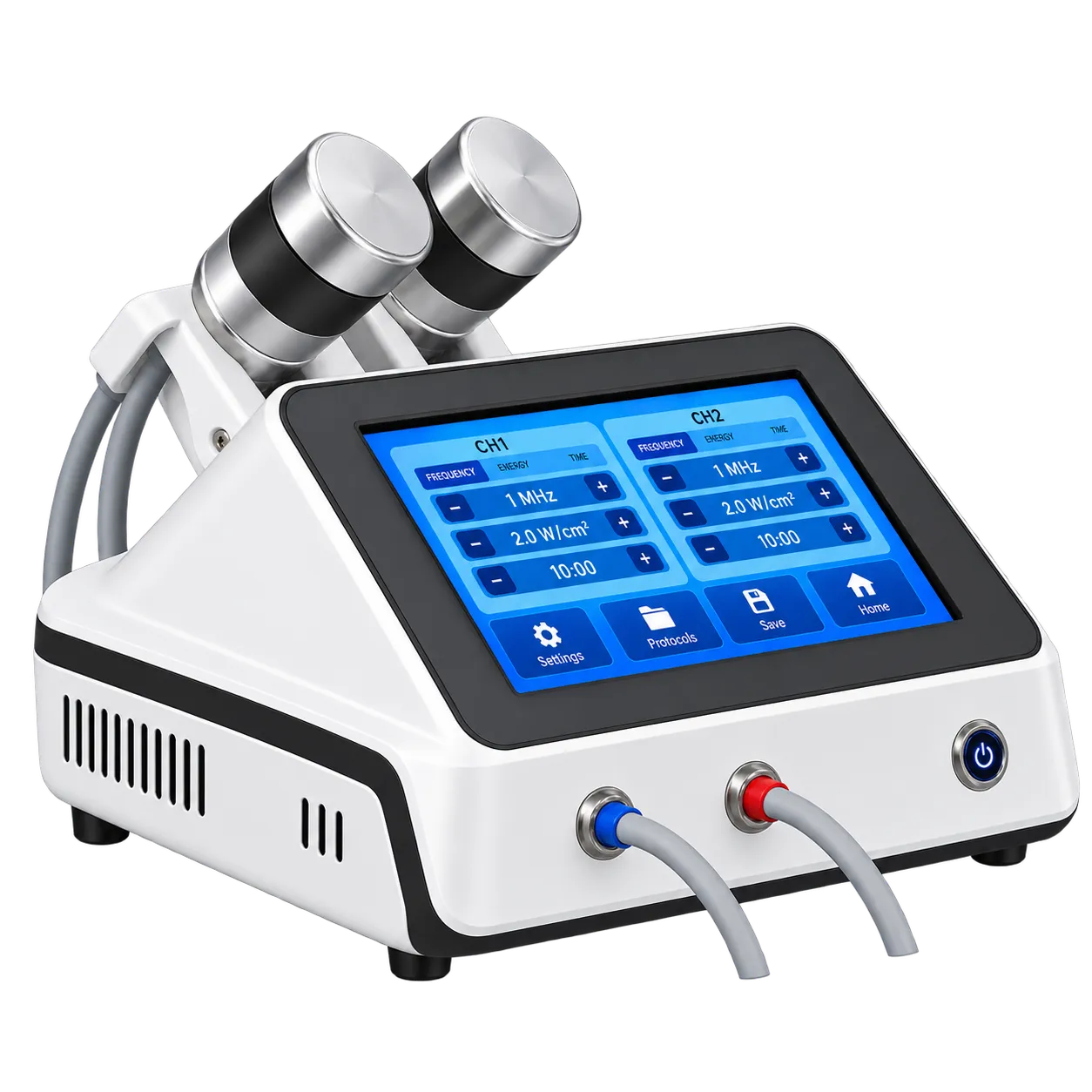
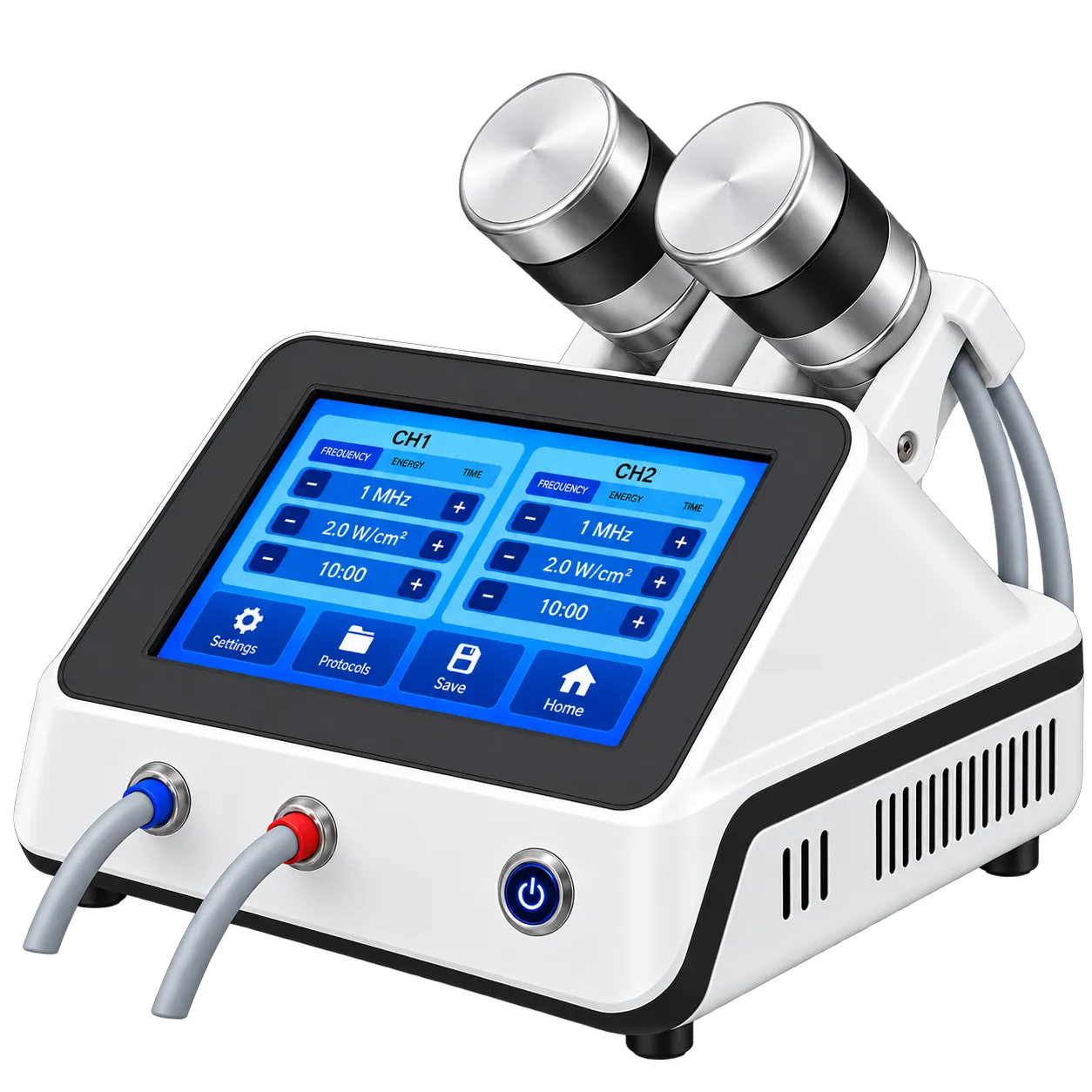
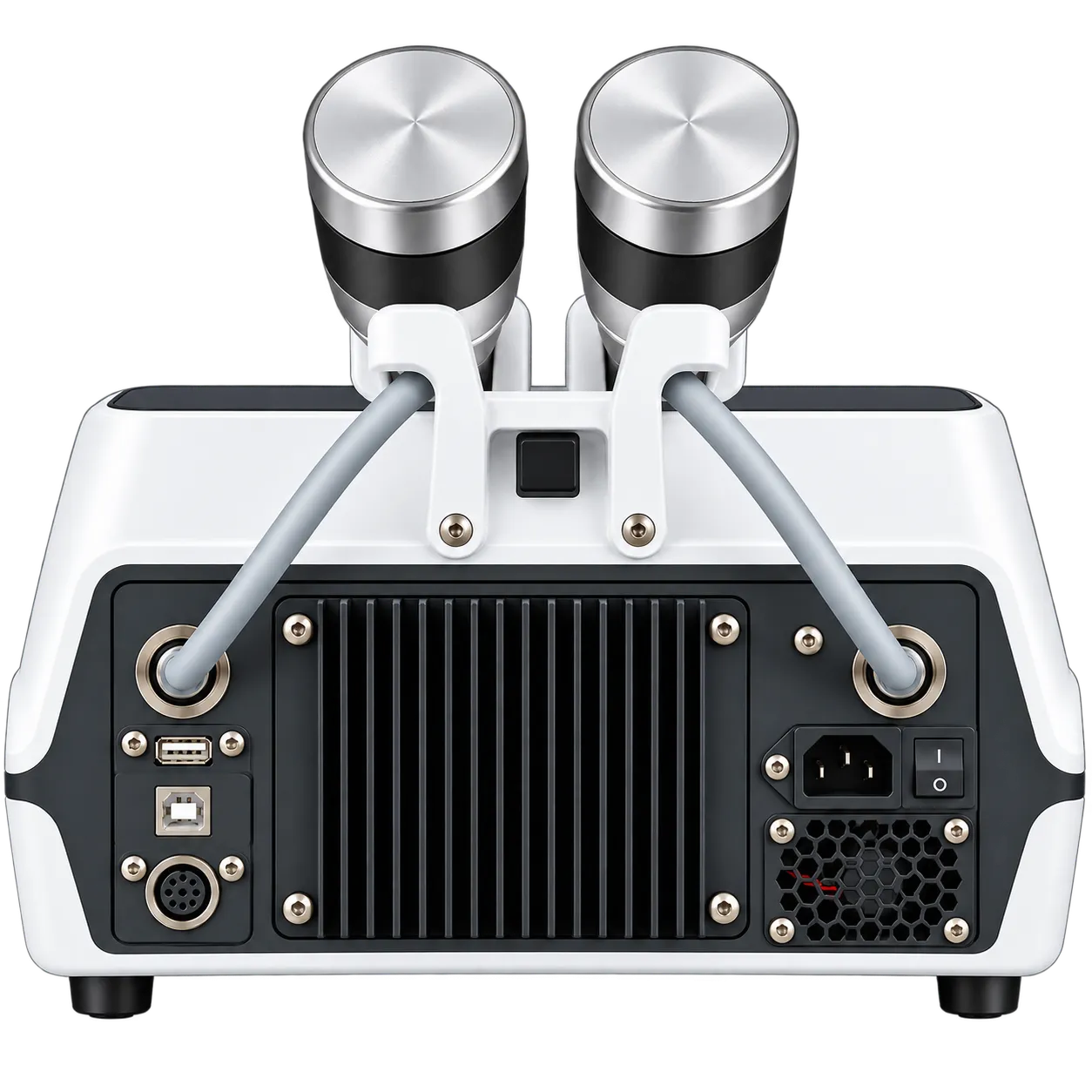
Hands raise the question the sheet leaves open. A 4.5 cm² face is broad against a finger or the base of the thumb, where full contact is hard to hold, and poor coupling reflects energy into the head. A second, smaller applicator would change that. The two-head photograph shows a second applicator, but its size and radiating area are not published. Hand therapy services should have the answer in writing before assuming the console suits them.
NICE advises against ultrasound for low back pain and for osteoarthritis, so the indication list worth agreeing is narrower than a general musculoskeletal caseload. Trust physiotherapy departments, private clinics and sports medicine providers each buy through their own routes. Whichever route applies, the manufacturer provides the conformity documentation through the seller.