
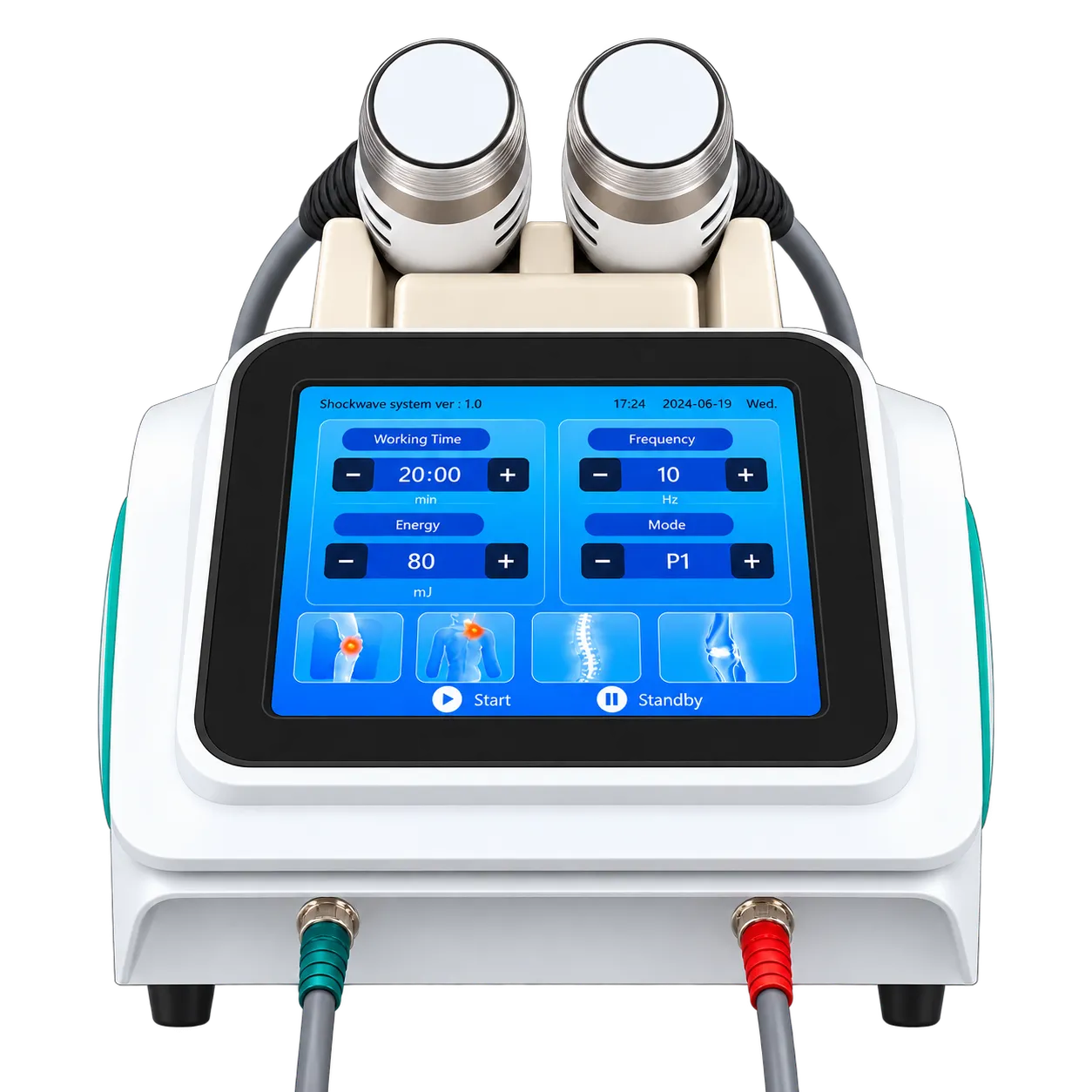
Staffing is the first thing to work out with this console, ahead of where it sits or what it plugs into. Therapeutic ultrasound occupies a clinician and a couch for the entire treatment, with no step where the operator can walk away. A department adding it to a musculoskeletal list is adding appointment slots, not just equipment, and it should do that arithmetic before ordering rather than discovering it in the first week.
What the time buys depends on the frequency selected. At three megahertz the energy is absorbed within the first centimetre or two, which suits trigger points, shallow calcific deposits, superficial tendon and scar work. At one megahertz the same console reaches three to five centimetres in, where larger muscle groups sit. Pulsing towards the lower end of the duty cycle range reduces heating for acute presentations, while continuous output drives the thermal effect in chronic ones.
The treated field stays small in either case. The radiating area of the head governs the area, and the usual approach covers roughly twice that figure, so a region of any size takes either a longer session or more than one field. Swelling and soft-tissue presentations that spread across a limb need planning on that basis.
Against all of it sits the guidance. Ultrasound is advised against in low back pain, sciatica, and osteoarthritis, with a 2025 rotator cuff guideline agreeing. Procurement runs through trust services, private clinics, podiatry groups, and teaching institutions under their own rules, with a Class IIa or IIb device clearing clinical governance alongside finance, and adverse incidents reported to the MHRA via Yellow Card.