
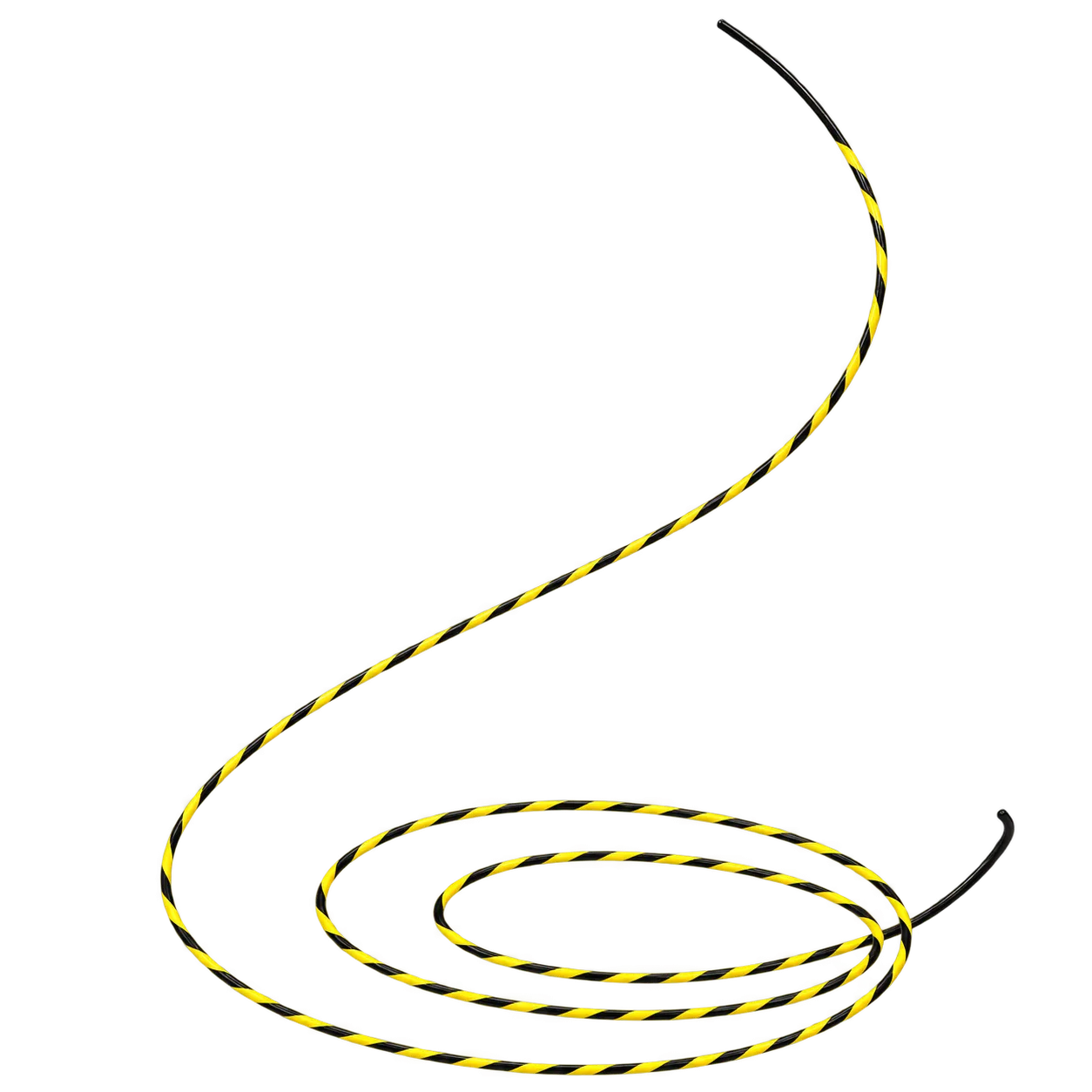
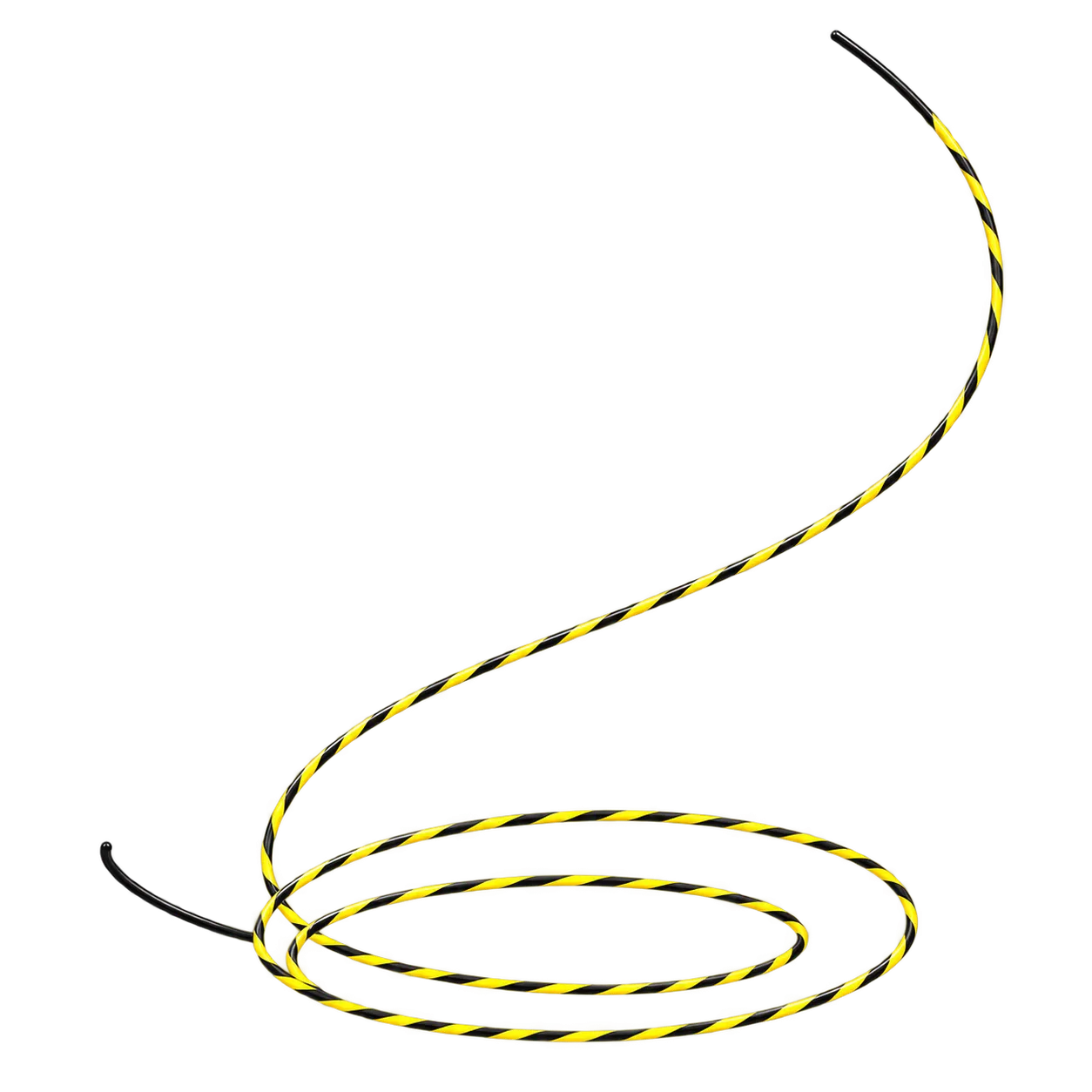
Almost everything done endoscopically in the urinary tract begins with a wire. It is placed past the obstruction or into the collecting system first, and then becomes the rail along which stents, dilators, sheaths and scopes travel. Losing that position means starting again, and when the wire was difficult to place, starting again may be considerably harder than the first time.
Holding position is therefore the wire's main job after it has found the route, and most of the risk sits in the exchanges. Something is being pushed over the wire or pulled off it, and either action can drag the wire with it. The operator's protection against that is watching, and watching only works if there is something to see.
This is where a striped wire earns its keep. A pattern moving through the endoscopic view shows exactly what the wire is doing, in real time, without needing fluoroscopy to confirm it. A uniform wire in the same view gives almost nothing. The rest of the specification serves the earlier part of the procedure. A hydrophilic tip crosses a stricture that a PTFE surface would catch on, finer diameters pass where a full-size wire will not, and an angled tip can be steered toward an orifice by rotating the shaft. A nitinol core makes all of that possible without the wire permanently kinking on the first tight turn.
Wire choice comes first, and everything that follows depends on it. Medigear.uk supplies the instructions for use with every order.