
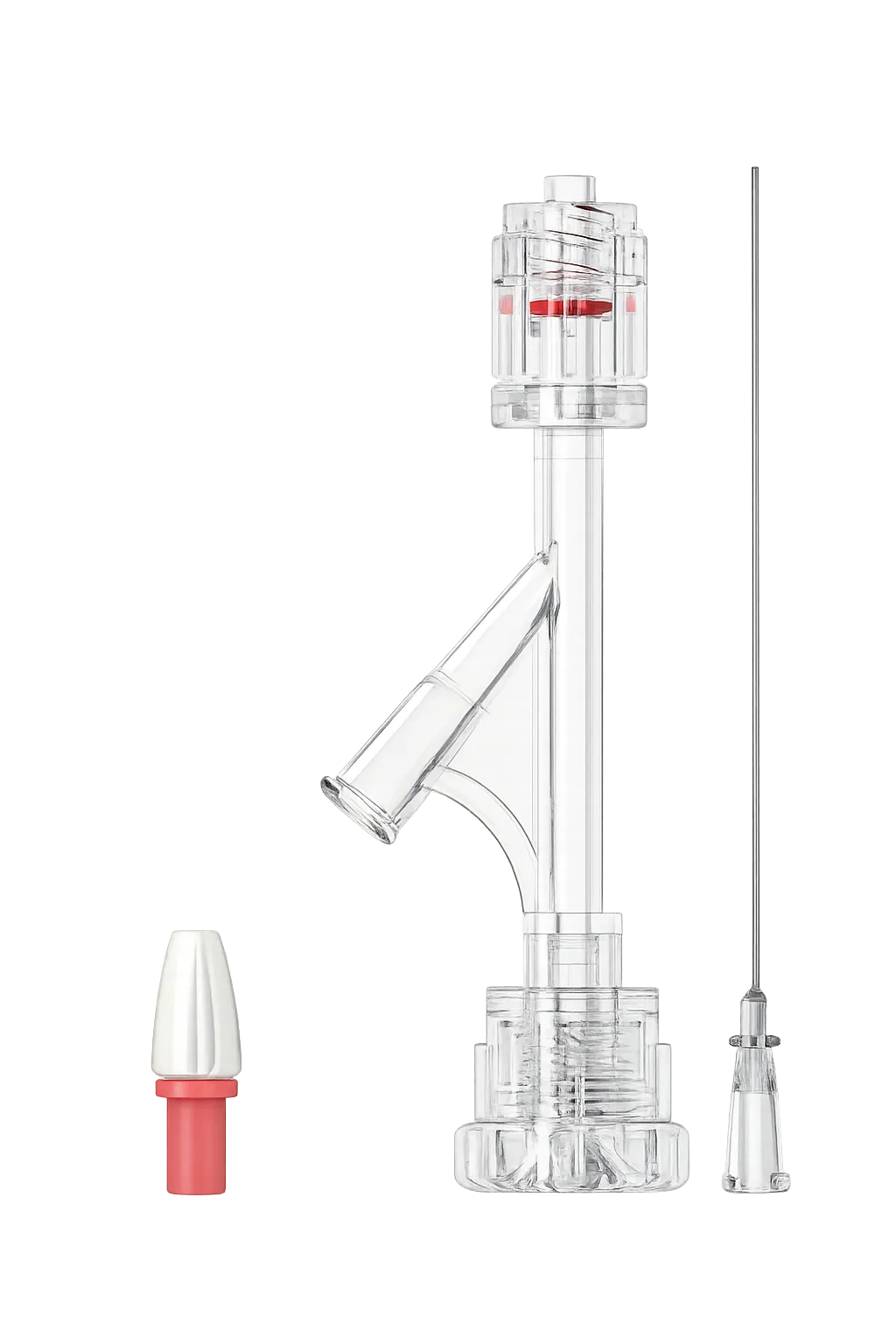
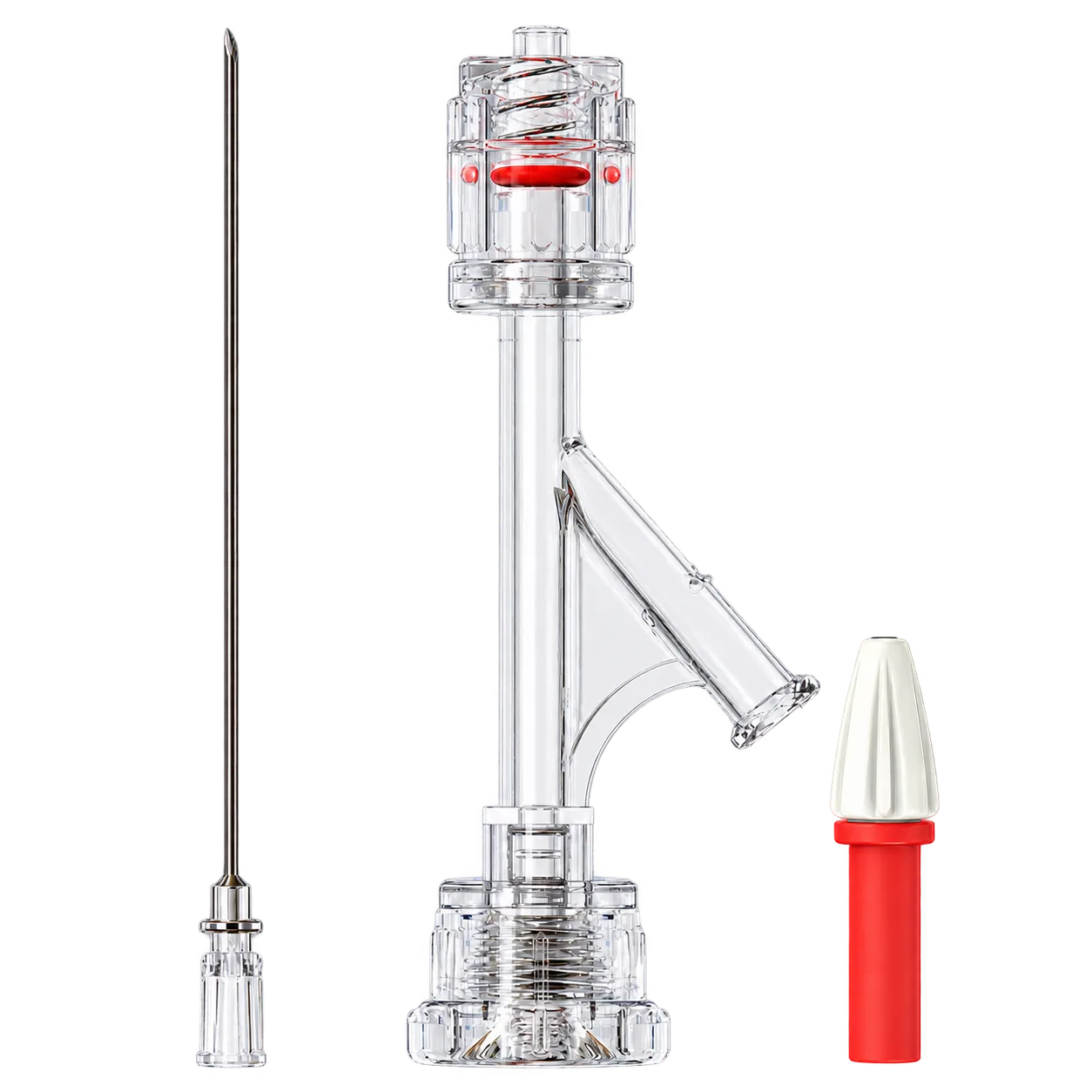
Percutaneous coronary intervention is the main setting. A guide catheter is placed at the coronary ostium, and the Y-connector goes on its hub. From that point, every device entering the patient passes through the valve. Balloons, stents, guidewires, and support catheters are advanced, exchanged, and withdrawn during a case. The valve holds a seal around each of them.
Two risks are managed by that seal. Blood loss through an open catheter hub is continuous while it is open, and arterial pressure drives it. Air entering the system is the more serious hazard, because air introduced into a coronary artery can cause ischaemia. A valve that seals reliably across the range of device diameters is therefore a safety component rather than a convenience. The 80 kPa rating gives margin over the pressures encountered.
The side arm carries contrast for angiography and a line for pressure monitoring, which is how the operator confirms catheter position and assesses the result. Extended kits add a 15 cm tube with a stopcock so this can be managed away from the valve body. One-hand valve operation matters in practice, since the operator's other hand is usually holding wire position. The insertion tool prevents a guidewire tip catching as it enters the valve, and the torque device grips the wire outside the body for steering. Peripheral interventional radiology uses the same kit for arterial and venous work. Vessel size and device calibre differ there, but the sealing requirement at the catheter hub is identical.
These are single-use devices and must not be reprocessed. Medigear.uk supplies the instructions for use with every order.