
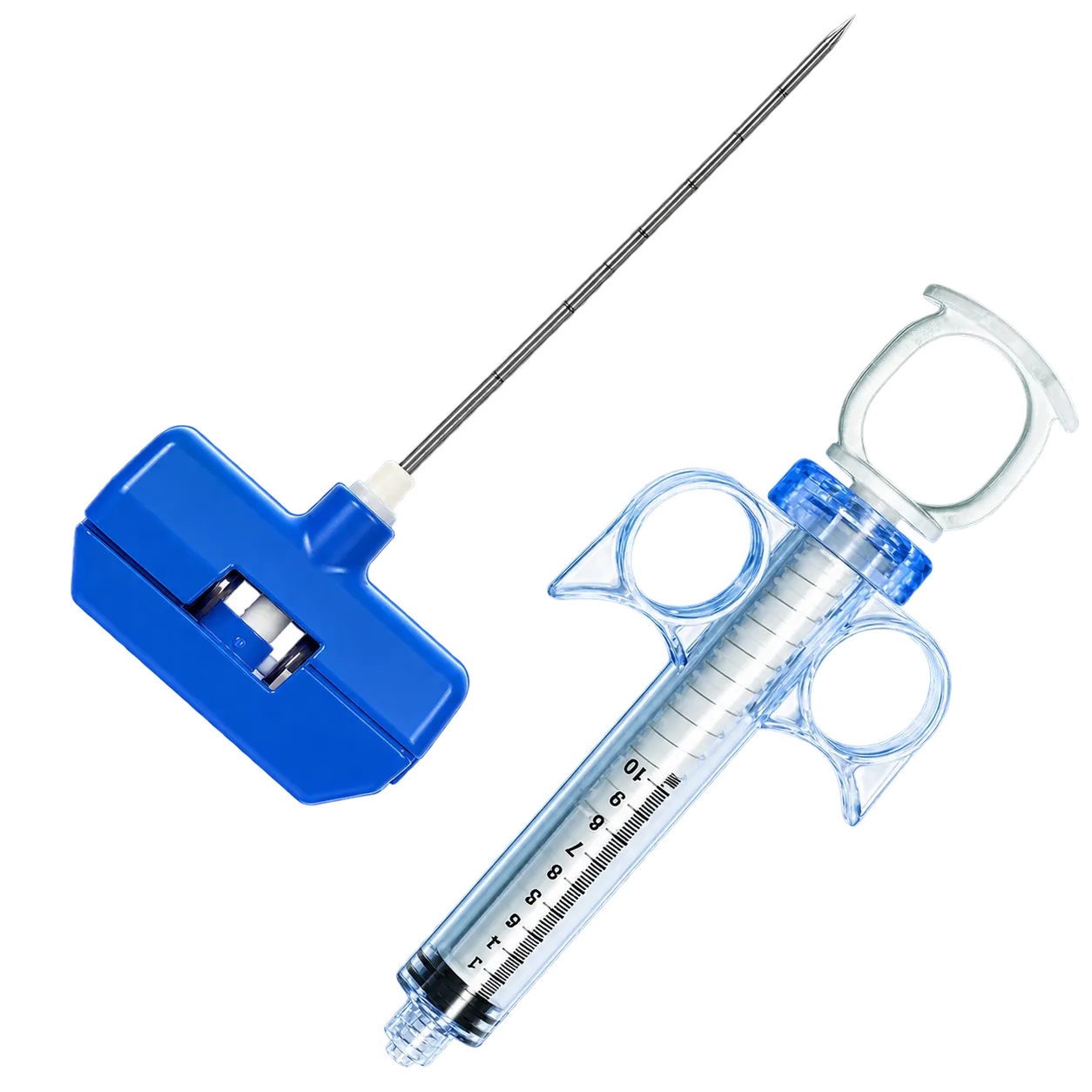
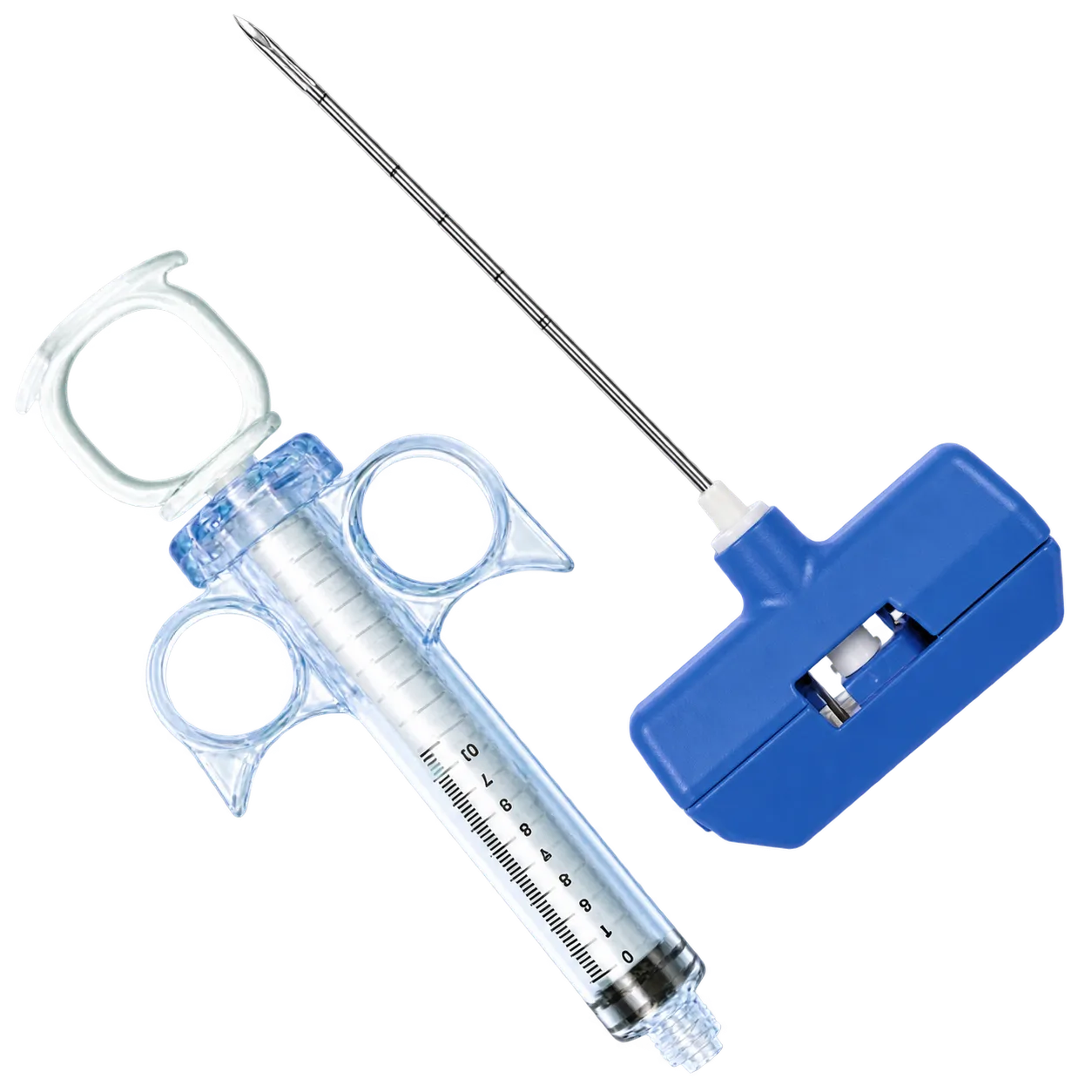
Vertebral compression fractures are common in osteoporosis and in spinal malignancy. They are painful, they reduce height, and they often fail to settle with conservative treatment. Vertebroplasty addresses this by filling the fractured body with bone cement, which hardens and stabilises the fragments. Pain relief follows from stopping the movement between them.
The procedure is straightforward in principle. A needle is advanced through the pedicle into the vertebral body under fluoroscopic guidance, and cement is injected. The difficulty lies in where the cement goes. The vertebral body sits directly in front of the spinal canal and is drained by a rich venous plexus. Cement that escapes the bone can compress the cord or a nerve root, or travel through veins to the lungs. Leakage is common, reported across a wide range in published series, and while most instances cause no symptoms, the serious ones can cause paralysis or fatal embolism.
Everything about injection technique follows from that. Cement is injected slowly so it has time to thicken in place. Operators stop at the first sign of escape, wait for the leaked cement to set, then resume. Cement thinned to make injection easier flows more readily into places it should not go, so keeping viscosity appropriate matters. All of this depends on the operator having fine control over delivery and being able to halt it instantly, which is exactly what a screw-driven injector provides that a hand-pushed syringe does not.
Medigear.uk supplies the instructions for use with every order.