
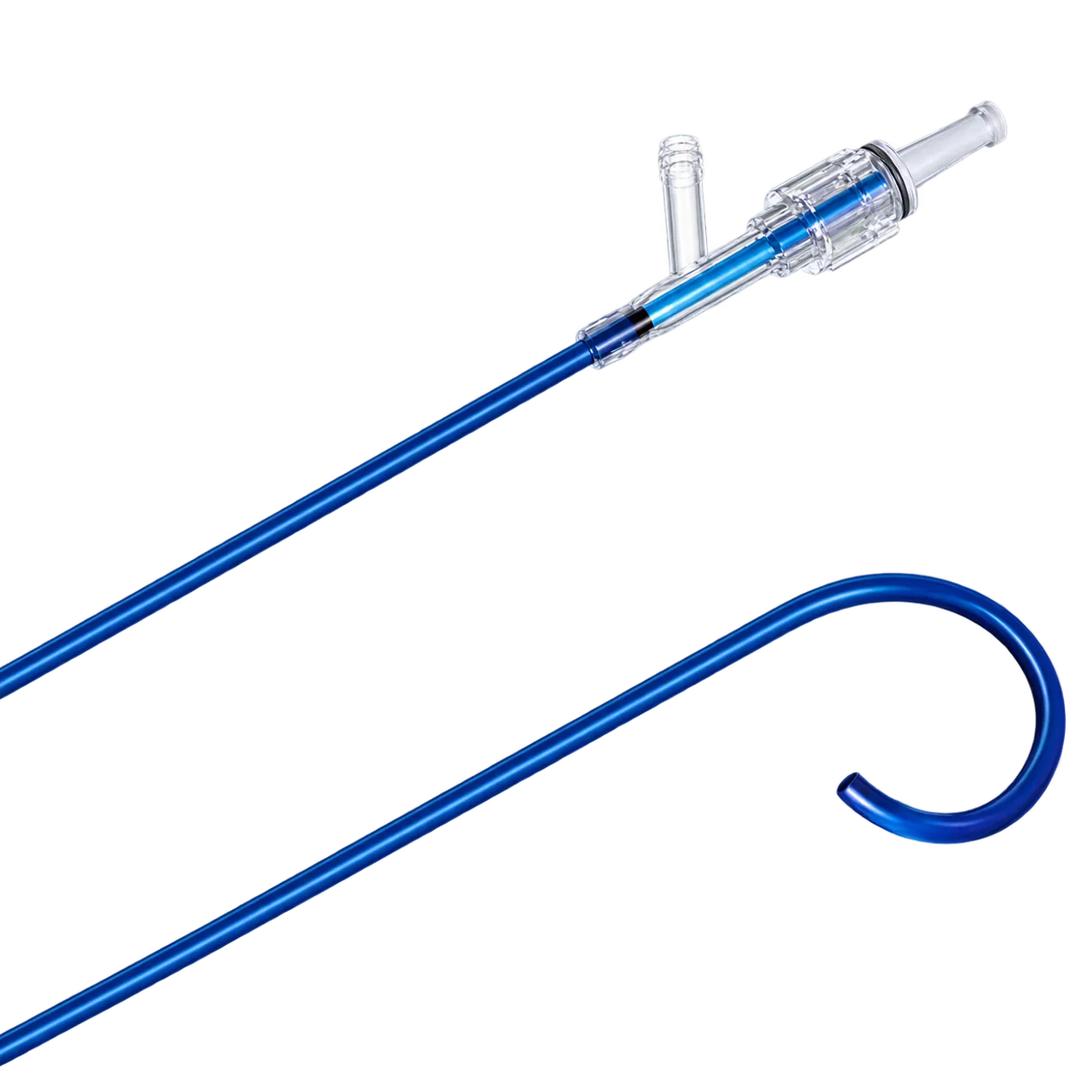
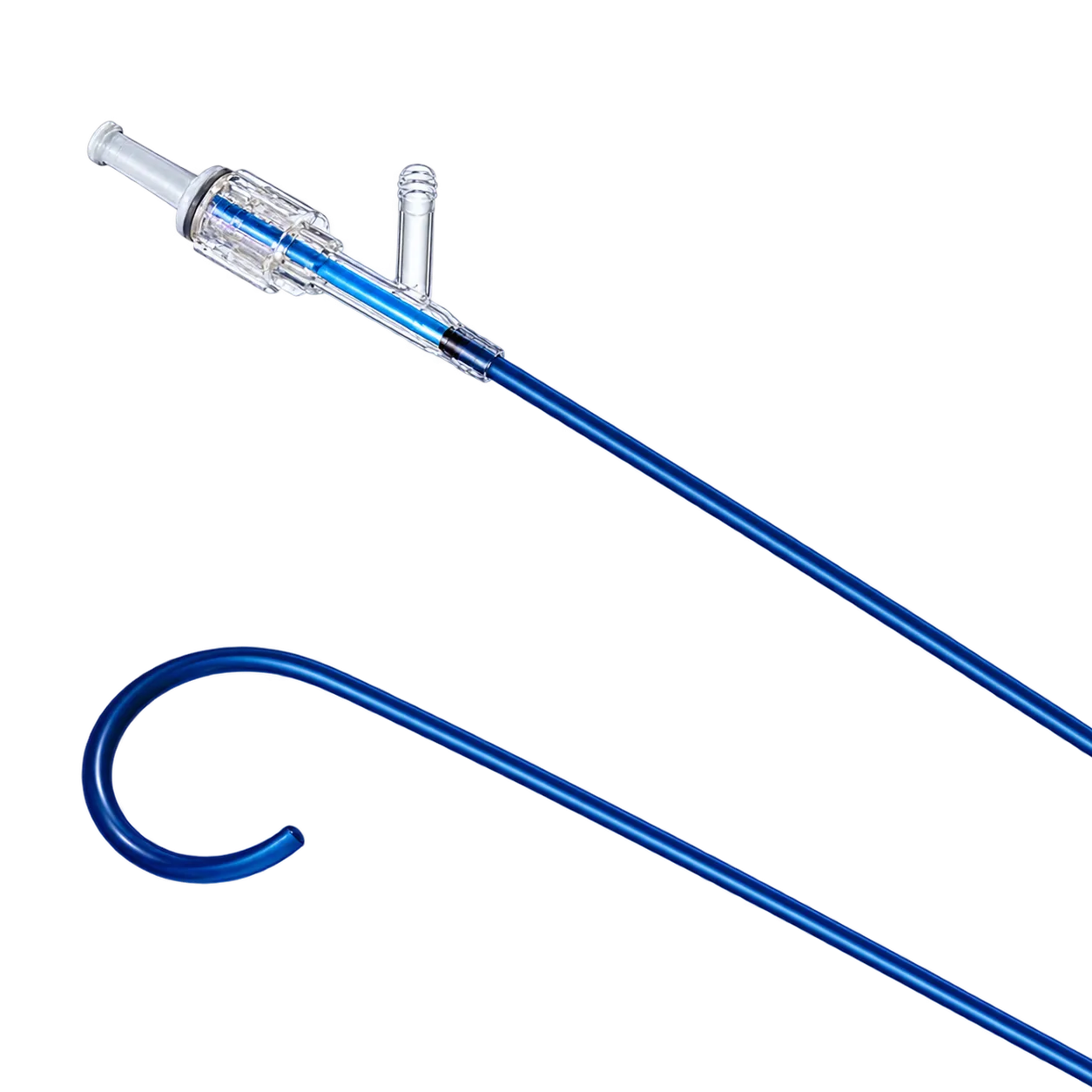
Removing a stone from the kidney means breaking it up and then removing the pieces. Laser lithotripsy handles the first part well. The second part is where cases are won or lost, because fragments left behind can regrow into stones, and reported stone-free rates after ureteroscopy have never been as good as the immediate appearance suggests.
Traditionally, fragments leave in two ways. Small ones wash out with irrigation flow, and larger ones are picked up individually with a basket, which means withdrawing the scope, releasing the fragment and going back in. Each pass takes time, and a sheath exists partly so those repeated passes do not damage the ureter along the way.
Applying suction through the sheath changes the arithmetic. Fragments that would have needed basketing are drawn out on the flow, and the same suction lowers the pressure inside the kidney by increasing outflow. These two benefits come together, which is worth understanding when selecting the equipment as a system. A larger bore provides more drainage and lower pressure but requires more ureteral dilatation, so the choice is real rather than simply taking the largest size that fits. A deflectable sheath extends the same reasoning further, carrying the drainage into the calyx where the fragments actually are rather than leaving them to find their own way back down the collecting system.
Sheath and scope are therefore chosen together rather than separately, since one determines what the other can drain. Medigear.uk supplies the instructions for use with every order.