
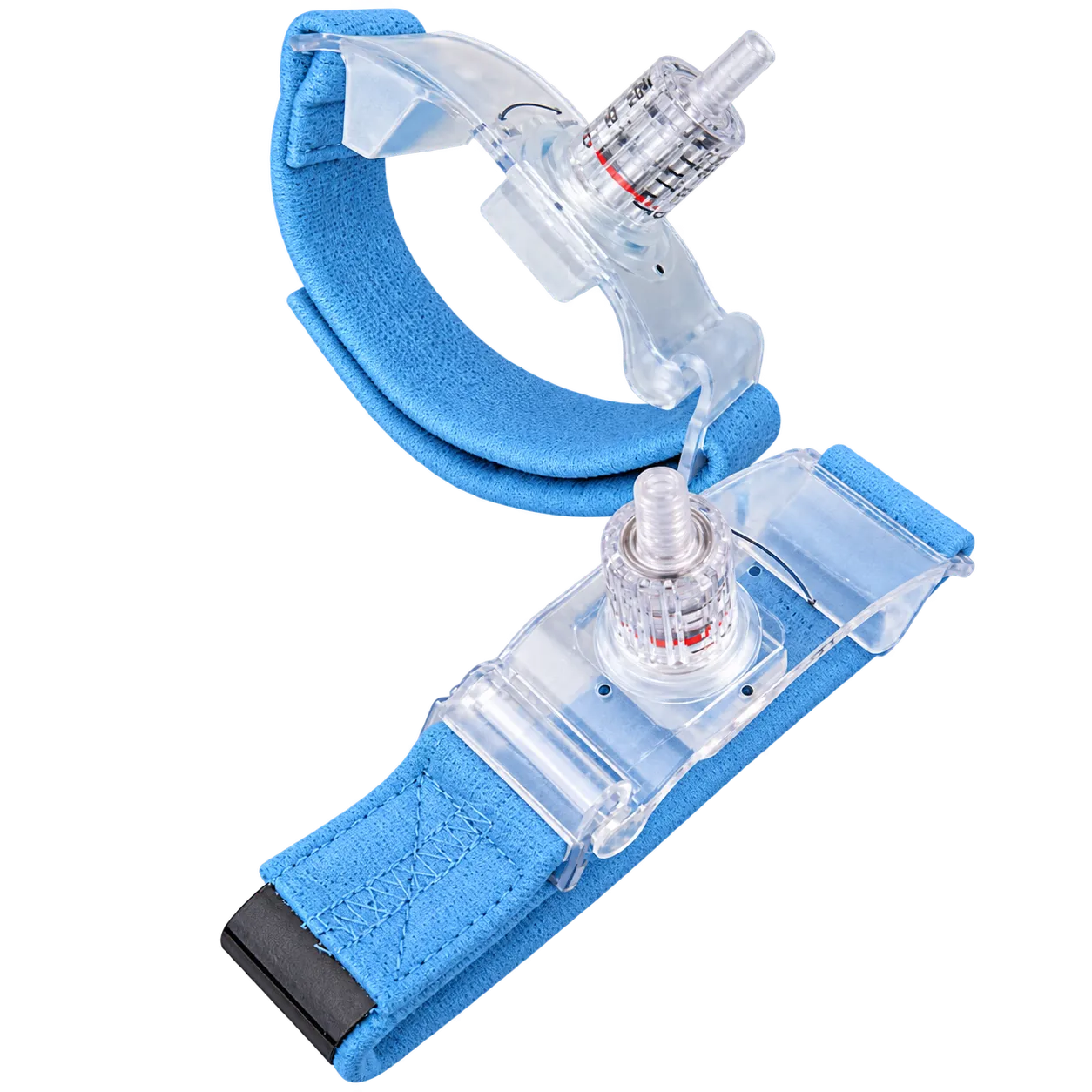
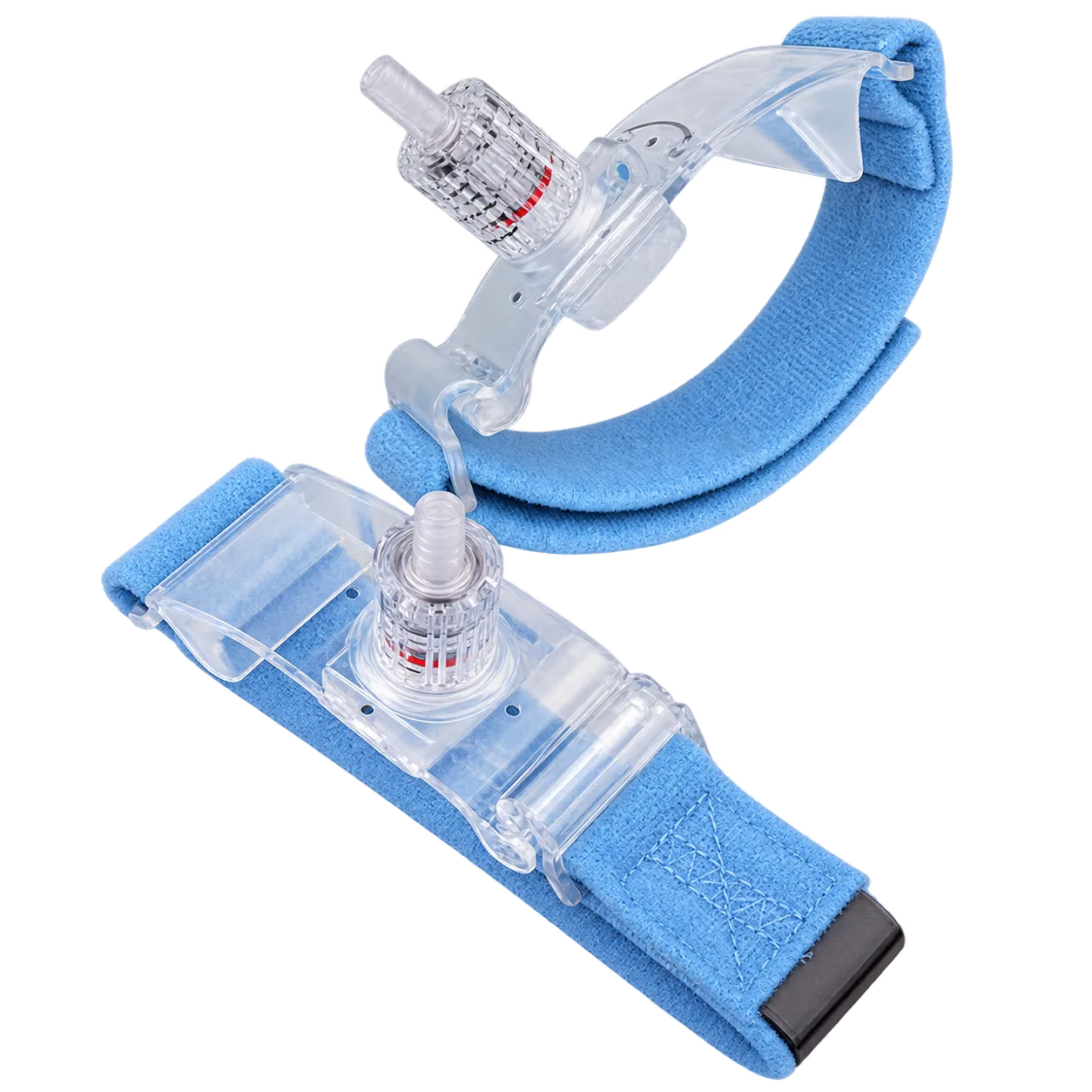
Radial access is the default route for coronary angiography and intervention in most UK centres. When the case finishes, the sheath comes out of the wrist, and the puncture has to close. A compression band holds the site while haemostasis develops, replacing sustained manual pressure by a member of staff.
Radial artery occlusion is the complication these bands are designed around. Compressing hard enough to stop all flow through the artery makes clotting more likely, and an occluded radial artery cannot be used for future access. Many of these patients return for repeat procedures, so preserving the vessel matters beyond the current admission. The technique developed in response is patent haemostasis, which means applying only enough pressure to stop bleeding while flow continues through the artery.
Patent haemostasis requires compression to be titrated rather than set and forgotten, and that is where a force indicator changes the working method. With a pneumatic band the operator judges by air volume, which does not translate directly into force at the artery and varies with wrist size. A graduated mechanical scale gives a figure that can be recorded, handed over between staff at shift change, and reduced in defined steps as the compression period progresses. Compression typically runs for one to two hours with staged reduction. Staff also check the hand for swelling and colour change across that period.
The curved silicone option addresses the comfort side of a device worn for that length of time. Medigear.uk supplies the instructions for use with every order.