
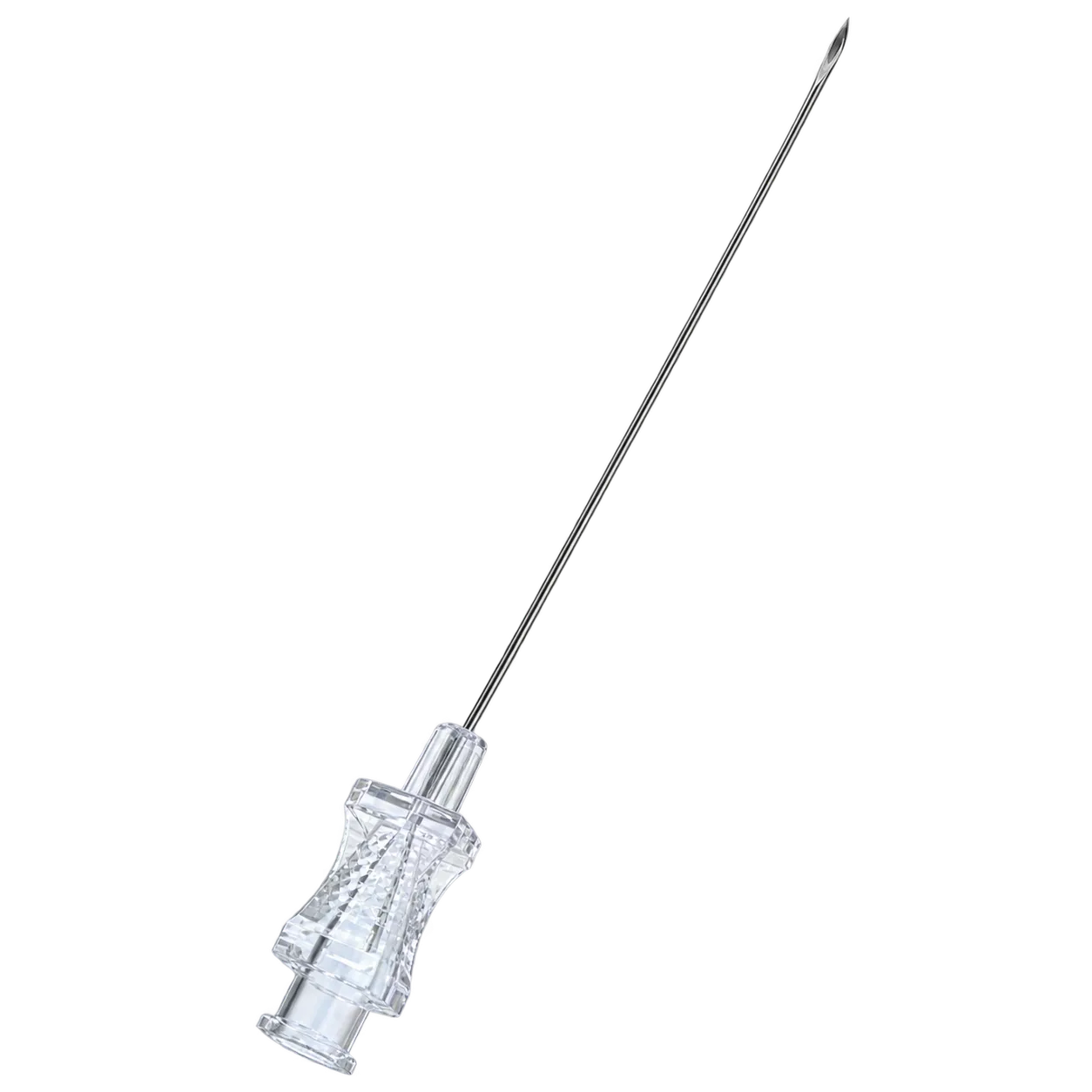
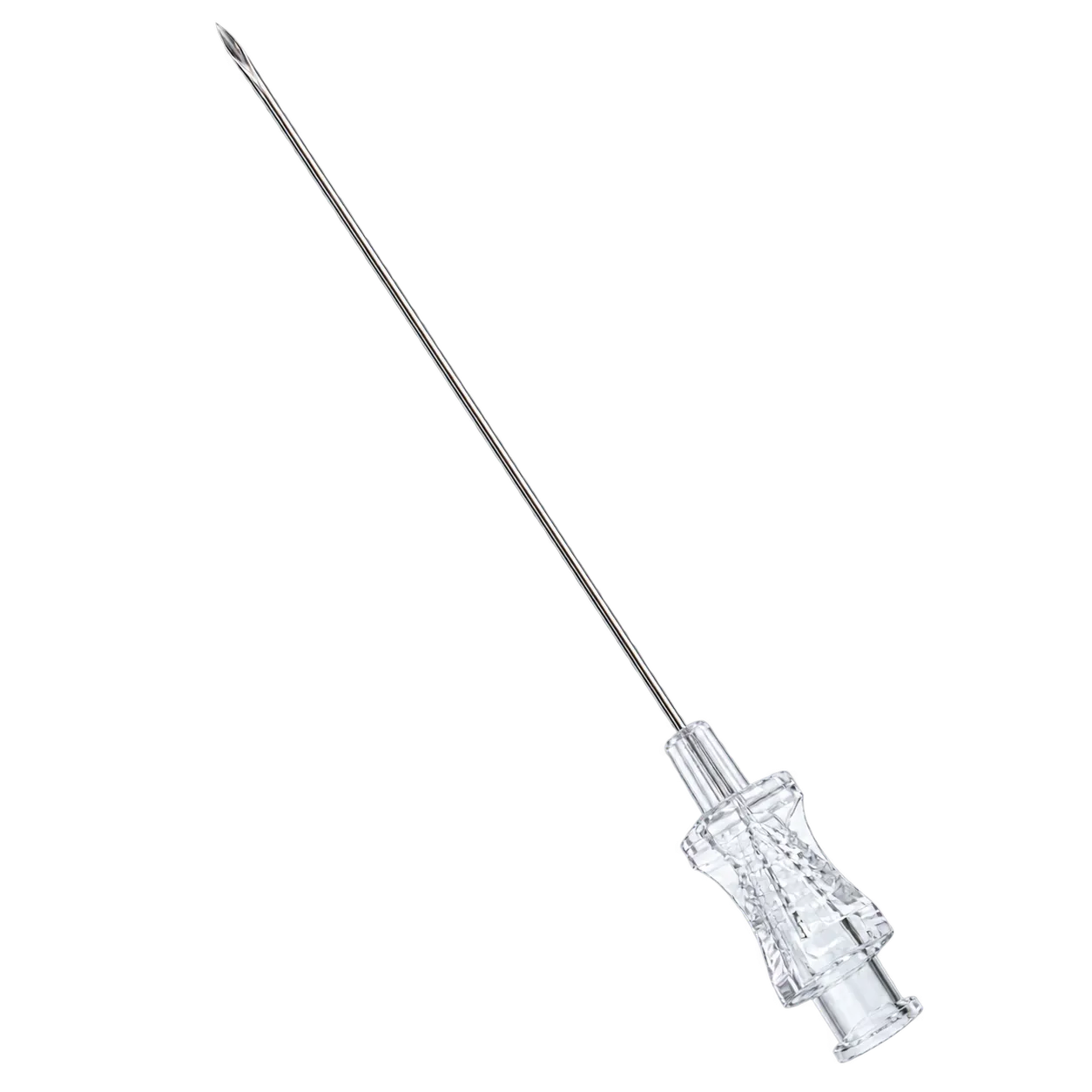
The Seldinger technique underpins almost all catheter-based interventions. A needle punctures the vessel. A guidewire goes through the needle into the lumen. The needle is withdrawn over the wire. A sheath is then advanced over the wire into the vessel, and the wire comes out. The needle is used for seconds, but a poor puncture affects everything after it.
Access route drives the choice between references. Femoral access needs a longer needle, because the artery sits deeper below the skin, and it needs a bore wide enough for a standard 0.035 or 0.038 inch working wire. The 18G 70 mm references are sized for that. Radial access is shallower,r and the artery is much smaller, so a narrower, shorter needle is used and a fine wire follows. The 21G 45 mm reference belongs to that group.
Bevel orientation carries practical weight during the puncture. The guidewire leaves the needle in the direction the bevel faces, so bevel up directs the wire along the vessel rather than at the far wall. Knowing bevel direction from the hub alone means the operator does not have to check the tip mid-procedure. Winged hubs suit operators who want to brace the needle while advancing the wire, which is the moment access is most easily lost. Bore finish matters at the same moment, because a wire that snags can have its coating stripped. Central venous access follows the same needle-then-wire sequence.
Peripheral interventional radiology and diagnostic angiography both use the same needles. Medigear.uk supplies the instructions for use with every order.