
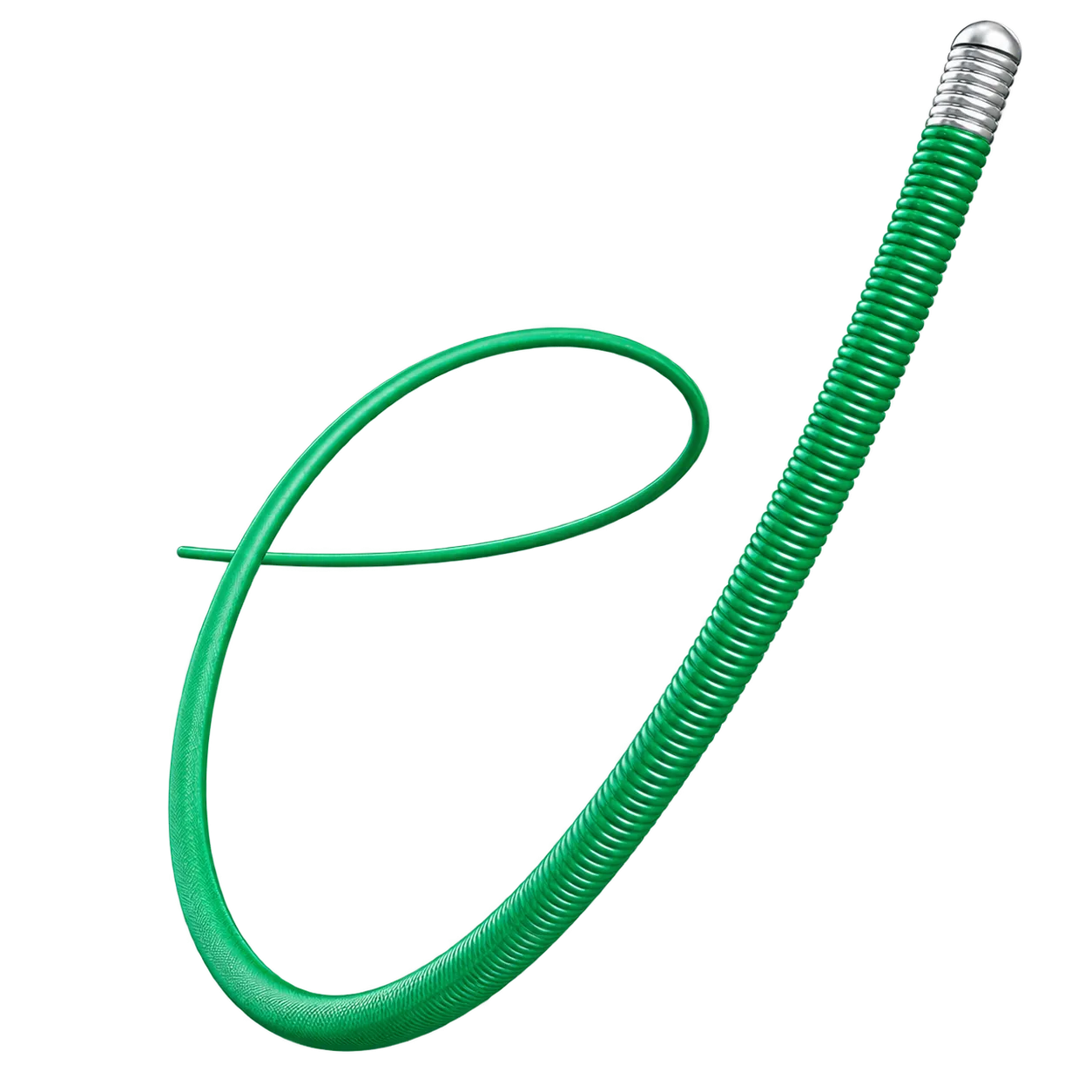
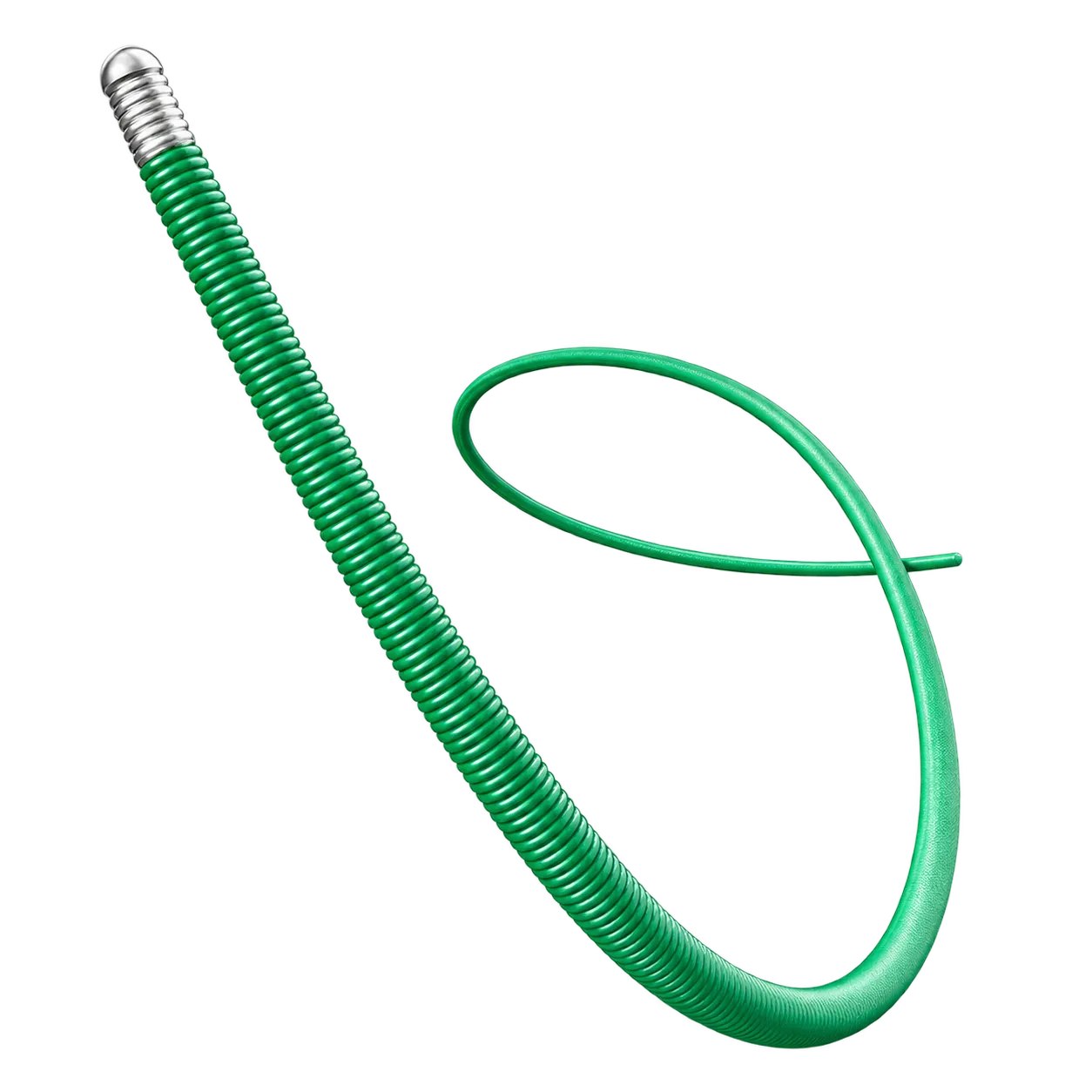
Almost every catheter-based procedure runs on a guidewire. The Seldinger technique starts with a needle in the vessel, but the wire is what holds that access once the needle is removed. Sheaths, diagnostic catheters, guide catheters, and balloons all track over it. If the wire is lost, access is lost, and the puncture has to be made again.
Tip shape is the first choice. A J tip presents a rounded loop to whatever it meets, so it deflects off plaque and vessel walls rather than digging in. That makes it the default for advancing blindly up an artery. A straight tip is used where the wire has to be directed into a specific branch or across a tighter segment, which trades some safety margin for control. Diameter follows the equipment: 0.035 and 0.038 inches are the standard working sizes for diagnostic angiography and peripheral intervention, and they match the 18G access needles and femoral sheaths that INT supplies alongside. Both diameters pass through the same 18G needle bore.
Length is driven by exchange. Working length is enough while a single catheter stays on the wire, but swapping catheters requires the wire to be longer than twice the catheter, so that the catheter can come off entirely while the wire stays in position. That is why the 260 cm references exist.
The movable core adds a further adjustment, letting the operator alter tip flexibility during the case rather than swapping to a different wire. Medigear.uk supplies the instructions for use with every order.