
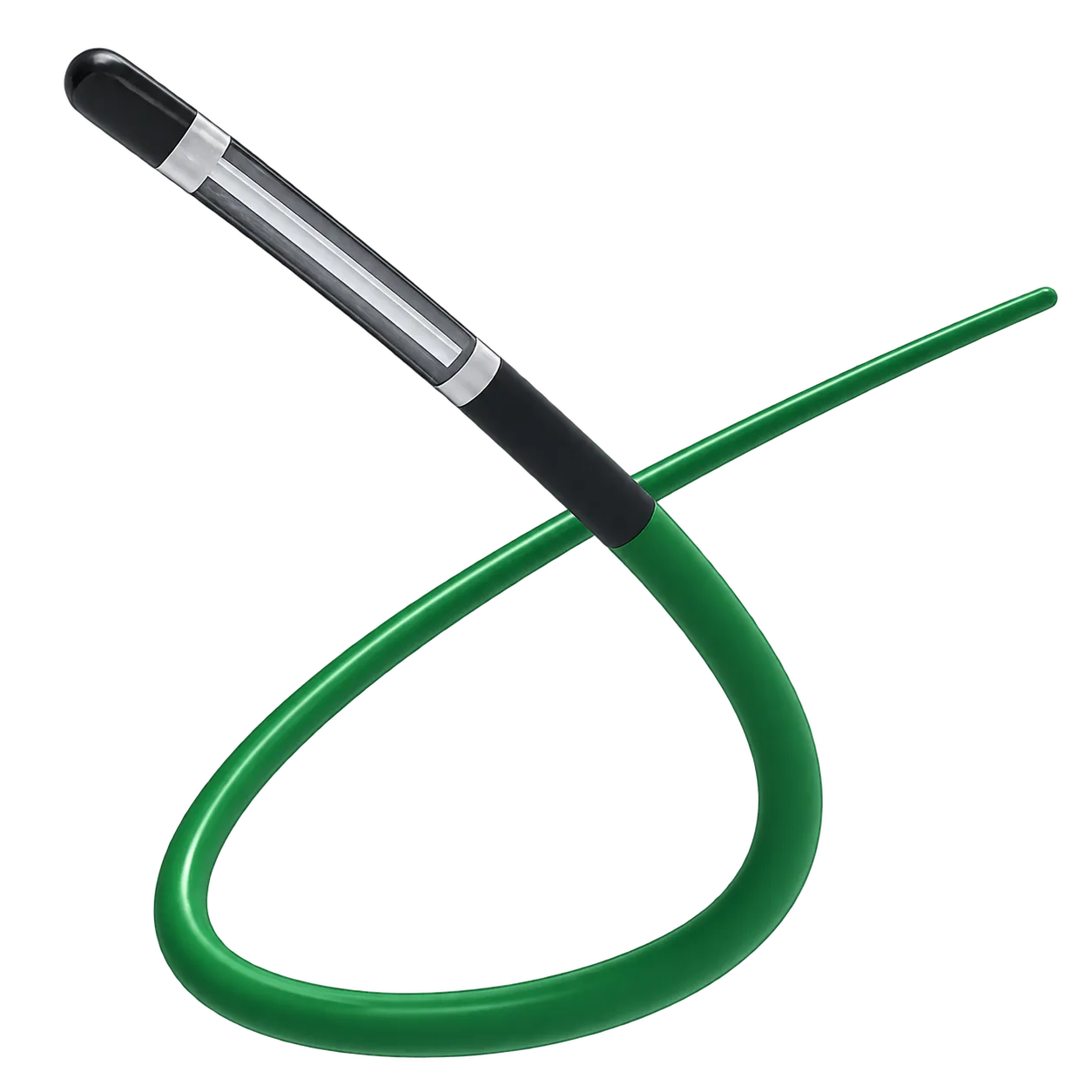
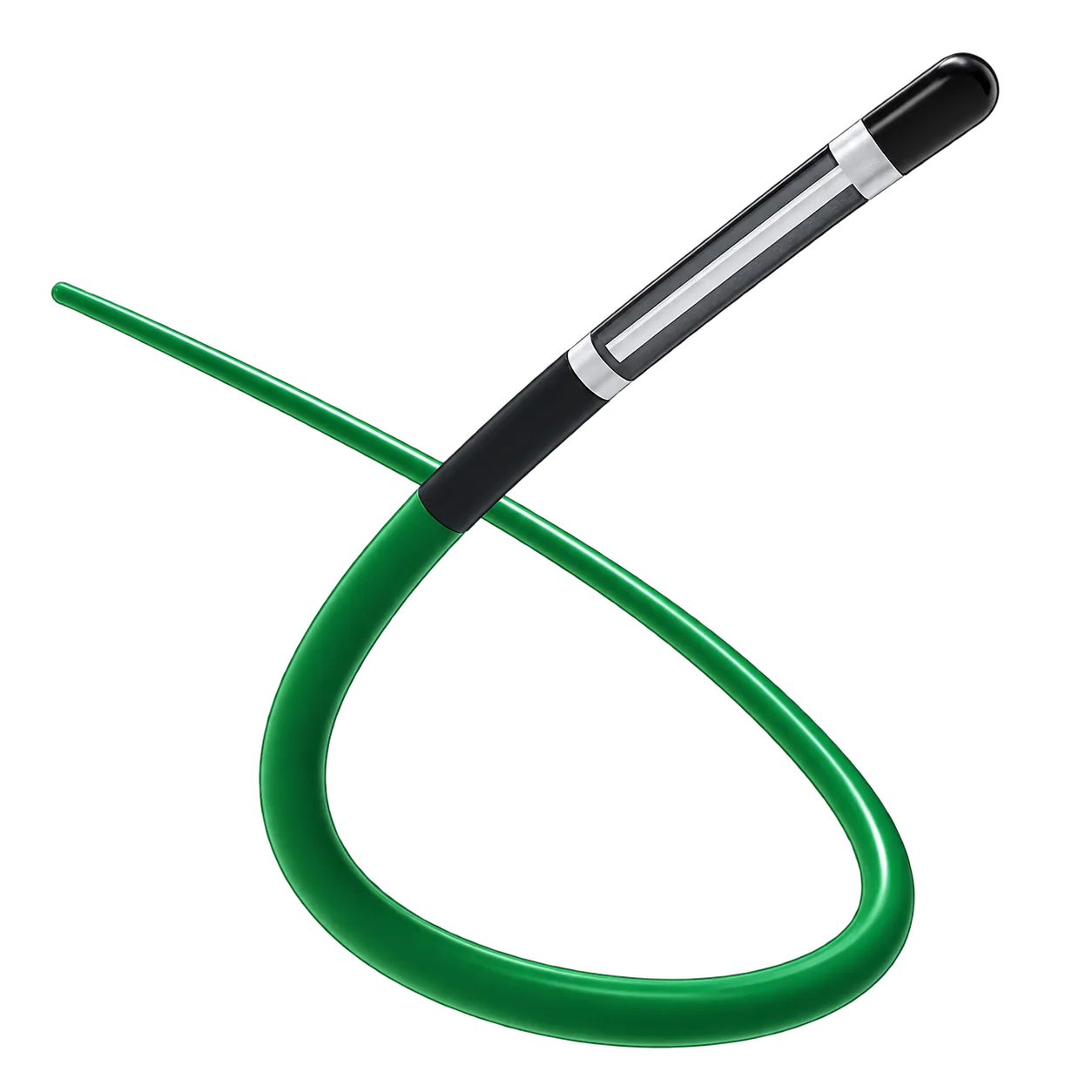
Peripheral arterial disease produces a different problem from coronary disease. The vessels are longer, the diseased segments are longer with them, and calcification is often heavy. A wire may have to travel from the groin down past the knee, following bends along the way, then cross a segment that has been narrowed for years. Both halves of that journey make demands, and they are opposite demands.
Following the vessel needs a soft, recoverable tip. A stiff wire pushed round a bend either damages the vessel or takes a permanent kink and stops tracking properly. Crossing the lesion needs the opposite, since force applied at the operator's hand has to reach the tip rather than being absorbed on the way. So does delivering a balloon or stent afterwards, because the wire becomes the rail everything else rides on, and a floppy rail lets devices stall.
A hybrid wire resolves this by changing material along its length rather than compromising throughout. The soft recoverable section is where the wire meets the anatomy, and the stiff section is where push is applied. Coating placement follows the same logic. A hydrophilic surface reduces the force needed to cross a tight segment, which is why it sits distally, while PTFE handles the friction of running inside a catheter, which is a proximal problem. Radiopacity matters because peripheral work is done under fluoroscopy and the operator needs to see where the tip sits.
Wire choice also has to account for what follows it, since the same wire usually stays in place through balloon and stent delivery. Medigear.uk supplies the instructions for use with every order.