
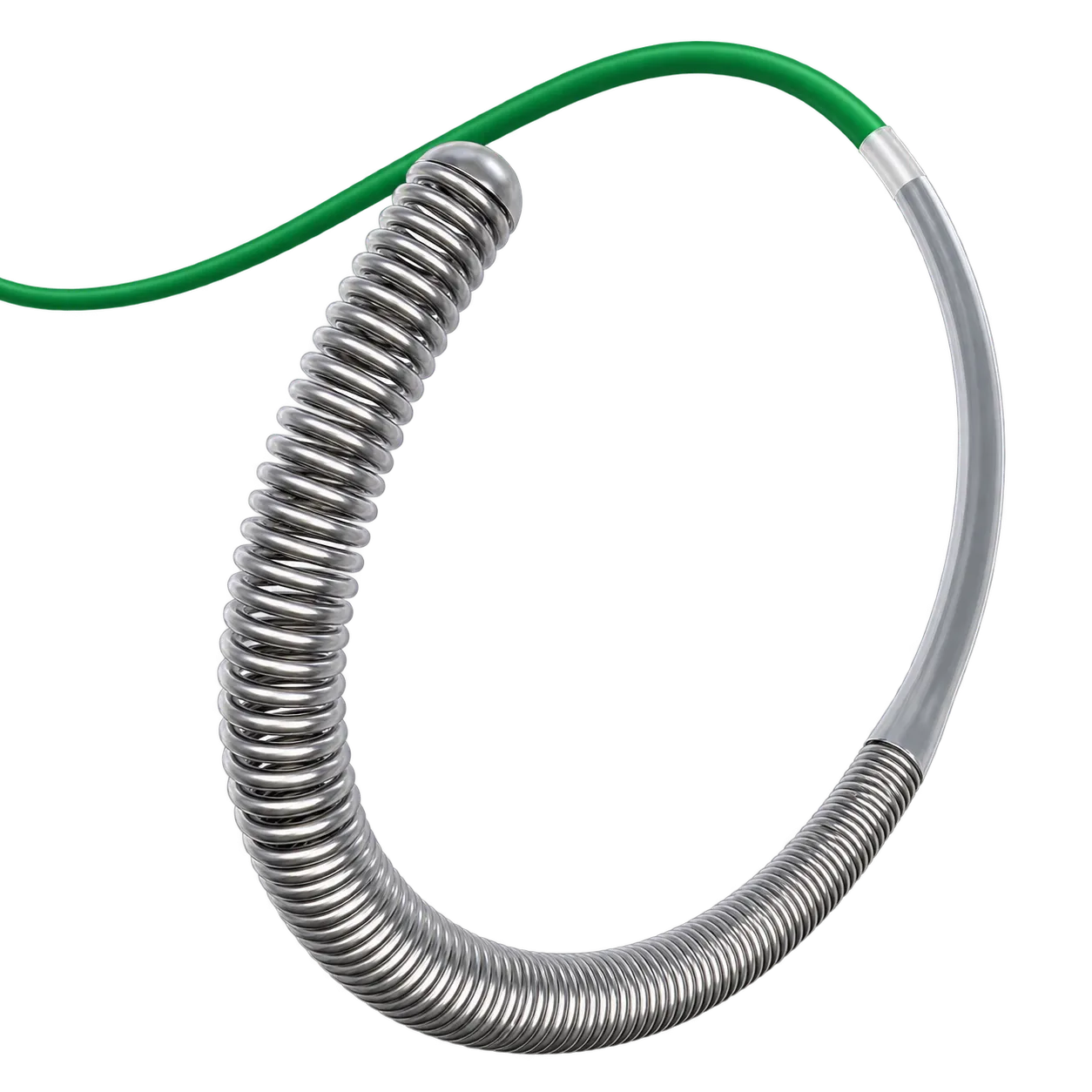
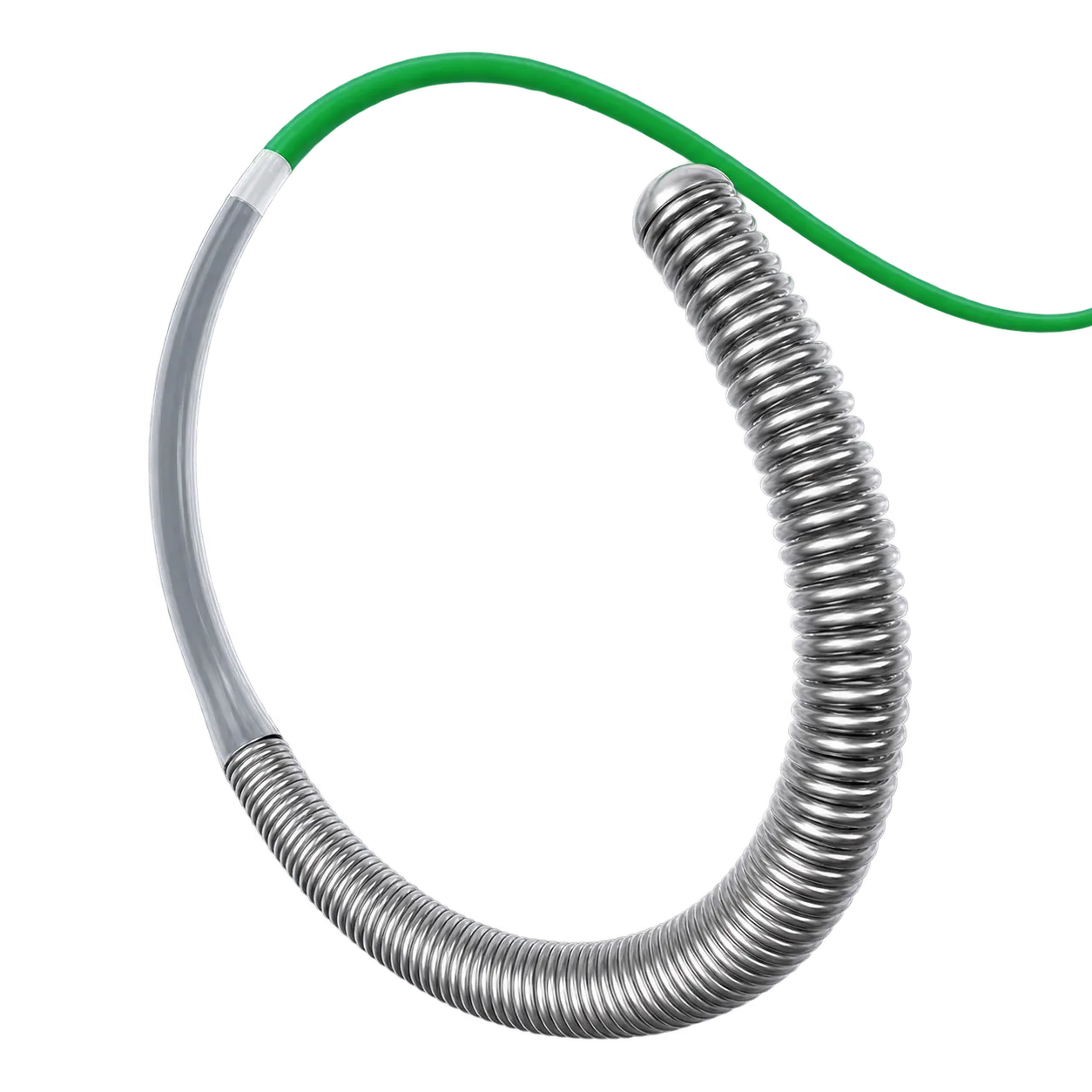
Cerebral vessels punish equipment. They are narrow, they branch repeatedly, and they curve back on themselves in ways that few other territories do. A wire pushed along that route is bent and rebent constantly, and a conventional core gradually takes a set, acquiring kinks that stop devices from tracking cleanly.
Nitinol answers that. It is superelastic, meaning it recovers its shape after deformation that would permanently bend another alloy. A wire built from it can follow a tortuous route repeatedly and emerge unchanged, which matters over a long procedure where the same wire is advanced, withdrawn and advanced again. INT presents this as the wire maintaining its shape throughout, and that is the correct framing.
The extension arrangement addresses a separate and very practical problem. Neurointerventional work involves exchanging microcatheters over a wire that has already found a difficult route, and losing that position means starting again. Removing a catheter without losing the wire requires a wire more than twice the catheter length, which conventionally means either stocking long wires throughout or exchanging to one mid-procedure. An extension coupled to the back of the wire avoids both. The wire stays exactly where it is, gains the needed length, and the catheter comes off it. Tapering serves the first problem again, since a wire narrow enough to reach distal vessels would lack support along its whole length if it were that thin throughout.
Tip stiffness is chosen based on the vessel and the target, and floppy wires suit navigation rather than crossing resistant lesions. Medigear.uk supplies the instructions for use with every order.