
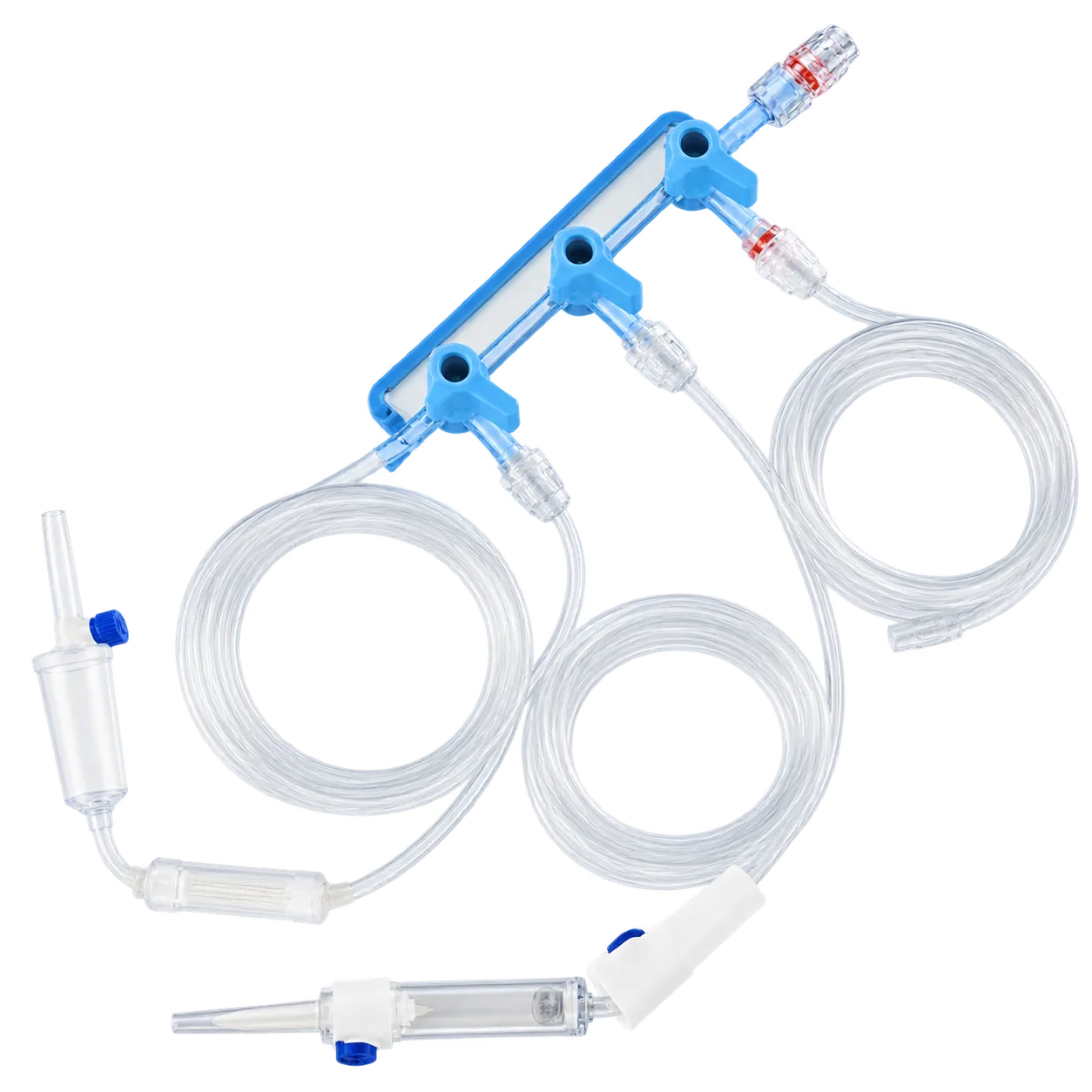
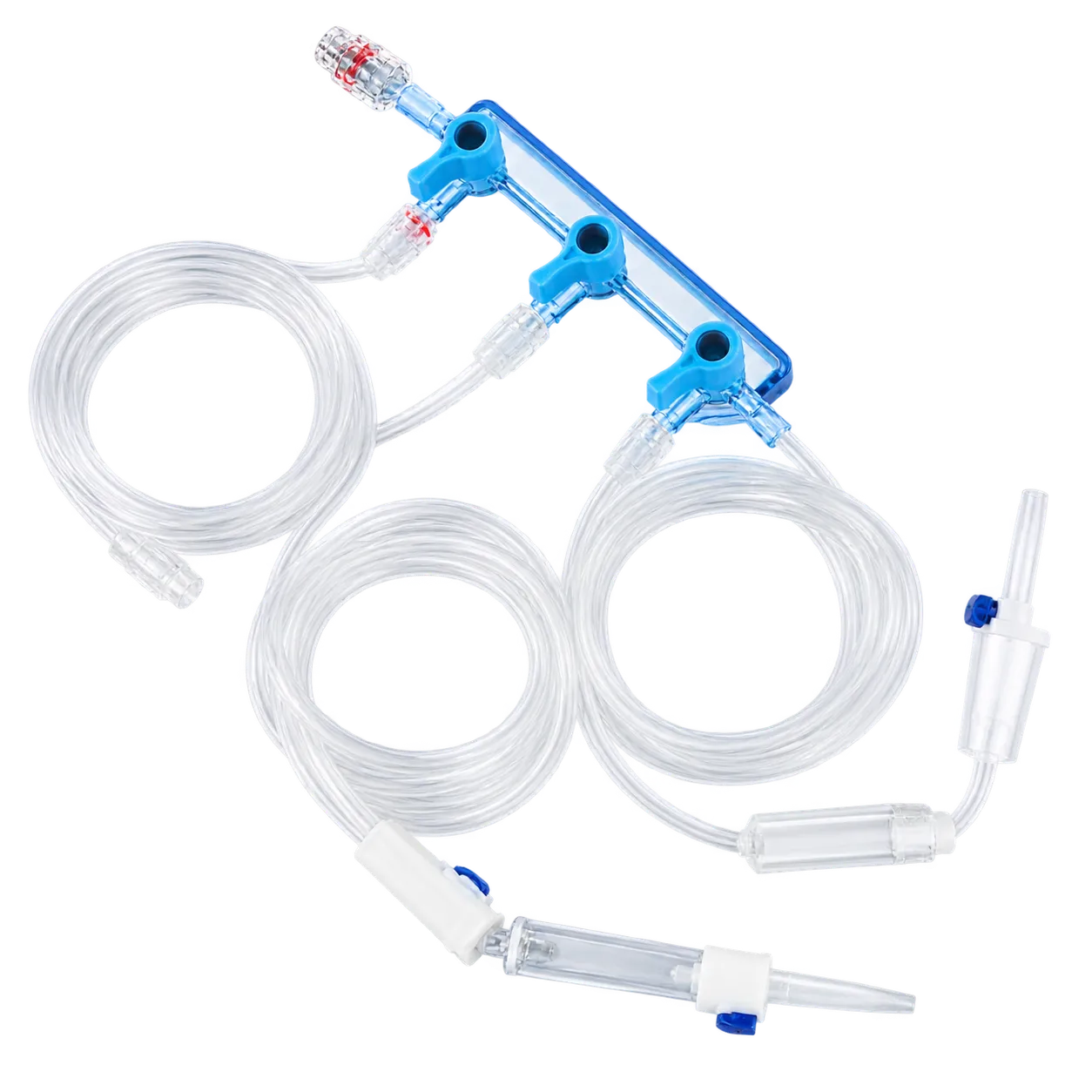
Diagnostic coronary angiography and percutaneous coronary intervention are the main settings. During a case, the operator needs three things from the same line. Contrast has to be injected for imaging. Saline has to be flushed through to clear the catheter. Arterial pressure has to be read continuously. The manifold makes all three available by turning a stopcock. Nobody has to disconnect a line at the access site.
That last point carries the clinical weight. Every disconnection is an opportunity for blood loss and for air to enter the system. Air reaching a coronary artery can cause ischaemia. Keeping the circuit closed reduces both risks. Continuous pressure monitoring also matters in its own right. Damping or ventricularisation of the trace warns the operator that the catheter tip is obstructing flow. That warning is easiest to act on when the trace runs continuously rather than being checked at intervals.
The three-port configuration is generally chosen for complex and multivessel work. Pressure monitoring then runs alongside injection and flushing. Simpler diagnostic cases can use fewer ports. Pre-assembled kits reduce setup time at the start of a case. They also cut the number of connections a team makes under pressure, which is where errors tend to occur. The colour-coded syringes in AM0352E address a related risk. Several fluids are often drawn up on one table. Telling them apart by sight is safer than by memory.
Peripheral interventional radiology uses the same arrangement for arterial and venous contrast work. Medigear.uk supplies the instructions for use with every order.