

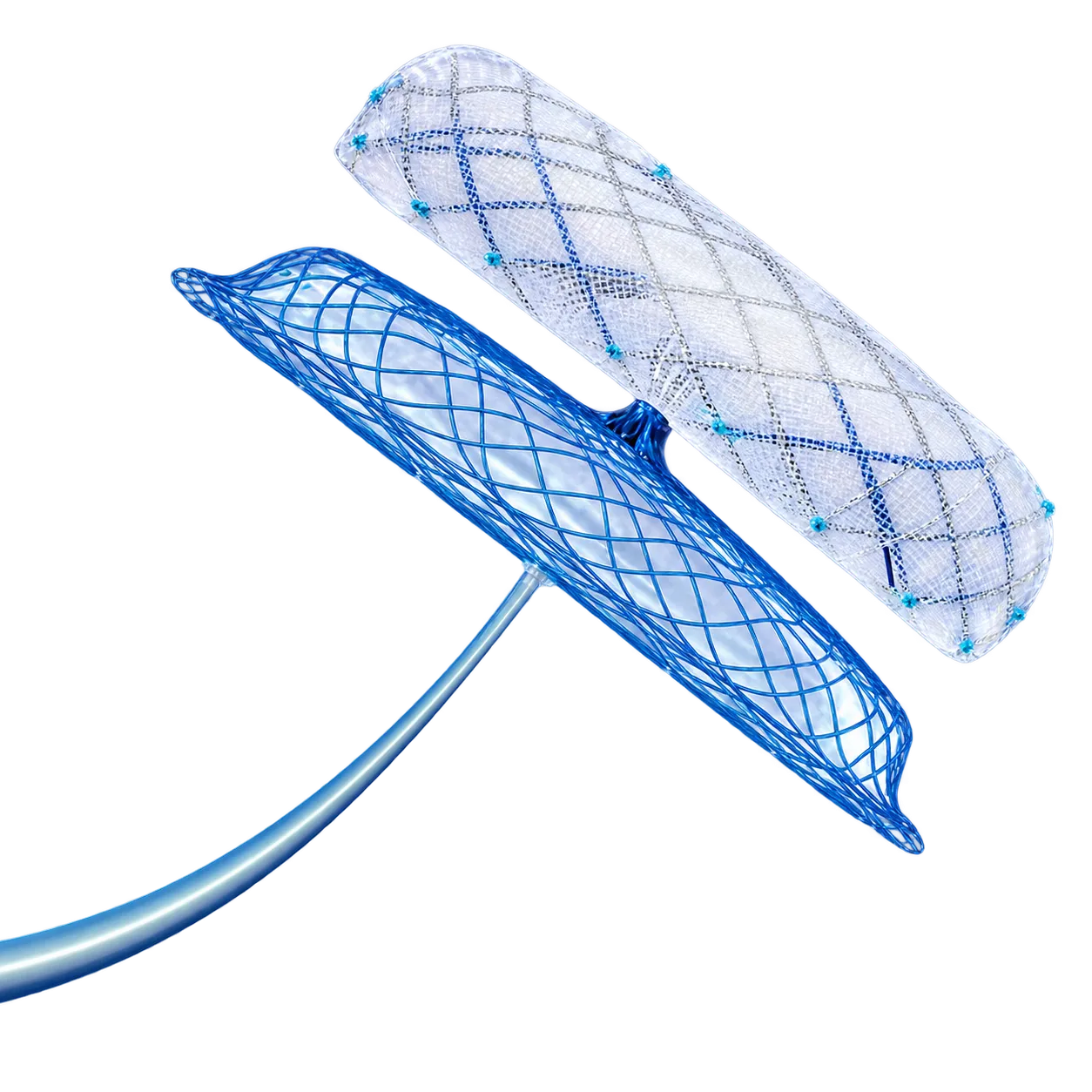
Atrial fibrillation raises the risk of stroke because blood pools and clots in the left atrial appendage. Anticoagulation is the standard answer, and it works well for most patients. Some patients cannot take it. Bleeding history, falls risk, or a stroke occurring despite treatment all leave clinicians looking for another route. Closing the appendage mechanically is that route.
The procedure is percutaneous. A catheter crosses from the right atrium to the left through the septum, and the occluder is deployed inside the appendage. Once the device is in place and endothelialised, the appendage no longer communicates with the atrium, and the commonest source of clot is removed. Patients can then usually come off long-term anticoagulation, which is the whole point.
Sizing dominates the procedure. The appendage is measured beforehand on transoesophageal echocardiography or CT, and the device is chosen to compress within a defined range at the landing zone. Under-compression risks the device shifting or embolising. Over-compression risks tissue erosion and paradoxically less secure anchoring. That is why a range with 2 mm size increments has practical value, since finer steps make it easier to land inside the window. Appendage shape complicates matters further, as a substantial proportion are divided into more than one lobe, and a device that anchors in one lobe still has to cover the whole ostium. Peri-device leak and device-related thrombus are the two problems watched for afterwards, and both are assessed by imaging at follow-up.
Medigear.uk will supply the instructions for use once the manufacturer documentation is complete.