
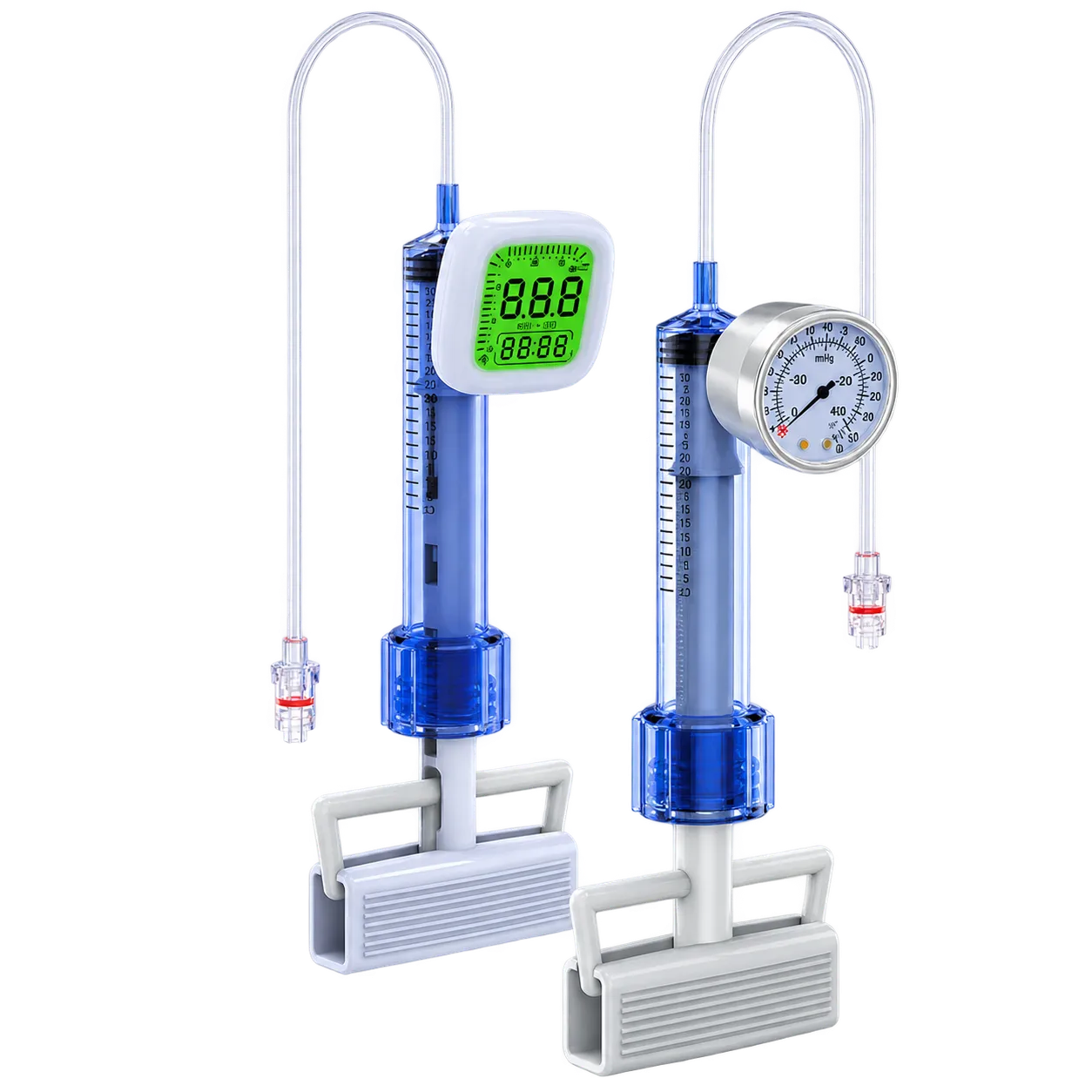
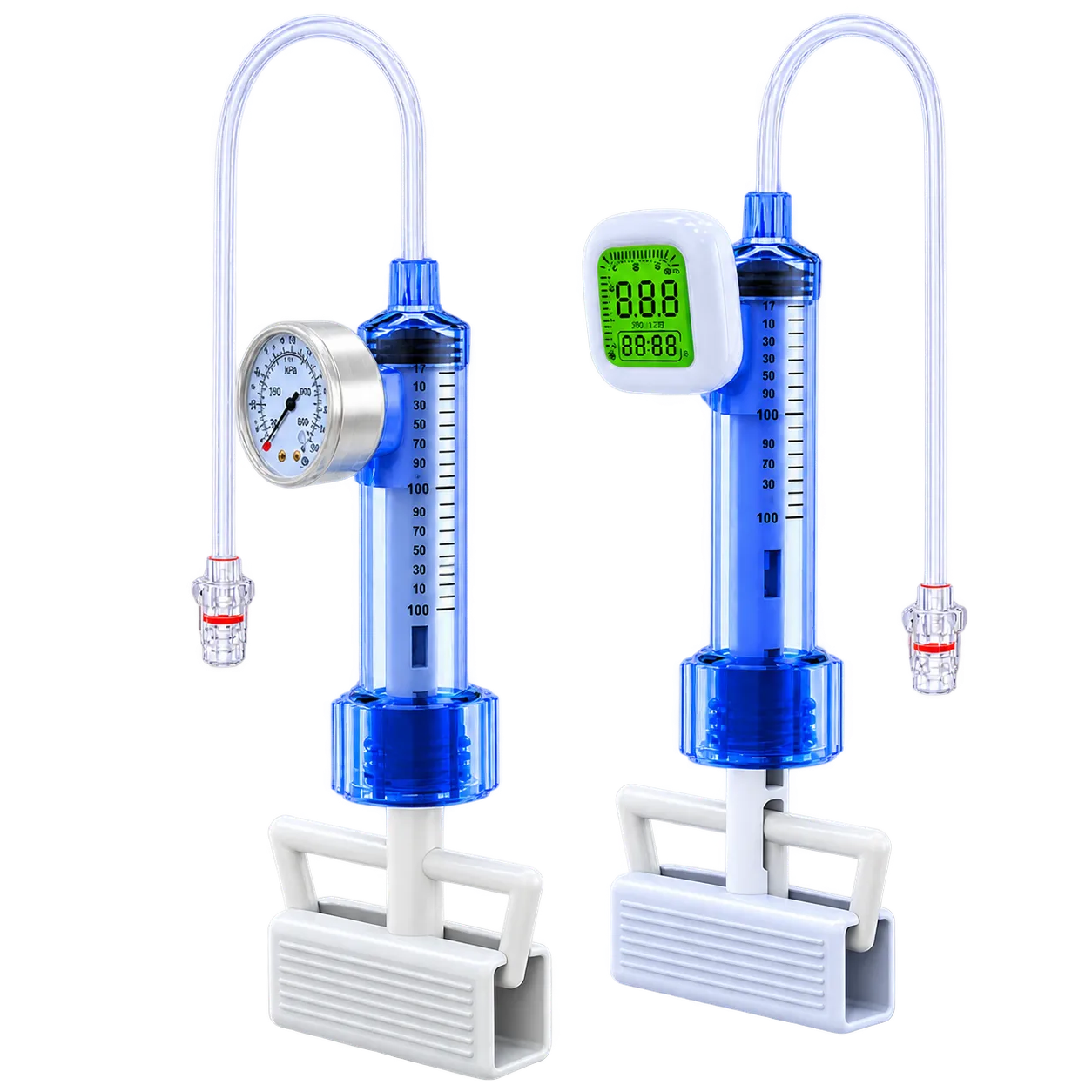
Balloon angioplasty is the main setting for this device. A dilatation balloon is passed into a narrowed vessel and inflated to open it. The inflation device supplies the pressure and shows what has been reached. Pressure matters clinically. Too little and the lesion is not fully dilated. Too much and the vessel wall or the balloon itself can be damaged. Every balloon carries a rated burst pressure. The operator stays below it while reaching the pressure the lesion needs. An accurate gauge is therefore part of the safety case. It is not just a convenience.
Balloon-expandable stent deployment uses the same equipment. The stent is mounted on a balloon and expanded to appose the vessel wall. Post-dilatation to improve stent apposition often needs higher pressures. That is where the 40 atmosphere AI40 reference fits. Drug-coated balloon work adds a timing element. The balloon is held inflated for a set period so the drug transfers. INT describes a timer function on its digital inflation devices for this purpose. Peripheral interventional radiology uses the same device class for arterial and venous work outside the coronary tree.
Vessel calibre and balloon size differ there, but the inflation principle and the pressure limits are the same. The 3-way stopcock supports the practical workflow. An operator can draw contrast, purge air, and isolate the balloon line without breaking a connection. Air in the system is a genuine hazard during balloon inflation, so purging matters. These are single-use devices and must not be reprocessed.
Medigear.uk supplies the instructions for use with every order so clinical teams can confirm handling before a case.