
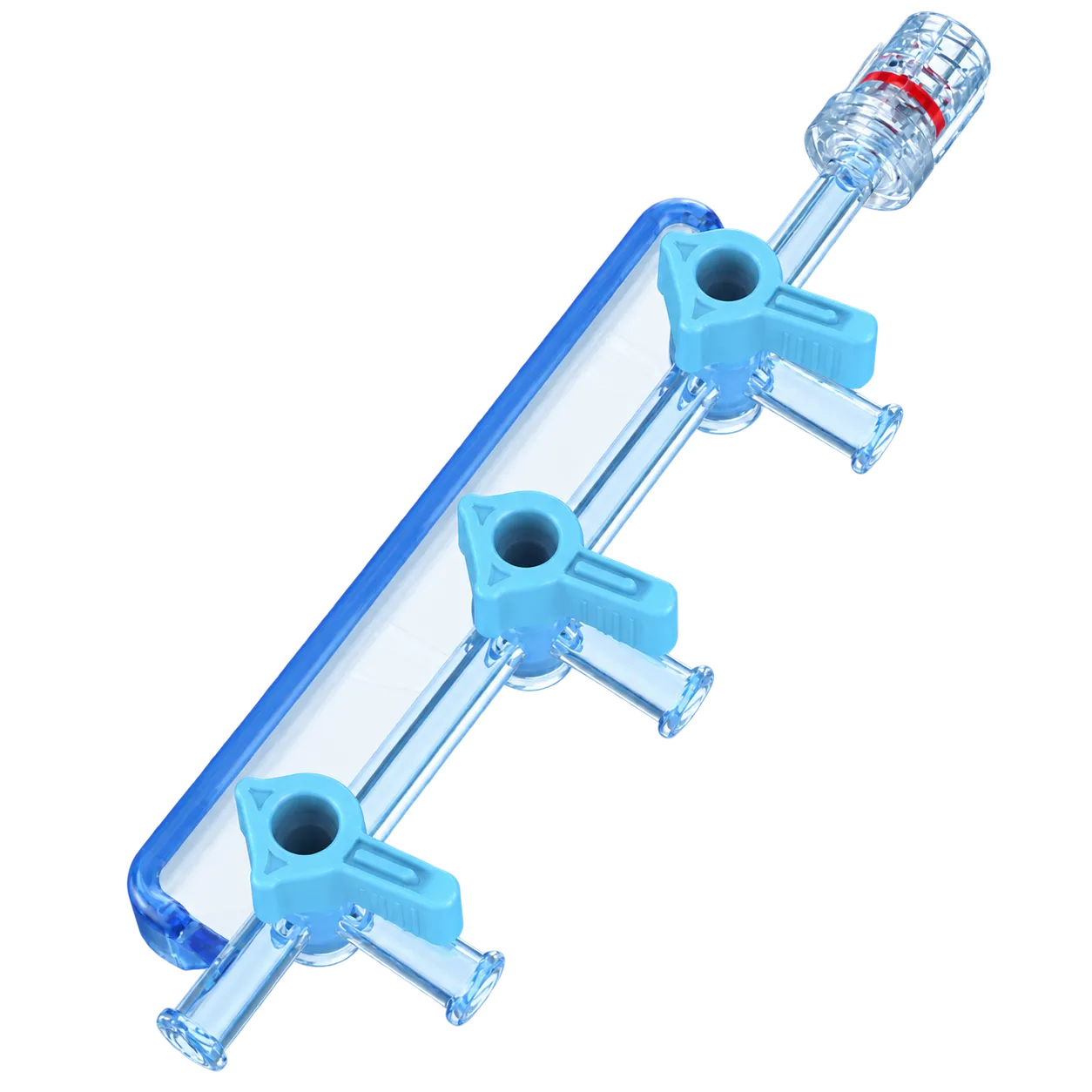
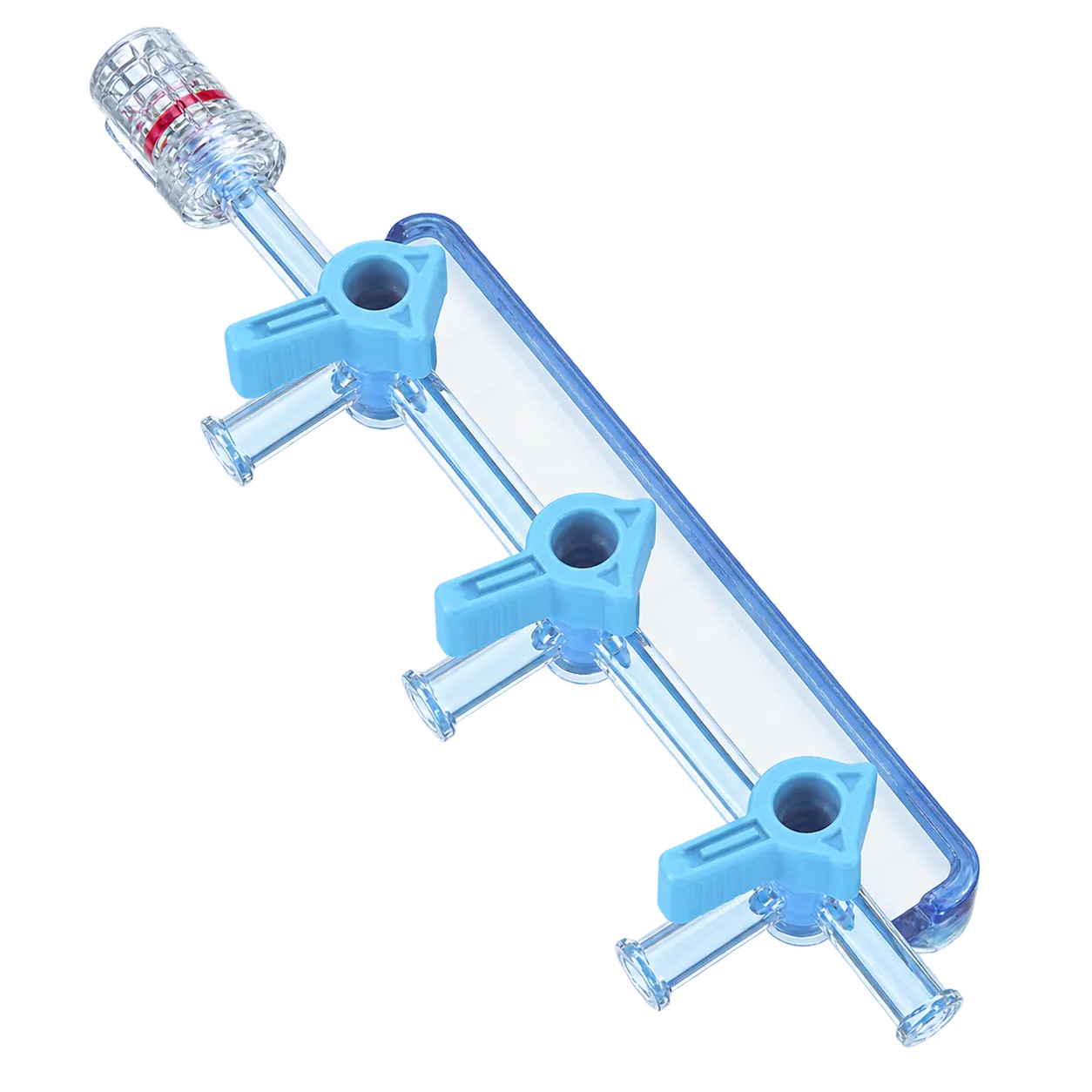
Coronary angiography and percutaneous intervention both need several fluid pathways available from one point. Contrast has to be injected for imaging. Saline has to be flushed to clear the catheter. Arterial pressure has to be read continuously. Medication is sometimes given through the same circuit. The manifold makes each of these selectable by turning a handle.
Keeping the circuit closed is the clinical argument. Every disconnection risks blood loss and lets air into the system. Air reaching a coronary or cerebral artery can cause ischaemia. A manifold reduces the number of times anything is opened during a case. INT also presents single-use construction as removing the complications associated with reusable manifold systems. Cleaning and reprocessing introduce their own risks.
Port count follows case complexity. Diagnostic angiography often needs only contrast and flush, which two ports cover. Interventional work generally calls for three, so pressure monitoring runs continuously alongside injection. Continuous monitoring matters in its own right. Damping of the trace warns that the catheter tip is obstructing flow. Four ports allow an additional line where a case requires it. Handle convention and port orientation are ergonomic rather than clinical choices. Both still affect how quickly an operator selects the right pathway under time pressure. That is where selection errors occur. The pressure line references remove one connection from the setup, which cuts the assembly work done at the start of a case.
Peripheral interventional radiology uses the same manifolds for arterial and venous contrast work. Medigear.uk supplies the instructions for use with every order.