
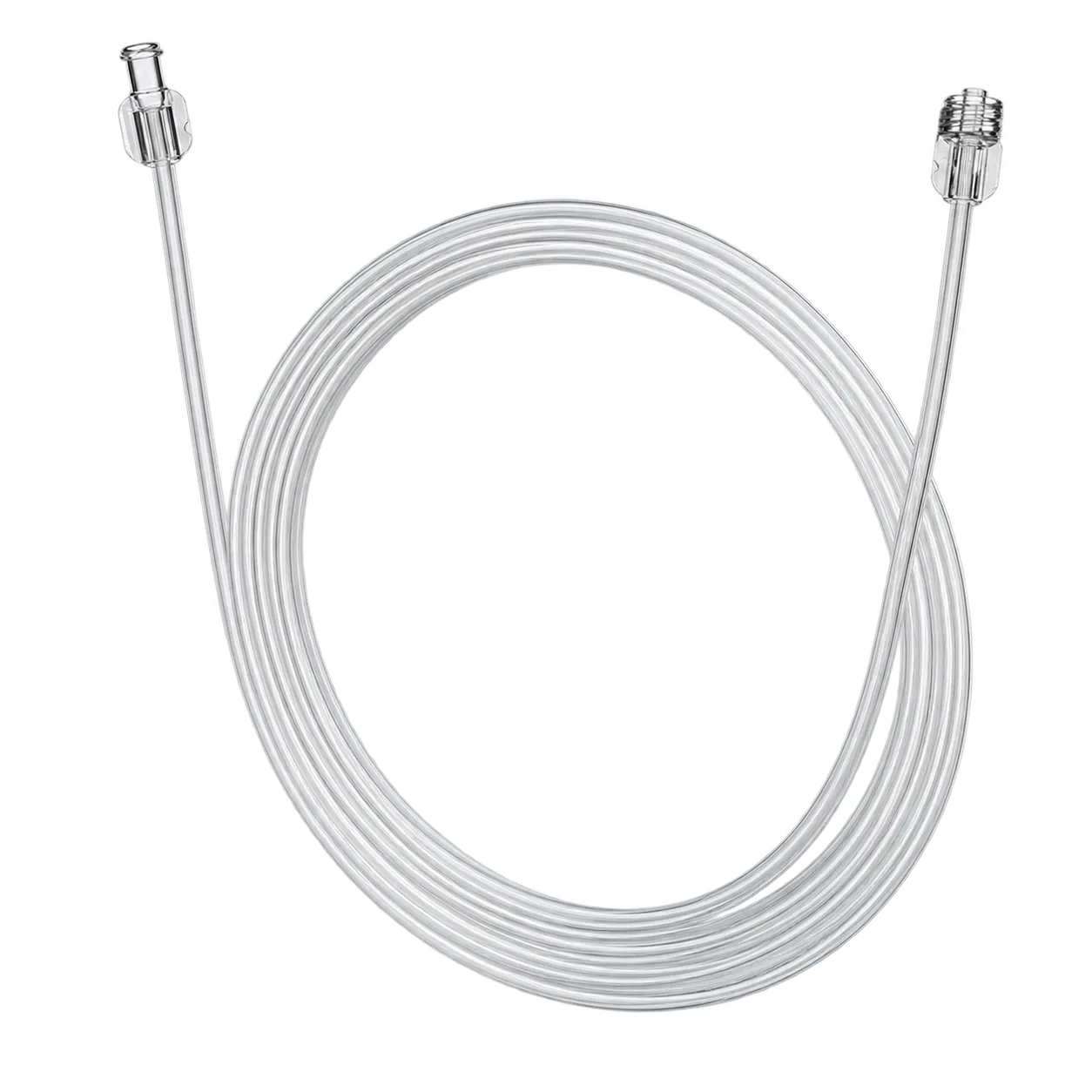
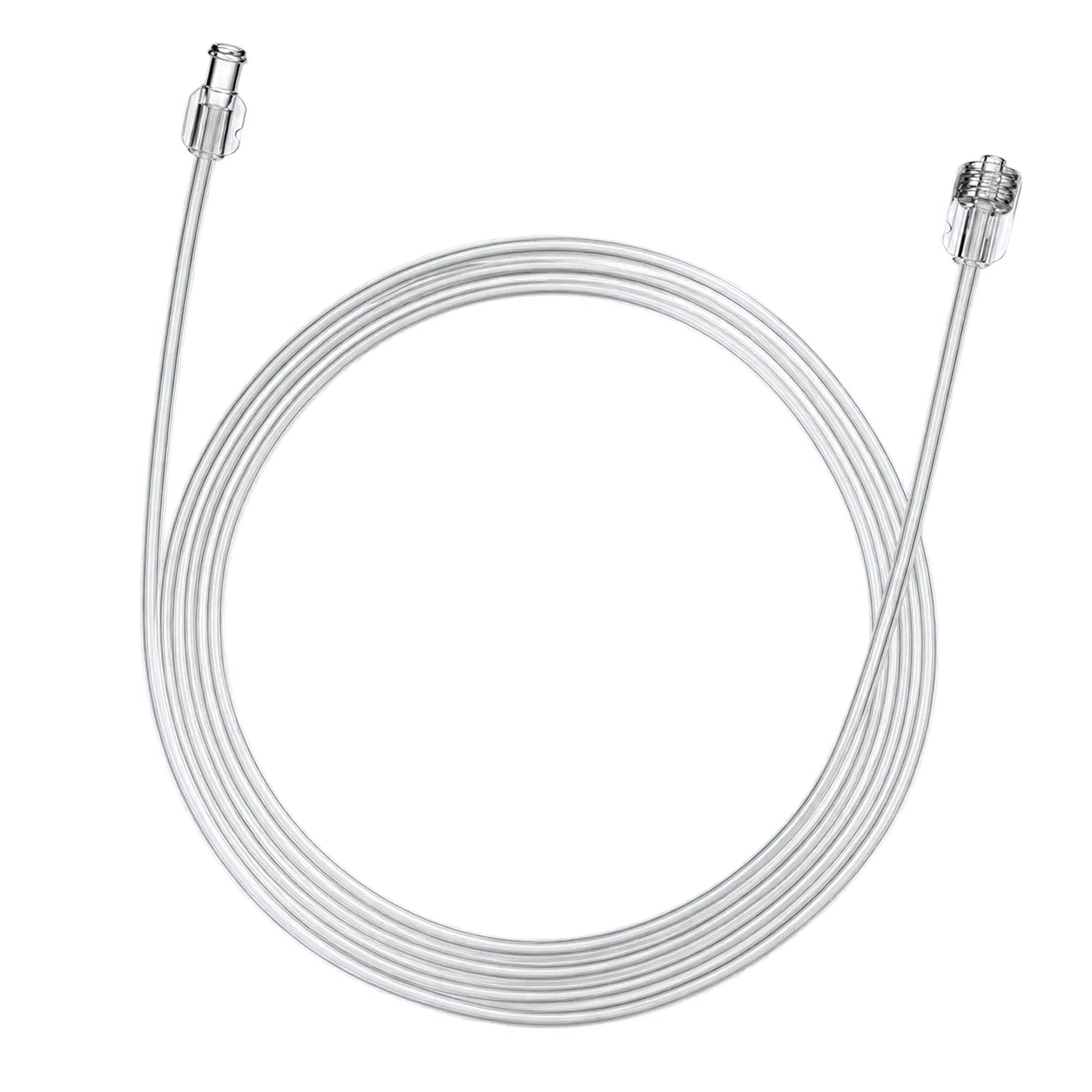
Angiography and interventional procedures both need contrast delivered from a source to the patient under pressure. The line that carries it has to hold that pressure without leaking or bursting. Two situations arise. In hand injection, the operator drives contrast from a control syringe through a manifold, and pressures stay modest. In power injection,n a machine delivers a set volume at a set rate, and pressures climb far higher.
The two pressure classes map onto those situations. The 500 psi PVC references suit manifold and hand-injection circuits. The 1,200 psi braided references are the class used with contrast power injectors. That is why the braid is there at all. Choosing the wrong class is a real hazard rather than a theoretical one. A line failing under injection sprays contrast interrupts the study and can contaminate the sterile field.
Air management is the other safety issue these lines touch. Air introduced into a coronary or cerebral artery can cause ischaemia. The whole circuit is therefore purged before injection. That purge depends on the operator being able to see bubbles in the line. INT's claim about braid transparency is therefore a clinical point, not a cosmetic one. Line length is chosen to reach from the injector or manifold to the patient without excess slack. A longer line adds both dead space and compliance. Rotating adapters help where a line is repeatedly connected and released during a case.
Peripheral interventional radiology uses the same lines for arterial and venous contrast work. Medigear.uk supplies the instructions for use with every order.